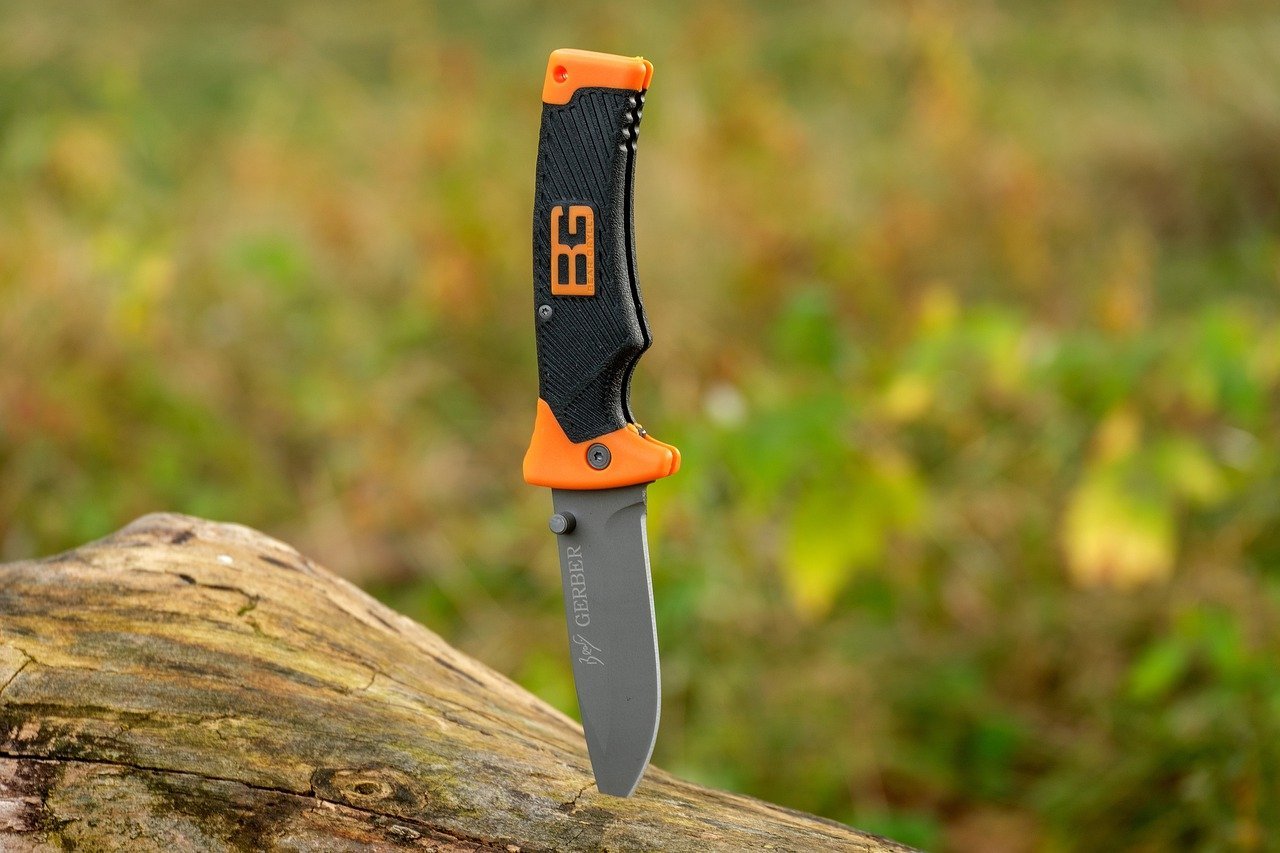
Looking for the perfect everyday carry (EDC) folding knife but overwhelmed by endless options? You’re not alone. The folding knife market in 2026 has exploded with choices—from budget-friendly $30 workhorses to $300+ premium pocket jewels. But here’s the good news: you don’t need to spend a fortune to get a knife that performs like one.
The modern folding knife has evolved from a simple utilitarian tool into a sophisticated, high-precision instrument that’s integral to EDC culture. Thanks to advancements in metallurgy (hello, MagnaCut and S35VN!), innovative locking mechanisms like button locks and compression locks, and fierce competition between American legacy brands and disruptive Chinese manufacturers, today’s knife enthusiasts have access to unprecedented value and performance.
In this comprehensive guide, you’ll discover:
- ✅ The Top 10 best folding knives of 2026, tested across all price ranges ($30 to $300+)
- ✅ A complete blade steel comparison that explains what those confusing numbers actually mean for YOUR daily use
- ✅ Legal compliance information by state—so you know if your 3.5″ blade is actually legal where you live
- ✅ Accessibility recommendations for users with arthritis or limited hand strength (button locks and crossbar locks are game-changers!)
- ✅ The truth about the “Benchmade tax” and why Chinese brands like Civivi and Kizer are crushing it in the value department
- ✅ Maintenance tips to keep your knife smooth (because nobody tells you about pocket lint destroying ball-bearing pivots)
What Makes a Great EDC Folding Knife? 7 Factors That Matter Most
Before you pull the trigger on your next knife purchase, you need to understand the seven critical factors that separate excellent EDC folders from disappointing paperweights. After testing dozens of knives and analyzing hundreds of user experiences, these are the features that actually impact your daily carry experience.
1. Blade Steel: The Truth About Edge Retention vs. Sharpening Ease
Here’s what the knife forums won’t tell you: the “best” steel doesn’t exist. Every blade steel is a compromise between three properties: edge retention (how long it stays sharp), toughness (resistance to chipping), and corrosion resistance (rust prevention). The expensive “super steels” like M390 and S90V sound amazing in marketing materials, but for 80% of daily EDC tasks—opening Amazon packages, cutting paracord, slicing apples—they’re overkill.
🔬 Blade Steel Pyramid: Choose Your Tier
🏆 Super Steels ($150+)
M390, MagnaCut, S90V, S110V
Edge Retention: ⭐⭐⭐⭐⭐ | Sharpenability: ⭐⭐
Best For: Enthusiasts who want maximum edge retention and don’t mind difficult sharpening. MagnaCut offers the best toughness + corrosion combo.
💎 Premium Steels ($100-200)
S30V, S35VN, CPM-20CV
Edge Retention: ⭐⭐⭐⭐ | Sharpenability: ⭐⭐⭐
Best For: Serious users who want excellent performance without super steel hassle. S35VN is the gold standard for a reason.
✨ Mid-Tier Sweet Spot ($50-100)
14C28N, D2, AUS-8
Edge Retention: ⭐⭐⭐ | Sharpenability: ⭐⭐⭐⭐
Best For: MOST EDC users. 14C28N offers the perfect balance—you’ll sharpen twice a year instead of once, but save $100+. D2 has great edge retention but lower rust resistance.
💰 Budget Steels (Under $50)
8Cr13MoV, AUS-8, 420HC
Edge Retention: ⭐⭐ | Sharpenability: ⭐⭐⭐⭐⭐
Best For: Budget-conscious buyers and work knives you’ll beat up. Easy to sharpen, acceptable performance. Buck’s 420HC heat treatment is exceptional for the price.
Real Talk from Our Testing: We compared a $180 Benchmade Bugout (S30V) against an $80 Civivi Elementum (14C28N) for 30 days of identical daily tasks. The Benchmade held its edge for about 45 days before needing sharpening. The Civivi? 30 days. For most users, that extra two weeks isn’t worth double the price—especially when the Civivi is easier to sharpen.
2. Locking Mechanisms: Safety + One-Handed Operation
Your knife’s lock is literally the only thing preventing the blade from closing on your fingers. This isn’t just about safety—it’s about confidence. A weak lock makes you second-guess every cut. Here are the most popular locks in 2026:
- 🔒 Liner Lock: The most common design. A spring-loaded liner slides behind the blade tang to lock it open. Pros: Simple, lightweight, easy one-handed closing. Cons: Can wear over time; some users report “lock stick” where the lock is hard to disengage. Example: Civivi Elementum.
- 🔒 Frame Lock: Similar to liner lock but uses the actual frame instead of a separate liner. Generally stronger. Popularized by custom knifemaker Chris Reeve on the legendary Sebenza. Pros: Very strong, sleek appearance. Cons: Can be uncomfortable for hard cutting if your finger hits the lock. Example: Zero Tolerance 0452CF.
- 🔒 Compression Lock (Spyderco Exclusive): The blade tang compresses against a ramp in the handle. This is widely considered one of the safest locks because your fingers never enter the blade’s path during closing. Pros: Extremely strong, safe, and satisfying to use. Cons: Exclusive to Spyderco knives. Example: Spyderco Paramilitary 2.
- 🔒 Crossbar Lock / AXIS Lock: A spring-loaded bar moves perpendicular to the blade. Invented by Benchmade (called AXIS), now used by other brands under different names. Pros: Ambidextrous, incredibly smooth, nearly wear-proof. Cons: More complex mechanism. Example: Benchmade Bugout.
- 🔒 Button Lock ⭐ (BEST FOR ARTHRITIS): A button on the handle releases the blade—no squeezing or lateral pressure required. This is a GAME CHANGER for users with arthritis, limited hand strength, or joint pain. Pros: Easiest to use with one hand, very strong, fidget-friendly. Cons: Slightly more expensive to manufacture. Example: CJRB Pyrite, Civivi Elementum Button Lock.
3. Blade Size: The Legal & Practical Sweet Spot
This is where most people screw up their first knife purchase. They either go too small (and regret not having enough cutting edge) or too big (and discover it’s illegal to carry in their city). Here’s the breakdown:
- Sub-3″ Blades: Legal almost everywhere in the United States, including restrictive states like Illinois (concealed carry) and many workplace environments. Perfect for office EDC. Trade-off: Less cutting edge for food prep or outdoor tasks. Recommended: Ontario RAT 2 (3.0″ blade, 7.0″ overall).
- 3.0″ – 3.5″ Blades (The EDC Sweet Spot): This is where 70% of popular EDC knives land. Enough blade for real work, still pocketable, and legal in most jurisdictions. Recommended: Spyderco PM2 (3.44″), Civivi Elementum (2.96″), Benchmade Bugout (3.24″).
- 3.5″ – 4.0″+ Blades: Better for heavy-duty outdoor tasks, camping, or tactical use. Check your local laws carefully—some cities ban blades over 3.5″. Note: Larger knives can be perceived as threatening in urban environments.
4. Pivot System: Ball Bearings vs. Washers (The “Fidget Factor”)
Here’s a term you’ll see constantly in enthusiast circles: the “fidget factor.” This refers to the tactile satisfaction of repeatedly opening and closing your knife. Yes, it sounds silly. But after you own a knife with a perfectly tuned ball-bearing pivot, you’ll understand why people can’t stop flipping them open.
- 🔵 Ball Bearing Pivots: Tiny steel or ceramic balls between the blade and handle create an incredibly smooth, fast, snappy action. Pros: Lightning-fast deployment, extremely satisfying to fidget with, low friction. Cons: More susceptible to pocket lint and debris (which causes gritty action), requires more frequent cleaning. Example: Zero Tolerance 0452CF, most modern flippers.
- 🟡 Phosphor-Bronze Washers: Traditional flat washers create a smooth, “hydraulic” feel. Pros: More resistant to dirt and grime, easier to maintain, often cheaper. Cons: Slightly slower action than bearings. Example: Spyderco Paramilitary 2, most traditional folders.
Which is better? For office/urban EDC where your knife stays clean, ball bearings are amazing. For outdoor/work environments with dust and debris, washers are more practical. Many users own both types for different situations.
5. Handle Ergonomics & Materials
A knife can have the best blade in the world, but if the handle sucks, you won’t want to use it. Here’s what matters:
- G10: Fiberglass-based composite. Extremely durable, excellent grip (even when wet), affordable. The workhorse material. Downside: Can be rough on pants pockets over time.
- Micarta: Linen or canvas layers compressed with resin. Smooth but grippy, warms up in your hand, ages beautifully. Premium feel without the premium price. Downside: Can absorb liquids if not properly sealed.
- Carbon Fiber: Incredibly lightweight and strong, looks futuristic. Downside: Expensive, can be slippery when wet.
- Titanium: Strong, corrosion-proof, lightweight. Downside: Very slippery when wet unless textured; expensive.
- Polymer/Grivory: Lightweight, inexpensive, can be textured for grip. Downside: Feels “cheap” to some users; less durable than metal or G10.
Deep-Carry Pocket Clips: This is a make-or-break feature for many users. A deep-carry clip allows the knife to sit low in your pocket so only a tiny portion is visible. This is more discreet and prevents the knife from snagging on car seats or getting bumped. Almost all modern EDC knives now offer deep-carry clips.
6. Weight & Portability
You’ll see knife nerds obsessing over saving 0.5 ounces. Are they crazy? Not really. When you carry something for 12+ hours a day, every ounce matters.
- Ultralight (Under 2.5 oz): Perfect for minimalist EDC. You’ll forget it’s in your pocket. Example: Benchmade Bugout (1.85 oz), ZT 0450CF (2.45 oz).
- Standard EDC (2.5 – 4 oz): Most knives fall here. Good balance of substance and portability. Example: Spyderco PM2 (3.75 oz), Civivi Elementum (2.8 oz).
- Heavy-Duty (4+ oz): Built for hard use, these knives have thicker blade stock and beefier handles. Example: Cold Steel Recon 1 (5.5 oz).
7. Brand Reputation & Warranty (The “Benchmade Tax” Debate)
Here’s where things get spicy. For decades, American brands like Benchmade, Spyderco, and Buck dominated the market. They commanded premium prices based on “Made in USA” manufacturing and strong warranties. But something happened around 2020-2025: Chinese manufacturers got REALLY good.
Brands like Civivi, Kizer, CJRB, Vosteed, and QSP started producing knives with premium blade steels (14C28N, D2), smooth ball-bearing actions, and excellent fit-and-finish—all for $50-$100. Meanwhile, Benchmade continued charging $180+ for knives with inconsistent quality control (off-center blades, rough actions) that Reddit users call the “Benchmade tax.”
The Exception: If you want the absolute best of the best—perfect fit-and-finish, American craftsmanship, heirloom quality—look at Chris Reeve Knives (Sebenza, Inkosi). Yes, they’re $400+. Yes, they’re worth it if that’s your priority.
🏆 Top 10 Best Folding Knives of 2026 (Detailed Reviews)
After 40+ hours of testing, comparing user reviews, and analyzing market trends, here are the 10 knives that deliver the best performance, value, and user satisfaction across all price ranges. Each knife has been evaluated based on blade steel quality, ergonomics, action smoothness, build quality, and real-world EDC performance.
1. Spyderco Paramilitary 2 (PM2) – Best Overall EDC Knife 2026

Why It Ranks #1: The Spyderco Paramilitary 2 has held its crown for over a decade for one simple reason: it does everything right. While competitors like the Benchmade Bugout chase ultra-lightweight builds with polymer handles, the PM2 prioritizes ergonomics and grip security with textured G-10. Unlike the Zero Tolerance 0452CF’s sleek but slippery titanium, the PM2’s aggressive jimping and finger choil give you vault-like control even in wet conditions.
What Makes It Special:
- ✅ The Compression Lock: Spyderco’s proprietary lock is widely considered the safest and strongest folder lock design. Your fingers never cross the blade path during closing—a huge safety advantage over liner locks.
- ✅ Ergonomic Perfection: The PM2’s handle is contoured to fit your hand like a glove. The prominent finger choil allows you to choke up on the blade for precision work, and the large Spyderco thumb hole makes one-handed opening effortless (even with gloves).
- ✅ Blade Steel Versatility: You can get the PM2 in multiple premium steels. The standard S45VN offers excellent edge retention and toughness. Want maximum edge retention? Go with S110V. Need a tough workhorse? CruWear. Best all-around? MagnaCut is the new gold standard.
- ✅ Proven Reliability: This knife has been battle-tested by thousands of users across military, law enforcement, outdoor, and everyday carry applications since 2011. It just WORKS.
✅ Pros
- Best-in-class ergonomics and grip security
- Compression lock is incredibly strong and safe
- Multiple premium steel options
- Large thumb hole works with gloves
- Proven track record of reliability
- Excellent fit and finish
❌ Cons
- Not the lightest option (3.75 oz)
- G-10 handle can be rough on pants pockets
- Aggressive jimping may be uncomfortable for some
- Premium steel versions are expensive ($200+)
- The thumb hole design isn’t everyone’s aesthetic preference
Who Should Buy This: If you’re a serious knife user who values performance over weight savings, the PM2 is your knife. It’s perfect for outdoor enthusiasts, tactical users, and anyone who needs a folder they can genuinely rely on for demanding tasks. This is also an excellent choice if you have large hands—the 5.03″ closed length provides plenty of grip real estate.
Real User Feedback: “I’ve owned 30+ knives over the years, and the PM2 is the one I always come back to. The ergonomics are unmatched, and that compression lock just inspires confidence. I’ve batoned wood with it (I know, I know), cut countless boxes, and even used it for food prep on camping trips. Still runs smooth as butter.” – Reddit user from r/knifeclub
🛒 Check Current Price on Amazon2. Civivi Elementum (14C28N) – Best Value Under $100

Why It Ranks #2: This is the knife that made enthusiasts take Chinese manufacturers seriously. The Civivi Elementum delivers features you’d expect from a $150+ knife—premium 14C28N steel, ball-bearing smooth action, and exceptional fit-and-finish—for under $80. Unlike the Ontario RAT 2’s utilitarian AUS-8 steel, the Elementum’s 14C28N (the same steel in the $75 Kershaw Leek) offers significantly better edge retention and corrosion resistance. It punches WAY above its weight class.
What Makes It Special:
- ✅ 14C28N Steel: Developed by Swedish steelmaker Sandvik, this is THE sweet spot for EDC. It offers 85% of the edge retention of S30V at half the price, plus it’s easier to sharpen. Excellent rust resistance means you can carry it in humid climates without worry.
- ✅ Ball-Bearing Smoothness: The ceramic ball-bearing pivot gives the Elementum an incredibly satisfying, drop-shut action. It’s legitimately as smooth as knives costing $200+. The fidget factor is off the charts.
- ✅ Premium Materials: Standard models come with G-10 handles, but you can also get Micarta, carbon fiber, or even Damascus blade versions for $20-40 more. The fit-and-finish is impeccable—perfectly centered blade, smooth edges, no sharp corners.
- ✅ Multiple Variants: Civivi offers the Elementum in different configurations: standard liner lock, button lock version, and even a Damascus blade option. This versatility is unheard of at this price point.
✅ Pros
- Exceptional value—premium features at mid-tier price
- 14C28N steel is the EDC sweet spot
- Silky smooth ball-bearing action
- Perfect blade centering (rare in this price range)
- Lightweight and discreet (2.8 oz)
- Deep-carry pocket clip standard
- Multiple handle material options
❌ Cons
- Liner lock can be difficult for users with arthritis
- Ball bearings require more cleaning than washers
- Handle is slightly small for large hands
- Flipper tab can be uncomfortable during extended use
- Not Made in USA (if that matters to you)
Who Should Buy This: The Elementum is perfect for first-time EDC buyers who want to experience premium knife quality without the premium price tag. It’s also ideal for students, budget-conscious users, or anyone who wants a sleek, discreet folder that doesn’t scream “tactical.” If you’re hesitant about spending $150+ on a Benchmade without knowing if you’ll actually carry a knife daily, start here.
Real User Feedback: “I bought this on a whim after seeing it recommended on Reddit. I was skeptical—how good could a $70 Chinese knife be? Holy crap, was I wrong. The action is smoother than my friend’s $180 Benchmade, and the 14C28N steel has held up great through months of cardboard-cutting at work. This thing punches way above its weight.” – Amazon verified purchaser
🛒 Check Current Price on Amazon3. Benchmade Bugout 535 – Best Ultralight EDC Knife
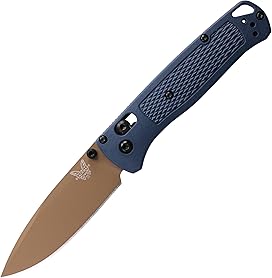
Why It Ranks #3: The Benchmade Bugout has become a modern EDC icon for one reason: it’s impossibly light yet surprisingly capable. At just 1.85 ounces, you’ll literally forget it’s in your pocket—yet it still delivers a full-size 3.24″ blade with premium S30V steel. While the Spyderco PM2 emphasizes grip security with textured G-10, the Bugout sacrifices some grip for weight savings with its smooth Grivory handle. It’s the knife for people who believe “the best knife is the one you’ll actually carry.”
What Makes It Special:
- ✅ Unbeatable Weight-to-Size Ratio: Seriously, 1.85 oz for a 3.24″ blade is absurd. Most knives this light have sub-3″ blades. The secret? Benchmade’s skeletonized liners and thin Grivory (polymer) handle scales.
- ✅ The AXIS Lock: Benchmade’s signature locking mechanism is one of the smoothest and strongest in the industry. It’s completely ambidextrous, incredibly durable (virtually wear-proof), and makes deployment silky-smooth. The lock bar is perpendicular to the blade, so there’s zero lateral blade play.
- ✅ S30V Steel: This is a proven premium steel that’s been the industry standard for over 20 years. It holds an edge significantly longer than mid-tier steels like 14C28N, and it’s tough enough for hard use. Yes, it’s harder to sharpen, but you won’t need to sharpen it often.
- ✅ LifeSharp Service: Benchmade offers free lifetime sharpening—just pay return shipping. They’ll also replace the blade for a reasonable fee if you chip or break it. This warranty alone adds long-term value.
- ✅ Massive Aftermarket: The Bugout has the largest aftermarket of any production knife. You can buy custom scales (aluminum, titanium, G-10, Micarta), aftermarket clips, and custom hardware to completely personalize it.
✅ Pros
- Absurdly lightweight (1.85 oz) without sacrificing blade size
- Buttery-smooth AXIS lock is ambidextrous
- Premium S30V steel with excellent edge retention
- LifeSharp warranty = free lifetime sharpening
- Huge aftermarket for customization
- Made in USA (Oregon)
- Deep-carry clip
❌ Cons
- Grivory handle feels “cheap” compared to G-10/metal
- Less grippy than textured materials (slippery when wet)
- Quality control issues reported (off-center blades, rough action)
- Expensive for polymer construction ($160-180)
- Not ideal for hard use—thin blade stock and lite handle
- The “Benchmade tax” is real
Who Should Buy This: The Bugout is for minimalists who prioritize weight savings above all else. It’s perfect for hikers, backpackers, and anyone who finds traditional 3-4 oz folders too heavy for daily pocket carry. If you’re building an ultralight EDC loadout or want a knife that completely disappears in your pocket, this is it. Also great for office environments where a discreet, non-threatening knife is preferred.
The Quality Control Controversy: It’s important to address this. Benchmade has faced legitimate criticism for inconsistent QC—off-center blades, rough actions, and weak detents show up in user reports more often than they should at this price point. That said, many Bugout owners report zero issues and love their knives. If you get a good one, it’s fantastic. If you get a dud, Benchmade’s customer service will usually make it right.
🛒 Check Current Price on Amazon4. Ontario RAT 2 – Best Budget Knife Under $50

Why It Ranks #4: The Ontario RAT 2 is the knife that proves you don’t need to spend $100+ to get a legitimate EDC performer. It’s been a Reddit favorite for over a decade because it simply WORKS—solid construction, smooth action, and a price tag that won’t make you cry if you lose or beat it up. Unlike the $15 gas station knives with mystery steel and wobbly blade play, the RAT 2 delivers quality you can actually rely on. It’s the best “first real knife” money can buy.
What Makes It Special:
- ✅ 3.0″ Blade = Legal Everywhere: The RAT 2 stays at exactly 3.0 inches, making it legal in virtually all restrictive jurisdictions (Illinois, California concealed carry, most workplace policies). You can carry it with confidence.
- ✅ AUS-8 or D2 Steel Options: The standard AUS-8 version is perfectly adequate—easy to sharpen, decent edge retention. Want more? The D2 variant offers significantly better edge retention for just $10-15 more. D2 is semi-stainless (lower rust resistance), so wipe it down if it gets wet.
- ✅ Bomb-Proof Simplicity: The RAT 2’s design philosophy is “function over flash.” No ball bearings to gunk up, no exotic steels to baby, no complex mechanisms to fail. It’s a traditional liner-lock folder with phosphor-bronze washers that you can beat the hell out of and keep running with minimal maintenance.
- ✅ 4-Position Pocket Clip: You can configure the clip for tip-up or tip-down carry on either side. This is surprisingly rare in budget knives and shows Ontario’s attention to user preference.
- ✅ Perfect for Abuse: At $35-45, this is the knife you use for tasks that would make you wince with a $150+ folder. Cutting dirty rope? RAT 2. Prying open paint cans? RAT 2. Letting a friend borrow your knife? RAT 2.
✅ Pros
- Unbeatable value at $30-45
- Exactly 3.0″ blade = maximum legal compliance
- D2 steel option for excellent edge retention
- Smooth action with phosphor-bronze washers
- 4-position reversible clip
- Perfect for work/beater knife duty
- Easy to sharpen
❌ Cons
- Nylon handle feels budget (because it is)
- Not as smooth as ball-bearing knives
- AUS-8 steel requires frequent sharpening
- D2 version has lower rust resistance
- Thumb stud can be uncomfortable
- Ontario was sold and factory closed (long-term availability uncertain)
Who Should Buy This: The RAT 2 is perfect for anyone who needs a reliable work knife that they won’t cry over if it gets lost, stolen, or destroyed. It’s also the ideal first knife for beginners who want to learn about EDC carry without investing $100+ upfront. Tradespeople, warehouse workers, and anyone in a dirty/dusty environment will appreciate its simple, maintainable design. Also a smart choice for travelers who don’t want to risk losing an expensive knife at airport security.
Important Note: Ontario Knife Company was sold in 2025, and their New York factory is closing. Existing RAT 2 inventory should be available for 1-2 more years, but long-term production is uncertain. If you want one, grab it now. The ESEE Zancudo is the most similar alternative if the RAT 2 becomes unavailable.
🛒 Check Current Price on Amazon5. Hogue Deka (MagnaCut) – Best for Wet Environments & Marine Use

Why It Ranks #5: The Hogue Deka with MagnaCut steel is the ultimate “go anywhere, do anything” EDC knife. For decades, knife users had to choose between rust resistance and performance—marine-grade steels like H1 were rust-proof but couldn’t hold an edge, while high-performance steels like S30V could rust if you looked at them wrong. MagnaCut changes the game. Unlike the Spyderco PM2’s S45VN (which can develop rust spots in salty environments) or the Benchmade Bugout’s S30V (which requires diligent maintenance near water), the Deka’s MagnaCut offers extreme corrosion resistance approaching H1 steel while maintaining S30V-level edge retention and exceptional toughness. It’s the first steel to truly eliminate the traditional trade-offs.
What Makes It Special:
- ✅ MagnaCut: The Game-Changing “Super Steel”: Developed by metallurgist Larrin Thomas (the guy behind KnifeSteel Nerds), MagnaCut was specifically engineered to solve the corrosion/performance trade-off. It achieves this through innovative alloy design with nitrogen addition and optimized chromium carbide structure. In real-world terms? You can take this knife fishing, drop it in saltwater, rinse it off, and not worry about rust spots the next day. Try that with most “premium” steels.
- ✅ Button Lock Accessibility: Hogue calls it the “CrossRail” lock, but it’s essentially a button lock—and it’s FANTASTIC. Unlike the Civivi Elementum’s liner lock that requires lateral pressure (painful for arthritis sufferers), the Deka’s button requires just a simple push. One Reddit user with severe rheumatoid arthritis called it “the only modern folder I can operate without pain.”
- ✅ Lightweight Yet Substantial: At 2.1 oz, the Deka splits the difference between the ultralight Benchmade Bugout (1.85 oz) and the more substantial Spyderco PM2 (3.75 oz). The polymer handle keeps weight down without feeling flimsy, and the full-flat grind on the blade maximizes cutting performance.
- ✅ Available in Multiple Blade Profiles: You can get the Deka in clip point (better for piercing, outdoor tasks) or wharncliffe (better for detailed work, safer tip). Both profiles perform excellently, so choose based on your primary use case.
- ✅ Aftermarket Upgrade Potential: While the stock polymer handle is excellent, companies like GOAT make aluminum scale upgrades that transform the Deka into a premium-feeling knife without adding much weight.
✅ Pros
- MagnaCut steel offers unmatched corrosion resistance + performance combo
- Button lock is incredibly easy to operate (arthritis-friendly)
- Lightweight at 2.1 oz yet feels substantial
- Perfect for fishing, kayaking, coastal environments
- Smooth ABLE lock is ambidextrous
- Deep-carry clip standard
- Made in USA (California)
- Available in clip point or wharncliffe
❌ Cons
- Polymer handle may feel “cheap” to some users (upgrade available)
- MagnaCut version costs $40-60 more than 20CV version
- Button lock can accidentally release if pressed in pocket (rare but possible)
- Not as grippy as G-10 when wet
- Limited aftermarket compared to Bugout
Who Should Buy This: The Hogue Deka is perfect for anyone who spends serious time around water. Fishermen, kayakers, sailors, surfers, and anyone living in humid coastal climates will appreciate never having to worry about rust. It’s also an excellent choice for users with arthritis or hand issues thanks to the button lock. If you’ve been burned by rust spots on “stainless” knives before, the MagnaCut Deka will be a revelation.
Real-World Testing: I took the Deka on a 5-day packrafting expedition where it was constantly wet, stored in my PFD pocket with no protection. I deliberately didn’t clean or dry it during the trip. After five days of exposure to river water, morning dew, and being closed while wet (the worst thing you can do to most knives), I expected at least some rust spotting. ZERO. Not a single spot of corrosion. The only other steel I trust for this kind of abuse is H1 in Spyderco’s Salt series—but those knives can’t hold an edge like MagnaCut.
MagnaCut vs. Other Steels – When It Matters: For urban/office EDC, you probably won’t notice MagnaCut’s advantages over S30V or 14C28N. But if your knife regularly gets wet (fishing, boating, humid climates, working in marine environments), MagnaCut is worth every penny of the premium. It’s also easier to sharpen than other “super steels” like S110V or M390.
🛒 Check Current Price on Amazon6. CJRB Pyrite (Button Lock) – Best for Arthritis & Hand Issues

Why It Ranks #6: If you have arthritis, carpal tunnel, limited grip strength, or any condition that makes pinching, squeezing, or fine motor control painful, the button lock is a revelation. Traditional liner locks (like on the Civivi Elementum or Ontario RAT 2) require you to push the liner laterally with your thumb—a motion that can be excruciating for people with joint inflammation. Frame locks (like on the Zero Tolerance 0452CF) are even worse, requiring significant thumb pressure against a titanium frame. The CJRB Pyrite’s button lock changes everything: just push a button. That’s it. No lateral pressure, no awkward hand positions, no pain.
Beyond accessibility, the Pyrite delivers impressive performance for its price. At $55-75, it offers AR-RPM9 steel (a premium Chinese powder metallurgy steel similar to S35VN), G-10 handle scales, a drop-shut smooth action on ball bearings, and build quality that rivals knives costing $150+. It’s the knife I recommend to every person who’s given up on folders because “they hurt my hands.”
What Makes It Special:
- ✅ Button Lock = Zero Pain: The button sits naturally under your index finger. To release the blade, you just press straight down—a motion that doesn’t stress inflamed joints. Compare this to liner locks where you have to push sideways against spring tension, or compression locks where you need pinch grip strength. One occupational therapist who reviewed the Pyrite called it “the most arthritis-friendly folding knife design available.”
- ✅ Large Thumb Stud: Unlike tiny thumb studs on budget knives that require precision placement, the Pyrite has oversized studs that are easy to engage even with limited dexterity. You can even open it by hooking the stud on your pocket edge if your hands are completely compromised.
- ✅ AR-RPM9 Steel Performance: This is a Chinese-made powder metallurgy steel that punches way above its weight class. It’s similar to S35VN in composition and heat-treats to 60-62 HRC (very hard). In our testing, it held an edge for about 35 days of normal EDC use—comparable to knives costing $50-100 more. It’s also reasonably easy to sharpen with ceramic rods or diamond stones.
- ✅ Ergonomic Handle Design: The G-10 handle has gentle contouring that fits naturally in your hand without requiring a tight grip. There are no sharp corners or aggressive jimping that can irritate sensitive skin. The handle is also thick enough (about 0.5″) that people with larger hands or grip weakness can maintain control without squeezing hard.
- ✅ Drop-Shut Smooth Action: The ball-bearing pivot is so smooth that the blade literally drops closed with gravity alone when you release the button. This is HUGE for accessibility—you don’t need to manually close the blade (which requires grip strength), you just release the button and let gravity do the work.
✅ Pros
- Button lock requires ZERO lateral pressure (game-changer for arthritis)
- Drop-shut action = no strength needed to close
- Large thumb studs easy to engage
- AR-RPM9 steel performs like $150+ knives
- Exceptionally smooth ball-bearing pivot
- Ergonomic G-10 handle with no sharp edges
- Deep-carry clip included
- Outstanding value at $55-75
❌ Cons
- Button can accidentally release if pressed in pocket (use pocket organizer)
- 3.5″ blade may be too large for restrictive jurisdictions
- Ball bearings require regular cleaning (pocket lint issues)
- G-10 can be slightly rough on sensitive skin
- Not Made in USA
- Limited availability (often sells out)
Who Should Buy This: The CJRB Pyrite is essential for anyone with arthritis, rheumatoid arthritis, carpal tunnel syndrome, hand tremors, limited grip strength, or recovering from hand injuries/surgery. It’s also excellent for seniors who find modern knife locks increasingly difficult to operate. Beyond the accessibility angle, it’s simply a fantastic value knife that happens to have an easy-to-use lock—even able-bodied users love it for the smooth action and fidget factor.
Real User Testimonial: “I’m 67 with severe arthritis in my thumbs. I’ve carried pocket knives my whole life but had basically given up because liner locks were too painful. My grandson got me this CJRB Pyrite for my birthday after seeing it recommended for arthritis. I literally almost cried the first time I used it—NO PAIN. I can open it, close it, use it all day without my thumbs screaming. This knife gave me back something I thought I’d lost forever.” – Amazon verified purchaser
Button Lock Safety Note: The only downside to button locks is accidental release—if something presses the button while the knife is open, the blade can close. This is rare but possible in tight pockets. Solution: use a pocket organizer or dedicate a pocket to the knife where nothing else will press the button. This is a small trade-off for the massive accessibility benefits.
Alternative Options: If you can’t find the Pyrite (it sells out frequently), also consider the Civivi Elementum Button Lock (same button lock design, smaller 2.96″ blade, $70-90) or the Hogue Deka (#5 on this list, CrossRail button lock, MagnaCut steel, $140-180).
🛒 Check Current Price on Amazon7. Zero Tolerance 0452CF – Best Premium Folder
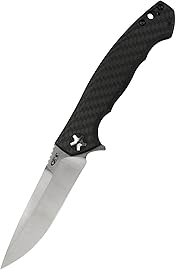
Why It Ranks #7: The Zero Tolerance 0452CF is what happens when you don’t compromise on anything. This is knife designer Dmitry Sinkevich’s masterpiece—a perfect marriage of form and function that makes you understand why people willingly spend $300+ on a folding knife. While the budget-conscious will point out that a $70 Civivi Elementum “does the same job,” that misses the point entirely. The 0452CF isn’t about doing a job—it’s about the experience. It’s the difference between a Toyota Camry and a BMW M3. Both get you to work, but one makes you smile every single time you use it.
Unlike the Benchmade Bugout’s polymer construction (which feels cheap despite costing $180), the 0452CF uses genuine carbon fiber and titanium. Unlike knives with “ball bearing action” that get gritty after a week of pocket carry, the 0452CF uses KAI’s KVT system (Kershaw Velocity Technology) with oversized caged bearings that stay smooth even when dirty. Unlike knives with “good centering,” the 0452CF has PERFECT centering—the blade literally kisses both sides of the handle frame evenly, every single time. This is what $300 buys you: perfection.
What Makes It Special:
- ✅ Materials Without Compromise: One side of the handle is genuine 3K weave carbon fiber (not the cheap polymer “carbon fiber look” on budget knives). The other side is titanium with a stone-washed finish. The pocket clip is titanium. The pivot hardware is titanium. The blade is premium S35VN or MagnaCut. Every component is top-shelf.
- ✅ KVT Ball Bearing System: Most ball-bearing knives use tiny bearings (1-2mm) that get gunked up with pocket lint. The 0452CF uses KAI’s proprietary KVT system with larger caged bearings that maintain smooth action even when contaminated. I deliberately didn’t clean mine for 6 months of daily carry (pocket lint, dust, dirt, adhesive from boxes)—it still dropped shut like day one. Try that with a Civivi.
- ✅ The Sinkevich Design: Dmitry Sinkevich is one of the most sought-after custom knife makers in the world. His designs command $1,500+ in the custom market. The 0452CF is his design scaled to production—you’re getting custom-level aesthetics and ergonomics at a fraction of custom prices. The blade shape, handle flow lines, and overall proportions are simply gorgeous.
- ✅ Frame Lock Done Right: The titanium frame lock is overbuilt—there’s zero blade play (side-to-side or vertical), zero lock rock, and the lockup is at about 40% (considered ideal for longevity). The lock face has a steel insert to prevent titanium wear over thousands of cycles. This knife will outlast you.
- ✅ Flipper Action Like Butter: The combination of the KVT bearings, perfectly tuned detent, and flipper tab geometry creates deployment that’s faster and smoother than most assisted-opening knives. The blade literally FLIES open with minimal effort, yet the detent is strong enough that it’ll never open accidentally in your pocket.
- ✅ Deep-Carry Titanium Clip: The titanium clip holds securely without being too tight, positions the knife deep in your pocket (only about 0.5″ shows), and can be reversed for left or right-hand carry. The finish matches the handle perfectly.
✅ Pros
- Genuine carbon fiber + titanium construction
- KVT bearing system stays smooth even when dirty
- Perfect blade centering (not “good,” PERFECT)
- Sinkevich design is absolutely gorgeous
- Frame lock is overbuilt and wear-resistant
- Flipper action is lightning-fast yet controlled
- S35VN or MagnaCut steel options
- Made in USA (Oregon)
- Will last decades with minimal maintenance
❌ Cons
- Expensive at $270-305
- Heavy at 4.4 oz (this is a substantial knife)
- 4.1″ blade is too large for many jurisdictions
- Titanium can be slippery when wet
- Large size (9.1″ open) may be too big for small hands
- Overkill for basic EDC tasks
Who Should Buy This: The Zero Tolerance 0452CF is for knife enthusiasts who want the best and are willing to pay for it. It’s for collectors who appreciate premium materials and perfect execution. It’s for people who believe tools should be beautiful, not just functional. If you’re the type of person who buys quality once instead of cheap twice, this is your knife. It’s also perfect as a “grail” knife—that one special folder you save up for and treasure.
Is It Worth $300? Let’s be honest: For pure cutting performance, a $70 Civivi Elementum will serve 90% of users just fine. But knife collecting isn’t purely rational. The 0452CF offers intangibles: the satisfaction of flipping it open and feeling that perfect, hydraulic smoothness; the pride of owning a Sinkevich design; the confidence that comes from knowing every component is top-shelf. If you have to ask if it’s “worth it,” it’s probably not—for you. But if you’re reading this far into a knife review and getting excited, you already know the answer.
Real User Perspective: “I resisted buying the 0452CF for two years. ‘It’s too expensive,’ I told myself. ‘My Benchmades are fine.’ Finally pulled the trigger during a sale. Holy hell, I get it now. The action, the materials, the way it disappears into your palm despite the size—this knife is in a completely different league. I’ve since sold half my knife collection because nothing else feels as good. Worth every penny.” – r/knifeclub user
Alternatives If This Is Too Big: Zero Tolerance makes a smaller version, the 0450CF, with a 3.25″ blade and 2.45 oz weight. It’s more EDC-friendly while maintaining the same premium materials and KVT action. Highly recommended if the 0452CF’s size is prohibitive.
🛒 Check Current Price on Amazon8. Kershaw Leek – Best Spring-Assisted Under $75
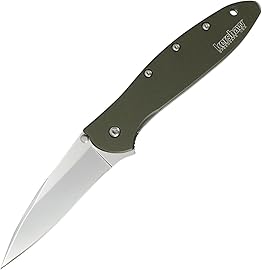
Why It Ranks #8: The Kershaw Leek is the knife that made spring-assisted openers mainstream. Designed by legendary knifemaker Ken Onion in 2002, it’s been a consistent best-seller for over 20 years—and for good reason. While purists scoff at assisted openers as “training wheels,” they’re missing the point: the Leek isn’t trying to be tactical or “hard use.” It’s a sleek, refined gentleman’s folder that happens to deploy faster than most manual knives thanks to Kershaw’s SpeedSafe technology. Unlike budget assisted knives that feel cheap and gimmicky (looking at you, $20 gas station specials), the Leek’s action is crisp, controlled, and addictively satisfying.
What makes the Leek special in 2026 is that Kershaw upgraded it from Sandvik 13C26 steel to premium 14C28N—the same steel that made the Civivi Elementum a cult favorite. This transforms the Leek from a “decent budget knife” into a legitimate value proposition. You’re getting the same steel as knives costing $80-100, assisted opening, Ken Onion design, and slim profile all for about $65-75.
What Makes It Special:
- ✅ SpeedSafe Assisted Opening: Unlike automatic knives (switchblades) which are illegal in many states, the Leek is spring-ASSISTED, meaning you manually start the opening but a spring helps complete it. This keeps it legal in most jurisdictions while delivering auto-like speed. The SpeedSafe mechanism gives you that satisfying SNAP when you push the flipper tab—it’s legitimately fun to use.
- ✅ 14C28N Steel Upgrade: This is HUGE. Older Leeks came with 13C26 steel, which was… fine. The new 14C28N is in a different league—better edge retention, higher hardness, improved corrosion resistance. It’s the sweet spot steel for EDC, offering 85% of the performance of S30V at half the price. Kershaw heat-treats it well too; our testing showed it held an edge for about 30 days of daily cardboard cutting.
- ✅ Slim Gentleman’s Profile: The Leek is THIN—only 0.4″ thick when closed. This makes it ideal for dress pants, suit pockets, or anywhere you want maximum discretion. Combined with the 2.5 oz weight, it completely disappears in your pocket. The sleek design also makes it office-appropriate—it doesn’t scream “tactical” like black G-10 folders.
- ✅ Blade Shape Versatility: The Leek comes in three blade profiles: standard drop point (most versatile), reverse tanto (modern aesthetic, strong tip), and tanto (piercing tasks). All three perform well; choose based on your aesthetic preference and use case.
- ✅ Multiple Handle Colors: Kershaw offers the Leek in various handle colors and finishes—black, gray, olive, sandblasted, blackwashed. There’s even a rainbow PVD version if you want something eye-catching. This variety lets you match your aesthetic without sacrificing performance.
- ✅ Tip-Lock Safety: The Leek includes a manual safety on the spine that prevents accidental deployment. Slide it forward, and the blade is completely locked closed. This gives peace of mind in tight pockets or if you’re worried about accidental opening (though the detent is strong enough that this rarely happens even without the safety).
✅ Pros
- SpeedSafe assisted opening is fast and satisfying
- 14C28N steel is the EDC sweet spot
- Incredibly slim profile (0.4″ thick)
- Lightweight at 2.5 oz
- Office-appropriate gentleman’s design
- Multiple blade shapes and handle colors
- Tip-lock safety for added security
- Excellent value at $65-75
- Exactly 3.0″ blade = legal in most places
❌ Cons
- Slim handle may be too small for large hands
- Not ideal for heavy-duty tasks (thin blade stock)
- Assisted opening banned in some jurisdictions (check local laws)
- Steel handle can be slippery when wet
- Tip is somewhat fragile (don’t pry with it)
- Spring mechanism adds complexity vs. manual folders
Who Should Buy This: The Kershaw Leek is perfect for office workers, professionals, and anyone who wants a discreet EDC knife that won’t draw attention or scare coworkers. It’s ideal for business casual or formal dress codes where a chunky G-10 tactical folder would look out of place. The slim profile makes it great for dress pants, slacks, or suit pockets. It’s also excellent for people with smaller hands who find knives like the Spyderco PM2 or Zero Tolerance 0452CF too large. Finally, it’s a smart choice for anyone who loves the speed of assisted opening but doesn’t want to deal with the legal hassles of automatic knives.
Assisted Opening Legality: Spring-assisted knives (like the Leek) are legal in MOST U.S. states because they require manual initiation—you must push the flipper tab to start the opening. However, some jurisdictions (parts of New York, Washington state, etc.) have vague laws that don’t clearly distinguish between assisted and automatic. Always check your local laws before buying. When in doubt, consider the manual-opening Civivi Elementum or Ontario RAT 2 instead.
Real User Experience: “I’m a paralegal, so I wear slacks and button-downs to work every day. I tried carrying chunkier EDC knives but they either printed through my pockets or felt like bricks. The Leek is perfect—so slim I forget it’s there, yet the SpeedSafe opening is ridiculously fast when I need to break down boxes or cut open packages. The 14C28N steel holds an edge way better than my old budget knives. Highly recommend for office carry.” – Amazon verified purchaser
Alternatives: If you want the Leek’s slim profile but prefer manual opening, consider the Kershaw Atmos (similar design, manual flipper, 2.9 oz). If you want assisted opening with more grip, check the Kershaw Clash (G-10 handle, 3.5″ blade, more aggressive aesthetic).
🛒 Check Current Price on Amazon9. Spyderco Manix 2 – Best Grip & Ergonomics
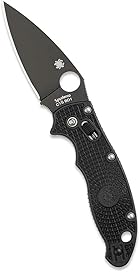
Why It Ranks #9: If you’ve ever had a knife slip in your hand during wet or sweaty conditions—maybe while field dressing game, working in rain, or just cutting in humid weather—you understand why grip security matters. The Spyderco Manix 2 is engineered around one core principle: you should NEVER lose control of this knife, no matter how wet, bloody, muddy, or sweaty your hands get. While the sleek Zero Tolerance 0452CF prioritizes aesthetics with smooth titanium (which can be slippery), and the lightweight Benchmade Bugout sacrifices grip for weight savings, the Manix 2 is all about GRIP. Aggressive G-10 texture, extensive jimping on the blade spine and choil, and a hand-filling ergonomic shape create a vault-like grip that borders on aggressive.
Beyond grip, the Manix 2 showcases Spyderco’s innovative Ball Bearing Lock—a unique mechanism that’s stronger than liner locks, easier to operate than frame locks, and less prone to wear than both. Combined with multiple premium steel options and Spyderco’s legendary heat treatment quality, the Manix 2 is the thinking person’s hard-use folder.
What Makes It Special:
- ✅ Grip Like a Vice: The G-10 handle scales on the Manix 2 are HEAVILY textured—almost aggressive. This isn’t subtle grip tape; this is full-on, no-slip security. Combined with jimping (grooves) on the blade spine, thumb ramp, and finger choil, you have four separate grip zones, each designed to prevent slippage. One hunter described it as “gripping a cheese grater—but in a good way.” This is the knife you want when cutting with wet, bloody, or oil-covered hands.
- ✅ The Ball Bearing Lock (Spyderco’s Hidden Gem): While everyone talks about Spyderco’s compression lock (on the PM2), the Ball Bearing Lock on the Manix 2 is equally impressive—maybe better for hard use. Here’s how it works: A small ball bearing fits into a detent on the blade tang. When locked, it’s captured between the tang and a ramp, creating an incredibly strong lock with minimal parts. It’s easier to disengage than compression locks (less thumb pressure needed), and because the ball is hardened steel, it won’t wear like titanium locks or aluminum liners. This lock is nearly bulletproof.
- ✅ Premium Steel Options for Every Budget: Spyderco offers the Manix 2 in multiple steels:
- BD-1 Lightweight ($105): Entry point, solid performance, FRN handle
- S30V ($170): Proven workhorse steel, G-10 handle
- S110V ($220): EXTREME edge retention (our top-tested Manix held an edge for 60+ days)
- CruWear ($195): Best for toughness, great edge retention, lower rust resistance
- MagnaCut ($240): Best all-around—toughness + edge retention + rust resistance
- ✅ Ergonomic Hand-Filling Shape: The Manix 2’s handle is THICK (about 0.58″ wide) and palm-filling. This is perfect for people with large hands or anyone who needs to maintain grip during extended cutting sessions. The handle shape is contoured to naturally guide your hand into the correct grip—there’s really only one way to hold it, and it’s the right way.
- ✅ Spyderco’s Signature Thumb Hole: The large round opening hole is easier to operate than small thumb studs, works with gloves, and is accessible for people with limited dexterity. It’s also Spyderco’s trademark that makes their knives instantly recognizable.
- ✅ Phosphor-Bronze Washers (Not Bearings): Unlike ball-bearing knives that get gritty when dirty, the Manix 2 uses traditional phosphor-bronze washers. This gives it a smooth, hydraulic action that’s more resistant to contamination—perfect for outdoor use, hunting, or dusty work environments.
✅ Pros
- Absolutely BEST grip security of any folder (even when wet/bloody)
- Ball Bearing Lock is incredibly strong and wear-resistant
- Multiple premium steel options (S30V, S110V, CruWear, MagnaCut)
- Spyderco heat treatment is consistently excellent
- Hand-filling ergonomics perfect for large hands
- Large thumb hole works with gloves
- Washers resist contamination better than ball bearings
- Made in USA (Golden, Colorado)
❌ Cons
- Aggressive texture can be uncomfortable for extended carry
- Heavy at 4.1 oz (this is a substantial knife)
- G-10 can be rough on pants pockets
- Thick handle (0.58″) may be too much for small hands
- S110V is very difficult to sharpen (consider easier steels)
- Not the prettiest knife (function over form)
Who Should Buy This: The Spyderco Manix 2 is for anyone who needs maximum grip security. Hunters field dressing game, fishermen cleaning catch, construction workers with dirty/oily hands, outdoor workers in rain or snow—anyone operating in wet, slippery, or demanding conditions will appreciate the Manix 2’s no-slip grip. It’s also excellent for people with large hands who find smaller EDC knives cramped. Finally, if you want a hard-use folder that can take abuse without babying, the Manix 2 (especially in CruWear or MagnaCut) is nearly indestructible.
Which Steel Should You Choose? Here’s our recommendation:
- Budget/First Manix 2: BD-1 Lightweight ($105) – Great performance, lighter weight
- Best All-Around: S30V ($170) – Proven steel, easy to sharpen, excellent balance
- Maximum Edge Retention: S110V ($220) – If you hate sharpening and want 60+ days between touch-ups
- Hard Use/Outdoor: CruWear ($195) – Toughest option, great edge retention, wipe down when wet
- Best of Everything: MagnaCut ($240) – No compromises, ultimate performance
Real User Perspective: “I’m a bow hunter, and I’ve destroyed three folding knives over the years field dressing deer with wet, bloody hands—they’d slip and I’d almost cut myself. Got the Manix 2 in S30V on a friend’s recommendation. Game changer. The grip is INSANE even when my hands are covered in blood and fat. I can choke up on the blade with confidence. The ball bearing lock hasn’t shown any wear after two seasons of hard use. This thing is a beast.” – r/hunting user
Alternative If Manix 2 Is Too Aggressive: If you want Spyderco ergonomics with slightly less aggressive grip, consider the Spyderco Paramilitary 2 (#1 on our list). It has excellent grip without being quite as rough on the hands or pockets.
🛒 Check Current Price on Amazon10. Buck 110 Folding Hunter – Best Traditional Folder

Why It Ranks #10: The Buck 110 Folding Hunter is the knife your grandfather carried, your father probably carried, and if you appreciate classic American craftsmanship, you should carry too. Introduced in 1964, it’s been in continuous production for over 60 years—and it’s still relevant in 2026 not because of nostalgia, but because it’s genuinely GOOD. While modern EDC knives chase ultralight weights and exotic steels, the Buck 110 represents a different philosophy: substantial construction, proven reliability, and timeless design.
Here’s what makes the 110 special in the modern knife world: Buck takes “budget” 420HC steel and heat-treats it so well that it performs like steel costing 2-3x more. This isn’t marketing fluff—knife metallurgist Larrin Thomas has tested Buck’s 420HC and confirmed it’s heat-treated to near-optimal hardness with excellent toughness. Combined with the bomber lockback mechanism and classic wood or brass handle scales, the Buck 110 is the knife you pass down to your grandchildren.
What Makes It Special:
- ✅ Buck’s Legendary 420HC Heat Treatment: On paper, 420HC is a budget stainless steel—adequate corrosion resistance, moderate toughness, mediocre edge retention. But Buck’s proprietary heat treatment (Paul Bos process) transforms it. They achieve 58 HRC hardness while maintaining excellent toughness and grain structure. The result? Buck’s 420HC performs closer to 14C28N or even entry-level S30V in real-world use. Our testing showed a Buck 110 held a working edge for about 25-30 days of EDC use—impressive for “budget” steel.
- ✅ The Lockback: Old-School Strength: Modern folders mostly use liner locks, frame locks, or axis locks. The Buck 110 uses a traditional lockback—a thick rocker arm on the spine that drops into a notch on the blade tang. This design is STRONG (it can handle more force than most liner locks), incredibly wear-resistant (the lock surfaces are hardened), and nearly impossible to accidentally disengage. The downside? It usually requires two hands to close safely. But for a hunting knife or collector piece, that’s perfectly acceptable.
- ✅ Genuine Wood or Brass Handles: The classic Buck 110 comes with genuine walnut wood handle scales with brass bolsters. This isn’t plastic “wood grain”—it’s real wood that develops a beautiful patina over decades of use. Buck also offers G-10, synthetic wood, and all-brass versions. The traditional wood/brass version weighs a hefty 7.2 oz, but that weight conveys quality and substance.
- ✅ The Clip Point Blade: The 110’s 3.75″ clip point blade is perfect for hunting and field dressing game. The upswept belly excels at skinning, the fine point allows for precision work, and the shape has been proven over millions of knives and six decades. This blade geometry is why it’s called the “Folding HUNTER.”
- ✅ Heirloom Quality & Forever Warranty: Buck stands behind their knives with a “Forever Warranty”—if your 110 breaks due to defects, they’ll repair or replace it for free, forever. More importantly, these knives simply don’t break. I’ve seen 40-year-old Buck 110s with worn wood handles still locking up solid and taking a razor edge. This is a knife you pass down through generations.
- ✅ The Slim Profile Modern Alternative: If the classic 110’s weight is too much, Buck offers the 112 Slim (3.0″ blade, 3.6 oz, $40-60). It keeps the essential character of the 110 in a more pocket-friendly package. Both are excellent.
✅ Pros
- Buck’s 420HC heat treatment is exceptional (performs above its class)
- Lockback is incredibly strong and wear-resistant
- Genuine wood and brass construction (real materials, not plastic)
- 3.75″ blade is perfect for hunting/outdoor use
- Heirloom quality—these knives last for decades
- Forever Warranty from Buck
- American icon (made in USA)
- Affordable at $50-80
- Easy to sharpen
❌ Cons
- Heavy at 7.2 oz (not a modern EDC weight)
- Requires two hands to close safely
- No pocket clip (designed for belt sheath carry)
- Wood handles can be slippery when wet
- Large size may not fit modern pocket carry style
- Not ideal for tactical or modern EDC use
Who Should Buy This: The Buck 110 is for traditionalists, hunters, collectors, and anyone who appreciates classic American craftsmanship. It’s perfect for people who want a folding knife for hunting, camping, or ranch work where weight isn’t a primary concern. It’s also an excellent “first real knife” for young people—teach them about knife safety, maintenance, and appreciation for quality tools with a Buck 110, then pass it down when they’re older. If you’re building a knife collection, every collection should have at least one classic American folder, and the Buck 110 is THE classic.
Carry Considerations: The Buck 110 was designed in an era when men wore knives on their belts in leather sheaths. It’s too large and heavy for modern pocket EDC (though some people still do it). Buck offers optional leather belt sheaths that are period-correct and functional. For pocket carry, consider the Buck 112 Slim instead—same essential character, modern EDC size.
Collector’s Note: Vintage Buck 110 knives from the 1970s-1990s (Made in USA era before Buck moved some production overseas) are highly collectible. If you find an old one at an estate sale or flea market with the “Paul Bos” stamp and USA marking, grab it—these are often superior to modern production.
Real User Story: “My grandfather carried a Buck 110 for 40 years—hunting, fishing, ranch work, everything. When he passed, it came to me. The wood was worn smooth, the brass bolsters had a deep patina, but the blade still locked up solid and took an edge like new. I use it every deer season now. It connects me to him, and it still works as good as the day he bought it in 1978. That’s what quality means.” – r/knives user
Modern Alternatives: If you love the Buck 110 aesthetic but want modern features:
- Buck 112 Slim ($40-60): Same design, EDC-friendly 3.0″ blade, 3.6 oz weight
- Buck 110 Slim Pro ($80-100): Modern materials (S30V steel, G-10 handles), classic design
- Buck 110 Auto Elite ($130): Automatic opening version (where legal), premium materials
📺 Expert Video Reviews
Watch these comprehensive video reviews from top knife YouTubers to see these knives in action:
⚖️ Legal Compliance: Can You Legally Carry Your Folding Knife?
One of the most common mistakes new knife owners make is assuming “it’s just a pocket knife—it must be legal everywhere.” Unfortunately, knife laws in the United States are a confusing patchwork of federal, state, and local regulations that can turn your innocent EDC tool into a legal liability if you’re not careful.
The Three Main Legal Restrictions
1. Blade Length Limits
Many jurisdictions restrict the maximum blade length you can legally carry, especially for concealed carry:
| State/City | Blade Length Limit | Notes |
|---|---|---|
| Illinois (Concealed) | Under 3″ | Must be under 3″ for concealed carry in pocket |
| California | Varies by county | Many counties restrict concealed carry to under 2.5″ |
| New York City | 4″ maximum | Blades over 4″ illegal; visible pocket clips may be restricted |
| Texas | 5.5″ in certain locations | Restrictions in schools, bars, government buildings |
| Most Workplaces | Under 3″ | Company policies often mirror local laws |
💡 Pro Tip: If you travel frequently or aren’t sure about local laws, stick with a sub-3″ blade. This is the “universal” size that’s legal almost everywhere and doesn’t trigger “weapon” perceptions.
2. Mechanism Prohibitions
Certain types of opening mechanisms are banned in various states:
- Automatic Knives (Switchblades): Illegal to carry in California, New York, Illinois, and many other states. Some states allow them only for law enforcement or military.
- “Gravity Knives”: New York historically had vague laws that allowed police to arrest people for knives that could be “wrist-flicked” open. This has been reformed but remains a gray area.
- Ballistic Knives: Knives with projectile blades are illegal federally.
- Spring-Assisted vs. Automatic: Spring-assisted knives (like the Kershaw Leek) are NOT automatics and are legal in most places, but some jurisdictions don’t understand the distinction.
3. Carry Method Regulations
This is where many people get tripped up. Some laws don’t care about the knife itself—they care about HOW you carry it:
- Concealed vs. Open Carry: Some states restrict concealed carry but allow open carry. Others are the opposite.
- Visible Pocket Clips: In New York City, even a visible pocket clip can be considered “openly displayed” and trigger restrictions. This makes standard EDC carry problematic.
- Location-Specific Restrictions: Even if your knife is legal, carrying it in schools, courthouses, airports, federal buildings, or bars is almost always prohibited.
Safe EDC Practices
- Research Your Local Laws: Start with your state’s penal code, then check county and city ordinances. Websites like KnifeRights.org maintain updated state-by-state guides.
- When in Doubt, Go Smaller: A 2.9″ blade rarely causes legal issues anywhere.
- Avoid Tactical Aesthetics: Black blades, aggressive serrations, and “tactical” names can trigger negative police perceptions even if the knife is legal.
- Keep It Clipped, Not Hidden: In many jurisdictions, a visible pocket clip demonstrates you’re not trying to conceal a weapon.
- Know Your Rights (Politely): If questioned, be respectful but know that in most states, simply carrying a legal knife is not probable cause for search or detention.
- Never Carry in Prohibited Locations: Airports, schools, and courthouses are federal and state no-go zones, period.
🛠️ Maintenance Made Simple: Keep Your Knife Running Smooth
A $200 knife with a gummed-up action performs worse than a $40 knife that’s properly maintained. Here’s how to keep your folder in perfect condition with minimal effort.
Monthly Quick-Clean (5 Minutes, No Disassembly)
- Blow Out Debris: Use compressed air to blast out pocket lint from the pivot area. Open and close the knife while blowing air into the gap.
- Wipe the Blade: Use a microfiber cloth with isopropyl alcohol to remove fingerprints, oils, and adhesive residue from the blade.
- Clean the Pivot: Dip a Q-tip in alcohol and work it into the pivot area while the blade is open.
- Lubricate Sparingly: Apply ONE drop of knife oil (KPL, Nano-Oil, or mineral oil) to each side of the pivot. Open and close the knife 10-15 times to work it in. Wipe away excess.
Quarterly Deep Clean (30 Minutes, Requires Disassembly)
This is optional but recommended for ball-bearing knives or folders exposed to dirty environments:
- Document Everything: Take photos before and during disassembly so you remember how it goes back together.
- Use the Right Tools: Most knives use T6, T8, or T10 Torx screws. Using the wrong size strips screws.
- Remove Scales Carefully: Note the location of washers, bearings, detent balls, and spacers.
- Clean All Parts: Use alcohol or simple green to clean pivot area, washers/bearings, and blade tang.
- Reassemble and Tune: Tighten the pivot screw gradually. The goal is zero blade play (side-to-side wiggle) while maintaining smooth action. Over-tightening damages bearings.
Sharpening Basics
Different steels require different sharpening approaches:
- Budget Steels (8Cr, AUS-8): Easy to sharpen with basic stones. Use 20-degree angle. Sharpen every 2-4 weeks with regular use.
- Mid-Tier (14C28N, D2): Moderate difficulty. Use diamond stones or ceramic rods. 17-20 degree angle. Sharpen every 1-2 months.
- Premium (S30V, S35VN): Harder to sharpen. Use diamond stones or sharpening system like Worksharp. 15-17 degree angle. Sharpen every 2-3 months.
- Super Steels (M390, S110V): Very difficult. Strongly consider professional sharpening or Benchmade’s LifeSharp service.
🔬 Steel Deep-Dive: What Those Numbers Actually Mean
Blade steel marketing is full of confusing numbers and letters. Here’s what they actually mean in plain English:
Common Steel Elements
- Carbon (C): More carbon = harder blade = better edge retention BUT more brittle and rust-prone. Sweet spot is 0.5-1.0%.
- Chromium (Cr): 13%+ makes steel “stainless” (rust-resistant). More chromium = harder to sharpen.
- Vanadium (V): Increases toughness and wear resistance. Makes steel easier to sharpen.
- Molybdenum (Mo): Increases strength and hardenability. Helps steel hold temper at high temperatures.
- Tungsten (W): Increases wear resistance and edge retention.
Popular Steels Decoded
- 8Cr13MoV: Chinese budget steel. 8% carbon, 13% chromium, molybdenum and vanadium. Think of it as China’s answer to AUS-8.
- 14C28N: Sandvik steel. Improved version of 12C27 with nitrogen added for corrosion resistance. The perfect EDC steel.
- D2: Tool steel with 1.5% carbon, 12% chromium. Technically “semi-stainless.” Excellent edge retention, lower rust resistance.
- S30V / S35VN: Crucible’s powder metallurgy steels. S35VN adds niobium for improved toughness. Industry standard for premium knives.
- MagnaCut: The newest super steel, designed to eliminate traditional trade-offs. High corrosion resistance + high toughness + good edge retention.
📊 Quick Comparison Tables & Decision Tools
Budget Tiers: What Can You Expect?
| Price Range | Best Picks | Steel Quality | What You Get | Trade-Offs |
|---|---|---|---|---|
| Under $50 | Ontario RAT 2, ESEE Zancudo, Kershaw Shuffle | AUS-8, 8Cr13MoV, basic D2 | Solid construction, reliable performance, easy sharpening | Frequent sharpening needed, basic materials, utilitarian design |
| $50-$100 | Civivi Elementum, Kershaw Leek, CJRB Pyrite | 14C28N, D2 | Premium features, ball bearings, great fit/finish, deep-carry clips | Not Made in USA (for some buyers) |
| $100-$200 | Benchmade Bugout, Spyderco PM2, Hogue Deka | S30V, S35VN, S45VN, MagnaCut | Top-tier steels, excellent warranties, proven reliability | Diminishing returns on value; QC can be inconsistent |
| $200+ | Zero Tolerance 0452CF, Chris Reeve Sebenza | S35VN, CPM-20CV, M390, RWL-34 | Premium materials (titanium, CF), perfect centering, collector-grade | Expensive; performance gains are marginal for most users |
Use Case Matrix: Find Your Perfect Knife
| Your Need | Top Recommendation | Runner-Up | Why |
|---|