
You mount a shiny new red dot, look through it at the range, and instead of a crisp dot you see something that looks like a drunk firefly. Congratulations — you’ve just discovered astigmatism the expensive way.
You’re in good company, though. Roughly 1 in 3 Americans has some degree of astigmatism, and a 2023 systematic review in Optometry & Vision Science found global rates between 36% and 46% depending on age group. That’s almost half the people at your local range squinting at a blurry blob.
The good news: you don’t have to give up modern optics. You just need the right type. Let’s dig in.
What Astigmatism Actually Does to Your Sight Picture
Astigmatism is a refractive error caused by an irregularly shaped cornea or lens. Instead of bending light to a single point, your eye spreads it — which is why a red dot appears distorted. The optic itself is fine. The distortion happens entirely inside your eye.
A standard red dot projects an LED onto a curved lens. Your eye then tries to focus that reflected light. If your cornea isn’t perfectly round, the result is chaos. Common distortions include:
- Starbursts — the dot radiates spikes in multiple directions
- Smearing — the dot stretches into a comma or comet shape
- Blooming — the dot appears fuzzier and much larger than it should
- Double dots — you see two overlapping aiming points instead of one
Importantly, astigmatism varies from person to person. Two shooters with the same diagnosis can see the same optic completely differently. What works for your range buddy may still look like fireworks to you. That’s not a bug — it’s just how individual eye anatomy works.
The 4 Best Optic Types for Astigmatism (Ranked)
Not all optics deal with astigmatism the same way. Here’s how each type performs — ranked from most to least astigmatism-friendly:
1. Prism Scopes — The Clear Winner for Most Shooters

Prism scopes use an etched reticle — meaning the crosshair is physically carved into the glass, not projected. Your eye sees a real, tangible line. Astigmatism cannot distort what’s carved in glass the same way it distorts an LED beam.
According to experts at the NRA’s Shooting Illustrated, micro-prism sights have become the go-to recommendation for shooters with astigmatism. The adjustable eyepiece on most prism scopes means you can dial the focus to match your specific eyes — something reflex sights simply can’t do.
✅ Pros
- Etched reticle eliminates LED-based distortion
- Adjustable eyepiece fits your exact vision
- Reticle stays visible even if battery dies
- Compact options available (Primary Arms MicroPrism)
❌ Cons
- Fixed magnification (usually 1x–3x)
- Limited eye relief (3–4 inches) — needs correct head position
- Too bulky for pistol-mounted use
2. Holographic Sights (EOTech) — Best for Speed + Clarity
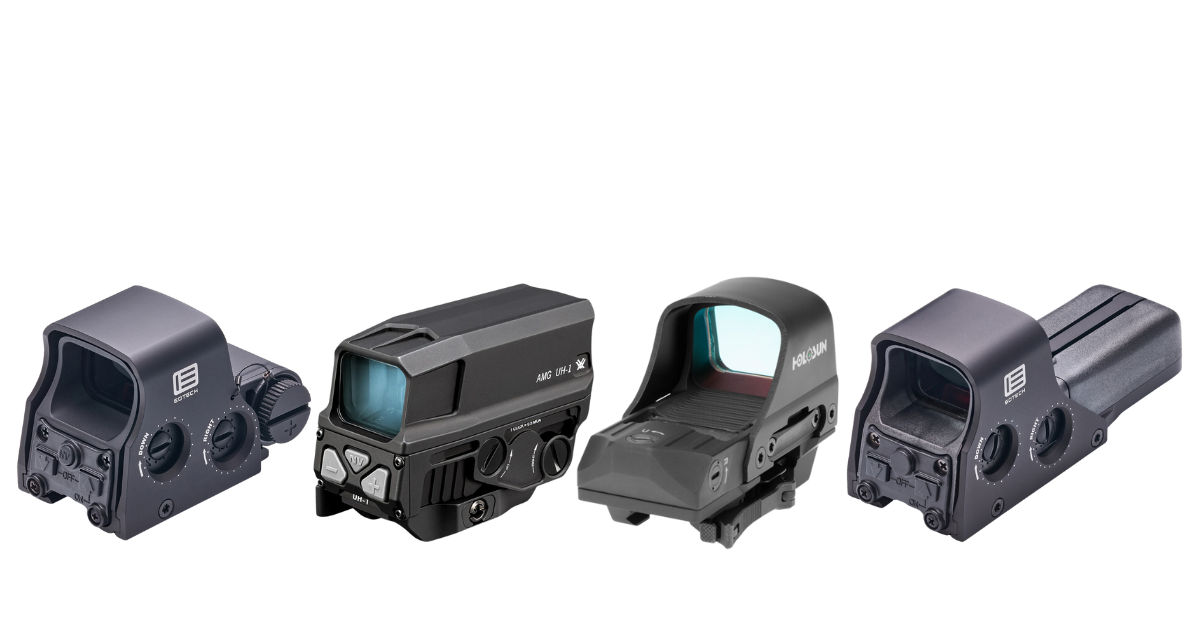
Holographic sights don’t use an LED at all. They use a laser diode to illuminate a hologram etched into the viewing window. The reticle appears to float in the target plane, and because the image is reconstructed from holographic film rather than reflected light, it behaves very differently to an astigmatic eye.
Most astigmatic shooters report cleaner, less distorted reticles with holographic sights than with standard red dots. The team at Pew Pew Tactical — including members who have astigmatism — consistently rate EOTech as the best unmagnified option for this condition.
The EOTech’s 68 MOA ring reticle is also naturally easier to use for astigmatic shooters. A larger reticle element gives your eye a more forgiving reference point compared to trying to center a tiny 1–2 MOA dot.
✅ Pros
- Holographic reticle resists starburst distortion
- Large 68 MOA ring aids fast target acquisition
- Unlimited eye relief
- Night vision compatible (EXPS3)
❌ Cons
- ~1,000-hour battery life vs 50,000 hours for red dots
- Heavy (11.2 oz for EXPS3-2)
- Expensive ($629–$999)
- Historical delamination issues (post-2016 units are improved)
3. Traditional / Variable Magnified Scopes — Reliable Choice for Rifles

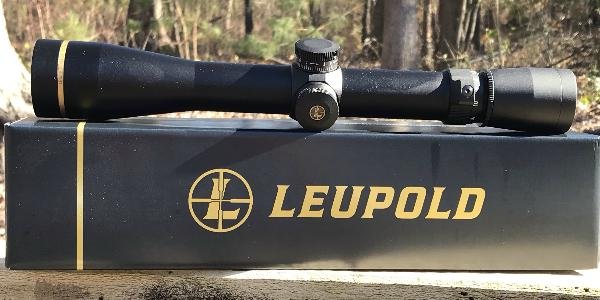
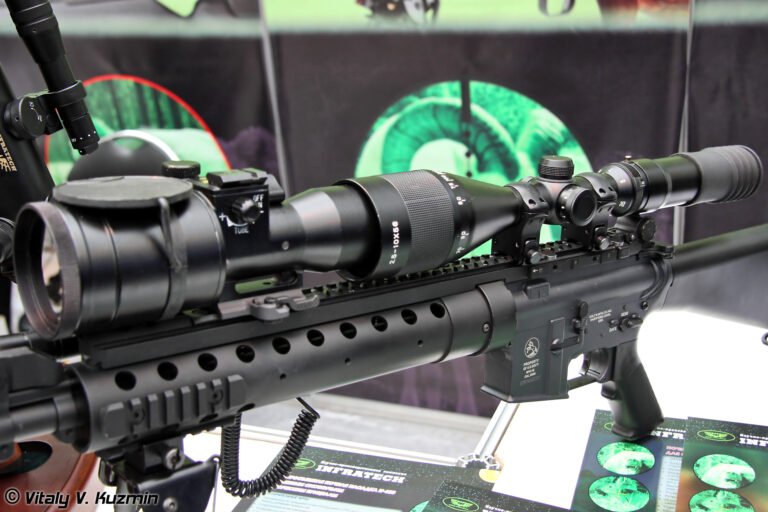
Good news for hunters and long-range shooters: traditional riflescopes are mostly immune to astigmatism problems. The adjustable diopter on most rifle scopes lets you tune the eyepiece to your specific vision. You simply dial until the reticle sharpens.
LPVOs (Low Power Variable Optics) also work well because they combine an adjustable eyepiece with variable magnification. At 1x, you’re close to a red-dot experience but with the option to dial in focus. At higher magnification, even mild astigmatism has little impact on a clean etched reticle.
If you want to explore the best rifle scopes with astigmatism-friendly adjustable eyepieces, our guide to the best rifle scopes for 2025 covers tested options across all budgets.
✅ Pros
- Adjustable diopter corrects for individual vision
- Etched reticles eliminate LED distortion
- Variable magnification for different distances
- Works at any budget level
❌ Cons
- Heavier and longer than red dots
- Slower target acquisition at close range
- Not practical on pistols
4. Red Dot Sights — Possible, with the Right Setup

Standard reflex red dots are the most astigmatism-unfriendly optic type — but they’re not always impossible to use. A few adjustments make a real difference:
- Choose green over red: Green wavelengths scatter less in the human eye. Many shooters with astigmatism report green dots appear noticeably sharper at equivalent brightness settings, according to Primary Arms.
- Go bigger, not smaller: A 6 MOA dot is easier to work with than a 1 or 2 MOA dot. Larger reticle elements (like a 65 MOA circle) give your eye something more forgiving to reference.
- Use enclosed emitters: Closed-emitter designs (like the Holosun 509T or EPS) reduce glare, protect the lens from dust, and minimize additional visual distortions.
- Try high-quality glass: Premium glass coatings reduce internal reflections. Holosun’s glass quality is well-regarded among astigmatic shooters in forums and reviews alike.
Quick Comparison: Optic Types for Astigmatism
| Optic Type | Astigmatism Performance | Battery Life | Best Platform | Price Range |
|---|---|---|---|---|
| Prism Scope | Excellent | Long (LED + works without battery) | Rifle / AR-15 | $150–$500 |
| Holographic (EOTech) | Very Good | ~1,000 hrs (CR123A) | Rifle / Shotgun | $630–$999 |
| LPVO / Variable Scope | Very Good | N/A (no battery for reticle) | Rifle / Hunt | $300–$1,500+ |
| Red Dot (green, large MOA) | Moderate | ~50,000 hrs (LED) | Rifle / Pistol | $100–$400 |
| Red Dot (1–2 MOA, red) | Poor | ~50,000 hrs (LED) | Pistol / Rifle | $80–$600+ |
| Iron Sights | Varies by person | No battery needed | Any firearm | $0–$100 |
Top Optics for Astigmatism in 2025 (By Category)
EOTech EXPS3-2 Holographic Sight
The EXPS3-2 earns its reputation as the top choice for astigmatic shooters. The holographic reticle does not starburst the way LED-based sights do. The 68 MOA ring with two aiming dots covers close-quarters work and mid-range shots in a single package.
Elite military and law enforcement units use EOTech for good reason. The sight is night-vision compatible, features a quick-detach mount, and is waterproof to 33 feet. The main trade-off is ~1,000-hour battery life and a price tag that stings a little. Keep spare CR123A batteries in your range bag — you’ll need them more often than with an LED sight.
- Reticle: 68 MOA circle + 2 aiming dots (50/200-yard holds)
- Weight: 11.2 oz
- Battery: CR123A, ~1,000 hours at setting 12
- NV Compatible: Yes (10 night-vision settings)
Primary Arms SLx 1x MicroPrism
For pure astigmatism clarity, prism scopes with etched reticles are unbeatable. The Primary Arms MicroPrism is compact, lightweight, and features an ACSS reticle that’s etched directly into the glass. There’s no LED projection to distort — just glass and lines.
The adjustable eyepiece means you can fine-tune focus to your specific vision. Even if the battery dies, the black etched reticle remains visible. Multiple shooters with severe astigmatism have described seeing a prism scope clearly for the first time as genuinely emotional — that’s not a sales pitch, that’s shooter feedback from forums and review sites.
- Reticle: Etched ACSS reticle (illuminated + non-illuminated)
- Magnification: Fixed 1x
- Weight: ~7.6 oz
- Eye Relief: ~2.4 inches
Holosun HS510C (Green Dot / Circle)
If you’re committed to a large-frame red dot and have mild astigmatism, the Holosun 510C is as good as it gets in this category. The 65 MOA circle option reduces the focus demand on your eye compared to a tiny 2 MOA dot. Many astigmatic shooters use the circle-only reticle mode as their primary aiming reference.
Holosun’s glass quality is above average for its price range. The solar backup panel means you’ll never be completely without power. Battery life is an almost absurd 50,000 hours — you’ll probably sell the optic before you change the battery. Results vary with astigmatism severity; some shooters see a crisp circle, others still see some distortion.
- Reticles: 2 MOA dot / 65 MOA circle / combo (switchable)
- Colors: Red or green
- Battery: CR2032, ~50,000 hours at setting 6
- Solar failsafe: Yes
- Shake Awake: Yes
Holosun 509T / EPS (Enclosed Emitter)
Pistol-mounted optics for astigmatism are tricky because prism scopes are too large for slides. Your best pistol options are enclosed-emitter red dots, which reduce glare and block dust from contaminating the lens — both of which worsen distortion for astigmatic eyes.
The Holosun 509T and EPS series use enclosed emitter designs with high-quality glass coatings. The 2 MOA dot is still a 2 MOA dot, but the cleaner optical environment makes a noticeable difference. For severe astigmatism on a pistol, the honest answer is that you may need corrective lenses — no pistol red dot fully escapes LED physics.
- Emitter type: Enclosed (protected from dust/debris)
- Reticle: 2 MOA dot + 32 MOA circle (multi-reticle)
- Available: 509T (Picatinny) / EPS (pistol direct mount)
- Shake Awake: Yes
🎯 Quick Pick Summary
Rifle + severe astigmatism: Primary Arms MicroPrism (prism) or EOTech EXPS3 (holographic)
Rifle + mild astigmatism: Holosun 510C (green circle) or any quality LPVO with adjustable diopter
Pistol + astigmatism: Enclosed-emitter red dot (Holosun 509T / EPS), green dot preferred
Hunting rifle: Traditional magnified scope with adjustable eyepiece — astigmatism barely affects you here
Practical Tips That Actually Work at the Range
Choosing the right optic type is step one. These habits make any optic perform better with astigmatism:
- Lower the brightness first. Use the lowest setting that still gives you a clear aiming point in your current lighting. Settings 4–6 usually work well for daylight. Higher brightness blooms the dot and worsens starburst.
- Focus on the target, not the reticle. This is how red dots are meant to be used. Keep both eyes open, focus on the target, and let the dot float in your peripheral vision. The dot will look crisper this way.
- Try green before giving up on red dots. If your current red is a mess, try a green-emitter version of the same sight. Green scatters less in the human eye, and many astigmatic shooters find it noticeably sharper.
- Wear your corrective lenses. Multiple LEO users with astigmatism report that simply wearing properly prescribed glasses eliminates most dot distortion. Don’t shoot without your lenses if you have them.
- Test before you buy. Visit a local gun store or shooting range and ask to look through different optic types with your own eyes. What fixes one person’s astigmatism may do nothing for yours. There is no universal answer — only a personal one.
- Ask your eye doctor for help. Some shooters bring their red dot to their optometrist appointment to check how their prescription interacts with it. Corrective lens technology keeps improving, and a targeted prescription can make even a regular red dot usable.
EOTech Holographic vs. Prism Scope — Which Should You Pick?
These two optic types are the top choices for serious astigmatism. Here’s how they split by use case:
| Factor | EOTech EXPS3 | Primary Arms MicroPrism |
|---|---|---|
| Astigmatism clarity | Very Good (holographic laser) | Excellent (etched reticle) |
| Target acquisition speed | Fastest (large window + ring) | Fast (wide FOV at 1x) |
| Battery life | ~1,000 hrs (CR123A) | Long + works without battery |
| Weight | 11.2 oz | ~7.6 oz |
| Price | ~$749 | ~$220 |
| Night vision compatible | Yes (EXPS3) | Some models yes |
| Works with magnifier | Yes (pairs with EOTech G33) | Fixed magnification only |
| Best for | CQB, duty use, NVG | General rifle use, budget-focused |
The bottom line: if budget is a concern, the prism scope wins. If you need CQB speed, night vision capability, and can accept the battery trade-off, the EOTech is worth every penny for astigmatic eyes.
Frequently Asked Questions
Final Verdict: What Should You Actually Buy?
Here’s the straight answer, without hedging:
- Rifle, severe astigmatism, on a budget: Primary Arms SLx 1x MicroPrism. Etched reticle, adjustable eyepiece, under $250. Hard to beat.
- Rifle, severe astigmatism, no budget limit: EOTech EXPS3-2. The holographic reticle is genuinely different in how it interacts with astigmatic eyes. It’s expensive and battery-hungry, but it works.
- Rifle, mild astigmatism: Holosun 510C (green, circle reticle). 50,000-hour battery, solar backup, and crisp glass at a fair price.
- Pistol, any astigmatism: Holosun 509T or EPS (enclosed emitter, green). Accept that severe pistol astigmatism may need corrective lenses regardless of optic.
- Hunting rifle: Any quality magnified scope with an adjustable diopter. Browse our tested rifle scope recommendations for options across price points.
Before you buy anything, walk into your local gun store, look through several optic types with your own eyes, and trust what you see — not what worked for someone else. Astigmatism is personal. Your solution should be too.
Sources & References
- Zhang et al. (2023). Global prevalence of astigmatism. Optometry & Vision Science. Cited via Cosmic Tactical.
- American Optometric Association — astigmatism statistics cited via multiple optics review sources.
- Pew Pew Tactical (2025). Best Optics for Astigmatism. pewpewtactical.com
- Primary Arms Government Blog (2025). Using a Pistol Red Dot Sight With Astigmatism. blog.primaryarms.com
- NRA Shooting Illustrated (2023). Alternatives to Red Dot Sights for Astigmatic Eyes. shootingillustrated.com
- Scopes Field (2026). Best Red Dot Sights for Astigmatism. scopesfield.com
- GritrSports Blog (2025). Astigmatism Red Dot Sights Guide. blog.gritrsports.com
- Rifle Configurator (2026). Best EOTech Optics. rifleconfigurator.com

Charmaine van Vuuren is a seasoned professional hunter and safari guide turned outdoor gear expert, with over 15 years of experience leading big-game expeditions and wilderness adventures across Southern Africa. That same field-tested expertise now drives every review on TheOutdoorChamp — from hunting gear and survival tools to camping equipment, fishing tackle, and boating accessories. When she recommends a product, it’s because she’s used it in conditions where failure isn’t an option.