
Key Facts at a Glance
- 3 license classes: Technician → General → Amateur Extra
- FCC exam fee: $35 | VEC session fee: ~$15 (varies)
- Technician study time: 10–30 hours
- Passing score: 74% on all three exams
- License valid: 10 years (renewable)
- Minimum age: None (youngest ever: 5 years old)
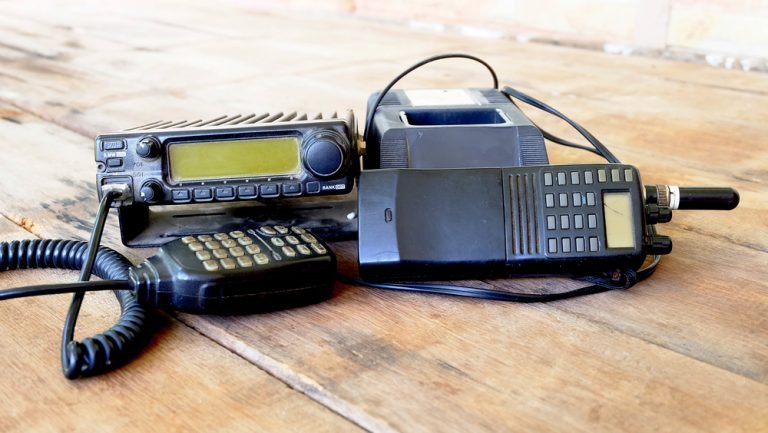
In September 2024, Hurricane Helene carved through western North Carolina. Power lines went down. Cell towers went silent. Roads washed out for weeks. More than 200 people died. When 911 systems went offline in Asheville, it was licensed amateur radio operators — volunteers with handheld radios — who used mountaintop repeaters to coordinate welfare checks, relay insulin requests, and announce when stores reopened.
Less than a year later, during the July 2025 central Texas floods in Kerr and Kendall Counties, ARRL ARES teams activated on Independence Day. Ten licensed hams rode directly with search-and-rescue teams, passing critical communications through areas where cell signals never existed in the first place.
These aren’t historical footnotes. They’re how amateur radio still works — right now, in 2026.
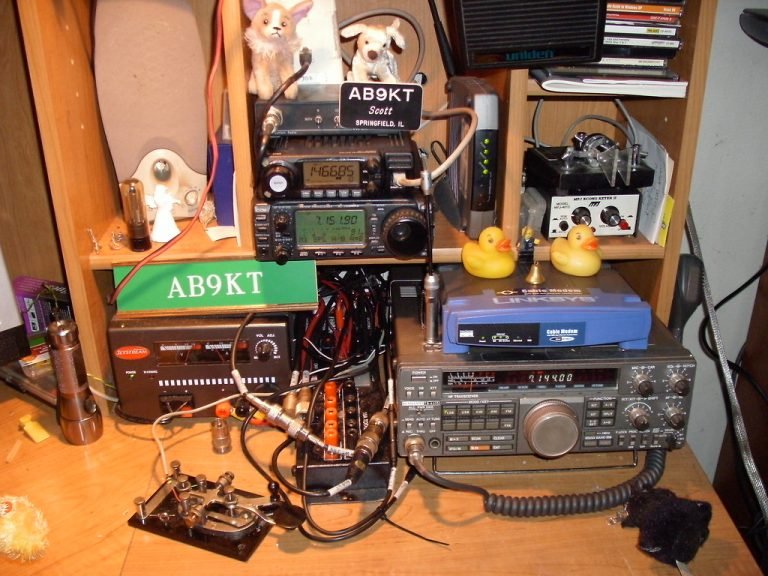
But you don’t have to wait for a disaster. Ham radio is also one of the world’s most technically rich hobbies — a gateway to electronics, global communication, satellite operation, digital modes, and a community of roughly 750,000 active licensed operators in the United States alone. And it all starts with a license.
This guide covers three things: why you legally need a ham radio license (and what happens without one), how to get licensed step by step in 2026, and which of the three license classes is right for your specific goals — whether you’re picking up a radio for the first time or you’ve held a Technician ticket for years and keep hitting the HF wall.
Why Do You Need a Ham Radio License?
The short answer: the FCC (Federal Communications Commission) requires a license to transmit on amateur radio frequencies under Part 97 of the Communications Act of 1934. Anyone may listen — receive signals — for free, with no paperwork required. But the moment you key up a microphone and transmit, you need a license. Here’s why that matters, and what the license actually unlocks.
The Legal Requirement (Part 97)
The FCC regulates amateur radio to prevent interference with emergency services, aviation, military, and other licensed communications. Part 97 of the FCC rules defines the amateur radio service and the conditions under which it operates.
Penalties for unlicensed transmission are real. The FCC has issued fines as high as $17,000 for intentional interference on amateur frequencies. Unauthorized transmissions that jam emergency services or aviation communications can trigger federal enforcement.
“But in a REAL emergency, can I transmit without a license?” Technically, yes — FCC Part 97.405 allows an unlicensed person to use amateur radio in a genuine life-or-safety emergency. But here’s the practical problem: if you’ve never touched the radio, you won’t know how to use it when the disaster hits. What frequency? Which repeater? What mode? What protocol? The license doesn’t just give you permission — it forces you to learn while the stakes are low.
What a License Unlocks
Reason 1 — Frequency Access
Without a license, you’re limited to FRS walkie-talkies (0.5W), GMRS (which itself requires a separate FCC license), or CB radio (short range, max 4 watts, no license needed but severely limited). A ham license opens significantly more spectrum:
- VHF/UHF bands for local and regional communication
- HF bands (3–30 MHz) for intercontinental contacts — General and Extra class
- Up to 1,500 watts of output power on most allocations
- Digital modes: FT8, Winlink, DMR, D-STAR, RTTY, PSK31
- Satellite operation, including the International Space Station
Reason 2 — Emergency Preparedness
The record speaks for itself. During Hurricane Maria in 2017, Puerto Rico lost 98% of conventional communications infrastructure. Ham operators restored lifelines using HF radios and the Winlink digital email-over-radio system, relaying health and welfare messages to the mainland for months.
During Hurricane Helene in 2024, ARES (Amateur Radio Emergency Service) volunteers used Mount Mitchell repeaters to coordinate road closures and relay relief information when internet and telephone systems were completely down. During the July 2025 Texas floods, ARES teams embedded with SAR squads, passed health-and-welfare messages to anxious families, and supported Red Cross shelter operations.
FEMA’s CERT program actively encourages members to get licensed. ARES and RACES (Radio Amateur Civil Emergency Service) only accept licensed operators. To participate in organized emergency response — not just observe it — you need your ticket.
Reason 3 — Community and Events
Licensed amateur operators coordinate communications at the New York and Boston Marathons, handle logistics at the Peachtree Road Race in Atlanta (50+ ham volunteers per event), and participate in ARRL Field Day each June — when 40,000+ operators nationwide set up portable emergency stations as a live disaster preparedness exercise. You won’t find a more practical hobby community.
Reason 4 — Experimentation and Technology
Ham radio is the only communications medium where you can legally build, modify, and experiment with your own transmitters. Part 97 explicitly encourages technical experimentation. This makes it a genuine gateway to electronics engineering, antenna design, digital signal processing, and software-defined radio. Many working RF engineers got their start here.
PRO CORNER: Why Technicians Should Consider Upgrading
If you hold a Technician class license, you have access to all VHF/UHF bands and some limited HF privileges. But here’s what upgrading unlocks:
General class opens 83%+ of all HF band allocations — SSB voice on 80m, 40m, 20m, 15m, 17m, 12m, and 10m. Intercontinental DX contacts become routine rather than exceptional.
Amateur Extra adds exclusive sub-band segments on 80m, 40m, 20m, and 15m — frequencies only Extra class operators can use, which matters enormously on crowded contest weekends and during DX pileups. Extra also grants the right to become a Volunteer Examiner (VE) and administer exams, and provides the smoothest path to international reciprocal operating agreements.
Once licensed at any class, you can also apply for a vanity call sign. Extra class holders have access to shorter, more prestigious 1×2 or 2×1 call signs — formats like W4XY or K9AB.
How to Get Your Ham Radio License Step by Step
Let’s be direct about the Technician exam: it’s not hard. It’s 35 multiple-choice questions. The entire question pool is publicly available before you sit for the test. You need 26 correct answers (74%) to pass. Most people with 10–30 hours of focused study pass on their first attempt.
-
Get Your FRN (FCC Registration Number) — Do This First
Before exam day, you need an FRN from the FCC’s Universal Licensing System (ULS) at fcc.gov. This is how the FCC tracks your license and processes your $35 fee after you pass. Without an FRN in hand at the exam session, some VEC (Volunteer Examiner Coordinator) teams cannot submit your paperwork the same day.
Pro TipRegister your FRN at least 24 hours before your exam session. Some VEC sessions require it at check-in. Create your account at fcc.gov — it takes about five minutes.
-
Choose Your Study Method
Most beginners pass Technician with 10–30 hours of study. Those with prior electronics backgrounds can sometimes pass in as little as one focused weekend. “Ham Cram” one-day sessions exist — and because the entire question pool is published in advance, you can legally memorize answers without deep understanding. But understanding beats memorization the moment you actually get on the air.
According to data from RRRA.org, even on the Extra exam, less than 10% of questions require math calculations — you can miss every math question on the Technician or General exam and still pass comfortably.
Resource Best For Cost Format HamStudy.org Everyone — beginners to upgraders Free Adaptive flashcards + practice tests ARRL License Manuals Thorough learners who want to understand the “why” ~$30 Book / eBook HamRadioPrep.com Visual and video learners Paid course Video + mobile app Gordon West Study Guides Audio learners who prefer printed material ~$25 Book + audio supplements The Technician question pool (2022–2026) contains 411 questions. The General pool (2023–2027) has 454. The Extra pool (from July 1, 2024) has 621. Your exam draws randomly from these published pools — every correct answer is publicly known before you walk in.
Pro Corner — Upgrading From TechnicianIf you’re already Technician and upgrading to General, you only study for and sit the General exam (Element 3). You do not retake Technician. The VEs give full credit for your current license class. Overlap between Technician and General material is significant — plan for 15–30 additional study hours, not a full restart.
-
Find and Register for an Exam Session
Two options:
In-person sessions: Find via ARRL Exam Search or HamStudy.org session listings. Most areas have monthly sessions; metro areas sometimes weekly. Bring government-issued photo ID, your FRN number, payment (~$15 VEC fee, plus the $35 FCC fee paid online after you pass), and a pen. You can attempt multiple license classes at one session for a single $15 VEC fee — pass Technician, then immediately sit for General on the same day.
Online sessions: Available through several VEC organizations including GLAARG. Need a computer with webcam and microphone for remote proctoring. Find sessions at HamStudy.org.
-
Take the Exam
Technician and General exams are 35 multiple-choice questions, each with four answer options. The Extra exam is 50 questions. There’s no official time limit; most people finish in 15–45 minutes. You’re told your score immediately. If you fail, most sessions allow a same-day retake (additional $15 VEC fee). A passing score earns you a CSCE (Certificate of Successful Completion of Examination) — your temporary operating authority while the FCC processes your license.
-
Pay the $35 FCC Fee and Get Your Call Sign
After the VE team submits your paperwork, the FCC emails you instructions to pay the $35 administrative fee at pay.fcc.gov. Most licenses appear in the FCC ULS database the morning after payment. Your call sign is assigned automatically — you can begin transmitting legally as soon as your call sign appears in the database. You do not need to wait for paper — the FCC stopped mailing paper licenses in February 2015.
Your license is valid for 10 years, renewable within the 90 days before expiration via ULS. If it lapses, you have a 2-year grace period to renew without retesting. After that grace period, you lose the call sign and must retest from scratch.
| Item | Cost |
|---|---|
| Study materials | $0–$50 |
| VEC exam session fee | ~$15 |
| FCC administrative fee | $35 |
| Total | $50–$100 |
One of the cheapest hobbies to enter — the license itself costs less than most board games.
Ham Radio License Classes: Which Is Right for You?
The right license depends entirely on what you want to do with ham radio. Don’t aim too low and hit a wall in six months. Don’t aim too high and get discouraged before you start. Here’s the full picture.
| Class | Exam | Questions | Pass Mark | Pool Size | Key Privilege |
|---|---|---|---|---|---|
| Technician | Element 2 | 35 | 26/35 (74%) | 411 questions | All bands above 30 MHz |
| General | Element 3 | 35 | 26/35 (74%) | 454 questions | 83%+ of all HF bands |
| Amateur Extra | Element 4 | 50 | 37/50 (74%) | 621 questions | Full privileges, all bands |
Note: You cannot skip levels. To earn Extra, you must have passed both Technician and General. At a single exam session, you may take all three in sequence — passing each unlocks the next.
Technician Class — The Gateway License
Who it’s for: Complete beginners. Anyone who wants to transmit legally without needing deep radio theory yet. Ideal for preppers, hikers, boaters, and local community communicators.
What you can do: All amateur frequencies above 30 MHz — primarily 2 meters (144–148 MHz) and 70 centimeters (420–450 MHz), which are the workhorses of local ham communication. Also includes: local and regional repeater networks; satellites including the ISS; DMR, D-STAR, and Fusion digital voice modes; EchoLink and IRLP for worldwide contact via internet-linked repeaters. Some limited HF privileges exist on 80m, 40m, and 15m (CW only), plus 10m (CW, SSB voice, and digital). Power up to 1,500 watts on most bands.
What you cannot do as Technician: SSB voice (conversational talking) on most HF bands — no casual worldwide voice contacts on 20m, 40m, or 80m. No access to exclusive Extra-class sub-bands. Cannot become a Volunteer Examiner.
Technician is right for you if:
- You’ve never used ham radio before
- Your primary goal is emergency preparedness and local communication
- You want to get on the air fast and learn as you go
- You want to join ARES/RACES/CERT emergency response teams
- You’re not yet certain ham radio is your long-term hobby
Technician alone won’t be enough if:
- You want to talk to operators across the country or world on voice
- You want serious HF DX (distance) operating on the main bands
- You’re interested in HF propagation, contesting, or chasing DX entities
Seriously consider taking both Technician and General on the same exam day. Study time overlaps significantly between the two exams. You’re already in study mode, the VEC fee is the same whether you sit for one exam or three, and you’ll avoid the frustration of hitting HF limits within your first six months on the air.
General Class — The Operator’s License
Who it’s for: Technicians who want worldwide HF contacts. New operators who already know they want serious HF operating from the start. Anyone focused on emergency communications beyond the local level.
What you gain over Technician: Access to 83%+ of all HF band allocations — SSB voice on 80m, 40m, 30m, 20m, 17m, 15m, 12m, and 10m. Full 1,500W output on General-class allocations. Intercontinental DX contacts without restriction. Digital modes: FT8, Winlink email-over-radio, RTTY, PSK31.
What General requires: Passing Technician first (or on the same day), then a separate 35-question Element 3 exam drawn from a 454-question pool. The technical depth increases — AC circuit concepts, RMS voltage, HF propagation, antenna design basics, ionospheric layers — but, again, less than 10% of exam questions require actual calculations.
General is right for you if:
- You want to talk to operators in other countries on voice
- You want to chase DX (long-distance contacts in other countries)
- You’re interested in emergency communications at a regional or national level
- You’re an existing Technician who keeps hitting the HF wall
Many veteran operators stay at General for years without feeling limited. 83% of the HF spectrum is substantial operating territory. Only consider upgrading to Extra when you want the exclusive sub-bands during contests, Volunteer Examiner privileges, or smoother international reciprocal licensing.
Amateur Extra Class — Full Privileges
Who it’s for: Serious HF operators who want every available privilege. Contesters and DXers who want access to exclusive sub-bands on crowded frequencies. Operators who want to give back by becoming Volunteer Examiners. Anyone who travels internationally with their radio.
What Extra adds over General: Exclusive frequency segments on 80m, 40m, 20m, and 15m where only Extra class operators can transmit — on a busy contest weekend or during a rare DX pileup, those few kilohertz are genuinely valuable. Right to become a VE and administer licensing exams. Prestige and credential recognition. Easier path to international reciprocal operating agreements. Shorter vanity call signs in 1×2 or 2×1 formats.
What Extra requires: Having passed both Technician and General, then a 50-question Element 4 exam from a 621-question pool. Pass mark: 37/50 (74%). You can miss up to 13 questions and still pass. The content is genuinely deep — advanced RF theory, complex antenna systems, digital signal processing — but no single question type dominates the exam.
Extra is right for you if:
- You actively participate in HF contests and DX chasing as a General
- You want to give back to the hobby by becoming a Volunteer Examiner
- You travel internationally and want to operate abroad with minimal paperwork
- You want access to exclusive sub-band segments on busy contest weekends
- You want the most complete set of amateur radio privileges available
Extra may be overkill if:
- You primarily operate local VHF/UHF and are happy there
- You’re content with your General privileges and don’t contest
- You have no plans to travel internationally with your radio
The Decision Tree: Which License to Get First
Ask Yourself Three Questions
Fast-Track Paths by Operator Profile
Profile 1
Start with Technician and add General within six months — the study overlap makes this faster than it sounds. Equipment: a Baofeng UV-5R (under $30) to start, then a mobile VHF/UHF radio, then an HF transceiver. Join your local ARES chapter and check in on the weekly local net. When the grid goes down, you’ll already know your radio and your community.
Profile 2
Take Technician. Spend $30 on a handheld. Find a local club using the ARRL club finder. Operate for three months. Most new hams upgrade to General within their first year once the hobby takes hold — and it usually does.
Profile 3
You know Ohm’s law. Study for both Technician and General simultaneously and take both in one session. Skip the slow starter phase and go straight to HF. You’ll likely want Extra within 12–18 months — plan for it from the start.
Profile 4
You’ve been a Technician for months or years. HF is calling. You only need to study and pass Element 3 — the General exam. Fifteen to thirty additional study hours is realistic given your existing knowledge. Book your VE session. The HF bands are waiting.
Profile 5
If you hold General and want every frequency, every privilege, every band — study for Extra. Focused 6–10 weeks. Use HamStudy.org’s adaptive practice mode daily against the 621-question pool. The exclusive sub-bands will matter on your first serious contest weekend.
Frequently Asked Questions
Technically, yes — FCC Part 97.405 permits unlicensed use in a genuine life-or-safety emergency. But if you’ve never practiced on the radio, you won’t be able to operate effectively when it actually counts. You won’t know the repeater frequencies, the proper protocols, or how to reach someone who can help. Get licensed now, before the emergency.
There is no minimum age. The youngest licensed operator in U.S. history was five years old. The FCC issues licenses to anyone who passes the exam, regardless of age.
No. Anyone can receive (listen to) amateur radio transmissions without any license, paperwork, or fee. A license is required only to transmit.
Most licenses appear in the FCC ULS database the morning after you pay the $35 fee online. You can begin operating legally as soon as your call sign appears in the database — no waiting for paperwork. The FCC stopped mailing paper licenses in February 2015.
Yes. At most VE sessions, you can take Technician — and if you pass, immediately sit for General — and if you pass, immediately sit for Extra, all for a single ~$15 VEC session fee. Theoretically, you could go from zero to Amateur Extra in a single afternoon.
After expiration, you have a two-year grace period to renew online without retesting. After that grace period, you lose your call sign permanently and must retest from scratch to get a new license and a new call sign.
No. The FCC removed Morse code requirements for all license classes in February 2007. No current license exam tests Morse code. You may choose to learn it as a skill — many operators do — but it is not required for any license class.
CB (Citizens Band) requires no license, maxes out at 4 watts, covers only one small band, and is largely unregulated. Ham radio requires a license, allows up to 1,500 watts, covers dozens of bands from HF through microwave, supports digital modes, satellite operation, and global communication. The difference in capability is comparable to the difference between a walkie-talkie and a full communications system.