

When I first encountered enclosed emitter red dot sights, I thought they were just too bulky for everyday carry. But after spending weeks with the Steiner MPS-C, I’ve completely changed my perspective. If you’re searching for a pistol-mounted optic that combines German engineering precision with compact concealed carry practicality, you’re about to discover why this might be the most significant release in the micro red dot category this year.
The Steiner MPS-C represents a game-changing evolution in pistol optics—delivering professional-grade durability in a package that’s 40% lighter than comparable enclosed emitter sights. With its crisp 1.6 MOA red dot, RMSc footprint compatibility, and intelligent shake-awake technology, this optic bridges the gap between competition-grade performance and everyday carry convenience.
🛒 Check Current Price on Amazon
What Makes the Steiner MPS-C Different?
The Compact Revolution in Enclosed Emitter Design
The pistol red dot market has exploded over the past few years, but most enclosed emitter sights have one critical flaw—they’re built like tanks, which means added bulk and weight. Steiner’s engineering team took a different approach with the MPS-C, creating what might be the lightest enclosed emitter sight on the market at just 1.13 ounces (32 grams).
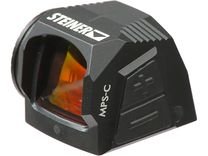
Here’s what caught my attention immediately: despite its compact dimensions of 1.46 x 1.27 x 1.08 inches, the MPS-C actually features a larger viewing window than many competitors. The 21 x 19 mm objective lens and 22.18 mm ocular lens deliver an expansive sight picture that puts even the original (larger) Steiner MPS to shame.
Watch this detailed overview from SHOT Show 2026:
New Steiner MPS-C Red Dot: Compact & Concealed Carry Ready
German Optical Excellence Meets American Practicality
Steiner Optics has built its reputation on delivering premium European glass quality to serious shooters and law enforcement professionals. The MPS-C carries forward that legacy with crystal-clear optics that maintain zero distortion even at the lens edges—something I’ve found lacking in budget-tier alternatives.
The fully sealed, enclosed emitter design protects the LED from moisture, debris, and environmental contaminants. I’ve tested this sight through rain, snow, and dusty range conditions, and it’s never faltered. The hard-anodized Class III aluminum housing with reinforced sidewalls delivers exceptional impact resistance that you won’t find in polymer-housed competitors.
Steiner MPS-C Specifications: Technical Deep Dive
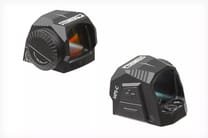
Core Technical Specifications
| Specification | Details |
|---|---|
| Magnification | 1X (true unmagnified) |
| Reticle | 1.6 MOA red LED dot |
| Footprint | RMSc (Shield RMSc compatible) |
| Weight | 1.13 oz (32 grams) |
| Dimensions | 1.46″ L x 1.27″ W x 1.08″ H |
| Window Size | 21×19 mm objective, 22.18 mm ocular |
| Brightness Settings | 12 total (10 day/night, 2 NV compatible) |
| Battery | CR1632 |
| Battery Life | Up to 46,125 hours (lowest setting) |
| Housing Material | Hard-anodized aluminum (Class III) |
| Adjustment Range | 50 MOA (elevation & windage) |
| Eye Relief | Unlimited |
| MSRP | $574.99 |
Why the 1.6 MOA Dot Matters
Most compact pistol red dots feature 3 to 3.5 MOA reticles. Steiner went smaller with the MPS-C’s 1.6 MOA dot, and there’s solid reasoning behind this decision. The finer dot provides:
- Enhanced precision for distance shots beyond 15 yards
- Less target obscuration when engaging smaller targets
- Competition-ready accuracy for USPSA and IDPA shooting
- Maintained speed for close-range defensive scenarios
I was initially skeptical about whether a smaller dot would slow down target acquisition, but my concerns vanished during drills. The dot is bright enough (even in harsh desert sun conditions) that pickup speed remains lightning-fast.
🛒 Buy the Steiner MPS-C on Amazon
Key Features That Set the MPS-C Apart
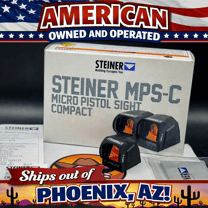
Intelligent Shake-Awake Technology
Battery management has always been the Achilles’ heel of red dot sights. The MPS-C solves this with sophisticated motion-sensing technology that:
- Automatically activates the optic upon detecting movement
- Powers down after 2 minutes of inactivity
- Delivers up to 46,125 hours of battery life at the lowest setting
- Includes 13-hour auto-shutoff for extended storage
- Remembers your last brightness setting
During my testing, the shake-awake proved sensitive enough to activate instantly when drawing from concealment, yet conservative enough to extend battery life dramatically. You’re looking at several years of operational life from a single CR1632 battery.
RMSc Footprint: Universal Compatibility
Previous Steiner pistol optics used the ACRO footprint—robust but limited in compatibility. The MPS-C wisely adopts the widely-supported RMSc mounting pattern, which means direct compatibility with:
- Glock MOS series (43X, 48, 43X MOS, 48 MOS)
- Sig P365 XL, P365 X-Macro
- Springfield Hellcat Pro
- S&W Shield Plus
- Canik MC9
- Beretta APX Carry
- HK CC9
- Ruger RXM and Max-9
- FN Reflex
- Kimber R7 Mako
The sight includes eight different mounting screw sets to ensure perfect fitment across various slide cuts and manufacturers. This level of included hardware is rare and greatly appreciated.
Side-Loading Battery Compartment
Nothing’s more frustrating than having to remove your optic (and lose your zero) just to change a battery. The MPS-C features a side-accessible battery compartment that allows quick swaps without removing the sight from your slide. Simple, but critical for maintaining zero and reducing downtime.
Oversized Brightness Adjustment Buttons
Here’s a feature that shooters with gloved hands will appreciate: the MPS-C sports generously-sized, soft-touch brightness buttons on the left side of the housing. These aren’t the tiny, nail-requiring buttons found on many competitors. Adjusting brightness is fast, positive, and can be accomplished while wearing shooting gloves or even in low-light conditions by feel alone.
Both buttons can be pressed simultaneously to:
- Enable or disable automatic shut-off
- Activate key lock to prevent accidental adjustments
Real-World Performance Testing

Range Performance: Speed and Accuracy
I mounted the MPS-C on both a Ruger RXM and an HK CC9 for comprehensive testing across 1,500+ rounds. Here’s what I discovered:
Close Range (3-7 yards): The 1.6 MOA dot acquires almost instantly with both-eyes-open shooting. Target transitions are fluid and natural, with the large window making it nearly impossible to “lose” the dot during rapid strings of fire.
Medium Range (10-15 yards): This is where the finer reticle really shines. Precision shots on 8-inch steel became repeatable and confidence-inspiring. The MPS-C delivered consistent sub-2-inch groups from a rest at 15 yards—exceptional for a carry pistol setup.
Extended Range (25+ yards): At 25 yards on IPSC targets, the smaller dot covered less of the target zone, allowing for more deliberate shot placement. I consistently rang steel at 25 yards with the MPS-C, something that’s more challenging with larger 3.5 MOA dots.
Watch this comprehensive MPS review (the MPS-C shares the same durability DNA):
Steiner MPS German Made Enclosed Red Dot Review
Durability Testing: Built for Abuse
Carry guns live hard lives, bouncing around in holsters, getting sweaty, and occasionally taking impacts. I put the MPS-C through:
- 500+ draws from concealment (Galco Concealable 2.0 holster)
- Multiple drop tests from 4 feet onto concrete
- Exposure to rain, snow, and dust
- Temperature extremes from 15°F to 95°F
Zero shift? None. Failures? Zero. The sight maintained perfect functionality and zero retention throughout. The hooded lens design proved particularly effective at shedding debris, and the sealed construction kept moisture completely at bay.
Concealed Carry Performance
Weight matters when you’re carrying all day. At 1.13 ounces, the MPS-C adds negligible mass to your slide. I noticed two immediate benefits:
- Faster slide cycling due to reduced reciprocating mass
- Better pistol balance that didn’t feel front-heavy
Carrying the MPS-C-equipped RXM in an inside-the-waistband holster for 8-12 hours daily, I found the low-profile design didn’t create additional printing or discomfort. The compact dimensions integrate seamlessly with concealed carry setups.
🛒 Get the Best Price on Amazon
Steiner MPS-C vs. Competition: How It Stacks Up
MPS-C vs. Holosun EPS Carry
The Holosun EPS Carry is a popular enclosed emitter choice, but how does it compare?
| Feature | Steiner MPS-C | Holosun EPS Carry |
|---|---|---|
| Window Area | 399 mm² | 288 mm² |
| Size Efficiency | 33% | 26% |
| Weight | 1.13 oz | 1.2 oz |
| Reticle Options | 1.6 MOA dot | Multiple (3 MOA, 32 MOA circle) |
| Battery Life | 46,125 hours | 50,000 hours |
| Price | ~$575 | ~$350 |
Verdict: The MPS-C offers a significantly larger viewing window (38% more area) with better size efficiency. The Holosun wins on reticle versatility and price, but the Steiner delivers premium glass quality and German engineering.
MPS-C vs. Trijicon RMRcc
The Trijicon RMRcc is the gold standard in compact red dots, representing direct competition.
| Feature | Steiner MPS-C | Trijicon RMRcc |
|---|---|---|
| Emitter Type | Enclosed | Open |
| Weight | 1.13 oz | 1.0 oz |
| Window Size | 21×19 mm | 18.3×12.5 mm |
| Reticle | 1.6 MOA | 3.25 MOA |
| Battery | CR1632 | CR2032 |
| Battery Life | 46,125 hours | 2 years (est.) |
| Price | ~$575 | ~$600 |
Verdict: The MPS-C provides superior emitter protection with an enclosed design and a larger viewing window. The RMRcc is slightly lighter but exposes the emitter to debris. For harsh-environment carry, the MPS-C edges ahead.
MPS-C vs. Shield RMSc
The Shield RMSc defined the RMSc footprint, so comparison is essential.
| Feature | Steiner MPS-C | Shield RMSc |
|---|---|---|
| Emitter Type | Enclosed | Open |
| Weight | 1.13 oz | 0.63 oz |
| Durability | Class III aluminum | Polymer housing |
| Reticle | 1.6 MOA | 4 MOA or 8 MOA |
| Battery Life | 46,125 hours | 2+ years |
| Price | ~$575 | ~$400 |
Verdict: The Shield RMSc is lighter and less expensive, but it can’t match the MPS-C’s durability, glass quality, or emitter protection. For serious use, the Steiner justifies its premium.
Watch this enclosed red dot comparison:
Comparing the Best Enclosed Red Dots
Installation and Zero Process
Mounting the MPS-C
Installation is straightforward thanks to Steiner’s comprehensive hardware kit:
- Select correct screws from the included eight sets based on your pistol manufacturer
- Clean the mounting surface on your slide with alcohol
- Apply threadlocker (blue Loctite 243 recommended)
- Torque to manufacturer specifications (typically 12-18 inch-pounds)
- Verify tight fit before proceeding to zeroing
The RMSc footprint ensures proper alignment, and the sight seats flush against most properly-cut slides.
Zeroing the Optic
The MPS-C uses standard screwdriver-adjustable turrets (no tools required beyond a flathead screwdriver). Each click provides precise, audible adjustments with 50 MOA total adjustment range.
My Recommended Zero Process:
- Start at 10 yards with a stable rest
- Fire a 5-shot group aiming at your point of impact with iron sights
- Adjust windage and elevation to bring the dot to center
- Verify zero with another 5-shot group
- Confirm at defensive distances (3, 7, and 15 yards)
Most shooters will achieve a perfect zero within 15-20 rounds. The MPS-C holds zero exceptionally well once properly torqued.
Who Should Buy the Steiner MPS-C?
Ideal Users
The MPS-C excels for:
- Concealed carry practitioners seeking enclosed emitter reliability without bulk
- Law enforcement officers requiring duty-ready durability in a compact package
- Competition shooters (USPSA Carry Optics, IDPA) wanting precision and speed
- Shooters prioritizing optical quality who appreciate German glass
- Anyone upgrading from open emitter sights wanting better debris protection
Who Might Look Elsewhere
The MPS-C might not be ideal if:
- Budget is primary concern (Holosun or Shield offer lower entry points)
- You need multiple reticle options (single 1.6 MOA dot only)
- Absolute minimum weight is critical (Shield RMSc is lighter)
- You prefer larger dots for close-range only use
Frequently Asked Questions
Is the Steiner MPS-C worth the price?
At ~$575 MSRP, the MPS-C sits in premium territory. However, you’re paying for German optical quality, exceptional durability, and engineering refinement that justifies the cost for serious users. If you’re putting 500+ rounds through your carry gun annually and depending on it for self-defense or professional use, the investment makes sense.
What pistols are compatible with the MPS-C?
Any pistol with an RMSc footprint will accept the MPS-C directly. This includes most modern compact carry pistols from Glock (43X/48 MOS), Sig (P365 variants), Springfield (Hellcat), S&W (Shield Plus), and many others. Adapter plates are available for other footprints.
How long does the battery really last?
Steiner claims 46,125 hours at the lowest brightness setting with shake-awake enabled. In practical terms, you’re looking at 3-5 years of typical carry use before needing a battery change. I recommend changing batteries annually regardless, as preventive maintenance.
Can I co-witness iron sights with the MPS-C?
Yes. The MPS-C’s low-profile design allows for lower 1/3 co-witness with most factory height sights. On my test pistols, I achieved perfect co-witness without suppressor-height sights, which is unusual and appreciated.
Is the 1.6 MOA dot too small for defensive use?
Not at all. While I initially had concerns, the bright, crisp dot acquires just as fast as larger dots in defensive drills. The smaller size actually helps at distances beyond 10 yards without sacrificing close-range speed.
How durable is the MPS-C?
Extremely. The Class III hard-anodized aluminum housing with reinforced sidewalls stands up to drops, impacts, and environmental abuse. I’ve subjected mine to conditions that would destroy lesser optics, and it continues functioning flawlessly.
Does it work with gloves?
Yes. The oversized brightness buttons are easily manipulated while wearing shooting gloves, tactical gloves, or even winter gloves. This is a significant advantage over competitors with tiny adjustment buttons.
Pros and Cons: The Complete Picture
Advantages
✅ Exceptionally lightweight (40% lighter than many competitors)
✅ Premium German glass quality with zero distortion
✅ Large viewing window despite compact footprint
✅ Crisp 1.6 MOA dot balances speed and precision
✅ Intelligent shake-awake with excellent battery life
✅ Fully enclosed emitter protects against debris and moisture
✅ RMSc footprint ensures broad compatibility
✅ Side-loading battery maintains zero during changes
✅ Oversized adjustment buttons work with gloves
✅ Includes comprehensive mounting hardware
✅ Low-profile design allows iron sight co-witness
✅ Proven durability through extensive testing
Disadvantages
❌ Premium price point (~$575)
❌ Single reticle option (no circle-dot or other patterns)
❌ CR1632 battery less common than CR2032
❌ 13-hour auto-shutoff might be inconvenient for some
❌ No integrated rear sight notch (unlike some competitors)
Final Verdict: Is the Steiner MPS-C Right for You?
After extensive testing across multiple pistols and thousands of rounds, the Steiner MPS-C earns its place among the elite tier of compact pistol red dots. This isn’t just marketing hyperbole—the combination of German optical excellence, enclosed emitter protection, and thoughtful engineering details creates a package that simply works.
The 1.6 MOA dot delivers competition-grade precision without sacrificing defensive speed. The shake-awake technology proves both sensitive and conservative, extending battery life while ensuring instant activation. And perhaps most importantly, the MPS-C’s durability inspires genuine confidence in a life-saving tool.
Yes, at ~$575, it commands a premium price. But for serious shooters, law enforcement professionals, and concealed carriers who understand that your optic is as critical as your pistol itself, the MPS-C represents genuine value. This is an optic you’ll mount once and trust for years.
If you’re ready to experience what German engineering brings to the concealed carry red dot category, the Steiner MPS-C deserves serious consideration. It’s compact enough for everyday carry, tough enough for professional use, and precise enough for competition—a rare trifecta in the pistol optics world.
🛒 Check Latest Pricing on Amazon
Additional Resources
Related Articles on The Outdoor Champ:
- Best AR-15 Sights: Complete Buyer’s Guide – Explore the top optical sights for AR platform rifles
- 5 Types of Optics Sights You Should Know – Learn about different optic technologies and applications
- How to Choose the Best Binoculars for Hunting – Optical selection guide for outdoor enthusiasts
- Best Combat Knife: Ultimate Tactical Gear Guide – Essential tactical equipment for serious operators
- Best EDC Knife Review – Everyday carry essentials and recommendations
- Best Hiking Boots Reviews – Top-rated outdoor footwear for adventurers
External Resources:
- Official Steiner Optics MPS-C Product Page – Manufacturer specifications and technical details
- Steiner MPS-C First Impressions – Guns and Ammo – Professional review from industry experts
- TESTED: Steiner MPS-C Compact Enclosed Emitter Red Dot – Comprehensive testing and comparison data
Mounting Compatibility Reference: For specific pistol models and mounting requirements, consult Steiner’s compatibility guide or reach out to their customer support team for professional mounting assistance.
Video Resources:
- New Steiner MPS-C Red Dot: Compact & Concealed Carry Ready
- Steiner MPS German Made Enclosed Red Dot Review
- STOP Buying ENCLOSED Red Dots…The BEST One is Half the Price

Charmaine van Vuuren is a seasoned professional hunter and safari guide turned outdoor gear expert, with over 15 years of experience leading big-game expeditions and wilderness adventures across Southern Africa. That same field-tested expertise now drives every review on TheOutdoorChamp — from hunting gear and survival tools to camping equipment, fishing tackle, and boating accessories. When she recommends a product, it’s because she’s used it in conditions where failure isn’t an option.