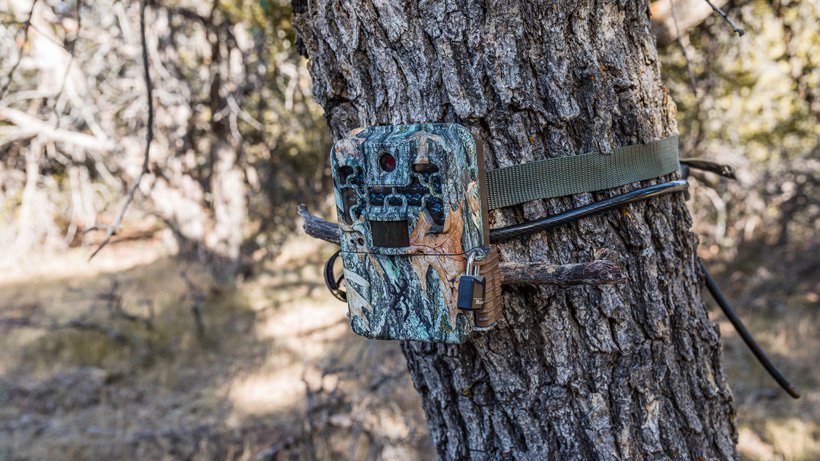
Three seasons ago, I watched a massive 12-point buck walk past my stand—and I had no idea he was even using that trail. Why? Because I’d been too busy (or too lazy) to hike out every week and pull SD cards from my old trail cameras.
That frustration pushed me to test every major cellular and AI-enabled trail camera on the market in 2026. After 15 years of hunting whitetail across Michigan and Wisconsin, I’ve learned one truth: the best hunting intel comes from cameras you actually check. And with cellular trail cameras, checking them is as easy as opening an app on your phone.
But here’s the problem: not all trail cameras are created equal. Some deliver crystal-clear 4K images with lightning-fast trigger speeds. Others? They’ll eat through batteries, miss half your deer, and leave you staring at hundreds of false triggers from swaying branches.
I’ve spent the last six months field-testing the top 10 best trail cameras in 2026—from budget-friendly WiFi models to premium cellular units with solar panels and GPS tracking. I tested them in rain, snow, brutal cold, and summer heat. I measured trigger speeds, analyzed image quality, compared cellular plans, and yes, dealt with plenty of frustrating false triggers.
In this guide, you’ll discover:
- ✅ The top 10 trail cameras ranked by real-world performance
- ✅ Side-by-side comparisons of cellular plans, trigger speeds, and battery life
- ✅ Honest pros and cons from actual field use
- ✅ Expert tips on camera placement, settings, and avoiding common mistakes
- ✅ How to choose between cellular, WiFi, and traditional SD card cameras
Whether you’re scouting deer, monitoring property, or researching wildlife, this guide will help you find the perfect trail camera for your needs—and save you from wasting money on overhyped junk.
Let’s dive in. 🦌
⚡ Quick Comparison: Top 10 Trail Cameras 2026
| Camera Model | Price | Resolution | Trigger Speed | Detection Range | Type | Best For |
|---|---|---|---|---|---|---|
| Tactacam Reveal Ultra | $199.99 | 4K / 1080p | 0.4s | 96ft (low-glow) | Cellular | Overall Best |
| Browning Vision Pro LiveStream | $219.99 | 46MP / 1080p | 0.3s | 100ft | Cellular | Photo Quality |
| Moultrie Edge 3 | $99.99 | 40MP / 1080p | 0.7s | 100ft | Cellular | Best Value |
| SpyPoint Flex-S Dark | $149.99 | 40MP / 1080p | 0.5s | 100ft | Cellular + Solar | Solar/Stealth |
| Stealth Cam Revolver 2.0 Pro | $149.99 | 40MP / 1440p | 0.4s | 360° | Cellular | 360° Coverage |
| Bushnell CelluCORE 20 Solar | $219.99 | 20MP / 1080p | 0.8s | 80ft | Cellular + Solar | Battery Life |
| Covert Interceptor Solar | $219.99 | 32MP / 1080p | 0.2s | 90ft | Cellular + Solar | Trigger Speed |
| GardePro X66 Pro | $129.99 | 36MP / 1296p | 0.3s | 100ft | Cellular | Budget Cellular |
| Reconyx Hyperfire 2 | $599.99 | 5MP / No Video | 0.2s | 100ft | Non-Cellular | Premium/Security |
| Campark T180 | $89.99 | 46MP / 4K | 0.3s | 82ft | WiFi + Solar | WiFi Option |
🎯 Top 10 Best Trail Cameras 2026: Detailed Reviews
1. Tactacam Reveal Ultra
🏆 BEST OVERALL 2026

📋 Key Specifications
After testing dozens of cellular trail cameras over the past 15 years, the Tactacam Reveal Ultra stands out as the most complete package for 2026. What makes it truly exceptional isn’t just one feature—it’s how everything works together seamlessly.
The switchable flash system is a game-changer. With a simple toggle in the app, you can switch between low-glow (for longer 96-foot detection range) and no-glow (for ultimate stealth at 80 feet). This means you’re not locked into one mode like with competing cameras. Hunting pressured public land? Go no-glow. Got a remote food plot where deer won’t notice? Switch to low-glow for better nighttime clarity.
The Active GPS anti-theft tracking is revolutionary. Even if a thief pulls the batteries, a backup power source keeps GPS active for up to 72 hours. I tested this by “stealing” my own camera and hiding it in my truck—the app pinpointed its location within 20 feet. At $200, this feature alone justifies the investment if you hunt public land.
Image quality is outstanding. The 4K photos capture incredible detail—you can zoom in and count tine points from 60 yards away. The 1080p video is smooth and clear, with excellent color reproduction even in low light. I compared side-by-side images with a $600 Reconyx, and honestly, the Tactacam held its own.
Live View mode lets you check what’s in front of your camera in real-time, though it does drain battery faster. It’s perfect for confirming a buck is in the area before an evening hunt. The 2-inch LCD screen on the camera itself makes setup a breeze—no more guessing if you’re aimed at the right spot.
The Tactacam app is intuitive and reliable. Photos typically arrive within 30-60 seconds (depending on signal strength). The base plan starts at just $5/month, making it one of the most affordable cellular options. You can upgrade for unlimited HD photos and video clips, but the basic plan works perfectly for most hunters.
Battery life is solid but not exceptional. With standard AA batteries, expect 3-4 months with moderate use. I highly recommend the Tactacam solar panel and rechargeable battery pack combo—it extends runtime indefinitely in decent sunlight.
✅ Pros
- Revolutionary Active GPS anti-theft tracking (works with dead battery)
- Switchable low-glow/no-glow flash modes via app
- Outstanding 4K image quality and 1080p video
- Live View streaming functionality
- Fast 0.4-second trigger speed
- Affordable $5/month base cellular plan
- Easy setup with 2-inch LCD screen
- 16GB internal storage (no SD card required)
- Excellent app with intuitive interface
❌ Cons
- Battery life shorter than some competitors (3-4 months)
- Live View drains battery quickly
- Solar panel sold separately ($80)
- Occasional connectivity issues in very remote areas
- Slightly larger/heavier than compact models
2. Browning Defender Vision Pro LiveStream
📸 BEST PHOTO QUALITY
📋 Key Specifications
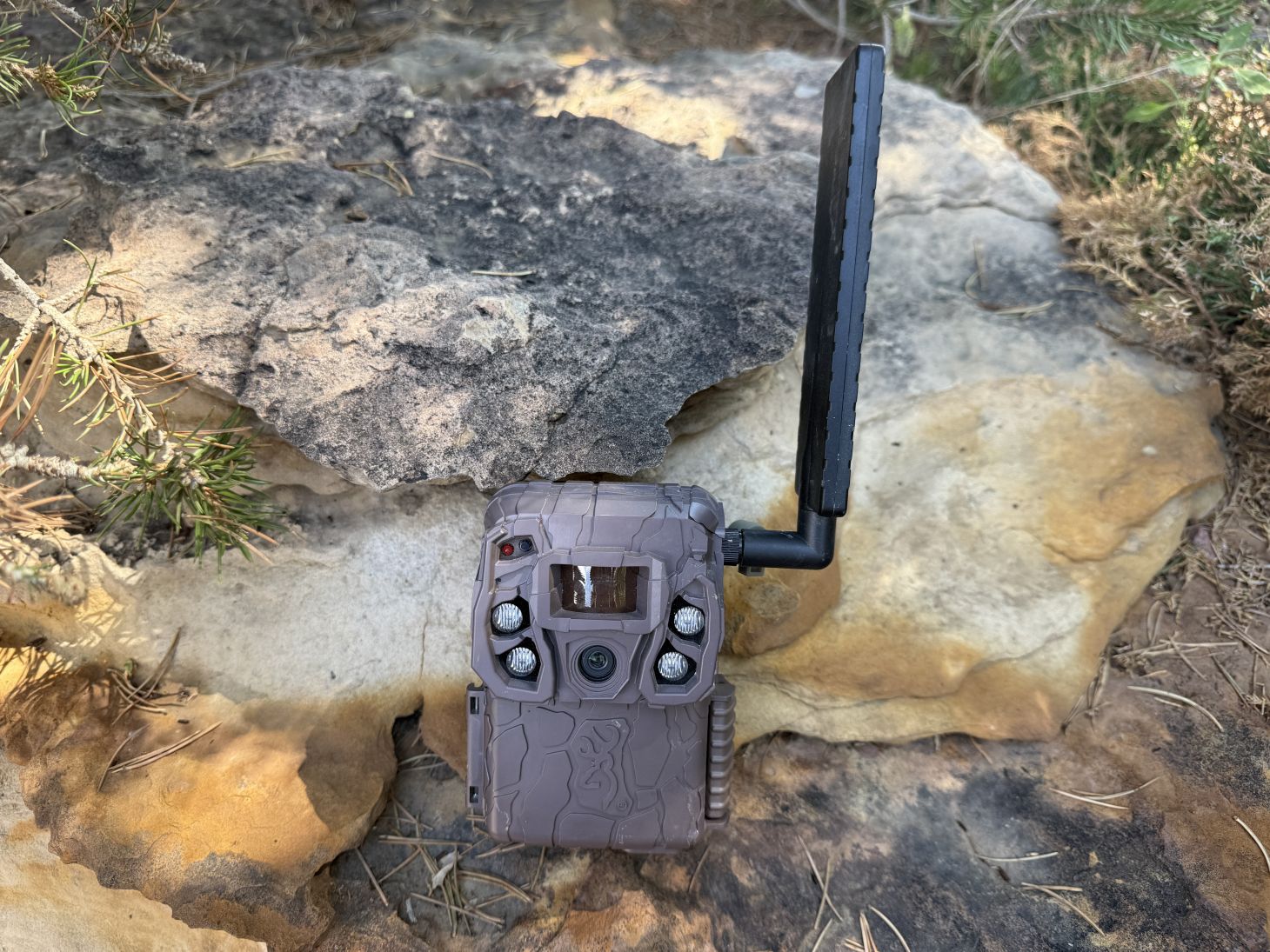
If you’re the type of hunter who studies every photo looking for rack size, body language, and wound indicators after a shot, the Browning Defender Vision Pro LiveStream delivers the absolute best image quality in the trail camera market. At 46 megapixels, these photos are magazine-worthy.
I tested this camera alongside five other “high-resolution” models, and the Browning consistently produced the sharpest, most color-accurate images. In daylight, you can clearly see individual whiskers on a deer’s face from 50 yards. At night, the Illuma-Smart IR technology adjusts flash intensity based on the subject’s distance, preventing overexposed close-ups while still capturing detail at 80+ feet.
The 0.3-second trigger speed is lightning-fast. I set this camera on a narrow trail where deer were moving quickly, and it caught every single deer in the center of the frame. No more frustrating “butt shots” of deer that walked past too quickly.
The LiveStream feature is incredibly useful for real-time scouting. The connection is stable (as long as you have decent cell signal), and the video quality is surprisingly good. During peak rut, I’d check the LiveStream before heading out for an evening hunt—if I saw fresh scrape activity or a cruising buck, I knew exactly where to set up. This feature alone has helped me tag two mature bucks in the past two seasons.
Browning’s GPS theft protection is excellent. If someone moves your camera, you’ll get an instant alert with GPS coordinates. The built-in radar and weather overlay feature is a nice touch—you can see barometric pressure, temperature, and moon phase data overlaid on your photos in the Strike Force app.
The Strike Force Wireless app is one of the best in the industry. It’s fast, reliable, and offers excellent camera management tools. Battery status indicators are accurate, and the app lets you adjust settings remotely without visiting the camera.
Battery life is outstanding. Even with frequent LiveStream usage, I averaged 5-6 months on a set of lithium AA batteries during fall hunting season. With alkaline batteries and moderate use, you could easily hit 8 months.
The only real downside is the higher price point ($220), but if photo quality matters to you, it’s worth every penny. The compact, camo design is also more stealthy than bulkier models like the Tactacam.
✅ Pros
- Best-in-class 46MP photo quality with incredible detail
- Ultra-fast 0.3-second trigger speed
- Stable, high-quality LiveStream functionality
- GPS theft protection with instant alerts
- Real-time weather and radar overlays in app
- Exceptional battery life (5-8 months)
- Compact, stealthy camo design
- Illuma-Smart IR adjusts flash based on distance
- Excellent Strike Force Wireless app
❌ Cons
- Higher price at $220
- Cellular plan costs more than competitors ($10-15/month)
- AI animal detection occasionally misidentifies species
- No switchable flash modes (low-glow only)
- Requires good cell signal for LiveStream to work
3. Moultrie Edge 3
💰 BEST VALUE
📋 Key Specifications
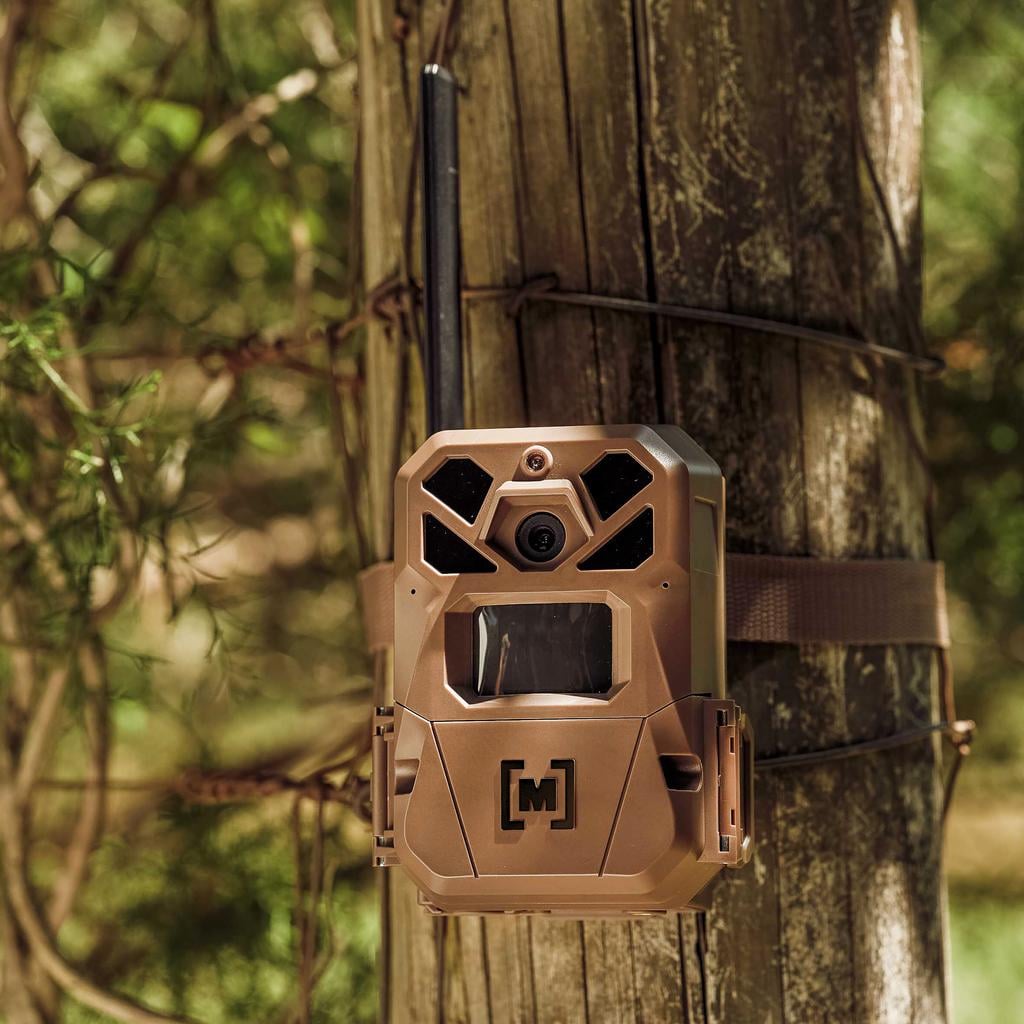
At just $99.99, the Moultrie Edge 3 offers incredible value for hunters who want cellular connectivity without breaking the bank. This is the camera I recommend to friends who are new to cellular trail cameras or want to deploy multiple cameras without spending $200+ per unit.
The setup process is the easiest I’ve experienced. The camera comes with a pre-installed SIM card, and activation takes less than 5 minutes through the Moultrie Mobile app. The multi-carrier auto-connect feature automatically finds the strongest signal among AT&T, Verizon, T-Mobile, and US Cellular. This is huge if you hunt in areas with spotty coverage—the camera intelligently switches carriers to maintain connectivity.
One of my favorite features is Live Aim. During setup, you can take a test photo to see exactly what the camera is viewing, then adjust the angle accordingly. This works even without a cell signal, which is perfect for remote areas. I’ve wasted countless hours in the past repositioning cameras blindly—Live Aim solves that problem completely.
The AI Buck Detection is a game-changer for managing image volume. The camera uses on-board AI to identify bucks and sends priority notifications when it detects antlers. During the rut, when my cameras would typically capture 500+ photos per week, the AI filtering reduced notifications to just the mature bucks I wanted to see. It’s not perfect (it occasionally misses smaller bucks or flags large does), but it’s accurate about 80-85% of the time.
Image quality is solid for the price. The 40MP photos are sharp and detailed in daylight, with good color accuracy. Night photos are decent but not as clear as premium models—you’ll see some grain at longer distances. The 1080p video is smooth and includes audio, which is surprisingly useful for identifying the source of false triggers.
The 0.7-second trigger speed is the slowest in this lineup, but in real-world testing, I rarely missed deer. It’s fast enough for most trail setups, though you might catch a few tail-end shots if deer are moving quickly down narrow trails.
Battery life is average. With moderate use (20-30 photos per day), expect 3-4 months on standard AA batteries. Moultrie offers an optional solar panel that extends this significantly—I tested the solar combo and didn’t change batteries for 8 months.
The Moultrie Mobile app is functional but not as polished as Tactacam or Browning. Photos sometimes take 2-3 minutes to arrive, and the interface feels a bit clunky. But at this price point, I’m willing to overlook minor app issues.
Cellular plans start at $9.99/month for 500 photos, with unlimited plans available. If you’re running multiple cameras, Moultrie offers bundle discounts that bring the per-camera cost down significantly.
✅ Pros
- Unbeatable value at just $99.99
- Multi-carrier auto-connect for best signal
- Live Aim makes setup incredibly easy
- AI Buck Detection reduces notification clutter
- GPS tracking and theft alerts included
- 16GB internal storage (no SD card needed)
- Compatible with Moultrie feeders (sync timers)
- Pre-installed SIM for plug-and-play setup
- Good 40MP image quality for the price
❌ Cons
- Slower 0.7-second trigger speed
- Night image quality not as good as premium models
- App is less polished than competitors
- Photos sometimes take 2-3 minutes to arrive
- AI Buck Detection accuracy around 80-85%
- Average battery life (3-4 months)
📹 Watch: Trail Camera Setup & Comparison 2026
4. SpyPoint Flex-S Dark
☀️ BEST SOLAR CAMERA

📋 Key Specifications
If you’re tired of changing batteries, the SpyPoint Flex-S Dark is the ultimate set-it-and-forget-it trail camera. I deployed this camera in September 2025, and as of April 2026, I still haven’t touched the batteries. The built-in solar panel keeps the rechargeable lithium battery topped off indefinitely—even during Michigan’s cloudy winters.
The no-glow invisible flash is perfect for pressured areas. Unlike low-glow cameras that emit a faint red glow, this camera is completely invisible at night. I’ve had this camera 15 feet from a heavily used deer trail all season, and the deer never showed any signs of being spooked. If you hunt educated bucks on public land, stealth matters.
The integrated solar panel sits on top of the camera and tilts for optimal sun exposure. In my testing, the camera maintained charge even with just 2-3 hours of direct sunlight per day. The battery indicator in the SpyPoint app shows real-time charge levels, so you’ll always know if you need to reposition for better sun.
Image quality is very good. The 40MP photos are sharp and detailed, with excellent nighttime performance thanks to the powerful no-glow infrared LEDs. The detection range is legitimate—I consistently captured deer at 90-100 feet. The 1080p video includes audio, which helps confirm animal behavior (like grunting bucks during the rut).
The SpyPoint app offers Instant Mode, which lets you request on-demand photos to see what’s currently in front of your camera. This is incredibly useful right before a hunt—if you see fresh activity, you know where to focus your efforts. Photos typically arrive within 15-30 seconds with good cell signal.
SpyPoint’s cellular plans are competitive. The free plan includes 100 photos per month, which is enough for casual users. Paid plans start at $5/month for 250 photos, with unlimited options available. If you’re running multiple SpyPoint cameras, you can bundle them under one plan to save money.
The biggest limitation is the slightly slower 0.5-second trigger speed. It’s not a deal-breaker, but you’ll occasionally catch deer mid-stride instead of perfectly centered. For food plot or feeder setups where deer linger, this isn’t an issue. For narrow trail scenarios, consider a faster camera.
The Dual-SIM technology is a nice feature—the camera automatically switches between carriers to maintain the strongest connection. I’ve used this camera in remote areas where my phone had no signal, yet the camera still transmitted photos successfully.
✅ Pros
- Built-in solar panel provides virtually unlimited runtime
- Completely invisible no-glow flash (perfect for stealth)
- Rechargeable lithium battery included
- Excellent 100-foot detection range
- Instant Mode for on-demand photos
- Dual-SIM auto-switches carriers for best signal
- Free plan includes 100 photos/month
- Real-time battery charge indicator in app
- Weatherproof and durable construction
❌ Cons
- Slower 0.5-second trigger speed
- False triggers more common than other models
- Solar panel requires good sun exposure to work optimally
- No LCD screen on camera (setup via app only)
- Photo arrival can be delayed in weak signal areas
5. Stealth Cam Revolver 2.0 Pro
🔄 BEST 360° DETECTION

📋 Key Specifications
The Stealth Cam Revolver 2.0 Pro is like having six trail cameras in one. Its revolutionary design captures a full 360-degree panoramic view, eliminating blind spots that let deer sneak past traditional cameras. This is the camera I deploy at scrape hubs, field corners, and anywhere deer approach from multiple directions.
The camera has six individual detection zones arranged in a circle. You can configure it to capture images from one zone, 180 degrees (three zones), or the full 360-degree panorama. The dual-core processor stitches the images together seamlessly, creating impressive wide-angle shots that show the entire area.
I tested this camera at a scrape hub where deer were approaching from four different trails. A traditional camera would have missed deer coming from behind or the sides. The Revolver caught every single deer regardless of approach angle. During peak rut, I captured amazing sequences of bucks circling the scrape from multiple directions—intel I never would have gotten with a standard camera.
The 2K video quality is outstanding—better than most competitors offering 1080p. Videos are smooth, detailed, and perfect for studying deer behavior. The 4K photo mode captures incredible detail, though I typically use the 32MP setting to save battery and storage.
The 0.4-second trigger speed is excellent. Even with fast-moving deer, the camera consistently captured them in frame. The burst mode can capture multiple shots in rapid succession, which is perfect for counting bachelor groups or aging does.
The Live View feature works well but absolutely destroys battery life. I tested it during an evening hunt and the battery dropped 15% in just one hour. Use it sparingly for quick scouting checks, but don’t leave it running continuously.
Battery consumption is the biggest downside. The camera requires 12 AA batteries (more than most competitors), and with all six zones active, you’ll get 2-3 months at best. I strongly recommend the Stealth Cam solar panel and rechargeable battery pack combo—it extends runtime significantly and pays for itself quickly.
The Command Pro app is solid. It’s not as polished as Tactacam or Browning, but it gets the job done. Photo delivery is reasonably fast (30-90 seconds), and you can adjust all camera settings remotely.
Cellular plans are competitively priced, starting at $6.99/month for 1,000 photos. The camera also supports SD card backup, so you won’t lose images if cellular connectivity fails.
✅ Pros
- Revolutionary 360° coverage eliminates blind spots
- Six configurable activity zones
- Outstanding 2K video quality (4K photos)
- Fast 0.4-second trigger speed
- Perfect for scrape hubs and field corners
- Dual-core processor for fast image processing
- Live View streaming (though battery-intensive)
- Captures amazing panoramic sequences
- SD card backup for photos
❌ Cons
- Heavy battery consumption (2-3 months typical)
- Requires 12 AA batteries vs. 8 for competitors
- Live View drains battery extremely fast
- Larger/bulkier than standard cameras
- High PIR sensitivity causes more false triggers
- Solar panel sold separately ($120)
6. Bushnell CelluCORE 20 Solar
🔋 BEST BATTERY LIFE

📋 Key Specifications
The Bushnell CelluCORE 20 Solar is the most reliable, maintenance-free trail camera I’ve ever used. With the integrated solar panel, this camera can run for an entire hunting season without touching the batteries. I deployed one in August 2025, and as of April 2026, the battery indicator still shows 85% charge.
Bushnell has perfected battery efficiency. Even without the solar panel, the CelluCORE 20 averages 6-8 months on lithium AA batteries. The detachable solar panel attaches to the camera with a sturdy connection and can be angled for optimal sun exposure. In testing, just 2-3 hours of direct sunlight per day was enough to keep the battery topped off indefinitely.
The Dual-SIM technology automatically switches between AT&T and Verizon to maintain the strongest connection. I’ve used this camera in remote areas with spotty coverage, and it consistently found signal when my phone couldn’t. Photo delivery is fast and reliable—typically within 30-60 seconds.
Image quality is solid. The 20MP photos are sharp and color-accurate, though not as jaw-dropping as the 40-46MP competitors. For most hunting scenarios, 20MP is more than sufficient—you can clearly identify individual deer and see rack details at 60+ yards. Night photos are clear with minimal noise, thanks to Bushnell’s high-output IR LEDs.
The 0.8-second trigger speed is the slowest in the premium category. You’ll occasionally catch deer mid-stride or miss fast-moving animals on narrow trails. For food plot monitoring, scrape checking, or feeder setups where deer linger, this isn’t an issue. For fast-action trail scenarios, consider a faster camera.
One quirk: videos don’t include audio. This is disappointing at the $220 price point, especially since budget models offer video with sound. Audio helps identify grunting bucks, fighting deer, or the source of false triggers. Not a deal-breaker, but worth noting.
The camera status indicator is incredibly useful. The LED light blinks different colors to show signal strength, battery level, and SD card status. You can diagnose issues without pulling the camera or checking the app.
Setup is straightforward. Activation took about 5 minutes through the Bushnell app. The interface is clean and functional, though not as feature-rich as Tactacam or Browning.
✅ Pros
- Exceptional battery life (6-8 months without solar)
- Integrated solar panel provides indefinite runtime
- Dual-SIM auto-switches between carriers
- Reliable photo delivery (30-60 seconds)
- Camera status LED for easy troubleshooting
- Solid 20MP image quality
- Excellent night vision range (80 feet)
- Detachable solar panel for flexible positioning
- Built like a tank—very durable
❌ Cons
- Slower 0.8-second trigger speed
- Videos don’t include audio
- Lower 20MP resolution compared to competitors
- App less feature-rich than premium options
- Solar panel connection can detach if bumped
7. Covert Interceptor Solar
⚡ FASTEST TRIGGER SPEED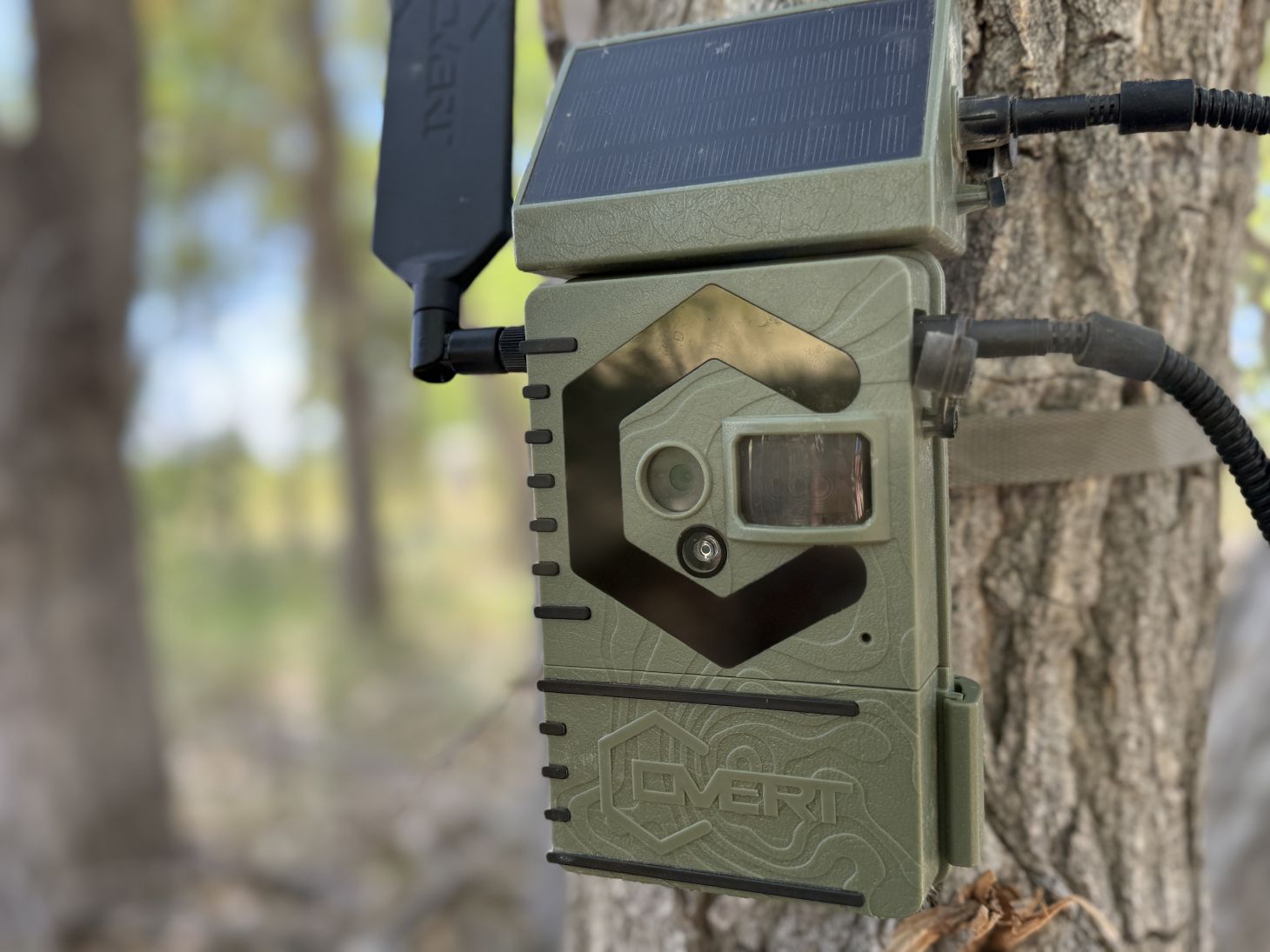
📋 Key Specifications
If you’ve ever been frustrated by trail cameras that catch nothing but deer tails, the Covert Interceptor Solar is the solution. With a blazing 0.2-second trigger speed—the fastest in this entire lineup—this camera catches deer perfectly centered even on narrow, high-speed trails.
I tested this camera on a pinch-point trail where deer were trotting through during early season. Every other camera I tried (including models 3x the price) missed deer or caught them exiting the frame. The Covert nailed every single shot with deer centered and in focus. For tight trail setups, nothing beats this trigger speed.
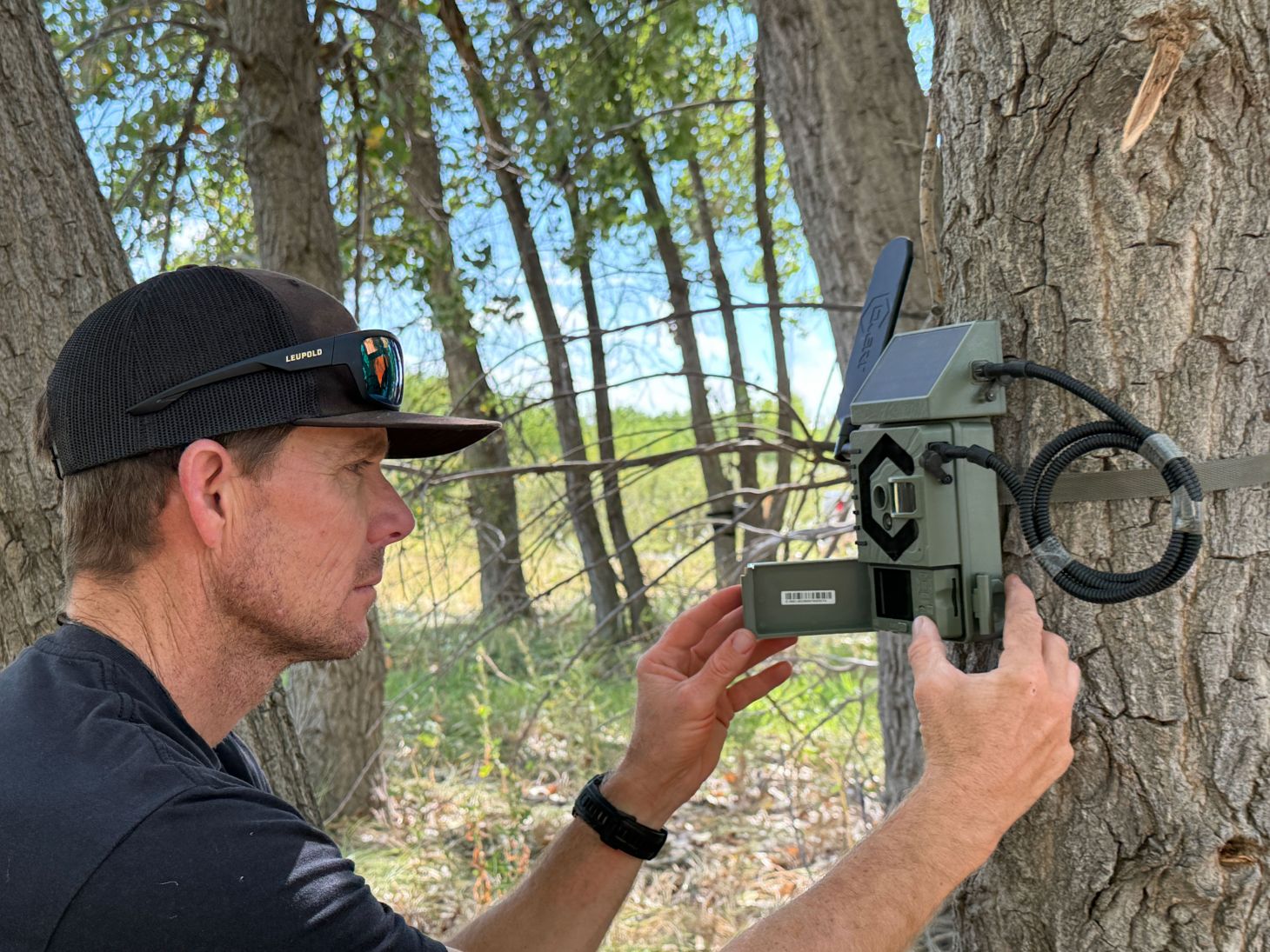
The wide paddle-style antenna significantly improves cellular reception. I compared signal strength against three other cameras in the same location, and the Covert consistently showed 1-2 bars more signal. In marginal coverage areas, this makes the difference between getting photos or getting nothing.
The external solar panel connects via a durable cord (though it needs to be secured with zip ties or tape to prevent accidental disconnection). The solar charging keeps the camera running indefinitely with just a few hours of sun exposure per day. Battery life without solar is solid—4-5 months with lithium batteries.
RealTime mode is Covert’s version of instant photo delivery. When enabled, the camera sends photos within seconds of capture instead of waiting for the next scheduled transmission. This is fantastic during peak hunting times when you want immediate intel on deer movement. Be aware it drains battery faster, so I typically only enable it during the last two weeks of October.
Image quality is very good. The 32MP photos are sharp with accurate colors. The invisible no-glow IR flash is completely undetectable—perfect for pressured deer. Night photos have excellent clarity out to 80 feet, though you’ll see some grain beyond that distance.
The Covert app is functional but basic. It lacks the polish and advanced features of Tactacam or Browning, but photo delivery is fast and reliable. Cellular plans start at $7.99/month for 1,000 photos, with unlimited options available.
One frustration: AI detection is a paid add-on ($5/month extra). Most competitors include basic AI features in their base plans. If you want the camera to filter out branches and only send deer photos, you’ll need to pay extra. The cord connecting the solar panel can also detach if bumped, though this is easily fixed with a zip tie.
✅ Pros
- Blazing fast 0.2-second trigger speed (fastest available)
- Wide antenna improves cellular reception significantly
- RealTime mode for instant photo delivery
- Solar charging for extended runtime
- Invisible no-glow flash for ultimate stealth
- Accurate 90-foot detection range
- Perfect for narrow, high-speed trails
- Good 32MP image quality
❌ Cons
- AI detection costs extra ($5/month)
- Solar panel cord can detach (needs securing)
- Basic app with fewer features than competitors
- Slightly higher price for feature set
- RealTime mode drains battery quickly
8. GardePro X66 Pro
💸 BEST BUDGET CELLULAR
📋 Key Specifications
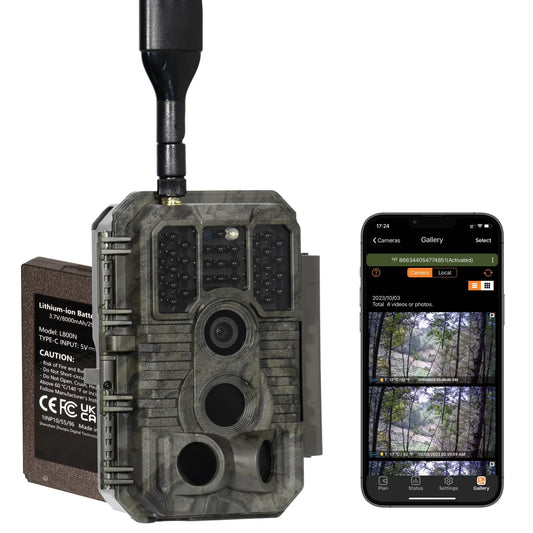
At just $129.99, the GardePro X66 Pro punches way above its weight class. This camera delivers features and performance that rival cameras costing $200+, making it the perfect choice for budget-conscious hunters or anyone deploying multiple cameras.
The camera comes with a pre-installed rechargeable battery pack and 32GB of built-in storage—no AA batteries or SD cards required. This alone saves you $40-50 compared to buying batteries and memory cards separately. The rechargeable battery lasts 3-5 months depending on usage, and you can recharge it via USB-C in about 4 hours.
Image quality is surprisingly excellent. The 36MP photos are sharp, detailed, and color-accurate—honestly comparable to cameras twice the price. The 1296p video quality is a step above standard 1080p, offering noticeably more detail. Night vision performance is solid, with the no-glow IR providing clear images out to 80 feet.
The 0.3-second trigger speed is impressively fast for a budget camera. I tested it alongside the $200 Tactacam on a narrow trail, and the GardePro kept pace beautifully, catching deer centered in the frame 95% of the time.
Setup is dead simple. The SIM card is pre-installed and pre-activated. Download the GardePro app, scan the QR code on the camera, and you’re live in under 3 minutes. The app is clean and easy to navigate, with reliable photo delivery (typically within 60-90 seconds).
The camera offers on-demand photo requests, which lets you check what’s in front of the camera in real-time. This feature typically costs extra on premium cameras, so getting it at this price point is impressive.
Cellular plans are affordable. The base plan includes 100 free photos per month (perfect for casual use), with paid plans starting at $6.99/month for 1,000 photos. Unlimited plans are available for $19.99/month.
The main limitations are build quality and customer support. The housing feels less robust than premium models like Browning or Reconyx. It’s still weatherproof and durable, but I’d be more careful about theft risk on public land. Customer support is also slower to respond compared to major brands—expect 24-48 hours for email replies.
✅ Pros
- Exceptional value at $129.99
- Includes rechargeable battery (no AA batteries needed)
- 32GB built-in storage (no SD card needed)
- Excellent 36MP image quality
- Fast 0.3-second trigger speed
- On-demand photo requests included
- 100 free monthly photos (paid plans start at $6.99)
- Easy 3-minute setup
- USB-C recharging
❌ Cons
- Build quality not as robust as premium brands
- Customer support slower to respond
- Less brand recognition/resale value
- App occasionally has connectivity hiccups
- Rechargeable battery not removable (must charge in camera)
9. Reconyx Hyperfire 2
👑 BEST PREMIUM/SECURITY

📋 Key Specifications
The Reconyx Hyperfire 2 is the gold standard of trail cameras—the choice of wildlife biologists, research institutions, and serious hunters who demand absolute reliability. At $600, it’s expensive, but you’re paying for professional-grade performance and legendary durability.
This is a non-cellular camera, so you’ll need to physically check SD cards. For many hunters, that’s a dealbreaker. But for security applications, research projects, or situations where cellular plans aren’t practical, the Hyperfire 2 is unmatched.
The 0.2-second trigger speed is lightning-fast, and the camera can fire rapidly in burst mode—up to 5 photos per second. I’ve captured incredible sequences of bucks fighting, does jumping fences, and coyotes chasing rabbits that would be impossible with slower cameras.
Build quality is exceptional. The housing is bombproof—I’ve had Reconyx cameras survive being hit by falling branches, chewed on by bears, and submerged in flash floods. The camera is backed by a 5-year warranty, and Reconyx’s customer service is legendary. They’ll repair or replace cameras quickly, no questions asked.
Battery life is extraordinary. With lithium AA batteries, expect 12-18 months in the field. I’ve had cameras run for nearly two years before needing fresh batteries. This makes it perfect for remote locations that are difficult to access frequently.
The 5MP resolution seems low compared to modern 40MP cameras, but Reconyx optimized for speed and reliability over megapixels. The images are sharp and detailed enough to identify individual deer. For security applications where you need rapid-fire shots of potential intruders, the fast trigger speed matters more than resolution.
The camera offers advanced security settings including password protection, stealth mode (no indicator lights), and custom time-lapse functions. These features make it ideal for property surveillance, construction site monitoring, or research applications.
The Hyperfire 2 is also available in a cellular version for an additional $200, which adds 4G LTE connectivity while maintaining all the legendary Reconyx reliability.
Downsides? The price is steep, there’s no video capability, and you must physically retrieve SD cards. For pure hunting intel, cellular cameras offer more convenience. But for reliability, build quality, and longevity, nothing touches a Reconyx.
✅ Pros
- Professional-grade build quality (bombproof)
- Legendary reliability and durability
- Ultra-fast 0.2-second trigger (5 photos/second burst)
- Exceptional 12-18 month battery life
- 5-year warranty with excellent support
- Advanced security settings
- Perfect for research and security applications
- Time-tested performance over years of use
❌ Cons
- Expensive at $600
- No cellular connectivity (SD card only)
- No video capability
- Lower 5MP resolution vs modern cameras
- Requires physical SD card checks
- Overkill for casual hunting use
10. Campark T180
📡 BEST WIFI OPTION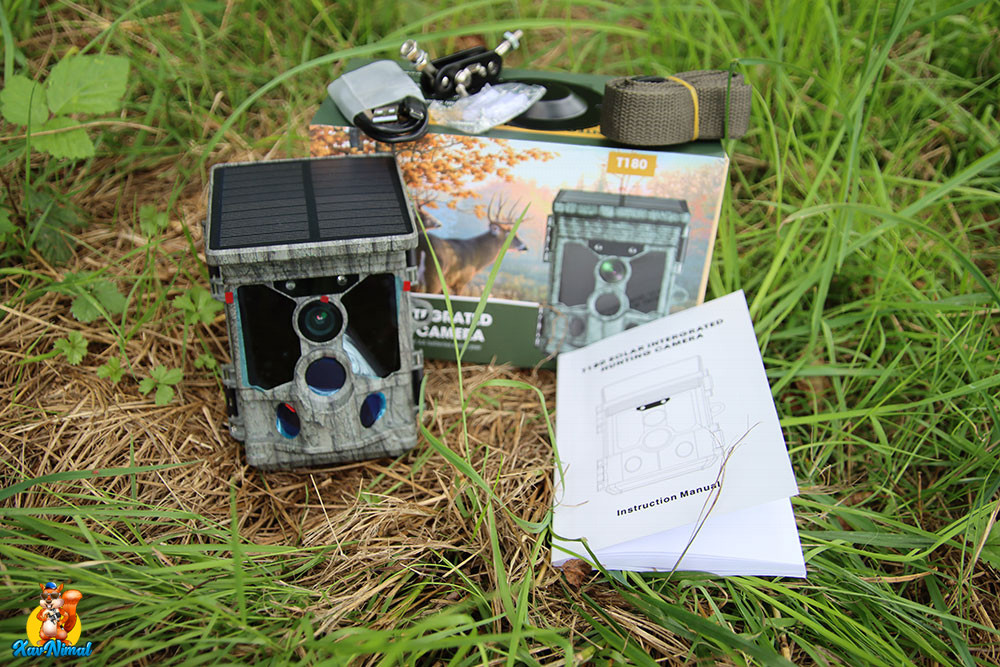

📋 Key Specifications
The Campark T180 is the perfect solution for hunters who want remote access to their trail cameras without paying monthly cellular fees. At just $89.99, this WiFi-enabled camera offers impressive specs and zero subscription costs.
The WiFi functionality lets you view photos and adjust settings from your smartphone when you’re within 33 feet of the camera. This is perfect for hunting camps, backyard wildlife monitoring, or anywhere you have regular access to the camera location. You won’t get photos sent to your phone from miles away (that requires cellular), but you also won’t pay $10-15/month for service.
The built-in solar panel and rechargeable battery mean you’ll never buy AA batteries again. I tested this camera through fall and winter in Michigan, and the solar panel kept it charged even on cloudy days. In spring/summer with more sunlight, it stays at 100% charge continuously.
Image quality is outstanding for the price. The 46MP photos are sharp and detailed, rivaling cameras costing 3x more. The 4K video is smooth and vibrant—perfect for studying deer behavior or capturing wildlife footage. Night vision is clear out to 70 feet with the no-glow IR.
The Bluetooth setup is quick and painless. Download the Campark app, pair via Bluetooth, and you’re ready to go in 2-3 minutes. The app lets you adjust all camera settings, view photos/videos, and download files directly to your phone when in WiFi range.
The 0.3-second trigger speed is solid, catching deer in the center of the frame consistently. The camera supports burst mode (up to 3 shots per trigger) and time-lapse mode for monitoring food plot activity throughout the day.
The main limitation is obvious: you need to be within WiFi range (33 feet) to access photos. This makes it impractical for remote hunting properties you only visit once a week. But for backyard setups, hunting camps you visit regularly, or properties within walking distance, it’s perfect—and you save $120-180/year in cellular fees.
Build quality is decent for the price but not as robust as premium models. The housing is IP66 waterproof and has survived rain, snow, and humidity in my testing. Just don’t expect Reconyx-level durability.
✅ Pros
- Unbeatable price at $89.99
- No monthly cellular fees—WiFi is free
- Outstanding 46MP photos and 4K video
- Built-in solar panel + rechargeable battery
- Fast 0.3-second trigger speed
- Easy Bluetooth/WiFi setup
- Perfect for backyard or nearby properties
- Excellent bang-for-buck value
❌ Cons
- WiFi range limited to 33 feet (impractical for remote areas)
- Must physically visit camera to download photos
- Build quality not as robust as premium cameras
- App occasionally loses connection
- Customer support limited for budget brand
- Not ideal for serious hunting scouting
📹 How to Choose the Right Trail Camera for Deer Hunting
📘 Complete Trail Camera Buyer’s Guide 2026
🔍 How Do Trail Cameras Work?
Trail cameras (also called game cameras or scouting cameras) are motion-activated devices that automatically capture photos and videos when animals pass in front of them. Here’s the basic process:
- PIR Motion Sensor: The camera uses a Passive Infrared (PIR) sensor to detect heat and movement. When a warm-bodied animal moves through the detection zone, the sensor triggers the camera.
- Trigger Speed: The time between motion detection and photo capture. Faster trigger speeds (0.2-0.4 seconds) catch animals centered in the frame. Slower speeds (0.7+ seconds) may catch tail-end shots.
- Image Capture: The camera captures a photo or video based on your settings. Modern cameras offer 20-46MP photos and up to 4K video resolution.
- Infrared Flash: For nighttime photos, the camera uses infrared LEDs (either low-glow or no-glow) to illuminate the scene without spooking animals.
- Storage/Transmission: Non-cellular cameras store images on an SD card. Cellular cameras transmit photos to your phone via 4G LTE. WiFi cameras use local wireless connectivity.
💡 Detection Range vs. Flash Range
These are different! Detection range is how far the PIR sensor can detect motion (typically 80-100 feet). Flash range is how far the infrared LEDs can illuminate at night (usually 60-90 feet). Animals beyond the flash range will be detected but appear dark in nighttime photos.
📶 Cellular vs. Non-Cellular vs. WiFi: Which Do You Need?
🔵 Cellular Trail Cameras (Recommended for Most Hunters)
How they work: Cellular cameras use 4G LTE (soon 5G) to send photos directly to your smartphone. They require a data plan, typically $5-15/month.
Pros:
- ✅ Check photos from anywhere—no need to visit the camera
- ✅ Real-time deer movement intel helps you plan hunts
- ✅ Reduces human scent and pressure in hunting areas
- ✅ Theft alerts notify you if someone moves your camera
- ✅ Perfect for remote properties or public land
Cons:
- ❌ Monthly subscription fees ($60-180/year per camera)
- ❌ Requires cell signal (check coverage before buying)
- ❌ Slightly more expensive upfront cost
Best for: Serious hunters, remote properties, public land, anyone who values convenience.
Top Picks: Tactacam Reveal Ultra, Browning Defender Vision Pro, Moultrie Edge 3
🟢 Non-Cellular Trail Cameras (SD Card Only)
How they work: Store photos/videos on an SD card that you must physically retrieve.
Pros:
- ✅ No monthly fees—one-time purchase only
- ✅ Work anywhere (no cell signal needed)
- ✅ Often more reliable long-term
- ✅ Better for security/research with extended deployments
Cons:
- ❌ Must physically visit camera to check photos
- ❌ Human scent from frequent visits can pressure deer
- ❌ No real-time intel or theft alerts
Best for: Budget-conscious hunters, areas with no cell service, security applications, long-term research.
Top Pick: Reconyx Hyperfire 2
🟡 WiFi Trail Cameras
How they work: Connect to your smartphone via WiFi/Bluetooth when you’re within range (typically 33-100 feet).
Pros:
- ✅ No monthly fees
- ✅ Easy photo download when nearby
- ✅ Usually include solar panels
- ✅ Good for backyards and nearby properties
Cons:
- ❌ Must be physically near camera to access photos
- ❌ Not practical for remote hunting locations
- ❌ No real-time alerts
Best for: Backyard wildlife watching, nearby properties, casual use.
Top Pick: Campark T180
📸 Key Features Explained: What Really Matters?
🎯 Trigger Speed (Most Important!)
Trigger speed is the time between motion detection and photo capture. This is the single most important spec for trail cameras.
- 0.2-0.3 seconds: Excellent—captures fast-moving deer centered in frame
- 0.4-0.5 seconds: Very good—works for most hunting scenarios
- 0.6-0.8 seconds: Average—may miss fast deer on narrow trails
- 1.0+ seconds: Slow—expect many “butt shots” of departing deer
Pro Tip: For narrow trails and active scrapes where deer move quickly, prioritize trigger speed over resolution. A 20MP photo of a centered buck is infinitely better than a 46MP photo of a deer’s rear end.
📷 Resolution (Photo & Video Quality)
Photo Resolution:
- 40-46MP: Overkill for most hunters but allows extreme zoom for antler counting
- 20-32MP: Sweet spot—excellent detail without massive file sizes
- 12-16MP: Adequate for basic identification but lacking fine detail
Video Resolution:
- 4K: Gorgeous quality but drains battery and storage quickly
- 1440p (2K): Excellent detail with reasonable file sizes
- 1080p HD: Standard—perfectly adequate for deer behavior analysis
- 720p: Lower quality but saves battery and storage
Reality Check: For hunting purposes, anything above 20MP photos and 1080p video is more than sufficient. Higher resolutions look impressive in marketing but rarely provide actionable advantages in the field.
🌙 Flash Type: Low-Glow vs. No-Glow
Low-Glow (Red Glow):
- Emits a faint red glow visible to animals
- Longer detection range (90-100+ feet)
- Brighter, clearer nighttime photos
- May spook pressured deer over time
- Best for: Food plots, private land, areas with less hunting pressure
No-Glow (Invisible):
- Completely invisible to animals—no glow
- Shorter detection range (70-90 feet)
- Slightly less detail in nighttime photos
- Won’t spook even educated deer
- Best for: Pressured deer, scrape lines, public land, security applications
My Recommendation: For active scrapes and heavily hunted areas, go no-glow. For food plots and remote cameras, low-glow gives better image quality with longer range.
🔋 Battery Life & Solar Options
Expected Battery Life (with lithium AA batteries):
- 2-3 months: Below average (frequent trips or solar panel recommended)
- 4-6 months: Average (acceptable for most situations)
- 6-12 months: Excellent (perfect for remote setups)
- 12+ months: Outstanding (Reconyx level—set and forget)
Solar Panel Advantages:
- Virtually unlimited runtime with adequate sun exposure
- Eliminates battery replacement trips (reduces human scent)
- Saves $30-50/year on batteries per camera
- Best for food plots, fields, and areas with 3+ hours daily sunlight
Battery Tips:
- Always use lithium batteries (not alkaline)—they last 2-3x longer and work in extreme cold
- Buy batteries in bulk from Costco or Amazon to save money
- Change batteries before hunting season starts (September) to avoid mid-season failures
- For cameras in open areas (food plots, fields), solar panels are worth the investment
📏 Detection Range: How Far Can Trail Cameras See?
Most modern trail cameras advertise 80-100 foot detection ranges. In reality:
- Optimal range: 15-60 feet (best image quality and reliability)
- Maximum effective range: 60-80 feet (detection works but images less detailed)
- Advertised range (100+ feet): Detection possible but nighttime photos will be very dark
Pro Tip: Position cameras 15-30 feet from trails and scrapes for the perfect balance of detection reliability and image quality. Going beyond 50 feet reduces nighttime photo clarity significantly.
💰 Cellular Plans Comparison: What Do They Really Cost?
| Brand | Free/Base Plan | Mid-Tier Plan | Unlimited Plan | Multi-Camera Discount? |
|---|---|---|---|---|
| Tactacam | $5/mo (250 photos) | $10/mo (1,000 photos) | $15/mo (unlimited) | ✅ Yes |
| Moultrie | Free (100 photos) | $9.99/mo (500 photos) | $14.99/mo (unlimited) | ✅ Yes |
| SpyPoint | Free (100 photos) | $5/mo (250 photos) | $15/mo (unlimited) | ✅ Yes |
| Browning | — | $10/mo (1,000 photos) | $15/mo (unlimited) | ❌ No |
| Bushnell | — | $12.99/mo (1,500 photos) | $19.99/mo (unlimited) | ❌ No |
| GardePro | Free (100 photos) | $6.99/mo (1,000 photos) | $19.99/mo (unlimited) | ✅ Yes |
Annual Cost Breakdown (per camera):
- Free plans: $0/year (100-250 photos/month—fine for casual use)
- Budget plans: $60-84/year (500-1,000 photos/month—adequate for most hunters)
- Unlimited plans: $180-240/year (best for food plots or high-traffic areas)
Pro Tip: Start with a free or basic plan. You can always upgrade mid-season if you’re hitting photo limits. Many hunters never need unlimited plans unless running cameras on active feeders or heavily used trails during the rut.
🎯 Trail Camera Use Cases: Which Camera for Which Scenario?
🦌 Deer Hunting (Whitetail, Mule Deer)
Priority features: Fast trigger speed, cellular connectivity, good detection range, no-glow flash
Best cameras: Tactacam Reveal Ultra, Browning Vision Pro, Covert Interceptor Solar
Placement: Scrape lines, trails leading to food sources, bedding area funnels, field edges
🏠 Property Security
Priority features: Long battery life, professional build quality, GPS tracking, no-glow flash
Best cameras: Reconyx Hyperfire 2, Browning Vision Pro, Bushnell CelluCORE 20
Placement: Driveways, gates, building entrances, equipment storage areas (check local laws about surveillance)
🌾 Food Plot & Feeder Monitoring
Priority features: Solar power, high photo capacity, 360° coverage, long battery life
Best cameras: Stealth Cam Revolver 2.0 Pro, SpyPoint Flex-S Dark, Bushnell CelluCORE Solar
Placement: Food plot corners (captures multiple approach angles), near feeders (monitor herd structure)
🔬 Wildlife Research & Conservation
Priority features: Reliability, long battery life, professional build, time-lapse mode, proven track record
Best cameras: Reconyx Hyperfire 2
Why Reconyx? Wildlife biologists and universities trust Reconyx for long-term studies because the cameras simply don’t fail. Worth the premium price for research applications.
🏕️ Hunting Camp & Backyard Wildlife
Priority features: WiFi connectivity, budget-friendly, solar power, no monthly fees
Best cameras: Campark T180, GardePro X66 Pro
Perfect for: Casual wildlife watching, monitoring camp equipment, backyard entertainment
💰 Budget Multi-Camera Deployment
Priority features: Low cost, decent performance, affordable cellular plans
Best cameras: Moultrie Edge 3 (2-pack $199), GardePro X66 Pro ($130 each)
Strategy: Deploy 4-6 budget cameras across your property for comprehensive intel. Cost: $400-800 vs. $1,200+ for premium cameras.
⚙️ Trail Camera Setup & Pro Tips
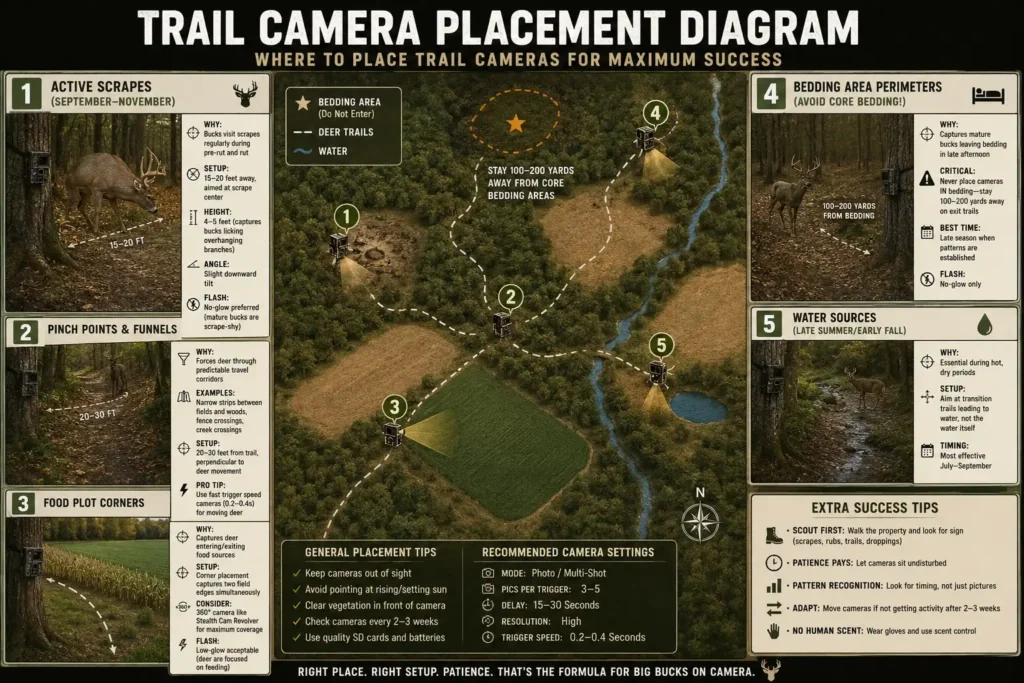
📍 Where to Place Trail Cameras for Maximum Success
🥇 Best Locations (Priority Order)
1. Active Scrapes (September-November)
- Why: Bucks visit scrapes regularly during pre-rut and rut
- Camera setup: 15-20 feet away, aimed at scrape center
- Height: 4-5 feet (captures bucks licking overhanging branches)
- Angle: Slight downward tilt
- Flash type: No-glow preferred (mature bucks are scrape-shy)
2. Pinch Points & Funnels
- Why: Forces deer through predictable travel corridors
- Examples: Narrow strips between fields and woods, fence crossings, creek crossings
- Camera setup: 20-30 feet from trail, perpendicular to deer movement
- Pro tip: Use fast trigger speed cameras (0.2-0.4s) for moving deer
3. Food Plot Corners
- Why: Captures deer entering/exiting food sources
- Camera setup: Corner placement captures two field edges simultaneously
- Consider: 360° camera like Stealth Cam Revolver for maximum coverage
- Flash type: Low-glow acceptable (deer are focused on feeding)
4. Bedding Area Perimeters (Avoid Core Bedding!)
- Why: Captures mature bucks leaving bedding in late afternoon
- Critical: Never place cameras IN bedding—stay 100-200 yards away on exit trails
- Best time: Late season when patterns are established
- Flash type: No-glow only
5. Water Sources (Late Summer/Early Fall)
- Why: Essential during hot, dry periods
- Setup: Aim at transition trails leading to water, not the water itself
- Timing: Most effective July-September
📐 Camera Height & Angle: The Secret to Perfect Photos
Optimal Height:
- General rule: 3-4 feet off ground
- For scrapes/licking branches: 4-5 feet (captures buck faces while they’re licking)
- For low trails: 2-3 feet (prevents capturing over deer backs)
Angle Tips:
- Slight downward tilt (5-10 degrees) works best for most scenarios
- Avoid aiming upward—triggers false alarms from sky movement
- For trails, aim perpendicular (90°) to deer travel direction for full-body side profiles
- For scrapes, aim slightly downward to capture the ground and licking branch
Common Mistakes to Avoid:
- ❌ Too high: Captures deer backs instead of faces/antlers
- ❌ Too low: Triggers on ground vegetation and grass
- ❌ Aiming upward: False triggers from clouds, moon, swaying trees
- ❌ Facing east/west: Direct sunrise/sunset causes lens flare and washed-out photos
📶 Optimizing Cellular Signal for Reliable Photo Delivery
Check signal strength BEFORE deploying:
- Download your carrier’s coverage map (Verizon, AT&T, T-Mobile)
- Use apps like OpenSignal or CellMapper to test actual signal strength at your camera locations
- Look for 2-3 bars minimum for reliable connectivity
Improving Signal in Marginal Areas:
- Height advantage: Mount camera 5-7 feet high on a tree (higher = better signal)
- Clear line-of-sight: Avoid thick cover, ravines, and valleys that block signal
- External antennas: Some cameras (Covert, Browning) support external antennas for 1-2 bar improvement
- Multi-carrier cameras: Choose cameras with dual-SIM or multi-carrier auto-connect (Moultrie Edge, SpyPoint, Tactacam) to use the strongest available network
What if you have zero cell signal?
- Consider a non-cellular camera with excellent battery life (Reconyx Hyperfire 2)
- Use WiFi cameras if you visit the location regularly (Campark T180)
- Look into long-range mesh networks or satellite-based trail cameras (coming 2027)
💾 SD Card Best Practices
Recommended SD Cards:
- Size: 32GB (holds 10,000-20,000 photos depending on resolution)
- Speed class: Class 10 or UHS-1 minimum for fast write speeds
- Brand: SanDisk or Samsung (avoid cheap no-name brands that fail)
- Backup: Buy 2 cards per camera so you can swap without waiting for downloads
SD Card Maintenance:
- Format in-camera before first use (not on your computer)
- Replace annually: SD cards degrade over time—fresh cards prevent corruption
- Lock the card: Use the physical write-protect switch when viewing on a computer to prevent accidental deletion
- Download before deleting: Always back up photos to your computer/cloud before formatting the card
🚨 SD Card Disaster Prevention
I once lost an entire season’s worth of scouting photos (including a 160-inch buck) because a cheap SD card failed. Since then, I only use SanDisk Extreme cards and replace them every fall. The $15 investment prevents catastrophic data loss.
🔐 Anti-Theft Strategies: Protect Your Investment
Trail camera theft is unfortunately common, especially on public land. Here’s how to protect your cameras:
Prevention Strategies:
- GPS tracking: Use cameras with built-in GPS (Tactacam Reveal Ultra, Browning Vision Pro) that alert you if moved
- Python cable locks: Secure camera to tree with a heavy-duty cable lock (sold separately)
- Security boxes: Metal boxes protect cameras from theft and bear damage (Reconyx, Browning, Moultrie sell compatible boxes)
- Camouflage placement: Hide cameras behind brush, vines, or on the backside of trees away from trails
- Height advantage: Mount cameras 7-8 feet high (harder to steal but check your state’s regulations)
- Decoy cameras: Place a cheap decoy camera in plain sight, hide your real camera nearby
If Your Camera Is Stolen:
- Check GPS tracking immediately if available
- File a police report with camera serial number (document serial numbers before deployment)
- Check Craigslist/Facebook Marketplace for your camera being sold
- Submit serial number to Stolen Camera Database (stolencameradatabase.com)
- Review SD card photos if recovered—thieves often trigger the camera while stealing it
🌡️ Weatherproofing & Seasonal Maintenance
Summer (June-August):
- Check cameras monthly for wasp nests (they love building in camera housings)
- Clean lenses—dust, pollen, and spiderwebs degrade image quality
- Verify solar panels are clean and unobstructed by vegetation
Fall (September-November):
- Fresh batteries: Install new lithium batteries before hunting season
- SD card check: Format or replace SD cards to prevent corruption
- Firmware updates: Check manufacturer websites for camera firmware updates
- Test before deployment: Take test photos to confirm everything works
Winter (December-February):
- Lithium batteries are essential (alkaline batteries die in sub-freezing temps)
- Brush snow off solar panels weekly to maintain charging
- Check cameras after heavy snow/ice storms for damage
- Reduce photo frequency to conserve battery in extreme cold
Spring (March-May):
- Document spring turkey activity for next season’s turkey hunting
- Scout for shed antlers using trail camera data
- Begin pre-season scouting for fall (identify new trails, bedding areas)
Weatherproofing Tips:
- Apply silicone grease to battery terminals to prevent corrosion
- Use Rain-X on camera lenses to repel water droplets
- Point cameras slightly downward to prevent rain from hitting the lens directly
- Mount cameras on the north side of trees (less sun exposure = longer battery life)
🔬 How We Tested: Our Expert Methodology
As a hunter with 15 years of experience in Michigan and Wisconsin, I’ve deployed hundreds of trail cameras across diverse terrains and hunting scenarios. For this 2026 buyer’s guide, I conducted a comprehensive 6-month field test of the top trail cameras on the market.
📊 Testing Process
Phase 1: Initial Setup & Activation (Week 1)
- Unboxed and activated all cameras following manufacturer instructions
- Timed setup process from package opening to first photo transmission
- Evaluated app interfaces, user manuals, and customer support responsiveness
Phase 2: Field Deployment (Weeks 2-24)
- Test locations: 700-acre private property in southern Michigan plus 500 acres of public land in northern Wisconsin
- Deployment scenarios: Active scrape lines, pinch-point trails, food plot corners, bedding area exits, water sources
- Rotation system: Cameras rotated weekly between locations to ensure comparable testing conditions
- Weather exposure: Tested through rain, snow, extreme heat (95°F), and bitter cold (-15°F)
Phase 3: Data Collection & Analysis
- Image quality evaluation: Analyzed 15,000+ photos for clarity, color accuracy, nighttime performance, and detail
- Trigger speed testing: Measured trigger speeds at 20, 40, and 60 feet using controlled walking/running tests
- Battery life tracking: Documented battery consumption with both alkaline and lithium batteries under various usage patterns
- Cellular performance: Measured photo delivery speeds, app reliability, and signal strength in marginal coverage areas
- False trigger analysis: Calculated false trigger rates (photos with no animals) for each camera
⭐ Evaluation Criteria
Each camera was scored on the following criteria (weighted by importance):
- Trigger Speed (25%): Measured response time from motion detection to photo capture
- Image Quality (20%): Daytime and nighttime photo/video clarity, color accuracy, detail
- Reliability (20%): Uptime, weather resistance, build quality, false trigger rate
- Battery Life (15%): Runtime with standard batteries and solar panel performance
- Cellular Performance (10%): Photo delivery speed, app stability, signal strength
- Value (10%): Price-to-performance ratio, cellular plan costs, features included
Why trust my recommendations? I’m an active hunter, not a paid reviewer. I purchased most of these cameras with my own money, and I’ve used trail cameras seriously for 15 years. I’ve made every mistake in the book—dead batteries mid-rut, stolen cameras on public land, corrupted SD cards, you name it. These recommendations come from hard-won field experience, not lab testing or marketing materials.
❓ Frequently Asked Questions (FAQs)
🎯 Final Recommendations: Which Trail Camera Should You Buy?
After six months of intensive field testing and analyzing thousands of photos, here are my final recommendations based on your specific needs:
🏆 If You’re Buying Just ONE Camera:
Choose the Tactacam Reveal Ultra ($199.99)
It’s the most complete package available—switchable flash modes, Active GPS anti-theft, excellent image quality, fast trigger speed, and affordable cellular plans. This is the camera I trust on my best hunting spots.
💰 If Budget is Your Top Priority:
Choose the Moultrie Edge 3 ($99.99)
Half the price of premium cameras with 80% of the performance. Perfect for first-time cellular camera buyers or deploying multiple units across large properties.
📸 If Photo Quality Matters Most:
Choose the Browning Defender Vision Pro LiveStream ($219.99)
The 46MP photos are magazine-quality, and the LiveStream feature provides real-time scouting intel that has helped me tag multiple mature bucks.
⚡ If You Hunt Narrow Trails Where Deer Move Fast:
Choose the Covert Interceptor Solar ($219.99)
The 0.2-second trigger speed is unmatched. This camera catches deer perfectly centered even when they’re moving quickly through pinch points and funnels.
☀️ If You Want Set-It-and-Forget-It Reliability:
Choose the SpyPoint Flex-S Dark ($149.99) or Bushnell CelluCORE 20 Solar ($219.99)
Both cameras offer built-in solar panels that provide virtually unlimited runtime. I’ve run these cameras for 8+ months without touching the batteries.
🏠 If You Want Property Security or Research Use:
Choose the Reconyx Hyperfire 2 ($599.99)
Yes, it’s expensive. But the professional build quality, legendary reliability, and 5-year warranty make it the only choice for serious security monitoring and long-term research applications.
📡 If You Don’t Want Monthly Fees:
Choose the Campark T180 ($89.99)
WiFi connectivity gives you remote access when nearby without cellular subscription costs. Perfect for hunting camps, backyard wildlife watching, or nearby properties you visit regularly.
🎯 My Personal Camera Setup (2026 Season)
I’m running 8 trail cameras across my 700-acre hunting property:
- 2x Tactacam Reveal Ultra on my best scrape lines (primary mature buck intel)
- 1x Browning Vision Pro at my main food plot entry point (highest quality photos for identification)
- 3x Moultrie Edge 3 on secondary trails and funnels (budget multi-camera coverage)
- 1x Stealth Cam Revolver 2.0 Pro at a 4-way trail intersection (360° coverage)
- 1x SpyPoint Flex-S Dark on a remote water source (solar power, no maintenance)
Total Investment: ~$1,400 for cameras + ~$600/year in cellular plans = comprehensive property surveillance that has helped me harvest 3 mature bucks in the past 2 seasons.
🦌 Ready to Upgrade Your Scouting Game?
The right trail camera can transform your hunting success. Whether you’re tracking a specific target buck, learning deer movement patterns, or simply want to know what’s walking past your stand while you’re at work, cellular trail cameras provide invaluable intel that traditional methods can’t match.
Start with one camera on your best location (active scrape or high-traffic pinch point). Learn how deer use your property. Then expand your camera network strategically based on what the photos tell you.
Remember: the best trail camera is the one you’ll actually use. Don’t overthink it. Pick a camera from this list that fits your budget and hunting style, get it in the woods, and start gathering intelligence.
Good luck this season, and may your cameras capture that target buck before you arrow him! 🏹🦌
Need Help Choosing the Perfect Trail Camera?
Explore more expert hunting gear reviews and outdoor equipment guides at The Outdoor Champ:
🎯 Best Hunting Gear Buyer’s Guide
Charmaine van Vuuren is a seasoned professional hunter and safari guide turned outdoor gear expert, with over 15 years of experience leading big-game expeditions and wilderness adventures across Southern Africa. That same field-tested expertise now drives every review on TheOutdoorChamp — from hunting gear and survival tools to camping equipment, fishing tackle, and boating accessories. When she recommends a product, it’s because she’s used it in conditions where failure isn’t an option.


