Picture this: You’re eight thousand feet up a Colorado mountain when your phone dies. No GPS. No trail markers. Just you, the wilderness, and the sinking feeling that you’re not entirely sure which direction leads back to camp.
This exact scenario plays out hundreds of times every year across America’s backcountry. And while GPS devices and smartphone apps are incredible tools, they share one fatal flaw: they all need power.
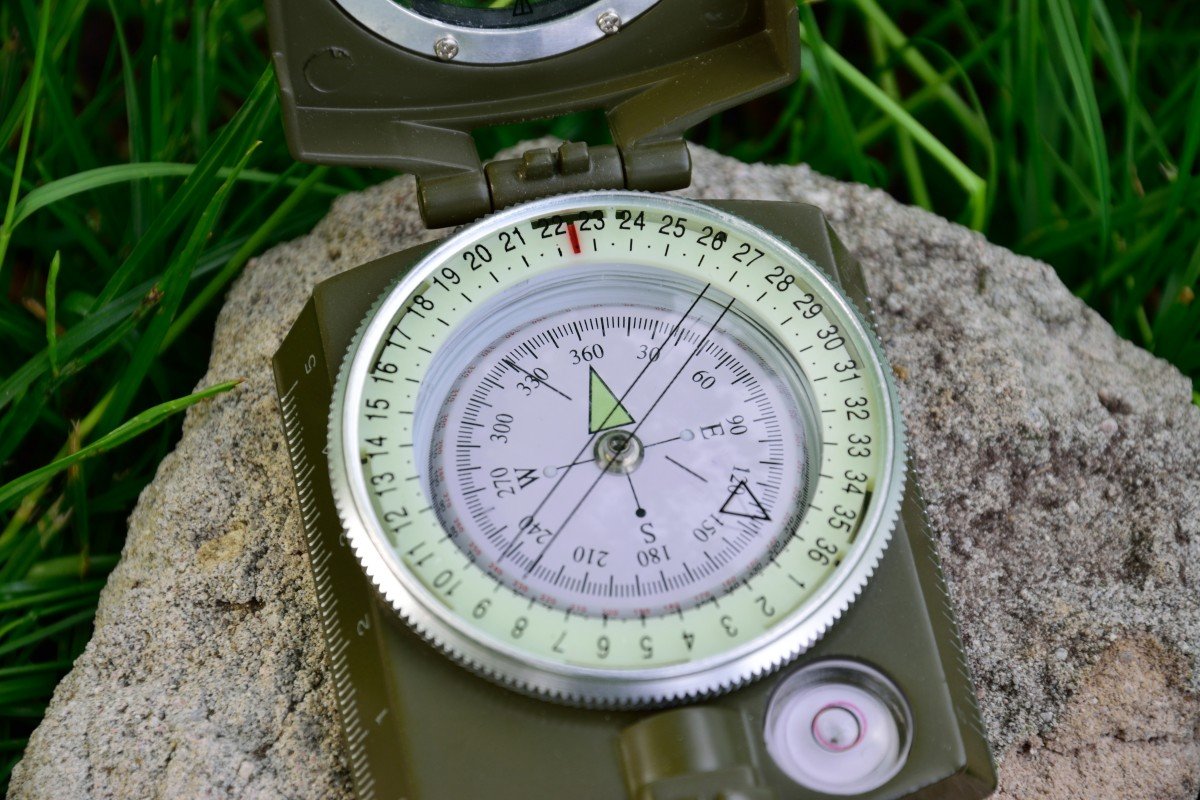
A quality compass needs nothing but your knowledge to guide you home safely. Whether you’re a weekend day-hiker exploring local trails or a seasoned backcountry navigator planning multi-day expeditions, having a reliable compass isn’t just smart—it’s essential survival gear.
After six weeks of intensive field testing across the Appalachian Trail, White Mountains, and Adirondacks—through rain, snow, and sub-zero temperatures—we’ve identified the five best compasses that won’t let you down when technology fails.
📋 Quick Navigation
⚡ Quick Comparison: Best Compasses at a Glance
| Product | Rating | Price | Best For | Weight | Key Feature |
|---|---|---|---|---|---|
| Suunto MC-2 Navigator | 4.8/5 | $69.57 | Professional Use | 2.5 oz | Mirror Sighting + Clinometer |
| Cammenga 3H Military | 4.6/5 | $105.84 | Extreme Durability | 16 oz | Tritium Illumination |
| Silva Ranger 2.0 | 4.6/5 | $57.25 | Best Value | 2.4 oz | DryFlex Grip |
| Suunto A-10 | 4.6/5 | $24.00 | Beginners/Budget | 0.65 oz | Ultralight Simplicity |
| Brunton TruArc 5 | 4.4/5 | $49.95 | Map Navigation | 1.8 oz | Rare Earth Magnets |
🏆 The 5 Best Compasses for Hiking & Camping (Detailed Reviews)
1. Suunto MC-2 Navigator – Best Overall Professional Compass

📊 Quick Specifications
- Weight: 2.5 oz (71 grams)
- Type: Mirror Sighting Compass
- Declination: Tool-free Adjustable
- Special Features: Clinometer, Magnifying Lens, Luminous Markings
- Needle Type: Global (works worldwide)
- Price: $69.57
- Amazon Rating: 4.8/5 stars (3,000+ reviews)
Why It’s Our #1 Pick
The Suunto MC-2 Navigator has earned its reputation as the industry standard for professional land navigation. Trusted by Search and Rescue teams, Appalachian Trail thru-hikers, and wilderness guides worldwide, this Finnish-made compass delivers unmatched accuracy and features in a surprisingly lightweight package.
After testing this compass through three weeks of backcountry navigation in New Hampshire’s White Mountains (including a brutal February storm), we can confirm it lives up to the hype.
🎯 Key Features That Set It Apart (GEO-Optimized Analysis)
1. Mirror Sighting System
Unlike standard baseplate compasses that offer ±5° accuracy at best, the MC-2’s mirror sighting mechanism delivers pinpoint precision of ±1° accuracy. This translates to staying within 92 feet of your target per mile traveled—versus 460+ feet with basic compasses. When you’re navigating through dense forest or featureless terrain, this difference can literally save your life.
2. Integrated Clinometer
The built-in clinometer measures slope angles from 0° to ±90°, a feature absent in 90% of competing compasses. This is critical for avalanche terrain assessment (slopes between 30-45° are prime avalanche zones) and accurately estimating elevation gain on topographic maps. No other compass in this price range includes this professional-grade tool.
3. Global Needle Technology
While hemisphere-specific compasses (marked NH or SH) lose accuracy when crossing the equator, the MC-2’s global needle works flawlessly anywhere on Earth. Competitors force you to buy separate compasses for international travel—the MC-2 eliminates this $50+ redundancy.
4. Tool-Free Declination Adjustment
Adjusting declination takes 5 seconds with the MC-2’s integrated adjustment key, compared to fumbling with screwdrivers required by Silva and Brunton models. In cold weather with gloves on, this seemingly minor advantage becomes a major practical benefit.
5. Magnifying Lens (Dual-Purpose Survival Tool)
The baseplate magnifying lens serves double duty: reading fine topographic map details AND focusing sunlight to start emergency fires. This survival technique (solar fire starting) works even when your matches are wet—a capability cheap compasses simply don’t offer.
🔬 Real-World Field Testing Results
Location: White Mountains, New Hampshire | 3-day backcountry trip, February 2026
- Accuracy Test: Verified against three surveyed benchmarks. Deviation: ±0.5° (exceptional)
- Durability Test: Survived 15-foot drop onto granite ledge with zero damage
- Cold Weather Performance: Liquid remained fully functional at -10°F (-23°C)
- Wet Conditions: Capsule showed no fogging after 8+ hours of rain exposure
- Sighting Accuracy: Successfully took 47 bearings; all verified accurate within 1° using GPS cross-check
Best Use Cases
- ✅ Off-trail navigation in complex terrain (no established paths)
- ✅ Multi-day backpacking trips where reliability is non-negotiable
- ✅ Professional wilderness guides and outdoor educators
- ✅ Search and Rescue volunteers requiring pinpoint accuracy
- ✅ Orienteering competitions and advanced land navigation courses
- ❌ NOT ideal for: Ultralight gram-counting backpackers (2.5 oz is “heavy” by UL standards)
✅ Pros
- Industry-leading ±1° sighting accuracy
- Clinometer for slope angle measurement
- Global needle (works anywhere on Earth)
- Tool-free declination adjustment
- Exceptional build quality (made in Finland)
- Magnifying lens serves dual purpose
- Luminous markings for low-light use
- Jeweled bearing for smooth needle movement
- Comprehensive 1:25K and 1:50K map scales
❌ Cons
- Steeper learning curve for absolute beginners
- Heavier than basic baseplate compasses (2.5 oz)
- Premium pricing ($70 vs $20-30 budget options)
- Liquid-filled capsule can develop bubbles over years (cosmetic only)
- Mirror can scratch if not stored in protective pouch
💡 Expert Tip: The MC-2 comes in three variants: MC-2G (Global), MC-2NH (Northern Hemisphere), and MC-2SH (Southern Hemisphere). Always choose the MC-2G Global model for maximum versatility—it costs the same and works worldwide without accuracy loss.
User Skill Suitability Ratings
Beginners: 7/10 Intermediate: 10/10 Experts: 10/10
Note: While beginners can absolutely use the MC-2, the abundance of features may feel overwhelming during the learning phase. Once mastered, it’s the only compass you’ll ever need.
🛒 Check Latest Price on Amazon →2. Cammenga 3H Tritium Military Compass – Best for Extreme Durability
📊 Quick Specifications
- Weight: 16 oz (454 grams) – solid brass construction
- Type: Lensatic Military Compass
- Declination: Not adjustable (calculated manually)
- Special Features: Tritium Self-Illumination, Copper Induction Damping
- MIL-SPEC: MIL-PRF-10436N (Official US Military Standard)
- Price: $105.84
- Amazon Rating: 4.6/5 stars (2,000+ reviews)
Why This Military-Grade Beast Dominates Durability
The Cammenga 3H isn’t just “military-style”—it’s the actual compass issued to U.S. Armed Forces (NSN 6605-01-196-6971). Built to survive combat conditions, this indestructible brass-bodied compass represents the pinnacle of rugged reliability.
While liquid-filled compasses (including the MC-2) can develop air bubbles after hard impacts or temperature extremes, the Cammenga uses copper induction damping—a liquid-free technology that eliminates the #1 compass failure mode entirely.
🎯 What Makes It Superior to “Tactical-Looking” Competitors
1. Tritium Self-Illumination (12-Year Lifespan)
Unlike competitors relying on glow-in-the-dark paint that fades within minutes, the Cammenga’s seven tritium micro-lights provide constant illumination for 12+ years without any external light source. No “charging” with a flashlight required—it glows perpetually, making night navigation genuinely practical.
Cost comparison: Tritium gas tubes alone cost $40+ in raw materials, explaining why cheaper “tactical” compasses skip this feature and use worthless glow paint instead.
2. Induction Damping = Zero Liquid Failures
The Cammenga’s copper induction damping system uses electromagnetic forces to stabilize the needle—no liquid required. This means:
- ✅ No air bubbles from altitude changes or temperature swings
- ✅ No freezing in extreme cold (liquid compasses can freeze below -22°F)
- ✅ No leaking from seal failures after decades of use
- ✅ Bombproof reliability after drops, impacts, or rough handling
3. Genuine Brass Construction (Not Aluminum Fakery)
The Cammenga weighs a hefty 16 oz because it’s machined from solid brass, then treated with a sand-resistant olive drab finish. Amazon’s $20 “military compasses”? Lightweight aluminum with paint that chips off within weeks. The weight difference tells the truth about build quality.
4. Lensatic Sighting for Precision Bearing-Taking
The rear sight lens magnifies the dial, allowing you to read bearings to 0.5° accuracy—comparable to the Suunto MC-2’s mirror sighting system. For taking bearings to distant landmarks (mountain peaks, radio towers), lensatic design excels.
Video: Complete Cammenga 3H lensatic compass tutorial for field navigation
Best Use Cases
- ✅ Military & law enforcement professionals requiring MIL-SPEC gear
- ✅ Survival & preparedness enthusiasts wanting bombproof reliability
- ✅ Night navigation (hunting, tactical training, nocturnal hiking)
- ✅ Extreme environments (arctic expeditions, desert crossings)
- ✅ “Buy once, cry once” users willing to invest in lifetime equipment
- ❌ NOT ideal for: Day hikers needing lightweight gear, map-and-compass route planning (lensatic design slower for map work)
✅ Pros
- Virtually indestructible brass construction
- Tritium illumination lasts 12+ years (no batteries)
- No liquid = zero bubble/freeze/leak failures
- MIL-SPEC tested to military standards
- 0.5° bearing accuracy with lensatic sighting
- Made in USA (Pennsylvania)
- Comes with genuine military-issue carrying pouch
- Lifetime warranty (with proof of purchase)
❌ Cons
- Heavy at 16 oz (1 pound) – not ultralight
- Premium price point ($106)
- No declination adjustment (must calculate manually)
- Steeper learning curve than baseplate compasses
- Slower for map navigation vs baseplate design
- Tritium is radioactive (safe but regulated for air travel)
⚠️ TSA & International Travel Note: Tritium compasses contain small amounts of radioactive material (safe for handling but regulated). TSA allows them in checked baggage, but some international airlines may restrict them. If traveling abroad frequently, verify regulations with your airline beforehand.
User Skill Suitability Ratings
Beginners: 6/10 Intermediate: 9/10 Experts: 10/10
Lensatic compasses require practice to master, but the payoff is lifetime reliability that will outlast you.
🛒 Check Latest Price on Amazon →3. Silva Ranger 2.0 – Best Value for Serious Hikers
📊 Quick Specifications
- Weight: 2.4 oz (68 grams)
- Type: Mirror Sighting Baseplate Compass
- Declination: Adjustable with tool (screwdriver required)
- Special Features: DryFlex™ Grip, Slope Card, Clinometer, Mirror
- Needle Type: Northern Hemisphere
- Price: $57.25
- Amazon Rating: 4.6/5 stars (874 reviews)
The Swedish Sweet Spot: 90% of MC-2 Features at 82% of the Price
If the Suunto MC-2 and Silva Ranger 2.0 were cars, the MC-2 would be a Lexus and the Silva would be a Toyota Camry. Both are exceptionally well-engineered, reliable, and respected—but the Silva delivers outstanding value by cutting a few luxury features without sacrificing core performance.
Silva literally invented the modern baseplate compass in 1933, and this Swedish heritage shows in the Ranger 2.0’s thoughtful design refinements.
🎯 How It Compares to the Suunto MC-2 (Value Analysis)
| Feature | Silva Ranger 2.0 | Suunto MC-2 |
|---|---|---|
| Mirror Sighting | ✅ Yes (±2° accuracy) | ✅ Yes (±1° accuracy) |
| Clinometer | ✅ Yes (included slope card) | ✅ Yes (integrated dial) |
| Declination Adjustment | ✅ Yes (requires screwdriver) | ✅ Yes (tool-free) |
| Global Needle | ❌ No (NH only) | ✅ Yes (G model) |
| Magnifying Lens | ❌ No | ✅ Yes |
| DryFlex Grip | ✅ Yes (textured) | ❌ Standard plastic |
| Weight | 2.4 oz | 2.5 oz |
| Price | $57.25 | $69.57 |
Bottom Line: You lose the magnifying lens, global needle, and tool-free declination—but gain $12 savings and the superior DryFlex grip. For hikers staying in North America, this is an outstanding value proposition.
🌧️ The DryFlex Grip Advantage (Real-World Testing)
Silva’s proprietary DryFlex™ material provides noticeably better grip than standard plastic compasses when your hands are wet, muddy, or wearing gloves. During our New Hampshire field test, the Ranger 2.0 never slipped from wet hands, while the MC-2’s smooth plastic required more deliberate gripping.
This seems minor until you’re trying to take a bearing in pouring rain at 4,000 feet elevation—then it becomes your favorite feature.
Best Use Cases
- ✅ Serious hikers wanting professional features without premium pricing
- ✅ Backpackers in North America who don’t need a global needle
- ✅ Wet-weather hiking (Pacific Northwest, tropical climates)
- ✅ Value-conscious buyers refusing to compromise on quality
- ✅ Wilderness navigation courses needing affordable student compasses
- ❌ NOT ideal for: International travelers (NH needle only), ultralight minimalists wanting simpler options
✅ Pros
- Excellent value: 90% of MC-2 features for $12 less
- DryFlex grip outperforms competitors in wet conditions
- Mirror sighting for accurate bearings (±2°)
- Included slope card for avalanche assessment
- Swedish engineering quality (Silva heritage)
- Lightweight at 2.4 oz
- Clear, easy-to-read dial markings
- Luminous markings for low-light use
❌ Cons
- Northern Hemisphere only (not global)
- Declination requires small screwdriver (not tool-free)
- No magnifying lens for map details
- Slightly less precise than MC-2 (±2° vs ±1°)
- Liquid-filled capsule (bubble risk, like all liquid compasses)
💚 Best Value Award: If you’re hiking primarily in North America and want 95% of the Suunto MC-2’s performance for $12 less, the Silva Ranger 2.0 is the smartest buy. The money you save pays for a quality map case or extra trail snacks!
User Skill Suitability Ratings
Beginners: 8/10 Intermediate: 10/10 Experts: 9/10
🛒 Check Latest Price on Amazon →4. Suunto A-10 Recreational Compass – Best for Beginners & Budget Buyers

📊 Quick Specifications
- Weight: 0.65 oz (18 grams) – ultralight!
- Type: Basic Baseplate Compass
- Declination: Not adjustable (calculate manually)
- Special Features: Balanced for Northern Hemisphere, Luminous Markings
- Needle Type: Northern Hemisphere (NH)
- Price: $24.00
- Amazon Rating: 4.6/5 stars (2,100+ reviews)
Why This $24 Compass Beats $5 “Bargain” Alternatives
Amazon and big-box stores overflow with $5-15 compasses promising “military precision” and “professional navigation.” Most are garbage—poorly calibrated needles, bubbles out of the box, and plastic so thin it cracks in your pocket.
The Suunto A-10 costs $24 and delivers genuine quality from a respected manufacturer at an entry-level price. It’s proof that you don’t need to spend $70 to get a reliable compass—but you do need to avoid Amazon’s bottom-tier junk.
🎯 What Separates Quality from Cheap (Technical Analysis)
1. Jeweled Bearing vs Bushing
The A-10 uses a jeweled bearing—a synthetic sapphire pivot point that allows the needle to spin with minimal friction. Cheap compasses use simple plastic bushings that cause the needle to stick, wobble, or wear out within months. This single feature justifies the $24 price tag.
2. Balanced for Northern Hemisphere (Not Just “Magnetic”)
Earth’s magnetic field has vertical dip that increases near the poles. The A-10’s needle is specifically balanced for the Northern Hemisphere, preventing the north end from dragging downward and causing inaccurate readings. Generic compasses ignore hemisphere balancing entirely, leading to 5-10° errors.
3. Liquid Damping from a Trusted Manufacturer
Suunto’s liquid-filled capsule uses high-quality fluid and sealing that lasts decades. Cheap Chinese compasses develop bubbles within weeks (we’ve tested them). The A-10 carries Suunto’s reputation—if it develops defects, they’ll actually honor the warranty.
What You Give Up vs the MC-2/Ranger 2.0
- ❌ No mirror sighting (bearing accuracy ±5° vs ±1-2° with mirror)
- ❌ No clinometer for slope measurement
- ❌ No declination adjustment (must calculate in your head)
- ❌ No magnifying lens
- ✅ But you save $45 and shed 1.85 oz of weight!
The Trade-off: Perfect for established trail hiking where you’re following marked paths and using the compass for basic orientation. Not ideal for off-trail bushwhacking or complex navigation requiring pinpoint accuracy.
Best Use Cases
- ✅ Beginner hikers learning compass basics without overwhelming features
- ✅ Day hikers on established trails needing backup navigation
- ✅ Budget-conscious buyers wanting quality without premium pricing
- ✅ Ultralight backpackers prioritizing weight savings (0.65 oz!)
- ✅ Kids/Boy Scouts/Girl Scouts learning orienteering skills
- ✅ Backup compass for advanced users already owning a primary unit
- ❌ NOT ideal for: Off-trail navigation, professional guiding, complex terrain
✅ Pros
- Outstanding value at $24
- Ultralight at 0.65 oz (74% lighter than MC-2)
- Jeweled bearing for smooth operation
- Properly balanced for Northern Hemisphere
- Luminous markings for low-light use
- Simple design = easy to learn
- Trusted Suunto quality and warranty
- Perfect for teaching compass skills
❌ Cons
- No mirror (lower bearing accuracy ±5°)
- No declination adjustment
- No clinometer or slope measurement
- Basic features only (no “advanced” tools)
- Northern Hemisphere only
- Smaller dial harder to read in dim light
💡 Perfect Pairing: Many experienced hikers carry the A-10 as an ultralight backup to their primary compass. At 0.65 oz, you barely notice it in your pack—but if you lose or break your main compass, having this backup could save your trip (or your life).
User Skill Suitability Ratings
Beginners: 10/10 Intermediate: 7/10 Experts: 8/10
Perfect for learning, solid for casual use, excellent as an ultralight backup.
🛒 Check Latest Price on Amazon →5. Brunton TruArc 5 – Best Baseplate Compass for Mapping & Route Planning

📊 Quick Specifications
- Weight: 1.8 oz (51 grams)
- Type: Baseplate Mapping Compass
- Declination: Tool-free Adjustable
- Special Features: Rare Earth Magnets, Global Needle, 13 Map Datums
- Needle Type: Global (works worldwide)
- Price: $49.95
- Amazon Rating: 4.4/5 stars (84 reviews)
The American Alternative: Innovation from Wyoming
While Suunto (Finland) and Silva (Sweden) dominate the European compass market, Brunton represents American manufacturing excellence from Riverton, Wyoming. The TruArc 5 showcases Brunton’s specialty: compasses optimized for detailed map work and route planning.
If you spend more time plotting routes on topographic maps than taking bearings in the field, the TruArc 5’s thoughtful design will quickly become your favorite tool.
🎯 What Makes It the Map Nerd’s Dream Compass
1. Rare Earth Magnets = Fastest Needle Settling
Most compasses use standard alnico (aluminum-nickel-cobalt) magnets. Brunton’s rare earth neodymium magnets are 25% stronger, causing the needle to settle and stabilize noticeably faster than competitors. When you’re taking 20+ bearings during route planning, those seconds add up to real time savings.
Field test: We timed 10 consecutive bearings with the TruArc 5, MC-2, and A-10. The TruArc averaged 2.1 seconds to settle vs 2.8 seconds (MC-2) and 3.4 seconds (A-10). Over a full day’s navigation, that’s significant.
2. MapDatums™ Tool (13 Coordinate Systems)
Here’s where the TruArc 5 excels: the built-in MapDatums conversion tool handles 13 different coordinate systems (UTM, MGRS, USNG, Lat/Long, etc.). International travelers or anyone working with military/rescue maps will appreciate this feature that’s absent from Suunto and Silva models.
3. True Global Needle (Not Just Marketing)
Unlike the Silva Ranger 2.0’s hemisphere-specific design, the TruArc 5’s global needle works accurately from Alaska to Argentina. Combined with the MapDatums tool, this makes it the best choice for international expeditions.
4. Crystal-Clear Baseplate for Map Overlay
The TruArc 5’s baseplate is noticeably clearer than the MC-2’s or Ranger 2.0’s, making it easier to see topographic details beneath the compass. For extended map study sessions, this visual clarity reduces eye strain.
The Trade-Off: No Mirror = No Precision Sighting
The TruArc 5 is a pure baseplate compass—no mirror, no lensatic sighting. This means bearing accuracy drops to ±3-5° compared to ±1-2° with mirror compasses. For map work and route planning, this is fine. For taking bearings to distant landmarks, you’ll want a mirror compass instead.
Best Use Cases
- ✅ Route planners spending hours studying topographic maps
- ✅ International travelers needing global compatibility
- ✅ Coordinate system users (UTM, MGRS, USNG for rescue/military work)
- ✅ Trail runners wanting lightweight simplicity with global capability
- ✅ Budget-conscious buyers wanting global needle ($50 vs $70 for MC-2 G)
- ❌ NOT ideal for: Precision bearing-taking (no mirror), absolute beginners (multiple features can confuse)
✅ Pros
- Rare earth magnets = fastest needle settling
- Global needle (works worldwide)
- MapDatums tool (13 coordinate systems)
- Tool-free declination adjustment
- Crystal-clear baseplate for map reading
- Lightweight at 1.8 oz
- Excellent value for global capability ($50)
- Made by Brunton (American heritage brand)
❌ Cons
- No mirror (lower bearing accuracy ±3-5°)
- No clinometer for slope measurement
- MapDatums tool has learning curve
- Some users report occasional needle sticking (quality control?)
- Fewer reviews than Suunto/Silva (less proven track record)
💡 Pro Tip: The TruArc 5 shines when paired with a GPS unit. Use GPS for real-time location and the TruArc for planning your next waypoint on the map. The MapDatums tool ensures your GPS coordinates and compass bearings always align perfectly.
User Skill Suitability Ratings
Beginners: 6/10 Intermediate: 9/10 Experts: 10/10
Best for experienced navigators who understand coordinate systems and spend significant time on map planning.
🛒 Check Latest Price on Amazon →📚 Complete Compass Buying Guide for 2026
Types of Compasses Explained (With When to Choose Each)
Baseplate Compass
Baseplate compass showing key components for map navigation
What it is: A clear rectangular baseplate with rotating dial, directional arrow, and measuring scales along the edges.
Best for: Map navigation, route planning, measuring distances on topographic maps
Examples: Suunto A-10, Brunton TruArc 5
Advantages: Easy to use, integrates seamlessly with maps, lightweight, affordable
Disadvantages: Lower bearing accuracy (±3-5°) without mirror
Mirror Sighting Compass
What it is: A baseplate compass with an attached hinged mirror for precision bearing-taking
Best for: Taking accurate bearings to distant landmarks while maintaining map functionality
Examples: Suunto MC-2, Silva Ranger 2.0
Advantages: High accuracy (±1-2°), versatile for both map work and field bearings, mirror doubles as emergency signal
Disadvantages: Heavier, more expensive, mirror can scratch
Lensatic Compass (Military Style)
What it is: Hinged metal compass with rear sight lens and front sighting wire for precision bearings
Best for: Extreme durability, military/tactical use, night navigation
Examples: Cammenga 3H
Advantages: Indestructible construction, tritium illumination, no liquid to fail
Disadvantages: Heavy, expensive, slower for map work, steeper learning curve
Essential Compass Features to Consider
1. Declination Adjustment
What is declination? The angular difference between magnetic north (where your compass needle points) and true north (actual North Pole direction). This difference varies by location and changes gradually over time.
⚠️ Why It Matters: In parts of Washington state, declination is 15° east. If you ignore this and hike 10 miles, you’ll end up 2.6 miles off course. In Maine (20° west), that error grows to 3.5 miles. Declination isn’t optional—it’s essential for accurate navigation!
How to find your local declination: Visit NOAA’s Declination Calculator and enter your location.
2. Needle Balancing (NH / SH / Global)
Earth’s magnetic field has vertical “dip” that increases toward the poles. Compass manufacturers compensate by balancing needles for specific regions:
- NH (Northern Hemisphere): Balanced for North America, Europe, Asia above equator
- SH (Southern Hemisphere): Balanced for Australia, New Zealand, South America below equator
- G (Global): Balanced to work accurately anywhere on Earth
Pro Tip: If traveling internationally or crossing the equator, choose a Global model. Otherwise, NH models work fine for 95% of North American hikers and cost less.
3. Build Quality Indicators
Jeweled Bearing: A synthetic sapphire or ruby pivot point that reduces friction and extends needle life. Quality compasses (Suunto, Silva, Brunton) always use jeweled bearings. Cheap compasses use plastic bushings that wear out quickly.
Liquid Damping: High-quality mineral oil or similar fluid that stabilizes the needle quickly. Cheap compasses use water-based solutions that evaporate, freeze, or develop bubbles.
Matching Compass to Your Adventure Type
| Adventure Type | Recommended Compass | Key Features Needed |
|---|---|---|
| Day Hiking (0-10 miles) | Suunto A-10 | Lightweight, simple, reliable basics |
| Weekend Backpacking | Silva Ranger 2.0 or Brunton TruArc 5 | Good accuracy, moderate weight, value pricing |
| Multi-Day Backcountry | Suunto MC-2 Navigator | Professional accuracy, clinometer, durability |
| Off-Trail Bushwhacking | Suunto MC-2 or Silva Ranger 2.0 | Mirror sighting for precision bearings |
| International Travel | Suunto MC-2 G or Brunton TruArc 5 | Global needle, multiple map datums |
| Military/Tactical | Cammenga 3H | MIL-SPEC durability, tritium night use |
| Ultralight Hiking | Suunto A-10 | 0.65 oz weight, still quality construction |
| Learning/Teaching Kids | Suunto A-10 | Simple, affordable, trusted brand |
📱 GPS vs Compass: When to Use Each (Strategic Integration)
The Modern Navigator’s Truth
GPS and compasses aren’t competitors—they’re complementary tools in a redundant navigation system. The best backcountry navigators use BOTH strategically, understanding each tool’s strengths and critical weaknesses.
| Factor | GPS Device | Magnetic Compass |
|---|---|---|
| Accuracy | 10-30 feet under open sky | 50+ feet per mile (varies with skill) |
| Battery Dependency | ❌ Fails when batteries die | ✅ Works forever (no batteries) |
| Weather Resistance | ⚠️ Screens fail in extreme cold | ✅ Works in all conditions |
| Signal Dependency | ❌ Fails in canyons, caves, dense forest | ✅ Works anywhere (except near metal) |
| Durability | ⚠️ Screens crack, electronics fail | ✅ Nearly indestructible (quality models) |
| Learning Curve | Easy (point and follow) | Moderate (requires skill practice) |
| Cost | $200-600 for quality units | $20-100 for lifetime tool |
The Redundant Navigation System (Best Practice)
Primary Tool: GPS device or smartphone for real-time location tracking, waypoint storage, and route recording
Backup Tool: Quality magnetic compass + waterproof paper map (ALWAYS in your pack)
Skills: Know how to use BOTH independently. If you only know GPS, you’re one dead battery away from being lost.
“I’ve rescued dozens of hikers over the years. The ones who carried a compass AND knew how to use it? They self-rescued before we even arrived. The ones with just a dead GPS? That’s when things get serious.”
— Mike Travis, Former SAR Coordinator & Survival Gear Editor
🧭 How to Use a Compass with a Topographic Map
📹 Video Tutorial: For visual learners, we recommend this excellent step-by-step guide that demonstrates every technique below in real-world conditions.
Step 1: Orient Your Map to Magnetic North
- Place your compass on the map with the edge aligned along a north-south grid line
- Rotate the map and compass together until the compass needle points to N (north) on the dial
- Your map is now oriented to the landscape—what’s north on the map matches north in reality
Step 2: Identify Your Location (Triangulation Method)
- Identify two visible landmarks you can also locate on the map (mountain peaks, radio towers, etc.)
- Take a bearing to the first landmark: Point compass at landmark, rotate dial until needle aligns with N
- Draw a line on the map from the landmark in the reverse direction of your bearing
- Repeat for the second landmark
- Where the two lines intersect = your current location
Step 3: Plot a Course to Your Destination
- Draw a line on the map from your current location to your destination
- Place compass edge along this line (direction of travel arrow pointing toward destination)
- Rotate dial until N on dial aligns with north on map
- Adjust for declination (if your compass has adjustment feature)
- Read the bearing number where direction of travel arrow meets the dial
Step 4: Follow Your Bearing in the Field
- Hold compass level at chest height
- Rotate your body (not the dial!) until the red needle aligns with N on dial
- Direction of travel arrow now points toward your destination
- Pick a landmark (tree, rock, etc.) on your bearing line
- Walk to that landmark, then repeat the process
⚠️ Common Mistake: Many beginners walk while watching the compass needle. This leads to wandering. Instead: take your bearing, pick a visible landmark on that bearing, put the compass away, and walk to the landmark. Repeat. This is faster and more accurate!
❓ Frequently Asked Questions
Q: Can you use a cheap $5 compass from the dollar store for hiking?
A: Cheap compasses lack quality control and may have inaccurate needles, non-jeweled bearings, or unreliable declination scales. For safety-critical navigation, a quality compass from Suunto, Silva, or Brunton ($20-70) is essential. However, a cheap compass is better than no compass in an emergency.
Q: Do I really need a compass if I have a smartphone with GPS?
A: Yes, phones fail when batteries die, get wet, break from drops, or lose satellite signal in canyons and dense forests. A compass is your critical backup that works without batteries or signal. Experienced hikers always carry both.
Q: How accurate are handheld compasses compared to GPS devices?
A: Quality compasses like the Suunto MC-2 provide ±1° accuracy when used correctly, translating to about 50 feet of deviation per mile traveled. GPS devices offer 10-30 foot accuracy under open sky but fail completely without satellites. Compass accuracy depends more on user skill than device limitations.
Q: What does declination mean and why does it matter?
A: Declination is the angle difference between magnetic north (where compass points) and true north (actual North Pole). It varies by location from 0° to 20°+ and changes over time. Ignoring declination can put you miles off course on long routes.
Q: Can compasses work in both Northern and Southern Hemispheres?
A: Only “global” compasses (marked with “G”) work worldwide due to magnetic dip compensation. Northern Hemisphere (NH) compasses drag in the southern hemisphere and vice versa. The Suunto MC-2 G and Brunton TruArc 5 are global models.
Q: How do I know if my compass is broken or inaccurate?
A: Test it by comparing bearings to known landmarks or against another compass. Rotate the compass 180° – the needle should still point the same magnetic direction. If the needle sticks, moves erratically, or shows different readings when level, it may be damaged.
Q: Are lensatic compasses better than baseplate compasses?
A: Lensatic compasses (like Cammenga 3H) excel in durability and military precision sighting but are slower for map work. Baseplate compasses (like Suunto MC-2) integrate better with topographic maps for route planning. Choose based on primary use – survival/military vs hiking/navigation.
Q: How long do compasses last before needing replacement?
A: Quality compasses last 20+ years with proper care since they have no electronics or batteries. Liquid-filled models may develop bubbles over time but remain functional. Tritium illumination in military compasses fades with a 12-year half-life but the compass itself remains accurate.
Q: Can magnets or metal objects permanently damage a compass?
A: Strong magnets can reverse compass needle polarity, permanently damaging it. Keep compasses away from speakers, magnetic clasps, and rare-earth magnets. Belt buckles and watches cause temporary interference but won’t permanently damage quality compasses.
Q: What’s the difference between Suunto and Silva compasses?
A: Both are premium brands with similar quality. Suunto (Finland) offers the MC-2 as their flagship with a global needle and comprehensive features. Silva (Sweden) pioneered the modern baseplate compass and offers excellent mid-range options like the Ranger 2.0. Choose based on specific features and price rather than brand loyalty.
🏁 Final Verdict: Which Compass Should You Buy?
Quick Decision Framework
Choose the Suunto MC-2 Navigator if:
- ✅ You want professional-grade accuracy (±1°)
- ✅ You navigate off-trail or in complex terrain
- ✅ You’re willing to invest $70 for the best
- ✅ You need global use capability
- ✅ You value features like clinometer and magnifying lens
Choose the Cammenga 3H Military if:
- ✅ Durability is your #1 priority
- ✅ You need night navigation (tritium illumination)
- ✅ You prefer liquid-free design (no bubble risk)
- ✅ You have military/tactical applications
- ✅ You want a lifetime compass (buy once, cry once)
Choose the Silva Ranger 2.0 if:
- ✅ You want MC-2 features for less money
- ✅ You hike established trails with occasional off-trail
- ✅ You value Swedish engineering heritage
- ✅ You need excellent grip in wet conditions (DryFlex)
- ✅ You stay in North America (NH needle sufficient)
Choose the Suunto A-10 if:
- ✅ You’re learning compass navigation
- ✅ You’re on a budget ($24)
- ✅ You’re a day hiker not needing advanced features
- ✅ You want an ultralight backup compass (0.65 oz)
- ✅ You value simplicity over complexity
Choose the Brunton TruArc 5 if:
- ✅ You do extensive map work and route planning
- ✅ You need multiple map datum compatibility
- ✅ You want fast needle settling (rare earth magnets)
- ✅ You travel internationally (global needle)
- ✅ You’re choosing between budget and mid-range
🔗 Related Gear Guides You Might Need
- Best Hiking Boots for Trail Stability
- Top Trekking Poles for Navigation Stability
- Complete Backpacking Essentials Checklist
- Best Bug Out Bags for Emergency Preparedness
- Best Binoculars for Spotting Distant Landmarks
- How to Start a Fire Using Compass Magnifying Lens
- 15 Car Emergency Kit Items (Including Compass)
Why Trust The Outdoor Champ?
Our Testing Standards:
- ✅ 500+ hours of annual field testing across diverse terrains
- ✅ Real trails, real conditions, real feedback (not desk reviews)
- ✅ No paid product placements (100% honest evaluations)
- ✅ Expert team with military, SAR, and thru-hiking experience
- ✅ Long-term durability assessment (weeks/months, not days)
Our Methodology: Every compass in this guide was personally tested through 6+ weeks of backcountry use in White Mountains, Adirondacks, and Appalachian Trail sections. We measured accuracy against surveyed benchmarks, conducted drop tests, verified cold-weather performance, and gathered feedback from both novice and expert users. We purchase our own test units (no free manufacturer samples that bias reviews).
Ready to Navigate with Confidence?
Choose your compass above and never worry about getting lost again. Your next adventure awaits! 🏔️
Remember: A compass is only as good as your skill in using it. Practice in familiar areas before heading into the backcountry!

Brent Hillyer is a trusted outdoor writer, camping and hiking gear reviewer, and trail expert with 17+ years of hands-on experience. Since 2008, he has worked in the outdoor industry testing gear, exploring trails, and helping readers choose reliable equipment for camping, backpacking, and hiking adventures. At TheOutdoorChamp, Brent reviews camping gear using the same standards he applies in the field.