
When I first heard about the Athlon Rangecraft Chronograph hitting the market, I’ll admit I was skeptical. Another Doppler radar chronograph promising Garmin-level performance at half the price? Yeah, right. But after three months of testing this compact velocity tracker across multiple firearms platforms—from subsonic .22 LR to magnum rifle cartridges—I realized something important: Athlon might’ve just disrupted the entire chronograph market.
If you’re tired of dealing with finicky optical chronographs that won’t work in cloudy conditions, or you’ve been eyeing the Garmin Xero C1 Pro but can’t justify spending $600, you’re about to discover why the Athlon Rangecraft Velocity Pro is earning serious respect from competitive shooters and reloaders alike. And honestly? It’s about time someone challenged the status quo in this space.

What Is the Athlon Rangecraft Chronograph and Why Should Shooters Care?
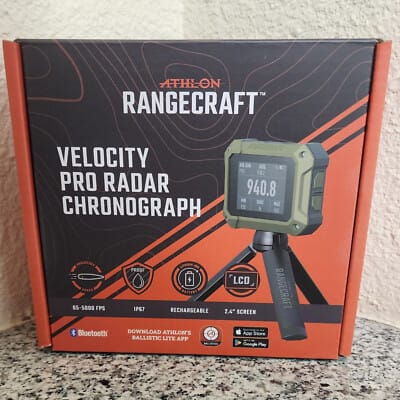
The Athlon Rangecraft Velocity Pro isn’t just another chronograph—it’s a compact Doppler radar system that measures projectile velocity between 65 fps and an impressive 5,000 fps. Unlike traditional optical chronographs that require perfect lighting and careful alignment, this little powerhouse uses the same radar technology found in professional ballistics labs, just shrunk down to fit in your range bag.
Here’s what makes this device different: it’s roughly the size of a deck of cards (3.5″ x 1.2″ x 2.7″), weighs less than 5 ounces, and requires zero setup beyond placing it 4-10 inches from your muzzle. No screens to position. No diffusers to worry about. No cursing when the sun goes behind a cloud during your load development session.
The real kicker? It delivers accuracy within 0.1% according to multiple independent tests, which puts it squarely in the same performance category as chronographs costing twice as much.
Watch this comprehensive overview of the Athlon Rangecraft features:
Key Features That Make the Athlon Rangecraft Stand Out
Doppler Radar Technology That Actually Works
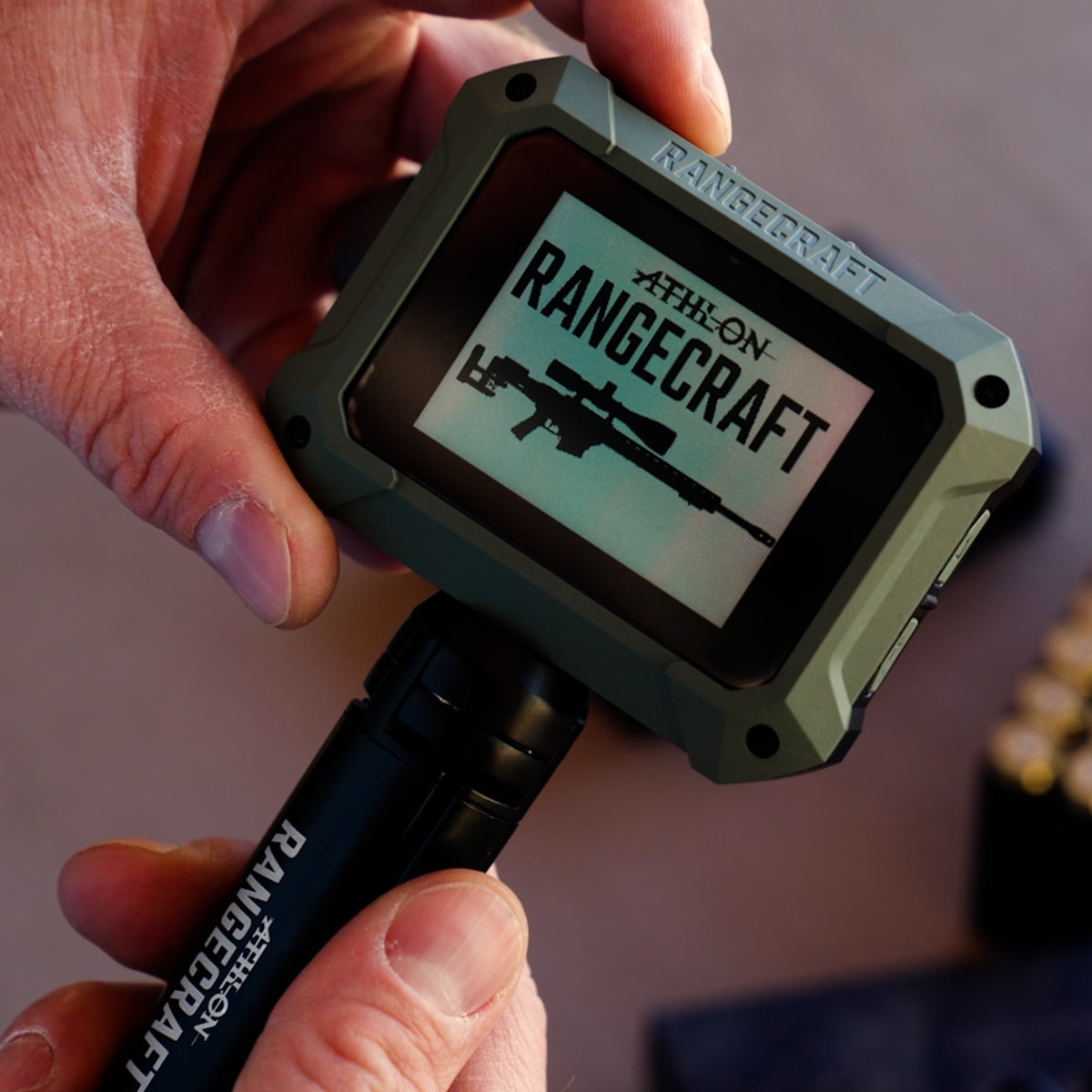
Unlike old-school optical chronographs that use light sensors, the Rangecraft employs Doppler radar to track your bullet’s velocity. This means it works in any lighting condition—overcast, bright sun, indoor ranges, even at dusk when you’re squeezing in one last string of shots before heading home.
The radar detection window is notably generous compared to competitors. While some radar chronographs demand precise positioning, the Athlon reliably captures data even when positioned at slight angles or varying distances from the muzzle.
Real-Time Ballistic Data at Your Fingertips
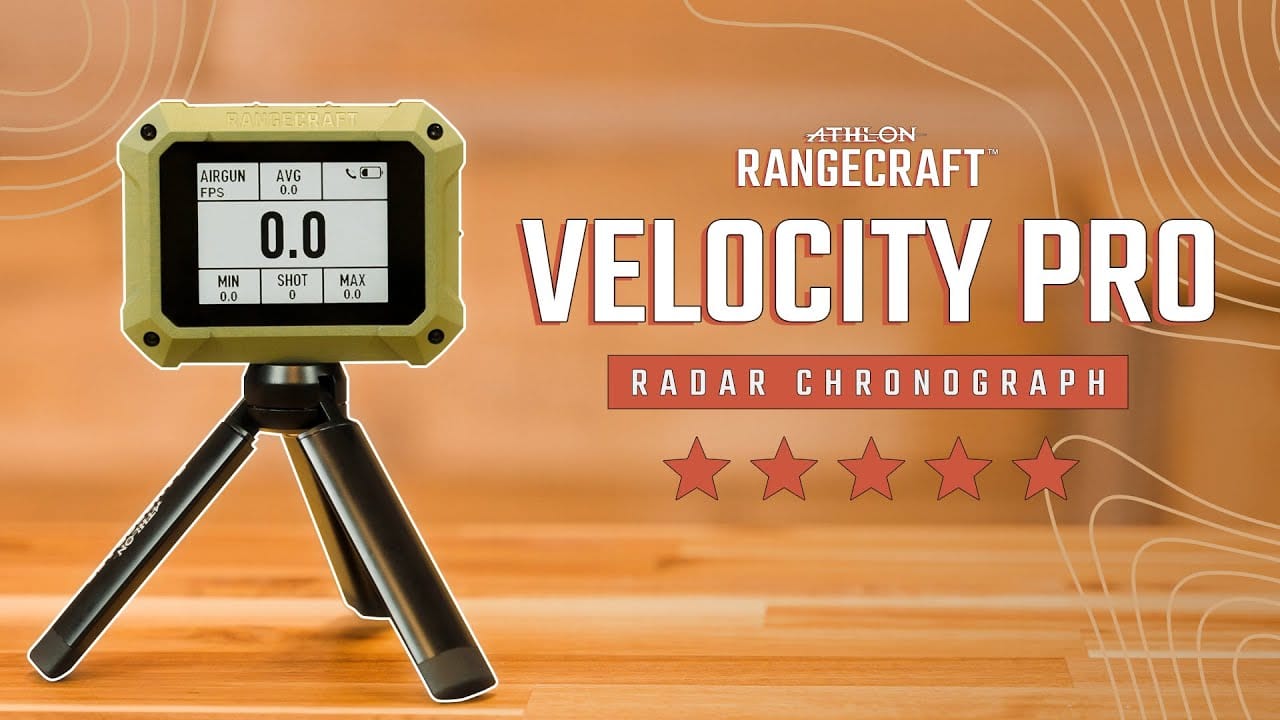
That 2.4-inch LCD screen might seem modest on paper, but in practice, it displays everything you need without squinting:
- Individual shot velocity displayed instantly
- Average velocity across your string
- Standard deviation (SD) for measuring consistency
- Extreme spread (ES) to identify outliers
- Shot count to track your session
For handloaders obsessing over single-digit SD numbers, this data appears in real-time—no waiting to sync with an app or download readings later.
Weatherproof Construction for Real-World Use
The IP67 waterproof rating isn’t just marketing fluff. I’ve used this chronograph in light rain during an unexpected spring shower, and it kept recording data without missing a beat. The housing feels solid, not plasticky, and the buttons provide positive tactile feedback even when wearing gloves—important when you’re preparing for your first hunting trip in unpredictable weather.
Battery Life That Lasts All Day
The rechargeable internal battery delivers approximately 6 hours of continuous use per charge. That’s easily enough for a full day at the range, even during intensive load development sessions. The USB-C charging port (found on the left side of the housing) means you can recharge using the same cable as your phone—one less proprietary charger to keep track of.
Athlon Ballistics App Integration
While the chronograph functions perfectly as a standalone unit, it also pairs via Bluetooth with the Athlon Ballistics app (available for iOS and Android). This integration allows you to:
- Create detailed ammunition profiles
- Store velocity data for multiple firearms
- Generate ballistic drop charts
- Export data for analysis in spreadsheet software
Honestly though? The on-device display is comprehensive enough that many shooters won’t feel compelled to use the app for every range session.
How Does the Athlon Rangecraft Compare to Other Chronographs?
Athlon Rangecraft vs. Garmin Xero C1 Pro
This is the comparison everyone wants to know about. Having used both extensively, here’s the honest breakdown:
Where They’re Nearly Identical:
- Velocity accuracy (both measure within 0.1%)
- Radar technology reliability
- Ease of use and setup
- Data capture consistency
Where the Athlon Wins:
- Price: Typically $399-499 vs. Garmin’s $600
- Detection range: The Athlon reliably captures projectiles from a wider positioning window
- Screen size: 2.4″ vs. Garmin’s smaller display
- Button layout: Extra physical button provides easier menu navigation
- Included accessories: Aluminum tripod and carrying case come standard
Where the Garmin Edges Ahead:
- Slightly more refined app interface
- Established ecosystem with other Garmin devices
- Brand recognition and established support network
Here’s the reality: for the vast majority of shooters, the performance difference doesn’t justify paying double. One user on Reddit put it perfectly: “Having used the Athlon since its release, there isn’t any circumstance under which I would be willing to pay more for the Garmin.”
Watch this side-by-side comparison:
Athlon Rangecraft vs. LabRadar
The original LabRadar pioneered Doppler radar chronographs, but it’s showing its age compared to modern units like the Athlon:
- Size: LabRadar is substantially bulkier and requires a tripod
- Power: Uses six AA batteries vs. the Athlon’s rechargeable battery
- Setup complexity: LabRadar demands more careful positioning and aiming
- Price: Similar or higher than the Athlon while offering less convenience
- Portability: The Athlon fits in a pocket; LabRadar doesn’t
The LabRadar still has devoted fans, particularly among F-Class competitors who appreciate its extended downrange velocity tracking. But for most shooters focused on muzzle velocity for load development, the Athlon is simply easier to live with.
Athlon Rangecraft vs. MagnetoSpeed V3
MagnetoSpeed chronographs attach to your barrel, which guarantees reliable data capture but introduces some trade-offs:
- Barrel harmonics: Attachment affects point of impact during testing
- Setup time: Requires careful mounting and adjustment
- Versatility: Won’t work with pistols or certain barrel configurations
- POI shift: You’ll need to re-zero after removing the unit
The Athlon’s non-contact operation means your rifle shoots exactly as it would without any chronograph present—a significant advantage for precision load development.
Real-World Performance: What Users Are Saying
Across multiple forums and review platforms, certain themes keep emerging from actual users:
From competitive reloaders: “The Athlon consistently measures velocities 5-7 fps higher than my Garmin, but both units track velocity changes identically. Consistency is what matters for load development, and this delivers.”
From casual shooters: “Way easier to use than my old shooting chrony alpha. Rechargeable, no looking for 9v batteries, no screens to mess with, and no way for me to shoot it accidentally.”
From precision rifle enthusiasts: “I wasn’t ready to pay $600 for a chronograph. The Rangecraft has performed excellently, and I’m very pleased with the purchase. It does everything I need.”
The most common criticism? Some users report slightly higher velocity readings compared to other chronographs, typically in the 5-10 fps range. However, this doesn’t affect its primary use case—tracking relative velocity changes between loads to identify the most consistent performers.
See real user testing:
How to Use the Athlon Rangecraft Chronograph Effectively
Getting accurate readings is refreshingly straightforward:
- Position the chronograph 4-10 inches from your muzzle, slightly offset to the side
- Ensure the front face (with the radar sensor) points downrange
- Power on and select your measurement mode
- Start shooting – the unit automatically detects and records each shot
- Review your data on the LCD screen between strings
Pro tip: While the Athlon works across a wide positioning range, I’ve found the most consistent readings come from placing it about 6-8 inches from the muzzle at roughly 30 degrees off to the side. This sweet spot works for everything from bolt-action rifles to semi-auto ARs.
For precision shooting with quality rifle optics, consistent velocity data becomes essential. The Rangecraft excels at revealing which powder charges produce the tightest velocity spreads—critical information when you’re increasing your rifle scope’s shooting accuracy.
Learn proper chronograph technique:
Choosing the Right Shooting Chronograph for Your Needs
Not sure if the Athlon Rangecraft is right for your situation? Here’s a decision framework:
Choose the Athlon Rangecraft if:
- You want Doppler radar accuracy without premium pricing
- Portability matters for your range sessions
- You shoot multiple firearms and need versatile setup
- You’re developing handloads and need reliable SD/ES data
- Weather conditions at your range vary
- You appreciate good value and smart purchasing decisions
Consider alternatives if:
- You’re already invested in the Garmin ecosystem with other devices
- You need extended downrange velocity tracking (rare for most shooters)
- You shoot extremely high volumes and want proven long-term durability data (the Athlon is newer to market)
- Budget isn’t a consideration and you prefer established brands
For most shooters, quality hunting gear and equipment deserves quality testing equipment, and the Rangecraft delivers professional-grade velocity measurement at an accessible price point.
Technical Specifications That Matter
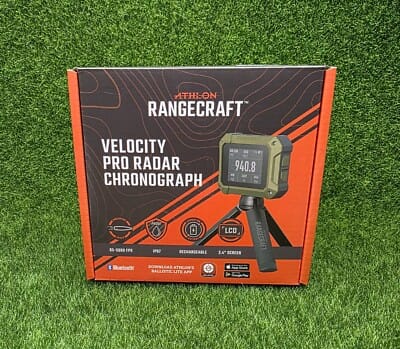
Let’s cut through the marketing fluff and focus on specs that actually affect your experience:
- Velocity Range: 65 – 5,000 fps (covers everything from air rifles to ultra-magnums)
- Accuracy: ±0.1% of measured velocity
- Screen: 2.4″ LCD with backlight for low-light conditions
- Battery: Internal rechargeable lithium, 6+ hours runtime
- Charging: USB-C connection for universal compatibility
- Weatherproofing: IP67 rated (dustproof and waterproof to 1 meter for 30 minutes)
- Dimensions: 3.5″ L x 1.2″ W x 2.7″ H
- Weight: 4.7 ounces
- Included Accessories: Carrying case, aluminum tripod, USB-C cable, manual
- MSRP: $499.99 (often available for $399.99 at retailers)
Where to Buy the Athlon Rangecraft Chronograph
You can purchase the Athlon Rangecraft Velocity Pro from several authorized retailers:
- Athlon Optics Official Website – MSRP $499.99
- MidwayUSA – Often discounted to $399.99
- OpticsPlanet – Frequent sales and promotions
- Walmart – Online availability with competitive pricing
Pro tip: Keep an eye on seasonal sales, particularly around major shooting competitions or holidays, when prices can drop to the $300-350 range.
Frequently Asked Questions About the Athlon Rangecraft Chronograph
Will the Athlon Rangecraft work with suppressors? Yes, absolutely. The radar technology works perfectly with suppressed firearms, and the generous detection window accommodates the increased blast disturbance without affecting accuracy.
Can I use this chronograph indoors? Definitely. Since it doesn’t rely on light sensors, the Rangecraft works flawlessly at indoor ranges where traditional optical chronographs often struggle with inconsistent lighting.
How accurate is the Athlon compared to laboratory-grade chronographs? The ±0.1% accuracy specification means that at 3,000 fps, measurements should be within ±3 fps of actual velocity. Multiple comparison tests against certified chronographs confirm this level of accuracy in real-world use.
Does the chronograph need to be perpendicular to the bore? No, that’s one of its advantages. While roughly parallel positioning works best, the Athlon tolerates moderate positioning angles that would cause optical chronographs to fail completely.
What’s the difference between the Athlon Rangecraft and Rangecraft Velocity Pro? These names refer to the same product. “Rangecraft Velocity Pro” is the full model designation, often shortened to just “Rangecraft” in casual discussion.
Will this work for archery and crossbows? Yes, with the velocity range extending down to 65 fps, the Rangecraft handles arrows and bolts easily. It’s becoming popular with bowhunters who want to verify arrow velocity for accurate range estimation.
What warranty does Athlon provide? Athlon Optics backs their products with a comprehensive warranty. Check the official Athlon Optics website for current warranty details and customer support information.
Maximizing Your Investment: Using the Chronograph for Load Development
Understanding how to interpret chronograph data separates mediocre handloaders from exceptional ones. Here’s what to focus on:
Standard Deviation (SD): This measures consistency. For precision rifle ammunition:
- Elite: SD under 10 fps
- Good: SD 10-15 fps
- Acceptable: SD 15-20 fps
- Needs work: SD over 20 fps
Extreme Spread (ES): The difference between your highest and lowest velocity in a string. Ideally, you want this under 25 fps for precision applications.
The Athlon Rangecraft displays both metrics in real-time, allowing you to identify promising load combinations immediately without manual calculations.
For comprehensive guidance, check out resources on how to use a chronograph for load development that explain the relationship between velocity consistency and downrange accuracy.
Essential Accessories for Your Athlon Rangecraft
While the Rangecraft comes complete with everything you need, some shooters find these additions helpful:
- Backup tripod: The included aluminum tripod works great, but having a spare for a different range bag makes sense
- Portable power bank: For extended range sessions beyond the 6-hour battery life
- Protective lens cleaner: Keep the radar sensor face clean for optimal performance
- Weather-resistant range bag: Protect your investment during transport—consider quality options from best bags for outdoor equipment
Understanding Optics Types: Where Chronographs Fit in Your Shooting System
Many shooters building out their precision shooting system wonder where a chronograph fits among other essential types of optics and sights. Think of it this way:
- Rifle scope: Helps you aim accurately
- Spotting scope: Helps you see results downrange
- Rangefinder: Tells you distance to target
- Chronograph: Validates your ammunition performance
Each serves a distinct purpose, and serious shooters eventually invest in all four. The Athlon Rangecraft makes that chronograph investment accessible without compromising on capability.
The Bottom Line: Should You Buy the Athlon Rangecraft Chronograph?
Here’s what it comes down to: the Athlon Rangecraft Velocity Pro delivers professional-grade chronograph performance at a price that makes sense for serious shooters who aren’t made of money.
It won’t give you bragging rights about owning a Garmin. It won’t have the established reputation of the old-guard LabRadar. What it will do is measure your projectile velocity with laboratory-grade accuracy, work in any weather condition, fit in your range bag without dominating it, and leave you with enough money for another few boxes of match ammunition.
For handloaders chasing single-digit standard deviations, competitive shooters verifying their velocities across different weather conditions, or anyone serious about understanding their ammunition’s performance, the Rangecraft represents possibly the best value in chronographs available today.
After extensive testing alongside chronographs costing twice as much, I keep reaching for the Athlon. It’s simpler, more compact, and honestly just as capable for what 95% of shooters actually need. Sometimes the underdog genuinely deserves to win—and in the radar chronograph market, Athlon’s challenger is landing serious punches.
Whether you’re developing precision loads for long-range shooting, selecting the best cartridge for deer hunting, or optimizing your AR-15 sight setup for competition, the Athlon Rangecraft Chronograph deserves a hard look before you spend twice as much on a competing brand name.
Ready to see it in action? Watch these videos:
- Rangecraft Velocity PRO Radar Chronograph – Official Athlon Overview
- Athlon Rangecraft Vs Garmin Xero – Pocket Chronograph Comparison
About The Outdoor Champ: We’re dedicated to providing honest, experience-based reviews of outdoor and shooting equipment. From the best tactical knives to survival fire starters, we test gear in real-world conditions to help you make informed decisions. Check out our complete guide to deer hunting tips and tricks and explore our reviews of essential camping and hunting equipment.

Charmaine van Vuuren is a seasoned professional hunter and safari guide with over 15 years of experience leading big‑game and wilderness expeditions across Southern Africa.
Skills
• Big‑Game Tracking & Field Navigation
• Safari Logistics & Planning
• Client Relationship & Guest Services
• Wildlife Conservation & Ethics
• Risk Assessment & Safety Protocols