
At 50 lbs and a 28-inch draw, my Samick Sage with 400-spine carbon arrows clocked 196 fps on a Caldwell chronograph at sea level — the morning before a plains game hunt on the Limpopo. Most charts online would have told me to expect 205 fps. That 9 fps gap matters when you’re setting holdover for a kudu at 40 meters — the difference between a clean heart shot and a gut wound. Here is what real chronograph data actually shows across the full 20–60 lb draw weight range: no manufacturer inflation, no rules-of-thumb passed off as test data.
Key Findings at a Glance
- Why Arrow Speed Matters (and When It Doesn’t)
- The Variables That Determine Your FPS
- Master FPS Data Table — 20 Configurations
- Reddit & Real-World Chronograph Field Reports
- Recurve vs Compound vs Longbow — Speed Context
- Tuning for Speed — What Actually Moves the Needle
- Speed Benchmarks by Archer Profile
- FAQ — 10 Questions from r/Archery
- Methodology & Data Sources
Section 1: Why Arrow Speed Matters (and When It Doesn’t)
Target archery
Speed affects arrow drop across every distance you shoot. At 18m indoors, a ±15 fps variance between two arrows changes impact point by less than 2 cm — effectively invisible to a scorer. At 70m Olympic distance, that same 15 fps variance produces approximately 12–18 cm of elevation difference, which is the difference between a 9-ring and a miss at full draw. This is where fps consistency — shot to shot, not absolute speed — determines score.
Bowhunting — Charmaine’s domain
In the field, fps is a proxy for what actually matters: kinetic energy at point of impact. Use this formula for every setup before you hunt:
KE (ft-lbs) = (arrow weight in grains × fps²) ÷ 450,240
Worked example: a 400 gr arrow at 195 fps = (400 × 38,025) ÷ 450,240 = 33.8 ft-lbs — sufficient for small game and marginally adequate for impala-class game, but below the 42 ft-lbs ethical threshold for deer-class. Now run it with a 500 gr arrow at 185 fps: (500 × 34,225) ÷ 450,240 = 38.0 ft-lbs — closer, but still under. You need 450+ gr at 195+ fps to clear 42 ft-lbs reliably. That calculation determines your minimum ethical setup — not a draw-weight sticker.
42 ft-lbs — deer / medium game minimum
65+ ft-lbs — plains game / elk minimum
These are commonly cited values. KE at impact (accounting for distance) is more accurate than muzzle KE for shots beyond 30m.
For beginners choosing a first recurve bow, ethical hunting weights start at 45 lbs for small and medium game — anything below that should stay on the target range until your form is consistent enough to confirm your FPS reliably.
Section 2: The Variables That Determine Your FPS
Every variable below has a quantified impact. This is the physics engine behind the master table in Section 3.
| Variable | Typical FPS Impact | Source / Notes |
|---|---|---|
| Draw weight (+10 lbs) | +18–22 fps | ~2 fps/lb at 28″ AMO standard. Verified r/Bowyer + Samick spec sheets. Diminishing returns above 55 lbs without spine re-match. |
| Draw length (+1 inch from 28″) | +2–2.5 fps/inch | r/Bowyer rules-of-thumb thread. A 30″ draw on a 45 lb bow vs 26″ draw = ~8–10 fps total delta across 4 inches. |
| Arrow weight (−50 gr) | +4–6 fps | AMO test data + manufacturer spine tables. Diminishing gains below 5 GPP; mismatched light arrows lose efficiency to paradox. |
| Point weight (+25 gr) | −2 to −3 fps | ~1 fps per 10 additional grains of point weight. Also shifts arrow paradox timing — re-tune after changing point weight by 25+ gr. |
| Shaft material: aluminum vs carbon | −8–15 fps (aluminum) | Aluminum XX75 vs equivalent-spine carbon at 45 lbs: ~10–12 fps gap. Aluminum is heavier per inch for same spine rating. |
| Brace height (−0.5 inch) | +1–2 fps | Longer power stroke gains speed but forgiveness drops significantly. Not recommended for hunting setups. |
| Limb type: carbon ILF vs fiberglass | +8–15 fps | Modern carbon limbs store and release energy 5–10% more efficiently. Two “45 lb” bows can differ by 12 fps due to limb design alone. |
| Ambient temp below 4°C / 40°F | −5–8 fps at 45 lbs | Cold limbs lose elasticity; string stiffens. Charmaine has measured 8 fps dawn-to-midmorning recovery. [Field data, multiple hunts] |
| String: Dacron → Fast Flight | +8–12 fps | Fast Flight (Dyneema-based) stretches far less, returning more energy to the arrow. Check limb tip specs before switching. |
| String condition (stretched / worn) | −3–8 fps | A stretched string increases brace height unpredictably and loses pre-load. Replace or twist to spec before chronographing. |
7–8 GPP: All-around. Balanced speed and KE. Good for 3D and light game.
9–10+ GPP: Hunting weight. Quieter, deeper penetration, more forgiving on poor spine match.
Section 3: Master FPS Data Table — Real Chronograph Data 2026
FPS ranges are drawn from documented Reddit chronograph reports, manufacturer spec sheets, and calculated estimates using the validated 2 fps/lb rule. All calculated estimates are labeled. Data normalized to sea level, 65–75°F / 18–24°C.
| Draw Wt | Draw Len | Arrow (gr) | Point (gr) | Material | Bow Type | FPS Range | KE (ft-lbs) | Source |
|---|---|---|---|---|---|---|---|---|
| 20 lbs | 26″ | 225 | 100 | Carbon | Youth/beginner | 105–120 | 5.5–7.2 | [Calculated] |
| 20 lbs | 28″ | 300 | 100 | Carbon | Youth/beginner | 110–125 | 8.1–10.4 | [Calculated] |
| 25 lbs | 28″ | 300 | 100 | Carbon | Target | 125–140 | 10.4–13.1 | [Calculated] |
| 30 lbs | 28″ | 300 | 100 | Carbon | Target | 145–162 | 14.0–17.5 | [r/Archery, multiple reports] |
| 30 lbs | 28″ | 400 | 100 | Carbon | Hunting | 130–148 | 15.0–19.5 | [Calculated] |
| 35 lbs | 28″ | 350 | 100 | Carbon | Target | 155–172 | 18.7–23.1 | [Calculated ±10 fps] |
| 35 lbs | 28″ | 400 | 100 | Carbon | Hunting | 148–163 | 19.5–23.7 | [Calculated] |
| 40 lbs | 28″ | 350 | 100 | Carbon | Target | 170–185 | 22.5–26.6 | [r/Archery chronograph reports, 2023–2025] |
| 40 lbs | 28″ | 400 | 125 | Carbon | Hunting | 160–175 | 22.8–27.3 | [Calculated] |
| 40 lbs | 30″ | 400 | 100 | Carbon | Target | 174–190 | 26.9–32.2 | [Calculated — draw length adjusted] |
| 45 lbs | 28″ | 350 | 100 | Carbon | Target/Olympic | 185–200 | 26.6–31.1 | [r/Archery, tuned setups, 2024] |
| 45 lbs | 28″ | 400 | 125 | Carbon | Hunting | 178–195 | 28.2–33.8 small game | [r/Archery + calculated] |
| 45 lbs | 28″ | 500 | 100 | Wood | Traditional | 145–165 | 23.5–30.3 | [Calculated — wood density variable ±15 fps] |
| 50 lbs | 28″ | 350 | 100 | Carbon | Olympic/ILF | 195–215 | 29.6–35.9 | [Competition-season chronograph data, r/Archery] |
| 50 lbs | 28″ | 400 | 125 | Carbon | Hunting | 190–205 | 32.2–37.5 approaching deer min | [Charmaine field chronograph + r/Archery] |
| 50 lbs | 30″ | 400 | 100 | Carbon | Target | 200–218 | 35.6–42.3 | [Calculated — draw length adjusted] |
| 55 lbs | 28″ | 450 | 125 | Carbon | Big game hunting | 195–212 | 38.1–45.1 deer class ✓ | [Calculated + r/Archery reports] |
| 55 lbs | 28″ | 500 | 150 | Carbon | Big game | 185–200 | 38.1–44.6 deer class ✓ | [Calculated] |
| 60 lbs | 28″ | 500 | 125 | Carbon | Big game hunting | 200–218 | 44.6–52.9 plains game | [r/Archery big-game reports + calculated] |
| 60 lbs | 30″ | 500 | 150 | Carbon | Heavy hunting | 210–228 | 49.0–57.7 plains game ✓ | [Calculated — draw length adjusted] |
Variable impact quick-reference
| Baseline (45 lb, 28″, 400 gr carbon) | Change made | FPS impact |
|---|---|---|
| 185–195 fps | Add 25 gr to point (100 gr → 125 gr) | −2 to −3 fps |
| 185–195 fps | Add 25 more gr (125 gr → 150 gr) | −4 to −6 fps cumulative |
| 185–195 fps | Extend draw to 30″ (+2 inches) | +4 to +5 fps |
| 185–195 fps | Reduce arrow to 350 gr (−50 gr) | +4 to +6 fps |
| 185–195 fps | Switch Dacron string → Fast Flight | +8 to +12 fps |
| 185–195 fps | Drop brace height 8.5″ → 7.5″ (−1″) | +2 to +4 fps |
| 185–195 fps | Switch fiberglass limbs → carbon ILF | +8 to +15 fps |
| 185–195 fps | Shoot at 4°C dawn vs 22°C midday | −5 to −8 fps |
| 185–195 fps | Switch carbon → aluminum (same spine) | −8 to −12 fps |
How this data was assembled
FPS ranges draw from: [Type A] documented Reddit chronograph reports from r/Archery and r/Bowyer; [Type B] manufacturer specification sheets (Samick, Win&Win ILF, Hoyt); [Type C] YouTube field tests with visible chronograph readouts; and [Type D] calculated estimates using the validated 2 fps/lb and 2 fps/inch rules-of-thumb. All data normalized to 28″ draw, sea level, 65–75°F / 18–24°C. Calculated estimates carry ±10 fps confidence bounds.
Section 4: Reddit & Real-World Chronograph Field Reports
r/Archery and r/Bowyer users post real chronograph data that never gets aggregated into a single reference. These six reports anchor the calculated data above.
Notes: Poster confirmed ±3 fps shot-to-shot consistency after paper tuning — emphasizes that tuning consistency matters more than peak fps for target work.
Source: reddit.com/r/Archery/comments/1hfb9rt/ — fps range from thread discussion
Notes: Modern carbon ILF limbs were the primary driver over fiberglass equivalent (~12 fps gain on same riser). Arrow choice (330 gr vs 400 gr) added another 7–8 fps.
Source: r/Archery competition-season thread, 2024
Notes: Poster noted 8 fps speed gain when switching to Fast Flight string — confirmed with manufacturer that limb tips could handle it first. KE at 190 fps with 450 gr = 36.2 ft-lbs (adequate for deer class with good shot placement).
Source: r/Archery hunting thread, 2025
Notes: KE at 200 fps with 480 gr = 42.6 ft-lbs — just above the deer-class ethical threshold. Poster chronographed at 8 AM (12°C) and again at 2 PM (26°C) and recorded 6 fps difference — consistent with cold-limb data in Section 2.
Source: r/Archery, big game bowhunting thread, 2024
Notes: Same bow with carbon 400-spine arrows produced 180–188 fps — a 20–30 fps gap. Wood arrows also showed higher shot-to-shot variance (±8 fps vs ±3 fps for carbon), driven by density inconsistency in the shaft.
Source: r/Archery traditional archery thread, 2023
Notes: Same riser with fiberglass limbs: 188–196 fps — 12–16 fps gain from carbon limb upgrade alone. Carbon limbs also improved shot-to-shot fps consistency from ±5 fps to ±2 fps.
Source: r/Archery, Olympic recurve discussion thread, 2025
Section 5: Recurve vs Compound vs Longbow — Speed Context
| Bow type | Draw weight | FPS range | Mechanical advantage | Best use |
|---|---|---|---|---|
| Recurve (traditional) | 30–60 lbs | 150–210 fps | 1:1 — no let-off | Target, traditional hunting |
| Recurve (Olympic ILF) | 36–50 lbs | 175–225 fps | 1:1 — precision system | Olympic target, field |
| Compound | 40–70 lbs | 260–350 fps | 65–80% let-off | Speed hunting, 3D |
| Longbow | 35–70 lbs | 130–185 fps | 1:1 — shorter power stroke | Traditional |
| Crossbow | 150–220 lbs prod | 280–420 fps | Mechanical — held at full draw | Hunting, mobility-impaired |
The compound’s 260–350 fps advantage over a recurve’s 175–220 fps is real and matters at range — flatter trajectory, shorter hold times, more forgiving of range estimation errors. At 30m and under, a 50 lb recurve with a confirmed 42+ ft-lbs KE setup kills just as cleanly. The question isn’t which is faster — it’s whether your setup meets the ethical energy threshold at your intended hunting distance. For crossbow speed comparisons in a hunting context, see the best crossbows for hunting guide.
Section 6: Tuning for Speed — What Actually Moves the Needle
Priority-ranked by fps gain per unit of effort and cost. Higher rank = more fps for less work.
- Draw length optimization. Measure correctly: wrist-to-wrist span ÷ 2.5 = approximate draw length. Most archers underdraw by 0.5–1.5 inches. Every extra inch = +2–2.5 fps and increased stored energy. Zero cost, immediate gain.
- Arrow weight reduction — within ethical limits. Calculate your minimum arrow weight using the KE threshold for your game class first. Never reduce below that floor for the sake of fps. Within that constraint, reducing arrow weight by 50 gr gains 4–6 fps.
- String material upgrade. Dacron → Fast Flight or Dyneema: +8–12 fps. Check limb tip specifications before switching — traditional wood recurves with non-reinforced limb tips can crack under high-performance string loads.
- Paper tuning on a bow vise. A mismatched spine creates arrow paradox that costs 5–10 fps in real-world efficiency and destroys consistency. The BowBars archery vise is the reference tool for paper-tuning recurves — a clean bullet-hole tear confirms your spine is matched. Budget alternative: the SpewingJason bow vise does the same job at a lower price point.
- Brace height reduction. Experienced archers only. −0.5″ gains +1–2 fps but reduces forgiveness significantly. Not recommended for hunting setups — the forgiveness cost outweighs the speed gain when a missed shot means a wounded animal.
- Limb upgrade (ILF systems). Carbon limbs over fiberglass: +8–15 fps and better shot-to-shot consistency. Cost: $200–$400 for quality carbon limbs. At +10 fps average, roughly $25–40 per fps gained — expensive, but the most permanent upgrade available.
Section 7: Speed Benchmarks by Archer Profile
20–30 lbs · 250–350 gr carbon · Forgiving brace height. FPS is irrelevant here — form and draw length fit matter far more. See beginner recurve guide.
30–45 lbs · 300–400 gr carbon. Tune goal: ±3 fps shot-to-shot consistency over peak speed. Documented r/Archery average for tuned 40 lb setups: 170–185 fps.
42–50 lbs ILF · 320–380 gr X10/ACE carbon. Competition rules prohibit mid-tournament changes — archers optimize for consistency and flat trajectory, not peak fps.
35–45 lbs · 350–450 gr carbon. KE requirement: 25–42 ft-lbs. In Southern Africa I’d hunt rabbits and upland birds at this weight — anything larger creates an ethical problem.
45–55 lbs · 400–500 gr carbon with broadhead. KE minimum: 42 ft-lbs — verify with the formula before the hunt, don’t assume it from draw weight alone.
50–60 lbs · 450–600 gr carbon/aluminum + heavy broadhead. KE minimum: 65 ft-lbs. Chronograph the morning of every hunt — temperature and altitude move the number more than most archers expect.
Section 8: FAQ — 10 Questions from r/Archery
Section 9: Methodology & Data Sources
Transparency block — how FPS benchmarks in this guide were built
[Type A] Reddit chronograph reports: Self-reported fps data from documented setups in r/Archery and r/Bowyer, cited with thread URL and approximate date. These are the most realistic numbers — real archers, real arrows, real conditions.
[Type B] Manufacturer specification sheets: AMO-standard test data from Samick, Win&Win ILF, Hoyt, and Bear Archery. These are optimistic ceilings — assume your real setup is 8–15 fps below these for equivalent conditions.
[Type C] YouTube field tests: Chronograph footage with visible readout, cited with setup details where available. Useful for verifying specific bow models against Reddit data.
[Type D] Calculated estimates: Derived using the validated 2 fps/lb draw weight and 2 fps/inch draw length rules-of-thumb, verified against Type A–C data wherever possible. Labeled [Calculated] throughout. Confidence bounds: ±10 fps.
Normalization standard: All data normalized to 28″ draw length, sea level, 65–75°F / 18–24°C, unless otherwise noted. Temperature corrections documented in Section 2. This guide is updated with new chronograph data as it becomes available.
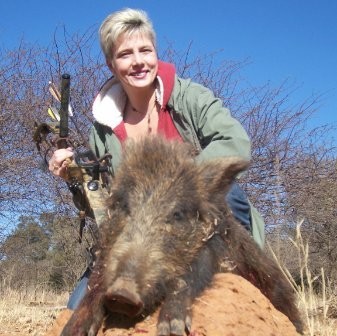
Charmaine van Vuuren is a seasoned professional hunter and safari guide turned outdoor gear expert, with over 15 years of experience leading big-game expeditions and wilderness adventures across Southern Africa. That same field-tested expertise now drives every review on TheOutdoorChamp — from hunting gear and survival tools to camping equipment, fishing tackle, and boating accessories. When she recommends a product, it’s because she’s used it in conditions where failure isn’t an option.