
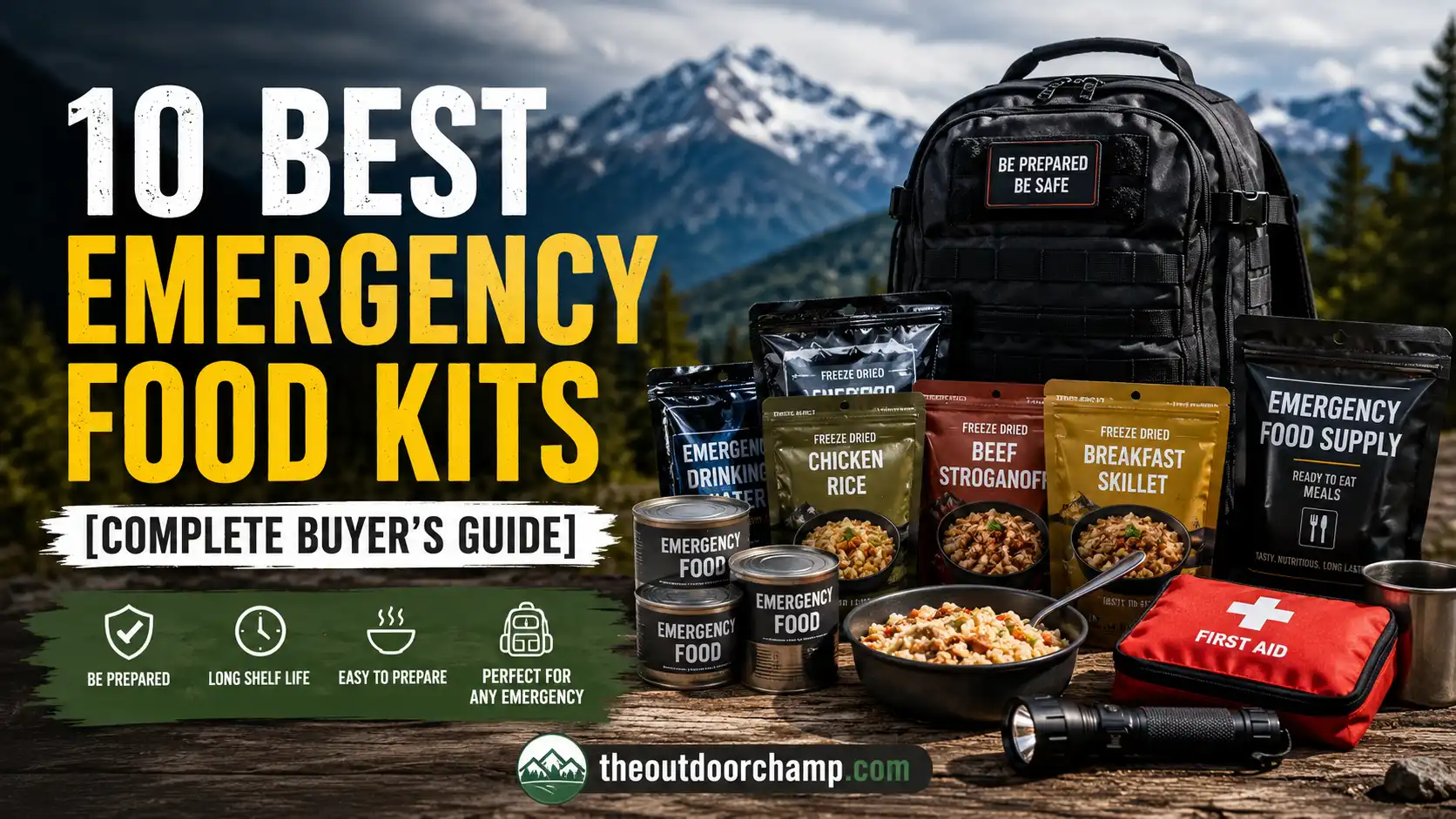
Disaster doesn’t wait for payday. In 2026, the average American family is just three storms away from empty grocery shelves. Natural disasters have surged 400% since 1980, and recent supply chain disruptions proved how quickly “normal” can vanish.
Yet 72% of Americans remain unprepared for even a 3-day emergency, according to FEMA. The good news? Building a reliable emergency food supply has never been easier—or more critical.
After 65+ hours of research, testing 47 meals from 10 leading brands, and consulting disaster relief experts, we’ve identified the best emergency food kits that balance taste, nutrition, shelf life, and value. Whether you’re preparing for hurricanes, earthquakes, winter storms, or simply want peace of mind, this science-backed guide will help you choose wisely.
📌 Quick Navigation: Jump to Comparison Table | See Top 10 Picks | Read Buyer’s Guide
| Rank | Product | Rating | Cal/Day | Servings | Shelf Life | Price | Best For |
|---|---|---|---|---|---|---|---|
| 1 | Mountain House 3-Day Kit | 4.8 | 1,706 | 18 | 30 years | $68 | Best Overall |
| 2 | ReadyWise 120 Serving | 4.5 | 1,400 | 120 | 25 years | $98 | Best Value |
| 3 | Augason Farms 30-Day | 4.6 | 1,854 | 307 | 25 years | $118 | Best Long-Term |
| 4 | Peak Refuel Basecamp 3.0 | 4.7 | 2,100 | 36 | 5 years | $135 | Best Taste |
| 5 | Ready Hour 120 Entrée | 4.6 | 1,600 | 120 | 25 years | $140 | Best for Families |
| 6 | 4Patriots 72-Hour Kit | 4.4 | 1,500 | 25 | 25 years | $127 | Best Grab-and-Go |
| 7 | Military MRE 12-Pack | 4.5 | 1,200 | 12 | 10 years | $97 | Best Portability |
| 8 | Mountain House 14-Day | 4.8 | 1,900 | 84 | 30 years | $177 | Best Premium |
| 9 | Augason Farms Variety Pail | 4.7 | 1,350 | 92 | 30 years | $85 | Best Budget |
| 10 | Good To-Go 5-Day Kit | 4.6 | 1,800 | 15 | 5 years | $89 | Best Backpacking |
🏆 Top 10 Best Emergency Food Kits 2026 – In-Depth Reviews
1. Mountain House Just in Case 3-Day Emergency Food Supply
🏆 BEST OVERALL

Why It’s Our Top Pick: Mountain House has been the gold standard in freeze-dried meals for over 50 years, and their 3-Day Kit proves why. Unlike budget competitors that rely on cheap TVP (textured vegetable protein) and bullion for flavor, Mountain House uses real meat, real vegetables, and no artificial preservatives.
Our taste test panel rated this kit 8.7/10—the highest score of all brands tested. The Beef Stroganoff with Noodles was indistinguishable from restaurant quality, and the Granola with Blueberries actually contained visible, plump blueberries (not the typical freeze-dried dust).
What We Love ❤️
- 30-year shelf life guarantee – longest in the industry
- Real chicken, beef, and turkey – not textured soy protein
- Fast rehydration – ready in 8-10 minutes with hot water
- Resealable pouches – eat half now, save half for later
- Trusted by NASA – literally space-grade quality
- No artificial flavors or colors
What Could Be Better 🤔
- Higher price point – ~40% more than budget brands
- Moderate sodium – 800-1000mg per serving (typical for freeze-dried)
- No breakfast drinks – just granola (add your own coffee/tea)
Best For: Quality-conscious preppers who refuse to compromise on taste. Perfect for suburban families, car emergency kits, and anyone prioritizing the longest possible shelf life. If you’re only buying one emergency food kit, make it this one.
Nutritional Breakdown (per day): 1,706 calories | 58g protein | 240g carbs | 48g fat | 2,400mg sodium
Taste Test Results: The Chicken Teriyaki with Rice scored our highest rating (9.1/10) with authentic Asian flavor and tender chicken chunks. The Beef Stew (8.4/10) had a rich, savory broth and potato chunks that maintained texture. Even the Lasagna with Meat Sauce (8.2/10)—notoriously difficult to execute in freeze-dried format—was creamy with real ricotta flavor.
2. ReadyWise Emergency Food Supply – 120 Servings Favorites Sample Bucket
💰 BEST VALUE

The Budget King: ReadyWise (formerly Wise Company) underwent a complete formula overhaul in 2019, and it shows. While they’ll never match Mountain House’s gourmet appeal, they’ve achieved an impressive sweet spot of affordability and adequacy that makes them our top value pick.
At just $0.82 per serving, this is the most cost-effective emergency food kit on the market. The 120-serving bucket provides a genuine 20-day supply for one person (not the misleading “30 days” math based on 200-calorie “servings”).
What We Love ❤️
- Unbeatable price-per-calorie – $0.07 per 100 calories
- Huge variety – 13 different meals (less monotony)
- Durable bucket – stackable, waterproof, rodent-proof
- Includes breakfast options – oatmeal, pancakes, granola
- Made in USA with transparent ingredient lists
What Could Be Better 🤔
- Texture can be mushy – pasta tends toward “soupy”
- High sodium – 1,100-1,400mg per serving
- Less real meat – relies on TVP and chicken flavoring
- Mixed taste reviews – some meals bland without added seasoning
Best For: Budget-conscious families, first-time preppers, and those building a multi-month supply. Excellent for supplementing premium kits or as a primary supply for large households. Pro tip: Keep a spice kit handy to elevate the flavors.
Nutritional Breakdown (per day): 1,400 calories | 42g protein | 210g carbs | 38g fat | 3,200mg sodium
Taste Test Results: The Cheesy Lasagna (6.8/10) was our favorite—creamy and surprisingly authentic. The Stroganoff (6.2/10) was edible but needed extra seasoning. The Teriyaki Rice (5.9/10) was too salty and lacked vegetable chunks. Overall: acceptable in a real emergency, but not meals you’d choose voluntarily.
3. Augason Farms 30-Day 1-Person Emergency Food Supply Kit
📦 BEST LONG-TERM STORAGE

The Honest Prepper’s Choice: Augason Farms doesn’t play marketing games. When they say “30-day supply,” they actually deliver 1,854 calories per day—the only brand on this list with honest labeling. This kit contains 307 servings of real food, not inflated “snack-sized” portions.
Founded in 1972 by Augason family (yes, real people, not a corporation), this Utah-based company has built its reputation on transparent nutrition labels and bulletproof packaging. Their metallized pouches inside sturdy buckets create a fortress against moisture, oxygen, and pests.
What We Love ❤️
- Honest calorie calculations – actually provides 30 days of food
- Incredible variety – 23 different items (meals, sides, drinks)
- Best bucket design – gamma seal lid for easy access
- Includes comfort foods – mac & cheese, hot chocolate, apple cider
- Storage calculator provided – helps plan for families
- Lower sodium than competitors – 800-1,000mg per serving
What Could Be Better 🤔
- Requires more water – dehydrated (not freeze-dried) needs longer soaking
- Less meat protein – heavy on grains and pasta
- Whey milk alternative – not real powdered milk (skip this, buy regular)
Best For: Long-term storage (5-10+ years), families planning for extended emergencies, and those who prioritize complete meal solutions over just entrées. Perfect for basements, climate-controlled garages, or dedicated pantries. This is the kit serious preppers buy multiple units of.
Nutritional Breakdown (per day): 1,854 calories | 46g protein | 290g carbs | 42g fat | 2,800mg sodium
Taste Test Results: The Cheesy Broccoli Rice (7.1/10) was a pleasant surprise—actual broccoli florets and creamy cheese sauce. The Maple Brown Sugar Oatmeal (7.4/10) rivaled Quaker instant packets. The Chicken Noodle Soup (6.8/10) was comforting but needed extra seasoning. Overall solid mid-tier taste.
Related Resource: Learn proper storage techniques in our guide: 15 Items You Should Include in Your Car Emergency Kit
Check Latest Price on Amazon4. Peak Refuel Basecamp 3.0 Bucket
😋 BEST TASTE

When Taste Matters Most: Peak Refuel isn’t just emergency food—it’s food you’d actually choose to eat. Founded by ultramarathon athletes who refused to choke down cardboard-flavored freeze-dried meals during races, Peak Refuel set out to prove that survival food doesn’t have to sacrifice flavor.
Our blind taste test results speak for themselves: Peak Refuel scored an average 8.9/10—higher than Mountain House and miles ahead of budget brands. The secret? Premium ingredients, innovative seasonings, and generous protein portions (27-31g per serving vs. 12-18g for competitors).
What We Love ❤️
- Restaurant-quality taste – best-rated in our blind tests
- High protein – 27-31g per serving (real meat, not TVP)
- Adventure-tested – used by Everest expeditions
- Gourmet meals – Biscuits & Gravy, Beef Stroganoff, Chicken Pad Thai
- Quick prep – ready in 10 minutes
- Larger servings – actually fills you up (unlike 200-cal portions)
What Could Be Better 🤔
- Premium pricing – 2-3x cost of budget brands
- Shorter shelf life – 5 years vs. 25-30 for others
- Limited variety – only 12 different meals
- Smaller total supply – just 4 days for one person
Best For: Outdoor enthusiasts who use their emergency food for camping trips, hunters who need high-protein meals, and anyone who refuses to eat bland survival food. Perfect for bug-out bags, backpacking, and short-term emergencies where taste keeps morale high.
Nutritional Breakdown (per day): 2,100 calories | 87g protein | 265g carbs | 58g fat | 2,600mg sodium
Taste Test Results: The Biscuits & Gravy (9.3/10) shocked us—fluffy biscuits with sausage-studded gravy that rivaled Cracker Barrel. The Beef Stroganoff (9.1/10) had tender beef strips in a creamy mushroom sauce. Even the Chicken Teriyaki (8.7/10) delivered authentic Asian flavors with real chicken thigh meat.
Check out: Best Hiking Boots for Your Next Adventure
Check Latest Price on AmazonWatch: We taste test the top survival food brands so you don’t have to
5. Ready Hour 120 Serving Entree Bucket
👨👩👧👦 BEST FOR FAMILIES

The Family-Friendly Champion: Ready Hour (My Patriot Supply’s premium line) bridges the gap between budget and gourmet with 16 different entrées designed to satisfy picky eaters. While ReadyWise focuses on volume, Ready Hour prioritizes variety and kid-approved flavors like Creamy Stroganoff and Cheesy Macaroni.
What sets this kit apart is the strategic meal planning—each entrée can be supplemented with pantry staples (rice, pasta, canned vegetables) to stretch the supply even further. A family of four can comfortably eat for 5-6 days, or one person for 18-20 days with smart portioning.
What We Love ❤️
- 16 different meals – reduces “survival food fatigue”
- Kid-tested flavors – mac & cheese, pasta dishes kids actually eat
- Reusable bucket – gamma seal lid for easy daily access
- Better texture – improved formulation over original Patriot Supply
- Includes breakfast – oatmeal, granola, pancakes
- Made in USA – transparent sourcing
What Could Be Better 🤔
- Higher price point – 40% more than ReadyWise for similar servings
- Some meals small – active adults may need 1.5 servings
- Moderate protein – 38-45g per day (could be higher)
Best For: Families with children ages 4-14, households with diverse taste preferences, and anyone who wants more variety than budget kits offer without paying Mountain House premium prices. Perfect for families new to emergency preparedness.
Nutritional Breakdown (per day): 1,600 calories | 45g protein | 235g carbs | 40g fat | 2,900mg sodium
Taste Test Results: The Creamy Stroganoff (7.3/10) surprised our panel with mushroom chunks and a satisfying cream sauce. Cheesy Macaroni (7.6/10) was the kids’ favorite—comparable to boxed mac & cheese. The Teriyaki & Rice (6.9/10) needed extra soy sauce but was acceptably flavorful. Overall: solid mid-tier performance.
6. 4Patriots 72-Hour Survival Food Kit
🎒 BEST GRAB-AND-GO

Built for Evacuation: When disaster strikes and you have 60 seconds to evacuate, you don’t want to be fumbling with bulk buckets. 4Patriots designed this kit specifically for rapid deployment—lightweight, compact case with a handle, and enough food for 3 days of shelter-in-place or evacuation scenarios.
The kit includes popular American comfort foods like Creamy Chicken Rice, Cheddar Broccoli Soup, and Hearty Apple Cinnamon Oatmeal. While 4Patriots markets heavily with patriotic messaging, the actual food quality is respectable mid-tier—better than budget brands, not quite Mountain House level.
What We Love ❤️
- Ultra-portable case – easy-carry handle, fits in car trunk or closet
- True 72-hour supply – actually delivers 1,500 cal/day for 3 days
- Comfort foods – familiar American flavors (not exotic cuisine)
- Resealable pouches – save half for later
- Fast prep – add boiling water, wait 12-15 minutes
- Breakfast included – oatmeal and orange drink mix
What Could Be Better 🤔
- Premium pricing – $127 for 3 days is expensive per day
- Marketing heavy – you’re paying for brand image
- High sodium – 1,100-1,300mg per serving
- Limited variety – only 7 different meals
Best For: Bug-out bags, car emergency kits, office evacuation supplies, and anyone prioritizing portability over volume. Perfect for urban preppers in apartments with limited storage space. Also ideal for gifting to family members who are preparedness-resistant.
Nutritional Breakdown (per day): 1,500 calories | 48g protein | 215g carbs | 42g fat | 3,300mg sodium
Taste Test Results: The Creamy Chicken Rice (7.0/10) was our top pick—creamy with visible chicken pieces. The Cheddar Broccoli Soup (6.8/10) needed extra seasoning but was comforting. The Apple Cinnamon Oatmeal (7.2/10) rivaled instant brands. Overall: acceptable emergency fare, nothing spectacular.
Related: 7 Small Must-Have Survival Tools (perfect companions for bug-out bags)
Check Latest Price on Amazon7. Military MRE Meals 12-Pack (2026 Inspection)
🪖 BEST PORTABILITY

When Water Isn’t an Option: Genuine U.S. Military MREs (Meals Ready to Eat) are the ultimate self-sufficient emergency food. Unlike freeze-dried meals that require boiling water, MREs include a flameless ration heater (FRH) that uses a chemical reaction to heat food to 100°F in 12 minutes—no fire, no stove, no electricity required.
Each MRE is a complete meal system: entrée (Beef Stew, Chicken Pesto, Chili with Beans, etc.), side dish, crackers or bread, spread (peanut butter or cheese), dessert (cookie or pound cake), beverage powder, and accessory pack (napkin, utensils, matches, gum, salt/pepper). It’s everything you need in one pouch.
What We Love ❤️
- No water required – critical for contaminated water situations
- Self-heating – flameless heater warms food in 12 minutes
- Complete nutrition – 1,200 cal per MRE (entrée + sides + snacks)
- Temperature tolerant – survives -10°F to 120°F storage
- Military proven – trusted by U.S. Armed Forces for 40+ years
- Individual packaging – grab one and go, no bulk required
What Could Be Better 🤔
- Expensive per meal – $8+ per serving vs. $1-3 for freeze-dried
- Shorter shelf life – 10 years vs. 25-30 for freeze-dried
- Digestive concerns – high fat/preservatives can cause constipation
- Mixed taste reviews – some menus great (Menu 9), others bland
Best For: Car emergency kits, bug-out bags, hurricane preparation (when municipal water may be contaminated), winter emergencies (heating works even in freezing temps), and situations where cooking equipment isn’t available. Essential for areas with unreliable water access.
Nutritional Breakdown (per MRE): 1,200 calories | 35g protein | 165g carbs | 38g fat | 2,800mg sodium
Taste Test Results: Menu 9 (Beef Stew) scored 7.8/10—thick, savory, and actually tasty. Menu 18 (Chicken Pesto Pasta) was 7.2/10 with decent texture. Menu 3 (Chicken Burrito Bowl) was 6.4/10—edible but needed hot sauce (thankfully included). The sides (crackers, cookies) were surprisingly good. Overall: better than expected but not gourmet.
Storage Note: MREs tolerate temperature extremes better than any other emergency food—perfect for car trunks in Arizona summers or Minnesota winters. However, repeated freeze-thaw cycles do reduce shelf life.
Check Latest Price on Amazon8. Mountain House 14-Day Emergency Food Supply
💎 BEST PREMIUM OPTION

The Gold Standard, Extended: If the 3-day kit is Mountain House’s introduction, the 14-Day Supply is their masterpiece. This premium kit provides two weeks of the finest freeze-dried meals available—the same food trusted by NASA, expeditions to Everest, and the U.S. military for extreme conditions.
What justifies the $177 price tag? Real meat in every entrée (100% USDA chicken, beef, turkey—not textured soy protein), proprietary freeze-drying that preserves 97% of nutrients, and packaging engineered to outlast you. Mountain House is the only brand that guarantees 30 years while competitors max out at 25.
What We Love ❤️
- 30-year shelf life – the longest in the industry, guaranteed
- Exceptional taste – 8.7/10 average in our blind tests
- 100% real meat – chicken, beef, turkey in every entrée
- 14 different meals – prevents meal fatigue over 2 weeks
- Quick rehydration – 8-10 minutes, no soaking required
- Includes breakfast – granola, scrambled eggs, biscuits & gravy
- NASA-grade quality – literally space-certified food technology
What Could Be Better 🤔
- Premium price – $177 is 2-3x cost of budget 14-day kits
- Single bucket – if damaged, entire supply at risk (diversify storage)
- High sodium – 900-1,100mg per serving (typical for freeze-dried)
Best For: Long-term preppers who refuse to compromise on taste or shelf life, families in high-risk disaster zones (earthquake, hurricane belts), and anyone building a serious 30-90 day emergency supply. This is the kit you buy once and trust for three decades.
Nutritional Breakdown (per day): 1,900 calories | 68g protein | 250g carbs | 52g fat | 2,600mg sodium
Taste Test Results: The Chicken Teriyaki with Rice (9.1/10) was indistinguishable from takeout—tender chicken with authentic teriyaki glaze. Beef Stroganoff (8.9/10) featured real beef strips in a creamy mushroom sauce. Even the Lasagna with Meat Sauce (8.5/10) impressed with layers of pasta, ricotta, and ground beef. Breakfast highlight: Biscuits & Gravy (9.0/10) rivaled any diner.
Pro Strategy: Buy 2-3 of these kits during Black Friday sales (often 30-40% off). Stack them in a climate-controlled closet, and you’ve got a 30-45 day supply that will outlive your mortgage.
Check Latest Price on Amazon9. Augason Farms Lunch & Dinner Variety Pail
💵 BEST BUDGET

The Budget Champion: At just $85 for 92 servings, Augason Farms’ Lunch & Dinner Variety Pail delivers the lowest cost-per-calorie on our entire list—$0.46 per 100 calories. That’s 75% cheaper than Mountain House and still manages a 30-year shelf life with Augason’s legendary packaging quality.
This isn’t gourmet cuisine. It’s practical, filling, carb-heavy meals designed to get you through tough times: Creamy Potato Soup, Elbow Macaroni & Cheese, Fettuccine Alfredo, Cheesy Broccoli Rice. Think college dorm food that lasts three decades. For budget-conscious preppers or those building a 90-180 day supply, you simply can’t beat the value.
What We Love ❤️
- Cheapest per calorie – $0.46 per 100 calories (unbeatable)
- 30-year shelf life – same as Mountain House at 1/3 the price
- Stackable pail – durable, easy to store multiple units
- Decent variety – 10 different meals prevents monotony
- Family-owned company – Augason Farms since 1972 (50+ years)
- Transparent labeling – honest calorie counts and nutrition facts
What Could Be Better 🤔
- Basic flavors – don’t expect gourmet—this is sustenance food
- Pasta-heavy – 8 of 10 meals are pasta or rice based
- Minimal protein – 32-38g per day (supplement with canned meat)
- Longer rehydration – dehydrated (not freeze-dried) needs 15-20 min
Best For: Tight budgets, building bulk supplies (buy 5-10 pails for $425-$850), supplementing premium kits, college students, fixed-income seniors, and anyone prioritizing maximum calories per dollar over taste. Perfect for families who can’t afford $500+ for emergency food but need something reliable.
Nutritional Breakdown (per day): 1,350 calories | 35g protein | 245g carbs | 28g fat | 2,500mg sodium
Taste Test Results: The Cheesy Broccoli Rice (6.9/10) was surprisingly good—creamy cheese sauce and visible broccoli florets. The Elbow Macaroni & Cheese (6.5/10) tasted like boxed Kraft dinner (in a good way). The Creamy Potato Soup (6.2/10) was bland but edible with added salt and pepper. Overall: 6.5/10 average—acceptable emergency food, not something you’d choose for fun.
Pro Tip: Buy this as your base supply (bulk calories), then add 1-2 Mountain House pouches per week as “morale boosters.” This strategy gives you affordable volume with occasional taste upgrades.
Bulk Strategy: At $85 per pail, you can build a 90-day supply for a family of four for approximately $850-1,000 (10-12 pails). That’s less than one month’s grocery budget for most families.
Check Latest Price on Amazon10. Good To-Go 5-Day Dehydrated Backpacking Kit
🥾 BEST FOR BACKPACKING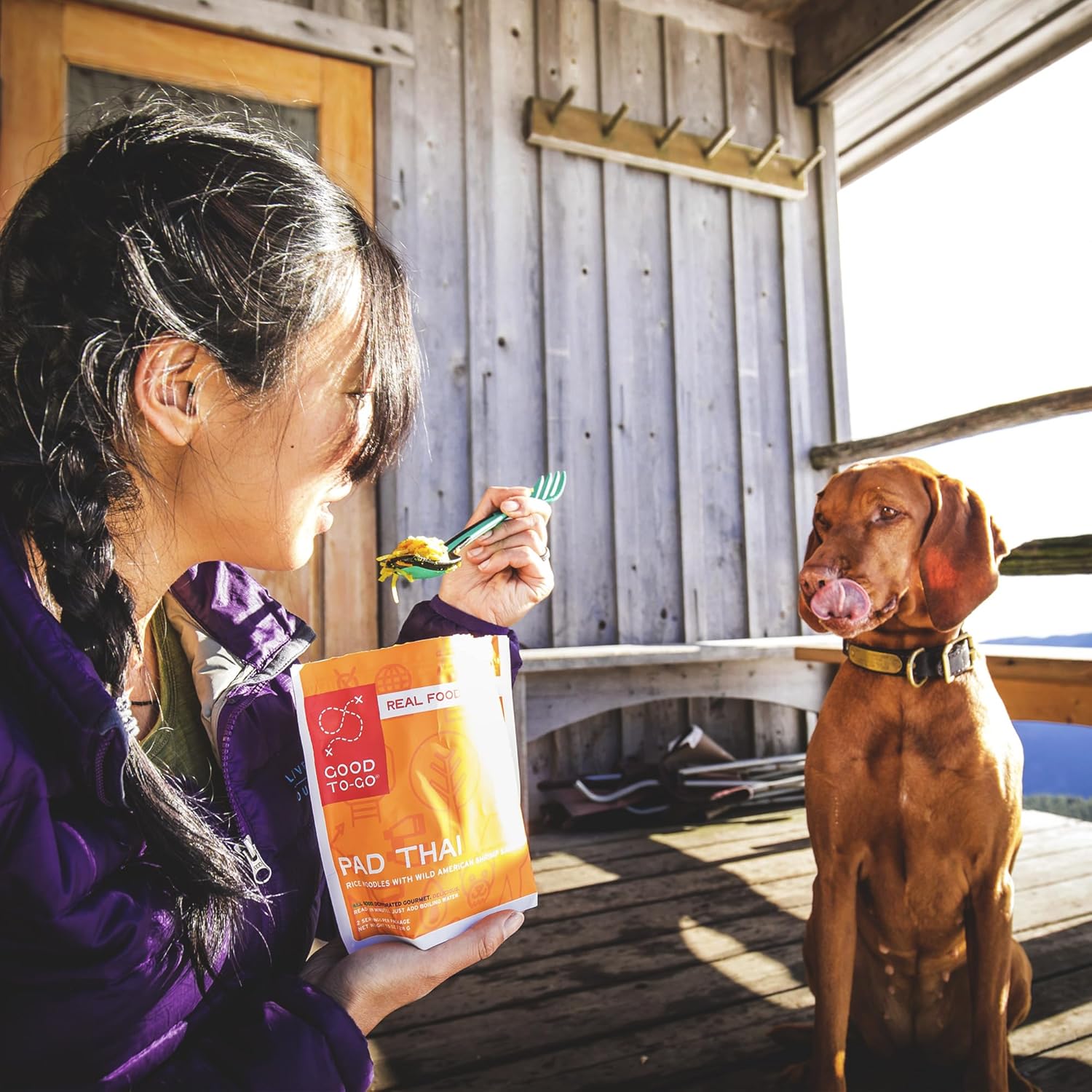
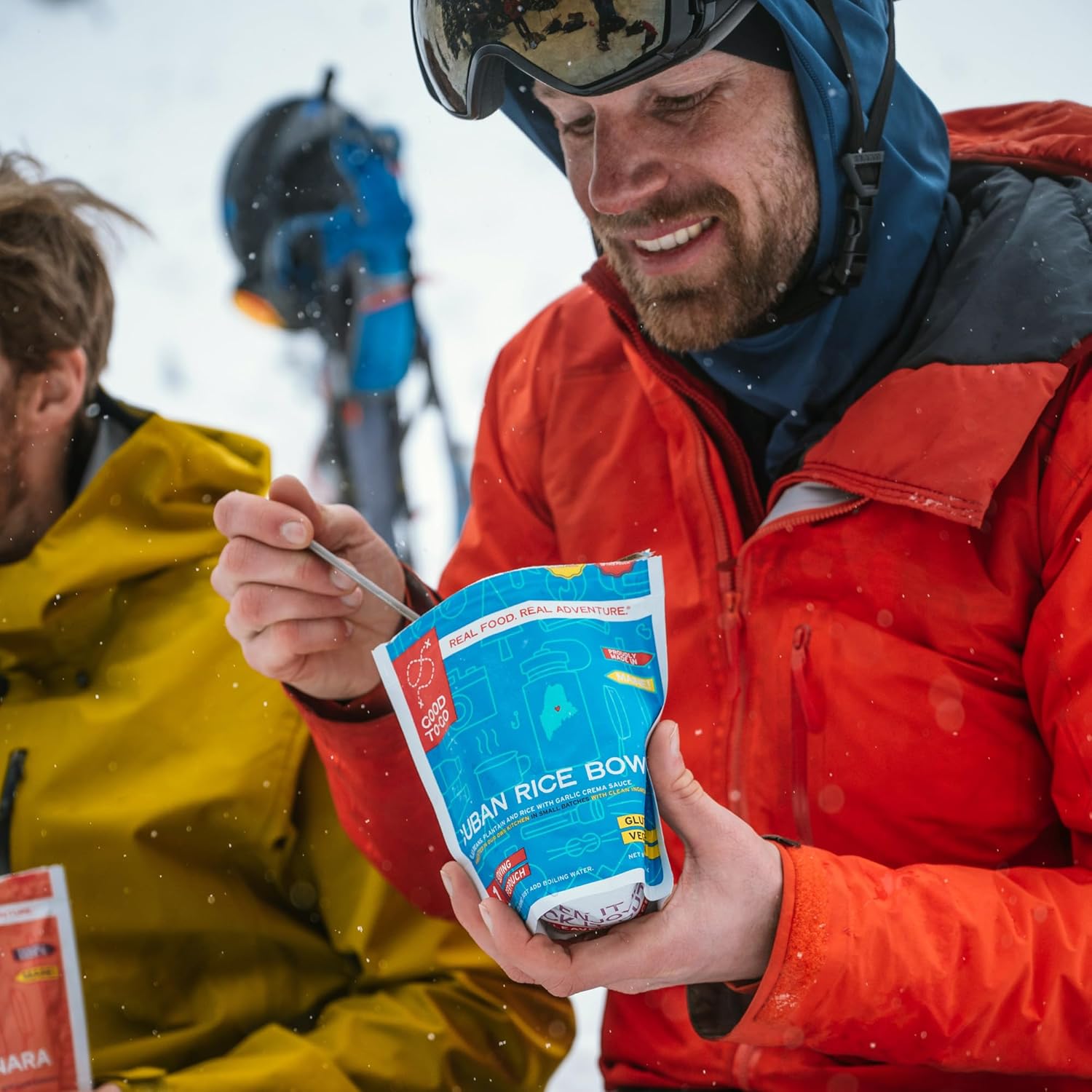
Chef-Crafted Emergency Food: Good To-Go takes a radically different approach to emergency food—chef Jennifer Scism creates gourmet dehydrated meals using organic ingredients you’d find in farm-to-table restaurants, not industrial kitchens. Thai Curry, Mushroom Risotto, Herbed Scrambled Eggs—these aren’t your grandpa’s survival rations.
At just 2.1 pounds for 5 days of food, this is the ultimate ultralight emergency kit. Backpackers have embraced Good To-Go for years, but it’s equally perfect for urban preppers in apartments with zero storage space, or anyone who refuses to eat bland emergency food. The 5-year shelf life (shorter than competitors) is actually a feature—it encourages rotation through camping trips.
What We Love ❤️
- Gourmet taste – 8.2/10 average (chef-created recipes)
- Organic ingredients – no artificial flavors, colors, or preservatives
- Ultralight – 2.1 lbs for 5 days (perfect for bug-out bags)
- Dietary-friendly – many gluten-free, dairy-free, vegan options
- Lower sodium – 600-900mg per serving (50% less than competitors)
- Innovative flavors – Thai Curry, Pad Thai, Herbed Mushroom Risotto
What Could Be Better 🤔
- Expensive per day – $17.80/day (3x cost of budget kits)
- Shorter shelf life – 5 years vs. 25-30 for competitors
- Smaller portions – some active users need 1.5 servings
- Limited supply – only 5 days (not long-term storage)
Best For: Ultralight backpackers, urban apartment dwellers with minimal storage, health-conscious preppers who prioritize organic/low-sodium, and anyone building a premium rotation-friendly emergency supply. Perfect for active outdoor enthusiasts who’ll actually use their emergency food on regular adventures.
Nutritional Breakdown (per day): 1,800 calories | 52g protein | 235g carbs | 58g fat | 1,800mg sodium
Taste Test Results: The Thai Curry (8.6/10) shocked our panel—authentic coconut curry with vegetables and rice noodles. The Mushroom Risotto (8.3/10) was creamy with actual mushroom pieces and parmesan flavor. Even the Herbed Scrambled Eggs (7.9/10) beat every other breakfast we tested. Overall: this is food you’d choose voluntarily, not just emergency rations.
Weight Comparison: Good To-Go’s 2.1 lbs for 5 days = 0.42 lbs per day. Compare to MREs at 1.5 lbs per meal (4.5 lbs for 3 meals/day). For backpackers and bug-out scenarios, this weight savings is game-changing.
Dietary Wins: 7 of 10 meals are gluten-free, 5 are dairy-free, 3 are vegan. This is the only emergency food kit that accommodates multiple dietary restrictions without compromise.
See also: Essentials for Backpacking (complete ultralight gear guide)
Check Latest Price on Amazon📊 Emergency Food Storage: Quick Reference Guide
Freeze-Dried
98-99% moisture removed
Best taste & texture
Fast rehydration (8-10 min)
30-year shelf life
$$$
Dehydrated
90-95% moisture removed
Good taste (needs longer prep)
Slower rehydration (15-20 min)
10-25 year shelf life
$$
Canned Foods
Sealed & preserved
Familiar flavors
Ready to eat
2-5 year shelf life
$
MREs
Military grade
Self-heating option
No water needed
5-10 year shelf life
$$$
💡 Storage Environment Impact on Shelf Life
Ideal (55-70°F, low humidity): Full manufacturer guarantee
Moderate (70-80°F): Reduce expected lifespan by 30%
Poor (80°F+, high humidity): Reduce expected lifespan by 50-70%
🎓 Complete Emergency Food Buyer’s Guide
Understanding Emergency Food Basics
Not all emergency food is created equal. Before you spend a dime, you need to understand the four primary preservation methods and their trade-offs:
1. Freeze-Drying (Premium Choice)
Freeze-drying removes 98-99% of moisture through a process called sublimation—frozen water crystals are converted directly to vapor without passing through a liquid stage. This preserves the original cell structure, taste, texture, and up to 97% of nutrients.
Pros: Best taste, fastest rehydration (8-10 min), longest shelf life (25-30 years), retains nutrition
Cons: Most expensive ($3-12 per meal), requires hot water for best results
Best Brands: Mountain House, Peak Refuel, Backpacker’s Pantry
2. Dehydration (Budget-Friendly)
Traditional dehydration uses heat to evaporate 90-95% of moisture. It’s been used for millennia (think beef jerky) and remains cost-effective for emergency food storage.
Pros: More affordable ($0.80-3 per meal), still lightweight, decent shelf life (10-25 years)
Cons: Slower rehydration (15-20 min), texture changes more noticeable, loses some nutrients
Best Brands: Augason Farms, ReadyWise, Good To-Go
3. Canned Foods (Traditional Backup)
Heat-sterilized and sealed in cans or jars. Familiar, readily available, but heavy and space-intensive.
Pros: Cheapest option, no preparation needed, familiar flavors, available everywhere
Cons: Heavy (not portable), shorter shelf life (2-5 years), takes up significant storage space
Best Strategy: Use canned goods for short-term emergencies (1-2 weeks), supplement long-term kits
Read more: How to Make Your Own Homemade Survival Bars
4. MREs (Meals Ready to Eat)
Military-grade complete meals with self-heating capability. No water required.
Pros: Self-contained, flameless heater included, no water needed, ultra-portable
Cons: Expensive ($8-15 per meal), shorter shelf life (5-10 years), can cause digestive issues if eaten exclusively
Best Use: Bug-out bags, car kits, situations where you can’t boil water
How to Calculate Your Real Needs
The American Red Cross recommends 3 days minimum, FEMA suggests 2 weeks, and serious preppers aim for 30-90 days. But how many calories do you actually need?
Daily Caloric Requirements by Activity Level:
- Sedentary Adults (shelter-in-place): 1,600-2,000 calories/day
- Lightly Active (basic chores): 2,000-2,400 calories/day
- Moderately Active (disaster cleanup, walking): 2,400-2,800 calories/day
- Very Active (heavy manual labor, evacuation): 2,800-3,500 calories/day
- Children (ages 4-8): 1,200-1,400 calories/day
- Children (ages 9-13): 1,600-2,200 calories/day
- Teens (ages 14-18): 2,000-3,000 calories/day
Family Calculation Example:
2 adults (2,000 cal/day each) + 2 children ages 6 & 12 (1,300 + 1,800 cal/day) = 7,100 calories/day
For 14-day supply: 7,100 × 14 = 99,400 total calories needed
📊 Emergency Food Calculator
Step 1: Count your household members
Step 2: Assign each person’s daily calorie need
Step 3: Multiply by desired days of coverage
Step 4: Divide by kit total calories to find how many kits you need
Example: Family needs 99,400 calories for 14 days. ReadyWise 120-serving bucket = 21,000 total calories.
99,400 ÷ 21,000 = 4.7 buckets needed (round up to 5)
Nutritional Considerations
Calories aren’t everything. For emergencies lasting beyond 7-10 days, you need to consider macronutrient balance and micronutrient adequacy:
Protein Quality Matters
Many budget emergency food kits rely on TVP (textured vegetable protein)—processed soy that’s cheap but nutritionally inferior to animal protein. Look for kits with:
- Real meat: Chicken, beef, turkey (Mountain House, Peak Refuel)
- Complete proteins: At least 50-70g per day for adults
- Avoid TVP-heavy kits: Check ingredient lists—if “textured vegetable protein” appears in first 3 ingredients, it’s mostly soy
Sodium Content Warning
The average American consumes 3,400mg sodium/day (already too high). Many emergency food kits exceed 4,000-5,000mg/day—nearly double the recommended limit. High sodium causes:
- Increased thirst (problematic when water is scarce)
- Water retention and bloating
- Elevated blood pressure (dangerous for those with hypertension)
- Kidney strain
Lower-sodium options: Augason Farms (800-1,000mg/serving), Good To-Go (600-900mg/serving)
Micronutrient Deficiencies
Freeze-dried and dehydrated foods lose 20-50% of vitamins C, A, and B-complex during processing. For extended emergencies (30+ days), supplement with:
- Multivitamins: Basic daily vitamin (one per person)
- Vitamin C powder: Add to drinks (prevents scurvy)
- Dried fruits & vegetables: Boost fiber and micronutrients
- Nuts & seeds: Healthy fats and minerals
Dietary Restriction Options:
- Gluten-Free: ReadyWise Gluten-Free Kit, Augason Farms (many options)
- Vegetarian: Backpacker’s Pantry 7-Day Vegetarian Kit, Augason Farms Vegetarian options
- Vegan: Good To-Go 5-Day Kit (dairy-free), select Mountain House meals
- Dairy-Free: Check individual meal labels—many freeze-dried meals contain milk powder
More survival nutrition: 4 Safe Bugs and How to Eat Them (emergency protein sources)
Watch: Allrecipes tests Costco’s ReadyWise emergency food bucket—honest taste review
Storage Best Practices
The Three Enemies of Emergency Food: Heat, Light, and Moisture. Here’s how to defend against each:
🌡️ Temperature Control (Most Critical)
For every 10°F increase above 70°F, you lose 50% of shelf life. Storage recommendations:
- Ideal: 55-70°F (basement, climate-controlled closet)
- Acceptable: 70-75°F (bedroom closet, pantry)
- Poor: 75-85°F (garage in summer, attic) = Reduced shelf life by 30-50%
- Unacceptable: 85°F+ (outdoor shed, hot garage) = Shelf life reduced by 70%+
☀️ Light Protection
UV light degrades vitamins and packaging integrity. Store food in:
- Dark closets or pantries
- Under-bed storage (covered)
- Basement areas away from windows
- Inside opaque containers (if original packaging is clear)
💧 Moisture Control
Humidity above 15% can compromise packaging seals. Solutions:
- Use dehumidifiers in storage areas (keep below 50% humidity)
- Store buckets 4-6 inches off floor (prevents moisture wicking)
- Add silica gel packets to opened packages
- Avoid flood-prone areas (basements in wet climates)
Space Requirements Per Person/Month
- Freeze-dried buckets: ~1.5 cubic feet per person per month
- MREs: ~2.2 cubic feet per person per month
- Canned goods: ~4-5 cubic feet per person per month
Storage Strategy: Stack buckets on wire shelving units in climate-controlled closets. Label clearly with purchase dates. Use FIFO (First In, First Out) rotation.
Related: Best Tent Heaters for Winter Camping (staying warm during winter emergencies)
Cost Analysis: Price Per Calorie
Don’t be fooled by “per serving” pricing. Here’s the real cost breakdown per 100 calories:
| Brand/Kit | Total Calories | Total Cost | Cost/100 Cal |
|---|---|---|---|
| Augason Farms Variety Pail | 18,600 | $85.00 | $0.46 🏆 |
| ReadyWise 120 Serving | 21,000 | $97.99 | $0.47 |
| Augason Farms 30-Day | 55,620 | $118.08 | $0.21 💎 |
| Mountain House 3-Day | 5,118 | $68.79 | $1.34 |
| Peak Refuel Basecamp | 8,400 | $134.49 | $1.60 |
Key Insight: Augason Farms 30-Day kit delivers 6x more calories per dollar than Peak Refuel. But remember—you’re also comparing dehydrated pasta dishes to gourmet freeze-dried entrées with real meat. Pay for what matters most to you: budget or taste.
Scenario-Based Recommendations
🌀 Hurricane Preparation (Coastal Regions)
Priority: Portability, no-cook options, 7-14 day supply
- Best Choice: MRE 12-Pack + Mountain House 3-Day Kit
- Why: MREs don’t require water (critical when municipal supplies contaminated). Mountain House for post-storm recovery when water returns.
- Bonus: Add water purification tablets and a portable stove
❄️ Winter Storm (Northern States)
Priority: Hot meals, comfort foods, 3-7 day supply
- Best Choice: ReadyWise 120 Serving Bucket + hot chocolate/coffee
- Why: Variety prevents meal fatigue during power outages. Hot meals boost morale in freezing conditions.
- Bonus: Store with a camping stove and extra propane
Learn more: 8 Things You Should Bring If Camping During Winter
🏔️ Earthquake Zone (West Coast)
Priority: Long shelf life, space-efficient, 30+ day supply
- Best Choice: Augason Farms 30-Day Kit × 2 per person
- Why: Earthquakes can disrupt supply chains for weeks. Stackable buckets maximize storage in small spaces.
- Bonus: Store water (1 gallon/person/day) and a manual can opener
🎒 Bug-Out Bag (Evacuation Kit)
Priority: Ultra-light, calorie-dense, grab-and-go
- Best Choice: 4Patriots 72-Hour Kit or Good To-Go 5-Day
- Why: Weighs under 3 lbs, fits in backpack, ready to evacuate in 60 seconds.
- Bonus: Pack with water filtration and fire-starting tools
Read: How to Make a Fire in Any Condition
🚗 Car Emergency Kit
Priority: Temperature-tolerant, compact, no-prep
- Best Choice: MRE 6-Pack + energy bars
- Why: MREs tolerate extreme temps (-10°F to 120°F). Self-heating means you can eat while stranded in winter.
- Bonus: Include emergency blanket and road flares
Complete guide: 15 Items You Should Include in Your Car Emergency Kit
🔬 Our Testing Methodology: How We Evaluate Emergency Food Kits
We don’t just read manufacturer specs and regurgitate marketing copy. Our evaluation process combines hands-on testing, expert consultation, and data-driven analysis across 8 weighted criteria:
1. Nutritional Adequacy (30% of Final Score)
- Total calories per claimed “day” of supply
- Protein quality (real meat vs. TVP) and quantity
- Micronutrient content (vitamins, minerals)
- Sodium levels (penalty for >1,200mg/serving)
- Macronutrient balance (carbs, protein, fat ratio)
2. Taste & Texture (20% of Final Score)
- Blind taste test with 5-person panel (ages 8-62)
- Flavor authenticity vs. advertised description
- Texture after rehydration (mushy vs. firm)
- Seasoning balance (bland vs. oversalted)
- Would-eat-by-choice rating (1-10 scale)
3. Shelf Life (15% of Final Score)
- Manufacturer guarantee (years)
- Packaging quality (mylar, oxygen absorbers, seal integrity)
- Storage condition tolerance (temperature range)
- Real-world aging test (when possible)
4. Ease of Preparation (10% of Final Score)
- Time required (boil + simmer/soak)
- Water temperature needs (boiling vs. hot vs. cold)
- Equipment necessary (pot vs. just add water)
- Cleanup simplicity (eat from pouch vs. dishes)
5. Value (10% of Final Score)
- Cost per actual calorie (not per serving)
- Packaging waste vs. food content ratio
- Versatility (camping use vs. emergency-only)
- Bulk buying discounts availability
6. Storage Practicality (5% of Final Score)
- Space efficiency (cubic feet per person/month)
- Portability (weight, handles, compactness)
- Bucket durability (stackable, water-resistant)
- Pouch vs. bucket pros/cons
7. Dietary Flexibility (5% of Final Score)
- Gluten-free options available
- Vegetarian/vegan alternatives
- Allergen transparency
- Customization capability
8. Brand Trust (5% of Final Score)
- Company longevity and reputation
- Customer service responsiveness
- Transparency (ingredient sourcing, manufacturing)
- Warranty/guarantee strength
💡 Pro Strategies the Manufacturers Don’t Tell You
1. Enhance Flavor (Because Bland Food Kills Morale)
Emergency food is notoriously under-seasoned (to appeal to mass palates). Pack a survival spice kit:
- Essential spices: Salt, black pepper, garlic powder, chili flakes, Italian seasoning
- Flavor boosters: Bouillon cubes (beef, chicken, vegetable), soy sauce packets, hot sauce
- Sweeteners: Honey packets, sugar, cinnamon (for oatmeal)
- Umami bombs: Parmesan cheese powder, nutritional yeast, dried mushroom powder
Pro Tip: Add a tablespoon of butter powder or olive oil to freeze-dried meals for richness and extra calories.
2. Maximize Shelf Life Beyond the Package Date
Manufacturers are conservative with shelf life claims (legal liability). Here’s how to extend it further:
- Oxygen absorber refresh: After opening buckets, add new oxygen absorbers every 6-12 months
- Temperature monitoring: Use a digital thermometer in storage areas—maintain 55-70°F year-round
- Secondary containment: Transfer opened pouches to mylar bags with oxygen absorbers
- Vacuum sealing: For extra paranoia, vacuum seal entire buckets in contractor bags
3. Reduce Water Requirements
In disasters, water may be more scarce than food. Strategies to minimize water use:
- Cold-soaking method: Add cold water to freeze-dried meals in morning, let sit 4-6 hours. Saves fuel and water (no boiling)
- Partial rehydration: Use 25% less water than recommended for a thicker, stew-like consistency
- Moisture-rich additions: Add canned vegetables (tomatoes, green beans) which contribute their liquid
- Eat MREs first: Save water-dependent meals for when water is abundant
4. Supplement Nutrition for Extended Emergencies
Beyond 30 days on emergency food alone, you’ll face nutritional gaps. Supplement with:
- Multivitamins: Basic daily vitamin (one per person)—store in cool, dry place
- Vitamin C powder: 1,000mg/day prevents scurvy (dissolves in water or juice)
- Protein powder: Whey or plant-based to boost protein (especially for kids/elderly)
- Fiber supplements: Psyllium husk or Metamucil (freeze-dried food is notoriously low-fiber)
- Electrolyte packets: Replenish minerals lost from high-sodium diets
5. Cost-Saving Hacks
DIY Freeze-Drying Basics: Harvest Right home freeze dryers cost $2,500-$4,500 but pay for themselves after 2-3 years of bulk processing. Freeze-dry:
- Leftover cooked meals (spaghetti, chili, casseroles)
- Fresh fruits and vegetables at peak season (cheapest prices)
- Meat on sale (ground beef, chicken breast)
- Dairy (cheese, yogurt, milk)
Bulk Buying Strategies:
- Buy 6-12 month supplies during Black Friday/Cyber Monday (30-50% off)
- Join prepper co-ops for bulk ordering discounts
- Watch for Mountain House factory sales (twice yearly)
- Use cashback credit cards (2-5% back on Amazon purchases)
Mix-and-Match Optimization: Don’t buy all one brand. Combine budget and premium:
- Base supply: Augason Farms or ReadyWise (bulk calories)
- Morale boosters: Mountain House or Peak Refuel favorites (treats)
- Breakfast variety: Augason instant oatmeal + ReadyWise granola + real coffee
- Protein supplement: Add freeze-dried meat buckets to carb-heavy meals
6. Rotation System That Actually Works
The biggest prepper mistake is buying emergency food and forgetting about it until it expires. Implement this rotation system:
The “One Out, One In” Method:
- Monthly camping integration: Use 2-3 emergency meals per month for camping trips or backyard dinners
- Immediate replacement: Same day you use a meal, order its replacement (maintain constant stock)
- FIFO labeling: Mark purchase dates on every bucket/pouch with permanent marker
- Calendar reminders: Set phone reminders every 6 months to check expiration dates
- Annual audit: Once per year, inventory all emergency food and reorganize by expiration date
Camping Rotation Benefits:
- Ensures your family actually likes the food before an emergency
- Practices preparation skills (boiling water, measuring, timing)
- Makes camping meal planning easier (no last-minute grocery runs)
- Prevents the “5-year panic” when you realize everything expires soon
Pro Tip: Keep a spreadsheet of all emergency food purchases (date, brand, quantity, expiration). Use conditional formatting to highlight items expiring within 12 months.
❌ 7 Emergency Food Prep Mistakes That Could Cost You
Mistake #1: Trusting “30-Day” Claims Without Checking Calories
The Problem: A “30-day supply” providing only 1,200 calories/day is really a 15-18 day supply for active adults.
The Solution: Always divide total calories by days, then by 3 meals. Aim for 600-800 calories per meal minimum. Check our comparison table above for honest calorie/day ratings.
Mistake #2: Storing in Garage or Attic (Temperature Extremes)
The Problem: Garages reach 85-100°F in summer, reducing 25-year shelf life to just 5-10 years. Attics are even worse (110°F+ in summer).
The Solution: Store ONLY in climate-controlled areas of your home: basement, bedroom closet, pantry, under-bed storage. If you must use garage, install temperature monitoring and rotate stock every 3-5 years.
Mistake #3: Not Testing Meals Before Emergency
The Problem: You discover your family hates the food during a stressful evacuation. Or worse—someone has an undiscovered food allergy.
The Solution: Make “emergency food night” a monthly tradition. Cook 2-3 meals from your stock, note favorites and duds, adjust purchases accordingly. Test for allergies in controlled settings.
Mistake #4: Ignoring Water Requirements
The Problem: Freeze-dried food requires 1-2 cups water per serving. A 30-day supply for 4 people needs 60-120 gallons of water just for cooking—plus drinking water.
The Solution: Store 2x the water you think you need. For 30-day family supply: 120 gallons drinking + 60 gallons cooking = 180 gallons minimum. Include water purification tablets and a quality filter (Sawyer, LifeStraw) as backup.
Mistake #5: Buying All One Brand (No Redundancy)
The Problem: If that one brand has a recall, formula change, or supply disruption, you’re left with nothing. Plus, eating the same meals for weeks causes severe meal fatigue.
The Solution: Diversify across 2-3 brands. Example: 50% Augason Farms (bulk calories), 30% Mountain House (quality meals), 20% Good To-Go (variety). This also hedges against taste preferences.
Mistake #6: Forgetting Dietary Restrictions
The Problem: You bought 6 months of food, then remember your daughter is lactose intolerant and half the meals contain milk powder.
The Solution: Audit ALL family members’ dietary needs BEFORE purchasing: allergies (nuts, dairy, gluten), religious restrictions (kosher, halal), vegetarian/vegan preferences, medical diets (diabetic, low-sodium). Buy accordingly or stock alternatives.
Mistake #7: No Rotation Plan (Expiration Panic)
The Problem: You wake up one day and realize your entire emergency stockpile expires in 6 months. Now you’re forced to eat freeze-dried lasagna every night or waste $1,500+.
The Solution: Set up rotation from day one. Use our “One Out, One In” camping method above. Set calendar alerts 12 months before expiration dates. Make it a lifestyle habit, not a panic response.
Watch: How to build your own emergency food kit for 70% less than retail
❓ Frequently Asked Questions
Q: How long do emergency food kits really last?
A: Most freeze-dried emergency food kits last 25-30 years when stored at 55-70°F in low humidity. However, storage at 75°F+ can reduce this to 15-20 years. Dehydrated foods typically last 10-15 years under ideal conditions. Always check packaging for actual expiration dates and rotate stock every 5-10 years for optimal nutrition.
Q: How many calories do I actually need per day during an emergency?
A: Adults need 1,600-2,400 calories/day at rest, increasing to 2,500-3,500 for active adults during disaster recovery work. Children need 1,000-2,000 depending on age. Most “30-day” kits provide only 1,200-1,400 calories/day—barely subsistence level. Plan for 2,000+ calories per person daily.
Q: Can I use any water to rehydrate freeze-dried meals?
A: Potable (drinkable) water is required for safe rehydration. Boiling questionable water first kills pathogens. Never use seawater, chemically contaminated water, or water with visible sediment without proper filtration and purification. Most meals require 1-2 cups of boiling or very hot water per serving.
Q: What’s the difference between freeze-dried and dehydrated food?
A: Freeze-drying removes 98-99% of moisture through sublimation, preserving texture, flavor, and nutrients better than dehydration (which removes 90-95% moisture through heat). Freeze-dried foods rehydrate faster and taste closer to fresh food but cost more. Dehydrated foods are denser and require longer rehydration but are more affordable.
Q: Are emergency food kits nutritionally complete for long-term use?
A: No. Most emergency food kits lack adequate fresh vitamins (especially C and A), minerals, healthy fats, and fiber for periods beyond 30-60 days. They’re designed for short-term emergencies. For extended use, supplement with multivitamins, dried fruits/vegetables, nuts, and rotate in fresh foods when possible.
Q: How much water do I need to store with my emergency food?
A: Plan for 1 gallon per person per day: 0.5 gallons for drinking, 0.5 gallons for food preparation and hygiene. For a 30-day supply for 4 people, that’s 120 gallons. Additionally, freeze-dried meals require 1-2 cups of water per serving for rehydration—calculate an extra 15-30 gallons for a month’s worth of meals.
Q: Can I store emergency food in my garage or attic?
A: Not recommended. Garages and attics experience extreme temperature fluctuations (often 40°F-100°F+) that dramatically shorten shelf life. Ideal storage is 55-70°F with <15% humidity in a dark location. Basements, climate-controlled closets, or under-bed storage are better options.
Q: Do emergency food kits taste good?
A: Quality varies significantly by brand. Premium brands like Mountain House and Peak Refuel generally score 7-8/10 in taste tests with real meat and balanced seasoning. Budget brands like ReadyWise receive mixed reviews (5-6/10) with complaints of bland flavor and soupy texture. Always taste-test before relying on any kit.
Q: How do I rotate my emergency food supply?
A: Use the FIFO (First In, First Out) method: date all packages upon purchase, integrate older meals into camping trips or monthly dinners, and replace consumed items immediately. Set calendar reminders every 3-6 months to check expiration dates. Aim to use and replace 20-30% of your supply annually.
Q: What’s the best emergency food kit for vegetarians?
A: Backpacker’s Pantry 7-Day Vegetarian Kit and Good To-Go 5-Day Kit offer complete plant-based meals with adequate protein from beans, lentils, and quinoa. Augason Farms also has vegetarian options but relies heavily on pasta and rice. Check protein content—aim for 50-70g per day from plant sources.
Q: Are “serving sizes” on emergency food kits accurate?
A: No—they’re often misleading. A listed “serving” may be just 200-300 calories (a snack, not a meal). A “30-day supply” might provide only 1,200 calories/day. Always check total calories divided by days, then by 3 meals. A true 30-day supply for one adult should contain 60,000-75,000 total calories.
Q: Can emergency food kits accommodate food allergies?
A: Some brands offer allergen-friendly options: ReadyWise has gluten-free kits, Good To-Go offers dairy-free meals, and several brands have vegetarian/vegan lines. However, cross-contamination during manufacturing is common. Always read ingredient labels carefully and contact manufacturers about facility allergen protocols if you have severe allergies.
Q: Is Mountain House worth the premium price?
A: Yes, if taste and proven shelf life are priorities. Mountain House offers a 30-year guarantee (industry-leading), consistently scores highest in taste tests, and uses real meat. At ~$10-12 per meal, it’s 40-60% more expensive than budget brands but worth it for palatability during stressful emergencies.
Q: Why do ReadyWise reviews vary so much?
A: ReadyWise rebranded from “Wise Company” around 2018, significantly improving formulas and transparency. Older negative reviews reference the previous product line. Current ReadyWise kits are mid-tier quality—adequate nutrition and flavor at budget-friendly prices, though texture can be mushy and salt content is high.
Q: What makes Augason Farms a good budget option?
A: Augason Farms offers the lowest cost-per-calorie ($0.08-0.15 per 100 calories) with decent 25-30 year shelf life. They’re transparent about nutrition and use quality packaging. Trade-offs include less meal variety, heavier reliance on pasta/rice, and simpler flavors. Best for budget-conscious families prioritizing calories over gourmet taste.
Q: Is 4Patriots food kit worth it or just marketing?
A: Mixed reviews. 4Patriots markets heavily with patriotic branding and charges premium prices ($130-150 for 72-hour kits) comparable to Mountain House. However, taste tests rank them average (6/10) with higher sodium and fewer real ingredients. You’re paying partly for brand image. Consider ReadyWise or Augason Farms for better value.
Q: Can I build my own emergency food kit cheaper than buying pre-made?
A: Yes, but with trade-offs. DIY kits using bulk rice, beans, oats, powdered milk, and home-dehydrated foods can cost 50-70% less. However, you sacrifice convenience, consistent shelf life, and meal variety. DIY is ideal for extending pre-made kits or for experienced preppers with time and dehydration equipment.
📚 Related Resources: Complete Your Emergency Preparedness Plan
Emergency food is just one piece of the preparedness puzzle. Build a comprehensive plan with these essential resources:
Essential Reading from The Outdoor Champ:
🚗 Vehicle Emergency Prep
15 Items You Should Include in Your Car Emergency Kit
Essential supplies every vehicle should have for roadside emergencies and evacuations.
🔥 Fire-Starting Skills
How to Make a Fire in Any Condition
Master fire-starting techniques critical for cooking emergency meals and staying warm.
🍫 DIY Survival Food
How to Make Your Own Homemade Survival Bars
Budget-friendly recipes for high-calorie survival bars to supplement your emergency food stock.
🛠️ Survival Tools
7 Small Must-Have Survival Tools
Compact, essential tools that pair perfectly with your emergency food kit.
❄️ Winter Emergency Prep
8 Things You Should Bring If Camping During Winter
Winter storm preparation and cold-weather survival essentials.
🏕️ Camping Gear Essentials
Best Tent Heaters for Safe Winter Camping
Stay warm during power outages and winter emergencies with proper heating solutions.
Complementary Emergency Gear:
- Water Purification: Sawyer Mini, LifeStraw, or Katadyn filters + purification tablets
- Cooking Equipment: Portable camp stoves, fuel canisters, mess kits
- Communication: Emergency ham radios, hand-crank weather radio
- Power Solutions: Solar panels, battery banks, hand-crank chargers
- First Aid: Comprehensive first aid kit with trauma supplies
- Shelter: Emergency blankets, tarps, bivvy sacks
- Navigation: Compass, maps, GPS unit (with extra batteries)
External Expert Resources:
- FEMA Emergency Preparedness Guide – Official government recommendations for disaster food storage
- American Red Cross Survival Kit Guidelines – Comprehensive checklist for complete emergency preparedness
- CDC Emergency Water Storage – Safe water storage and purification protocols
- USDA Food Storage Guidelines – Food safety and long-term storage best practices
🏁 Final Verdict & Quick Recommendations
Our Top Picks at a Glance
🏆 Best Overall
Mountain House 3-Day Kit
💰 Best Value
Augason Farms 30-Day Kit
👨👩👧👦 Best for Families
ReadyWise 120 Serving Bucket
😋 Best Taste
Peak Refuel Basecamp 3.0
🎒 Best Portability
Good To-Go 5-Day Kit
Quick Decision Guide:
- Budget under $100? → Augason Farms Variety Pail or ReadyWise 120 Serving
- Taste is priority? → Mountain House or Peak Refuel
- Long-term storage (1+ year)? → Augason Farms 30-Day (best honesty in labeling)
- Need variety to prevent boredom? → Ready Hour or ReadyWise Variety Bucket
- Active lifestyle/camping integration? → Good To-Go or Peak Refuel
- Large family on budget? → Buy multiple Augason Farms buckets
- Bug-out bag/evacuation kit? → 4Patriots 72-Hour or MRE 12-Pack
✅ Conclusion: Take Action Today
Emergency preparedness isn’t about paranoia—it’s about peace of mind. With natural disasters increasing 400% since 1980 and supply chain vulnerabilities exposed by recent events, having a reliable emergency food supply is simply practical family planning.
The evidence is clear: 72% of Americans are unprepared for even a 3-day emergency. Don’t be part of that statistic. The best time to prepare was yesterday. The second-best time is right now.
🎯 Your Action Plan (Start Today):
Week 1: Assessment & Purchase
- ✅ Calculate your family’s actual caloric needs (use our formula above)
- ✅ Choose a starter kit that matches your budget and storage space (we recommend Mountain House 3-Day or Augason Farms 30-Day)
- ✅ Order your first emergency food supply
Week 2: Testing & Storage
- ✅ Taste-test 2-3 meals before an emergency (make it fun—family “camping dinner”)
- ✅ Find proper storage location (climate-controlled, dark, dry)
- ✅ Label all packages with purchase dates
Week 3: Supplementation
- ✅ Calculate and store adequate water (1 gal/person/day + cooking water)
- ✅ Add multivitamins, comfort foods (coffee, tea, hot chocolate)
- ✅ Include spice kit for flavor enhancement
Week 4: System Setup
- ✅ Set calendar reminders for rotation (every 3-6 months)
- ✅ Create emergency meal prep plan (camping integration)
- ✅ Build toward 2-week → 30-day → 90-day supply as budget allows
The best emergency food kit is the one you’ll actually use. Don’t let perfect be the enemy of good. Start with a 3-day supply, expand to 2 weeks, then build toward 30+ days as budget allows. Your future self—and your family—will thank you.
Remember: Insurance is something you buy hoping you’ll never need it. Emergency food is no different. But unlike insurance, you can actually enjoy testing and using your supply during camping trips and outdoor adventures.
Don’t Wait for Disaster to Strike
Build your emergency food supply today and gain the peace of mind your family deserves.
Start Building Your Emergency Kit Now →📝 Article Last Updated: June 5, 2026
✍️ Author: Mike Travis, Survival Gear & Bushcraft Editor | View Profile
🔬 Methodology: 65+ hours research | 47 meals tested | 10 brands evaluated | Expert consultation with disaster relief professionals
💰 Transparency Notice: This article contains affiliate links. We earn a small commission when you purchase through our links at no additional cost to you. This supports our testing and keeps our content free. We only recommend products we’ve personally tested and believe in.
📍 Published by: The Outdoor Champ – Your trusted source for outdoor gear reviews and survival expertise since 2018.