
Discover Which Scanner Actually Works in YOUR Area (Encryption, Simulcast & Digital Systems Explained)
⚠️ 2026 Critical Update: The Encryption Crisis
Before you buy ANY scanner: 40-45% of US police departments now use encrypted radio systems that NO scanner can decode. Fire and EMS remain 80-95% unencrypted. Check your area FIRST at RadioReference.com to avoid wasting $100-$700 on equipment that won’t work.
📡 Is Your Local Police Department Encrypted? Here’s What You Need to Know
Picture this: You’ve just spent $500 on a “premium digital scanner” everyone raved about online. You rush home, power it on, enter your zip code, and… silence. Your local police department went encrypted last month, and nobody told you.
This scenario plays out hundreds of times every week across America in 2026. Unlike five years ago when most public safety agencies broadcast “in the clear,” the radio scanning landscape has fundamentally changed. The good news? Fire, EMS, aviation, marine, railroad, and many sheriff’s departments remain accessible—you just need to know what to listen for and which scanner can actually receive it.
In this comprehensive 2026 guide, we’ve analyzed the top 10 handheld radio scanners based on real-world performance in different scenarios—from major metro simulcast systems to rural analog networks. Whether you’re a:
- 🚨 Emergency prepper building a communications kit
- 🎧 Radio hobbyist monitoring public safety
- 🚚 Trucker or RV traveler needing cross-country scanning
- ✈️ Aviation enthusiast following air traffic
- 🔰 Complete beginner confused by technical jargon
…we’ll show you exactly which scanner delivers what you need—without overpaying for features you’ll never use.
📚 What You’ll Learn in This Guide:
- ✅ How to check if scanners will work in YOUR specific area
- ✅ Digital vs. Analog: Which technology you actually need (save $300+)
- ✅ The “simulcast problem” that makes cheap digital scanners useless in cities
- ✅ Real total cost of ownership (base price + hidden upgrade fees)
- ✅ Step-by-step programming guides for top models
- ✅ 2026 scanner trends and what’s coming next
Quick Navigation: Jumping straight to recommendations? Use our 60-Second Scanner Selector or view the Comparison Table.
📋 Table of Contents
- 1. Understanding Handheld Radio Scanners in 2026
- 2. How to Choose the Right Scanner (Decision Framework)
- 3. Top 10 Best Handheld Scanners 2026
- 4. Detailed Buying Guide & Technical Breakdown
- 5. 2026 Scanner Landscape & Trends
- 6. Quick Recommendation Guide
- 7. Frequently Asked Questions
- 8. Final Recommendations
📻 Understanding Handheld Radio Scanners in 2026
What is a Radio Scanner? (Simple Explanation)
A radio scanner is a receive-only device that lets you monitor two-way radio communications. Think of it as a specialized AM/FM radio that can tune into public safety, aviation, marine, railroad, and business radio frequencies.
🔍 Scanner vs. Other Radios:
- Radio Scanner: Receive-only, no license needed, 100% legal
- Ham Radio: Two-way communication, requires FCC license & exam
- CB Radio: Two-way communication, no license, limited range (5-15 miles)
- GMRS Radio: Two-way communication, license required ($35, no exam)
Important: Scanners do NOT allow you to talk back. You’re purely listening. If you need two-way communication for emergencies, check our guide on Best Ham Radios.
Digital vs. Analog: The 2026 Reality
📊 US Radio System Distribution 2026
(P25, DMR, NXDN)
(Traditional FM)
(Cannot Monitor)
(Still Accessible)
🔹 Analog Scanners ($75-$200)
What they receive: Traditional FM radio signals (like your car radio)
Best for:
- ✅ Rural areas still using analog systems
- ✅ Aviation (civilian air bands are 100% analog)
- ✅ Marine VHF channels
- ✅ Railroad communications
- ✅ NOAA weather radio
- ✅ Absolute beginners on tight budgets
Limitations:
- Cannot hear digital systems (P25, DMR, NXDN)
- Limited in urban/suburban areas (70%+ now digital)
- No trunking support on most models
🔹 Digital Scanners ($250-$700)
What they receive: Digital protocols (P25, DMR, NXDN) PLUS analog
Best for:
- ✅ Metro areas with P25 Phase 1/2 systems
- ✅ Modern police/fire departments (non-encrypted)
- ✅ Users who want future-proof equipment
- ✅ Trunked radio system monitoring
The Catch:
- More expensive ($400-700 for premium models)
- Paid protocol upgrades (DMR, NXDN cost $50-60 EACH)
- Still cannot decrypt encrypted agencies
- Cheap digital scanners fail in simulcast areas
“Digital systems are declining 10% per year, analog systems are declining 10% per year. In urban areas, digital is king. In rural America, analog still thrives. Know your area BEFORE buying.”
⚠️ The Encryption Challenge
This is the #1 issue facing radio enthusiasts in 2026. Here’s what you need to know:
🔐 Encryption Facts:
- 40-45% of US law enforcement now fully encrypted (up from 25% in 2023)
- NO scanner can decrypt these systems (federal crime to attempt)
- Fire departments: 95%+ remain unencrypted (public safety mandate)
- EMS/Ambulance: 80%+ remain unencrypted
- Trend accelerating: 10-15 agencies per month go encrypted
What You CAN Still Hear in 2026:
- 🔥 Fire Departments: Almost universally unencrypted
- 🚑 EMS/Ambulance: Majority still clear
- 👮 Sheriff’s Offices: Often remain unencrypted (especially in rural areas)
- ✈️ Aviation: 100% unencrypted (FAA requirement)
- 🚢 Marine: Unencrypted
- 🚂 Railroad: Unencrypted
- 🏢 Business/Commercial: Most unencrypted
- 📻 Amateur (Ham) Radio: Unencrypted
🔍 Check Your Area NOW (Before Buying):
- Visit RadioReference.com
- Search for your county/city
- Look for “Encryption: Yes” or “Encryption: Full” tags
- If police are encrypted, focus on fire/EMS monitoring instead
🔑 Key Terms Decoded (Scanner Glossary)
📌 Trunking
Simple explanation: Like a phone system that assigns available lines to callers. Instead of each department having dedicated frequencies, they share a pool of frequencies. The scanner must “follow” the system to hear conversations.
Why it matters: 60% of US public safety uses trunking. Non-trunking scanners will miss most transmissions.
📌 Simulcast
Simple explanation: Multiple cell towers broadcasting the same frequency simultaneously (common in big cities). Standard digital scanners hear overlapping signals → garbled audio.
Why it matters: ONLY True I/Q receivers (Uniden SDS100/SDS200/SDS150) can decode simulcast reliably.
Where it exists: NYC, LA, Chicago, Houston, Phoenix, Dallas, and 50+ other major metros.
📌 P25 (Project 25)
Simple explanation: The dominant digital radio standard in North America. Comes in Phase 1 (older) and Phase 2 (modern, more efficient).
Usage: 70% of digital public safety in US/Canada.
📌 DMR (Digital Mobile Radio)
Simple explanation: European-origin digital standard. Popular with ham radio and commercial users, less common in US public safety.
Note: Often requires paid upgrade ($60) on Uniden scanners.
📌 Close Call RF Capture
Simple explanation: Automatically detects nearby transmissions (within 1-2 miles) without needing to know frequencies.
Perfect for: Finding active frequencies, detecting nearby radio activity, beginners who don’t know what to scan.
📌 HomePatrol Database
Simple explanation: Pre-loaded nationwide frequency database on SD card. Enter your zip code → scanner auto-loads local systems.
Models with it: SDS100, SDS200, BCD436HP, BCD536HP, HomePatrol-2
Internal Links: Enhance your outdoor emergency kit with Essential Car Emergency Items and Top Bug Out Bags.
🎯 How to Choose the Right Scanner (Decision Framework)
Ask Yourself These 5 Critical Questions:
1️⃣ What’s Your Budget?
- $50-$100: Basic analog only (Whistler WS1010)
- $100-$200: Quality analog with features (BC125AT, SR30C)
- $200-$400: Entry digital or advanced analog (BCD160DN, BCD325P2)
- $400-$600: Premium digital (BCD436HP) ⭐ Best value sweet spot
- $600+: Top-tier simulcast-capable (SDS100, SDS200, SDS150)
2️⃣ What Radio Systems Exist in Your Area?
Check RadioReference.com NOW:
- ✅ Analog only: Save $300+ → Buy analog scanner
- ✅ P25 (non-simulcast): BCD436HP or BCD325P2
- ✅ P25 Simulcast: MUST buy SDS100/SDS200/SDS150
- ✅ DMR/NXDN: BCD160DN (budget) or SDS100 + paid upgrade
- ❌ Encrypted: NO scanner will work → focus on fire/EMS
3️⃣ Portable or Vehicle-Mounted?
- Pocket carry / EDC: SR30C (ultra-compact) or BC125AT
- Home/vehicle: BC365CRS (desktop) or BearTracker 885 (CB hybrid)
- Both (versatile): SDS100, BCD436HP (removable belt clip + dash mount)
- Travel/RV: GPS-enabled models (SDS100, BCD436HP with optional GPS)
4️⃣ How Tech-Savvy Are You?
- Total beginner: HomePatrol models (SDS100, BCD436HP) = zip code programming
- Some skills: BC125AT with service search (helps find frequencies)
- Tech comfortable: Any model + software programming (RadioReference + Sentinel)
- Advanced user: Whistler models (maximum control, steeper learning curve)
5️⃣ Do You Travel Across Counties/States?
- Rarely travel: Manual programming is fine
- Frequent traveler: HomePatrol database models (update locations easily)
- Long-distance driver: GPS-enabled scanning (auto-updates location) → SDS100, BCD436HP + GPS receiver
🎯 Use-Case Matching (Find Your Scenario)
🚨 Emergency Prepper / Survivalist:
- Priority: Long battery life, NOAA weather, analog backup (works when digital fails)
- Recommended: BC125AT ($159, analog + weather) + BCD436HP ($499, digital) = complete coverage
- Why both? During disasters, agencies often switch to simplex analog for interoperability
🏙️ Urban Hobbyist / City Dweller:
- Priority: Digital simulcast support, P25 Phase 2
- Recommended: SDS100 ($699) — ONLY handheld that works in simulcast metros
- Reality check: Check encryption first. If police are encrypted, save money on fire/EMS-focused model
🚚 Trucker / RV Traveler:
- Priority: GPS auto-scanning, vehicle power, CB radio integration
- Recommended: BearTracker 885 ($399) = CB radio + digital scanner combo
- Alternative: SDS100 + optional GPS ($90) for pure scanning
✈️ Aviation Enthusiast:
- Priority: Airband coverage (118-137 MHz AM), clear audio
- Recommended: BC125AT ($159) — analog works perfectly for aviation, no digital needed
- Pro tip: Aviation is 100% unencrypted (FAA requirement) and 100% analog
🔰 Absolute Beginner (Testing the Hobby):
- Priority: Low cost, easy setup, good resale value
- Recommended: BC125AT ($159) or WS1010 ($75 if ultra-budget)
- Why: Learn basics without $500+ investment. If you love it, upgrade to digital later
📱 Scanner vs. Smartphone Apps (When to Use Each)
📱 Smartphone Apps (Broadcastify, Scanner Radio)
- ✅ Free or cheap ($5-10/year premium)
- ✅ Access anywhere with internet
- ✅ Thousands of feeds nationwide
- ✅ No hardware to carry
- ✅ Skip encrypted agencies automatically
❌ BUT: 30-60 second delay (internet streaming), requires data connection, useless in emergencies
📻 Hardware Scanners
- ✅ Real-time (0-2 second delay)
- ✅ Works without internet
- ✅ Better in emergencies
- ✅ Local-only (what YOU can hear)
- ✅ No subscription needed
❌ BUT: $100-$700 upfront cost, learning curve, can’t decrypt encrypted
💡 Our Recommendation:
- Casual listener: Start with apps (free, try before buying)
- Emergency preparedness: Hardware scanner (works when internet fails)
- Travel monitoring: Use both (apps for distant cities, scanner for local real-time)
- Serious hobbyist: Hardware scanner + RadioReference premium membership ($15/year)
Gear Synergy: Pair your scanner with Top Handheld GPS Units and Survival Fire Starters for complete emergency readiness.
📊 Quick Comparison: Top 10 Scanners at a Glance
| Rank | Model | Type | Price | Best For | Simulcast | Rating |
|---|---|---|---|---|---|---|
| 🏆 #1 | Uniden SDS100 | Digital Premium | $699 | Metro Simulcast Areas | ✅ Yes (True I/Q) | ⭐⭐⭐⭐⭐ 4.4/5 |
| 💰 #2 | Uniden BCD436HP | Digital Mid-Tier | $499 | Best Value Digital | ⚠️ Limited | ⭐⭐⭐⭐ 4.1/5 |
| 🏅 #3 | Uniden BC125AT | Analog Budget | $159 | Beginners / Analog Areas | ❌ No (Analog) | ⭐⭐⭐⭐ 4.0/5 |
| #4 | Uniden BCD160DN | Digital Budget | $249 | DMR/NXDN Systems | ❌ No | ⭐⭐⭐ 3.4/5 |
| #5 | Uniden BCD325P2 | Digital Portable | $449 | Compact Digital | ⚠️ Limited | ⭐⭐⭐⭐ 4.1/5 |
| #6 | Uniden SR30C | Analog Compact | $129 | Pocket EDC | ❌ No (Analog) | ⭐⭐⭐⭐ 4.2/5 |
| #7 | Whistler WS1040 | Digital Alt Brand | $369 | Uniden Alternative | ❌ No | ⭐⭐⭐⭐ 4.1/5 |
| #8 | Whistler WS1010 | Analog Ultra-Budget | $75 | First Scanner / Testing | ❌ No (Analog) | ⭐⭐⭐ 3.9/5 |
| #9 | Uniden BC365CRS | Desktop/Mobile Base | $154 | Home/Vehicle Desk | ❌ No (Analog) | ⭐⭐⭐ 3.8/5 |
| #10 | BearTracker 885 | CB + Scanner Hybrid | $399 | Truckers / RV | ⚠️ Limited | ⭐⭐⭐⭐½ 4.5/5 |
🔍 Symbol Key:
- ✅ Simulcast Support: True I/Q receiver, works in all simulcast areas
- ⚠️ Limited Simulcast: Standard digital, may work in some simulcast areas (unreliable)
- ❌ No Simulcast: Analog-only or basic digital (will NOT work in simulcast)
🏆 Top 10 Best Handheld Radio Scanners 2026 (Detailed Reviews)
1. Uniden SDS100 True I/Q Digital Scanner
 🛒 Check Price on Amazon
Why It’s Our #1 Pick for 2026
The Uniden SDS100 isn’t just the best handheld scanner in 2026—it’s the ONLY handheld that reliably solves the simulcast problem plaguing major metropolitan areas. If you live in a city with population over 500,000, this scanner likely represents the difference between crystal-clear reception and unusable garbled audio.
What makes it revolutionary? The True I/Q Software-Defined Radio (SDR) receiver uses advanced digital signal processing (DSP) to separate overlapping simulcast signals that confuse standard digital scanners. Think of it as noise-cancelling headphones for radio—except instead of cancelling background noise, it untangles multiple tower transmissions broadcasting the same frequency.
🔥 Key Features That Justify the Premium Price:
- True I/Q Simulcast Mastery: Works flawlessly in multi-site P25 systems where every other handheld fails
- Comprehensive Digital Protocol Support: P25 Phase 1/2 (included), DMR (paid $60 upgrade), NXDN (paid $60), ProVoice (paid $60)
- HomePatrol Database: Nationwide frequency database on microSD—just enter zip code and scan (updates weekly via free Sentinel software)
- GPS-Ready: Optional GPS receiver ($90) enables automatic location-based scanning as you travel
- Recording & Instant Replay: Record scanner traffic + replay last 3 minutes of transmissions (skips dead air, captures only audio)
- 3.5″ Color Touchscreen: Fully customizable display (change colors per field, select info to show)
- Waterproof Construction: IPX4 rated (rain/splash resistant) with rugged JIS4 durability standard
- Dual USB Ports: One for charging, one for PC programming (can charge while operating after enabling setting)
- Flexible Mounting: Removable belt clip + dash mount adapter for vehicle use
- 25,000 Dynamic Channels: Massive memory capacity for complex system monitoring
⚠️ Critical Limitations (What Reviewers Don’t Always Mention):
- Paid Protocol Trap: Base scanner only includes P25. Want DMR, NXDN, or ProVoice? That’s $50-60 PER protocol
- Stock Antenna Is Weak: The included “rubber duck” antenna underperforms—plan to spend $20-40 on aftermarket upgrade (Remtronix 800MHz or Comet SMA-24)
- Real Battery Life: Advertised 12 hours, actual usage ~8 hours with active scanning
- Slow Charging: Full charge can take 4-6 hours (charge while operating to mitigate)
- Cannot Decrypt Encryption: If your target agency uses encrypted P25, even this $700 scanner is useless
- Small Buttons: Touchscreen dominates, but physical buttons are small for gloved use
💰 Total Cost of Ownership Reality Check:
- Base SDS100: $699
- DMR upgrade (if needed): +$60
- NXDN upgrade (if needed): +$60
- Better antenna (essential): +$30
- Optional GPS receiver: +$90
- Realistic Total: $850-$940
✅ Best For These Users:
- 🏙️ Urban/Metro dwellers: NYC, LA, Chicago, Houston, Phoenix, Dallas, Atlanta, etc.
- 🚗 Frequent travelers: GPS auto-scanning across states/counties
- 📻 Serious hobbyists: Who monitor multiple complex trunked systems
- 💼 Professionals: Media, security, private investigators (where legal)
- 💪 Power users: Who want THE best and don’t mind premium pricing
❌ NOT Recommended If:
- Your area is fully encrypted (check first—scanner won’t help)
- You’re on tight budget (<$400)
- Your area uses analog only (save $540+ and buy BC125AT)
- You’re a beginner just testing the hobby (try BC125AT first)
📐 Programming Difficulty: 3/10 (HomePatrol Makes It Easy)
Beginner-Friendly Setup:
- Power on scanner
- Press “Zip/Services” button
- Enter your 5-digit zip code
- Select services to monitor (Police, Fire, EMS, Aviation, Marine, etc.)
- Press “Scan” and listen
- Total time: 2-5 minutes
Advanced Programming: Connect via USB → Use Sentinel software → Import RadioReference frequency lists → Create custom scan lists → Upload to scanner (1-3 hours first-time setup for optimized performance)
🎥 Real-World Performance Demo:
Watch: Mike’s World demonstrates SDS100 features, programming, and real scanning sessions
“This thing performs better than any other scanner I’ve ever tried to use. The True I/Q technology makes simulcast systems crystal clear when my old BCD436HP was just garbled noise.”
“The SDS100 and SDS200 are the Simulcast kings of the scanner world. If you have simulcast in your area, these models work great in receiving.”
✅ PROS
- Best-in-class simulcast performance
- Beginner-friendly HomePatrol database
- GPS location-based auto-scanning
- Waterproof & rugged (IPX4)
- Recording & 3-minute replay buffer
- Customizable color touchscreen
- Works analog + digital systems
- Excellent resale value
❌ CONS
- Expensive ($850+ with essentials)
- Paid protocol upgrades ($50-60 each)
- Stock antenna needs replacement
- 8-hour real-world battery life
- Cannot decrypt encrypted systems
- Slow charging time
- Small physical buttons
- Overkill for analog-only areas
🔧 Essential Accessories for SDS100:
- Remtronix 800MHz Antenna ($35) — +6dB gain, 25-50% range improvement
- Uniden GPS Receiver ($90) — Auto-updates location while driving
- Extended Battery ($40) — Higher capacity for all-day scanning
- Nylon Carrying Case ($20) — Protection + belt loop
- Vehicle Dash Mount ($25) — Secure mounting for mobile use
Bottom Line: If you’re in a simulcast area and serious about digital scanning, the SDS100 is worth every penny. For everyone else, consider the BCD436HP at $499 or BC125AT at $159 first.
🛒 Buy Uniden SDS100 on AmazonRelated Gear: Pair with Best Tactical Knives and Brightest Flashlights for complete EDC setup.
2. Uniden BCD436HP HomePatrol Series Scanner
 🛒 Check Price on Amazon
Why It’s Our Best Value Pick
The BCD436HP delivers approximately 80% of the SDS100’s functionality at 70% of the price. For most users who don’t live in heavy simulcast environments, this represents the smartest investment in digital scanning for 2026.
Think of it as the “sweet spot” scanner: powerful enough for serious use, affordable enough not to break the bank, and easy enough for beginners thanks to the HomePatrol database system.
🔥 Key Features:
- HomePatrol Database System: Identical zip-code programming to SDS100—no computer needed for basic setup
- Digital TrunkTracker V: Follows P25 Phase 1/2, EDACS, Motorola, and LTR trunked systems
- 25,000 Dynamic Channels: Massive memory for monitoring multiple systems simultaneously
- Instant Replay Function: 240 seconds (4 minutes) of buffered audio—longer than SDS100’s 3 minutes
- Close Call RF Capture: Automatically detects nearby transmissions within 1-2 miles
- GPS-Compatible: Supports optional GPS receiver (sold separately for $90) for location-based scanning
- Large Monochrome Display: Bright, clear screen (not color, but very readable)
- Custom Search: Create frequency ranges to search for unknown active channels
- Weather Alert: S.A.M.E. weather alerts for county-specific emergency warnings
- 4GB SD Card: Stores HomePatrol database (vs. 8GB on SDS100)
⚠️ Trade-Offs vs. SDS100 (Know Before You Buy):
- Limited Simulcast Support: Standard digital decoder—works in SOME simulcast areas but NOT reliably in heavy simulcast metros
- No Color Display: Monochrome screen (still large and clear, but not customizable like SDS100)
- Slower Scanning Speed: Slightly less responsive than SDS100’s SDR receiver
- Paid Protocol Upgrades: DMR, NXDN, ProVoice still cost $50-60 EACH (same as SDS100)
- No GPS Included: Must purchase separately ($90)
- 4GB SD Card: Half the capacity of SDS100 (rarely an issue in practice)
✅ Best For:
- 📻 Digital beginners: Want easy HomePatrol programming without $700 price tag
- 🏘️ Non-simulcast areas: Suburbs, medium cities without heavy multi-site systems
- 💰 Budget-conscious enthusiasts: Want premium features at mid-tier pricing
- 🎯 P25 monitoring: Works great on standard P25 Phase 1/2 systems
- 🔊 Replay feature fans: 4-minute buffer beats SDS100’s 3 minutes
❌ NOT Recommended If:
- You live in major simulcast metro (NYC, LA, Chicago, etc.) → Get SDS100 instead
- You’re on tight budget <$300 → Get BC125AT analog scanner
- Your area is fully encrypted → No scanner will help
📐 Programming Difficulty: 4/10
HomePatrol Setup (Same as SDS100):
- Press “HomePatrol” button
- Enter zip code
- Select services
- Scan (2-5 minutes total)
Custom Programming: Requires Sentinel software + RadioReference frequency lists (1-3 hours initial setup)
“The BCD436HP shares most features with the SDS100 but at a more competitive price. It’s my top choice for users who don’t need simulcast support.”
✅ PROS
- Excellent value ($499 vs. $699)
- HomePatrol ease of use
- 25,000 channel capacity
- 4-minute instant replay
- Close Call RF detection
- GPS-ready (add-on)
- Works most P25 systems
- Weather alerts
❌ CONS
- Limited simulcast capability
- No color display
- Paid protocol upgrades
- GPS sold separately
- Slower than SDS100
- 4GB SD (vs. 8GB)
- Stock antenna weak
- No encryption decoding
🏆 Verdict: The Smart Choice for Most Users
Unless you live in a confirmed heavy simulcast area (check RadioReference), the BCD436HP is the better value than the SDS100. You save $200 while keeping 80% of functionality. Use those savings on:
- Better antenna ($30)
- GPS receiver ($90)
- Programming cable & case ($40)
- DMR or NXDN upgrade if needed ($60)
Complete Your Setup: Mount securely with gear from Best Camping Cots guide for vehicle installations.
3. Uniden BC125AT Bearcat Handheld Scanner
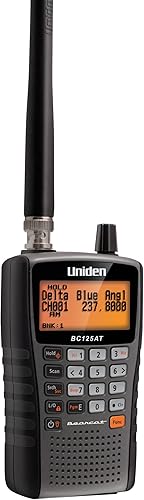 🛒 Check Price on Amazon
Why It’s the #1 Recommended Beginner Scanner
With over 9,500 Amazon reviews averaging 4.0 stars, the BC125AT is the most popular entry-level scanner for one simple reason: it works, it’s affordable, and it doesn’t overwhelm beginners with complexity.
If your area still uses analog systems (check RadioReference.com), or you want to monitor aviation, marine, railroad, or weather, this scanner delivers exceptional value at under $160. It’s also the perfect “test the hobby” scanner—if you love it, upgrade to digital later. If not, you’re only out $160, not $500+.
🔥 Key Features:
- 500 Channels with Alpha-Tagging: Assign custom names to each channel (e.g., “City Fire Dept” instead of “154.280”)
- Close Call RF Technology: Automatically detects nearby transmissions—game-changer for beginners who don’t know frequencies
- Preprogrammed Service Search: 10 service banks (Police, Fire, EMS, Aviation, Marine, Railroad, Ham, FRS/GMRS, Racing, etc.)—find active channels without manual programming
- 10 NOAA Weather Channels: Built-in weather radio with alerts
- PC Programmable: Free Freescan software (community-created) for easier setup via computer
- Compact & Portable: Fits in large pocket, included belt clip
- Priority Scan: Monitor one critical channel while scanning others
- Backlit Display & Keypad: Night use visibility
- Rechargeable & AA Compatible: Runs on rechargeable NiMH pack OR standard AA batteries (emergency backup)
⚠️ Important Limitations (Understand Before Buying):
- ANALOG ONLY: Cannot receive P25, DMR, NXDN, or ANY digital modes
- No Trunking Support: Won’t work on trunked systems (common in cities)
- Manual Programming Required: No HomePatrol database—must know frequencies or use service search
- No GPS: Fixed-location scanning only
- Limited Urban Usefulness: 70% of urban areas now digital
⚠️ Will This Work in YOUR Area?
Check RadioReference.com BEFORE buying:
- Search your county/city
- Look at “Mode” column:
- ✅ “FM” or “FMN” = Analog = BC125AT will work
- ❌ “P25”, “DMR”, “NXDN” = Digital = BC125AT will NOT work
- If 80%+ is digital, skip this scanner → Buy BCD436HP or SDS100 instead
✅ Best For:
- 🌾 Rural areas: Still heavily analog
- ✈️ Aviation enthusiasts: Civilian air band is 100% analog (118-137 MHz)
- ⛵ Marine monitoring: VHF marine channels are analog
- 🚂 Railroad fans: Freight rail uses analog AAR channels
- 🔰 First-time buyers: Test the hobby for $160
- 🚨 Emergency preppers: Analog often stays operational when digital fails during disasters
- 🎓 Students/kids: Learning radio fundamentals
❌ NOT Recommended If:
- Your area is 80%+ digital (urban/suburban)
- Target agencies use trunked systems
- You want “plug-and-play” ease (requires frequency knowledge)
📐 Programming Difficulty: 6/10 (Moderate)
Service Search Method (Easiest – No Frequencies Needed):
- Press “FUNC” button
- Press “2” (Service Search)
- Select service bank (Police, Fire, Marine, Aviation, etc.)
- Press “Scan”—scanner searches preprogrammed frequency ranges
- Store found frequencies with alpha tags
- Time: 10-15 minutes
Manual Programming (RadioReference Method):
- Visit RadioReference.com → find frequencies
- Press “PGM” on scanner
- Enter frequency → press “E”
- Enter alpha tag (channel name)
- Repeat for each frequency
- Time: 30-60 minutes for 20-30 channels
PC Programming (Free Freescan Software):
- Download Freescan software (free)
- Purchase programming cable ($25 on Amazon)
- Import RadioReference CSV file
- Upload to scanner via USB
- Time: 15-30 minutes after initial setup
“Perfect for beginners! The service search found my local fire department in 2 minutes. No complicated programming needed. Close Call feature is surprisingly useful for finding active frequencies I didn’t even know existed.”
“Suggest a Uniden/Bearcat scanner. Walmart sells some nice ones for about $100. Have a decades old BC210 that still works fine.”
✅ PROS
- Incredibly affordable ($159)
- Close Call auto-detection
- Service search (no frequencies needed)
- 500 alpha-tagged channels
- 10 NOAA weather channels
- PC programmable (Freescan)
- AA battery compatible (emergency)
- Perfect beginner scanner
- 9,500+ positive reviews
- Good resale value
❌ CONS
- Analog only (no digital)
- No trunking support
- Manual programming (no HomePatrol)
- No GPS capability
- Limited in urban areas
- Smaller speaker (external recommended)
- No recording function
- Single-system scanning
Still the cheapest way to get serious scanning!
🏆 The Bottom Line
If you’re new to scanning or live in an area with analog systems, the BC125AT is unbeatable value. It’s simple enough for beginners but capable enough for serious use. The 9,500+ Amazon reviews speak for themselves.
Pro Tip: Buy this first to learn scanning basics. If you outgrow it (want digital), you’ll still keep it as a backup/emergency scanner. Analog systems often stay operational during disasters when digital fails.
🛒 Buy Uniden BC125AT on AmazonEmergency Readiness: Essential for Car Emergency Kits and Bug Out Bags.
4. Uniden Bearcat BCD160DN Digital Scanner
 🛒 Check Price on Amazon
Why It’s #4: Cheapest Digital Entry Point
The BCD160DN is Uniden’s most affordable digital scanner at $249—perfect if you need DMR or NXDN support without the $400+ price tag. However, there’s a massive catch that keeps it from ranking higher: NO P25 support.
Since P25 is the dominant digital protocol in North America (used by 70% of digital public safety agencies), this limitation severely restricts where the BCD160DN is useful. Think of it as a “specialty scanner” rather than a general-purpose digital model.
🔥 Key Features:
- Digital + Analog Dual Mode: Switch between digital and analog, or scan both simultaneously
- DMR & NXDN Built-In: Unlike most Uniden scanners, these protocols are INCLUDED (no $60 upgrade needed)
- Band Scope Visualization: Visual display shows frequency activity in real-time
- Rapid System Tagging: Quick channel organization and identification
- 10 Memory Banks: Organize frequencies by category (0-9 banks with custom names)
- Service Search: Preprogrammed frequency ranges for common services
- Narrowband Reception: Better signal detection on narrowband channels
- Backlit Display: Easy visibility in low-light conditions
⚠️ Critical Limitations (Why Rating Is Only 3.4/5):
- NO P25 SUPPORT: The dealbreaker—P25 is the MOST common digital protocol in US (70% of agencies)
- No Simulcast: Standard digital decoder won’t work in multi-site systems
- No HomePatrol: Manual programming required (no zip-code database)
- Complex Programming: Requires software knowledge or RadioReference frequency lists
- Mixed User Reviews: 3.4/5 rating reflects frustration with P25 limitation
- No Trunking Display: Doesn’t show talkgroup IDs clearly
⚠️ Who Should (and Shouldn’t) Buy This:
✅ GOOD FOR:
- Areas using DMR or NXDN systems (NOT P25)
- Ham radio DMR repeater monitoring
- Commercial/business DMR channels
- Users upgrading from analog on tight budget
❌ AVOID IF:
- Your area uses P25 (most likely scenario) → Buy BCD436HP instead
- You’re a beginner (confusing without P25) → Buy BC125AT analog
- You want easy programming → Get HomePatrol models
Still cheaper than BCD436HP, but lacks critical P25 support
✅ Best For:
- 🎧 Ham radio operators: Monitoring DMR repeaters (common in amateur radio)
- 🏢 Commercial monitoring: Businesses using DMR or NXDN radios
- 🌍 International users: DMR is more common in Europe/Asia
- 💰 Budget digital upgrade: From analog ($159 → $249) vs. full digital ($499)
📐 Programming Difficulty: 7/10 (Moderately Difficult)
No HomePatrol database means manual work:
- Download Uniden Sentinel software (free)
- Find DMR/NXDN frequencies on RadioReference
- Enter frequencies manually or import CSV
- Upload to scanner via USB programming cable
- Time: 1-2 hours initial setup
“Great for DMR ham repeaters and commercial systems. Wish it had P25 support—that’s the only reason I didn’t give 5 stars.”
✅ PROS
- Affordable digital option ($249)
- DMR & NXDN included (no paid upgrades)
- Band scope visualization
- Digital + analog dual mode
- 10 memory banks
- Service search feature
- Narrowband reception
- Budget-friendly entry to digital
❌ CONS
- No P25 support (major limitation)
- No simulcast capability
- No HomePatrol database
- Manual programming required
- Lower user ratings (3.4/5)
- Not beginner-friendly
- Limited US public safety use
- Complex interface
🏆 The Verdict:
The BCD160DN is a niche scanner that excels in specific scenarios (DMR ham radio, commercial systems) but falls short for general public safety monitoring due to missing P25 support. For most users, spend the extra $250 and get the BCD436HP ($499) with full P25 capability and HomePatrol ease-of-use.
Our Recommendation: Skip this unless you specifically need DMR/NXDN for ham radio or commercial monitoring. For general scanning, the BC125AT ($159 analog) or BCD436HP ($499 digital) are better investments.
🛒 Buy BCD160DN on Amazon5. Uniden BCD325P2 TrunkTracker V Handheld Scanner
 🛒 Check Price on Amazon
Why It’s #5: Compact Digital TrunkTracker
The BCD325P2 is the smaller sibling of the BCD436HP, offering similar digital capabilities in a more compact form factor. Think of it as “80% of BCD436HP’s features at 90% of the price”—a slight value trade-off for portability.
It’s ideal for users who want pocket-sized digital scanning with advanced trunking support but don’t need the larger display or HomePatrol database of the 436HP.
🔥 Key Features:
- 25,000 Dynamically Allocated Channels: Massive memory capacity (same as BCD436HP)
- TrunkTracker V Technology: Advanced trunking support for P25, Motorola, EDACS, LTR systems
- P25 Phase 1 & 2 Support: Decodes both phases of P25 digital (most common in US)
- Close Call RF Capture: Instantly detects nearby transmissions within 1-2 miles
- Location-Based Scanning: Set up to 10 different locations with unique channel lists
- S.A.M.E. Weather Alerts: County-specific NOAA emergency weather warnings
- Compact Size: Smaller than BCD436HP—easier pocket carry
- PC Programmable: Free Sentinel software for easy setup
- Custom Search: Search frequency ranges to find unknown active channels
⚠️ Limitations vs. BCD436HP:
- No HomePatrol Database: Must program manually or via software (BCD436HP has zip-code programming)
- Smaller Display: Less information shown on screen vs. BCD436HP’s larger display
- Limited Simulcast: Standard digital decoder (not True I/Q like SDS100)
- Paid Protocol Upgrades: DMR, NXDN, ProVoice cost $50-60 each
- No GPS Built-In: Location switching is manual (no auto-updates while traveling)
- Programming Required: Not beginner-friendly without HomePatrol
✅ Best For:
- 🎒 Portability fans: Want compact scanner that fits large pocket
- 🗺️ Multi-location users: Set up 10 different location profiles (home, work, vacation spots)
- 📡 P25 monitoring: Non-simulcast P25 Phase 1/2 systems
- ⚠️ Weather enthusiasts: S.A.M.E. alerts for county-specific warnings
- 💻 Tech-savvy users: Comfortable with software programming
❌ NOT Recommended If:
- You want plug-and-play ease → Get BCD436HP with HomePatrol instead
- You’re a beginner → BC125AT analog is easier to learn
- You live in simulcast area → SDS100 is only reliable option
- You want best value → BCD436HP is only $50 more with HomePatrol
📐 Programming Difficulty: 6/10 (Moderate)
Requires Software Programming:
- Download free Sentinel software from Uniden
- Purchase USB programming cable ($25 on Amazon)
- Get frequency lists from RadioReference.com
- Import into Sentinel and organize into systems
- Upload to scanner via USB
- Time: 1-3 hours first-time setup
Manual Programming Alternative: Enter frequencies via keypad (tedious, 30+ minutes for 20 channels)
✅ PROS
- Compact portable size
- 25,000 channel capacity
- TrunkTracker V support
- P25 Phase 1 & 2
- Close Call RF detection
- 10 location profiles
- S.A.M.E. weather alerts
- Good battery life
❌ CONS
- No HomePatrol database
- Manual programming required
- Smaller display
- No True I/Q simulcast
- Paid protocol upgrades
- No GPS built-in
- Only $50 less than BCD436HP
- Less beginner-friendly
🏆 The Verdict:
The BCD325P2 is caught in a tough spot: it’s only $50 cheaper than the BCD436HP ($449 vs. $499) but loses the HomePatrol database—the killer feature that makes the 436HP so user-friendly. Unless you specifically need the more compact size, the BCD436HP is the smarter buy.
Who Should Buy: Users who value portability over ease-of-use and are comfortable with software programming.
🛒 Buy BCD325P2 on AmazonOutdoor Companion: Perfect for Hiking & Backpacking Adventures.
6. Uniden Bearcat SR30C Compact Handheld Scanner
 🛒 Check Price on Amazon
Why It’s #6: The Ultimate Pocket Scanner
The SR30C is smaller than most smartphones (4.7″ x 2.3″ x 1.2″) and weighs just 5.3 ounces. It’s the perfect “everyday carry” (EDC) scanner for outdoor activities, emergency kits, or anyone who needs monitoring without bulk.
Think of it as a “scanner you’ll actually carry” vs. larger models that stay in your vehicle or at home. The compact size does come with trade-offs (smaller keypad, weaker speaker), but the portability makes up for it.
🔥 Key Features:
- Ultra-Compact Design: Fits in shirt pocket, smaller than most phones
- 500 Channels with Alpha-Tagging: Custom names for each channel
- Close Call RF Technology: Auto-detects nearby transmissions (1-2 mile range)
- Backlit Display & Keypad: Night visibility for outdoor use
- Rechargeable Li-Ion Battery: Built-in rechargeable (no AA swapping needed)
- Service Search: Preprogrammed frequency banks (Police, Fire, Aviation, Marine, etc.)
- Belt Clip Included: Secure carry on belt or pack strap
- Weather Band: NOAA weather channels included
- Priority Scan: Monitor one critical channel while scanning others
⚠️ Compact Size Trade-Offs:
- Analog Only: Cannot receive P25, DMR, NXDN, or any digital modes
- Tiny Keypad: Small buttons difficult for large fingers or gloved use
- Weak Built-In Speaker: External earphone/speaker recommended for noisy environments
- No PC Programming: Manual entry only (no software/USB programming option)
- Limited Display: Small screen shows minimal information
- No Trunking: Won’t work on trunked systems
- Manual Programming Only: Must enter frequencies via tiny keypad
📏 Size Comparison:
- SR30C: 4.7″ x 2.3″ x 1.2″ (5.3 oz) — Smartphone-sized
- BC125AT: 6.9″ x 2.4″ x 1.4″ (11 oz) — Standard handheld
- SDS100: 6.3″ x 2.6″ x 1.7″ (15 oz) — Large handheld
SR30C is 50% lighter and 35% smaller than BC125AT!
✅ Best For:
- 🎒 EDC (Everyday Carry): Pocket scanner that goes everywhere
- 🏕️ Outdoor Activities: Hiking, camping, hunting (lightweight, no bulk)
- 🚨 Emergency Kit: Backup scanner in bug-out bag or vehicle glove box
- 🏃 Minimal Gear Users: Ultralight backpackers, minimalists
- 👔 Discreet Monitoring: Fits in business suit pocket
- ✈️ Aviation Spotting: Portable airband monitoring at airports
❌ NOT Recommended If:
- You have large hands (tiny keypad frustrating)
- Your area is digital-only (analog won’t work)
- You want PC programming (not supported)
- You need loud speaker (weak audio, earphones required)
- You’re a beginner (BC125AT is easier with larger interface)
📐 Programming Difficulty: 7/10 (Challenging Due to Size)
Manual Entry via Tiny Keypad:
- Get frequency list from RadioReference.com
- Press “PGM” button on tiny keypad
- Enter each frequency digit-by-digit (easy to make mistakes)
- Add alpha tag (channel name) using multi-tap keypad
- Repeat for each frequency
- Time: 45-90 minutes for 20-30 channels (tiny buttons slow you down)
Service Search Shortcut: Use preprogrammed service banks to find active channels without manual entry (10-15 minutes)
“Perfect for hiking! Fits in my shirt pocket, barely notice it’s there. Close Call found local park rangers I didn’t even know were on the air. Tiny buttons take getting used to, but worth it for the size.”
✅ PROS
- Ultra-compact (smaller than phone)
- Lightweight (5.3 oz)
- Affordable ($129)
- Close Call RF detection
- Rechargeable battery
- Service search feature
- Weather channels
- True pocket scanner
- 1,800+ positive reviews
❌ CONS
- Analog only (no digital)
- Tiny keypad (hard to use)
- Weak built-in speaker
- No PC programming
- Small display
- Manual programming only
- No trunking support
- Limited for large hands
🏆 The Verdict:
The SR30C excels at one thing: portability. If you want a scanner that actually fits in your pocket and goes everywhere, this is it. But if size isn’t your priority, the BC125AT ($159) offers larger display, easier keypad, louder speaker, and PC programming for just $30 more.
Perfect For: Outdoor enthusiasts, EDC fans, ultralight backpackers, emergency backup scanner.
🛒 Buy SR30C on AmazonEDC Essentials: Pair with Best EDC Knives for complete everyday carry setup.
7. Whistler WS1040 Digital Handheld Scanner
 🛒 Buy WS1040 on Amazon
Why It’s #7: The Best Uniden Alternative
Whistler is the #2 scanner manufacturer in North America (after Uniden), and the WS1040 is their flagship handheld digital model. It’s for users who want to break free from Uniden’s ecosystem or prefer Whistler’s programming approach.
The WS1040 offers competitive features at a lower price point than equivalent Uniden models, but with a steeper learning curve and less community support.
🔥 Key Features:
- Digital Trunking Support: P25, Motorola, EDACS, LTR systems
- 29,000 Channels: MORE memory than most Uniden models (vs. 25,000)
- Skywarn Storm Spotter Function: One-touch access to NOAA weather frequencies
- Object-Oriented Programming: Modern software architecture (different from Uniden)
- Free EZ-Scan Software: Included programming software (PC required)
- Spectrum Sweeper: Find active frequencies in real-time
- Priority Scan: Monitor critical channels while scanning
- V-Scanner Mode: Virtual scanner—create custom channel lists
- Multi-System Support: Track multiple trunked systems simultaneously
⚠️ Why Whistler Ranks Lower Than Uniden:
- No Simulcast Support: Standard digital decoder (like BCD436HP, not SDS100)
- Steeper Learning Curve: Object-oriented programming is powerful but complex
- No DMR or NXDN: P25 and analog only (most Uniden models support or can upgrade)
- Smaller Community: Fewer online resources, forums, YouTube tutorials vs. Uniden
- Fewer Accessories: Limited aftermarket antenna, case, mount options
- Software Bugs: EZ-Scan occasionally has compatibility issues (less polished than Sentinel)
- No HomePatrol Database: Manual programming required
🆚 Whistler vs. Uniden Comparison:
| Feature | Whistler WS1040 | Uniden BCD436HP |
|---|---|---|
| Price | $369 | $499 |
| Channels | 29,000 | 25,000 |
| Programming | Software required | HomePatrol zip-code |
| Protocols | P25 only | P25 + DMR/NXDN (paid) |
| Community Support | Smaller | Larger (more resources) |
✅ Best For:
- 💻 Advanced programmers: Who prefer object-oriented software approach
- 🌪️ Weather enthusiasts: Skywarn Storm Spotter one-touch feature
- 💰 Budget-conscious: $369 vs. $499 for similar Uniden (BCD436HP)
- 🔀 Uniden alternative seekers: Want to try different manufacturer
- 📡 P25 monitoring: Non-simulcast P25 Phase 1/2 areas
❌ NOT Recommended If:
- You’re a beginner (Uniden HomePatrol models are easier)
- You want plug-and-play ease (requires software programming)
- Your area needs DMR/NXDN (WS1040 doesn’t support)
- You live in simulcast area (need SDS100 instead)
- You want maximum community support (Uniden has more resources)
📐 Programming Difficulty: 8/10 (Complex)
Object-Oriented Programming (Powerful But Steep Curve):
- Download free EZ-Scan software from Whistler
- Purchase programming cable (~$25)
- Learn object-oriented structure (Systems → Sites → Channels)
- Import RadioReference database files
- Configure trunking parameters manually
- Upload to scanner
- Time: 2-4 hours first-time (steeper than Uniden Sentinel)
✅ PROS
- Lower price ($369 vs. $499 Uniden)
- 29,000 channel capacity
- Skywarn storm spotter
- Free programming software
- Spectrum sweeper tool
- P25 Phase 1 & 2
- Multi-system tracking
- Alternative to Uniden
❌ CONS
- No simulcast support
- Steeper learning curve
- No DMR or NXDN
- Smaller community
- Fewer accessories available
- Software bugs reported
- Manual programming only
- Complex interface
🏆 The Verdict:
The WS1040 is a solid scanner for advanced users who want an alternative to Uniden and don’t mind a steeper learning curve. However, for most people, the extra $130 for a Uniden BCD436HP ($499) buys HomePatrol ease-of-use, larger community support, and expandable protocol options (DMR/NXDN upgrades).
Buy Whistler If: You’re tech-savvy, like customization, want to save $130, and only need P25 support.
🛒 Buy WS1040 on Amazon8. Whistler WS1010 Analog Handheld Scanner
 🛒 Buy WS1010 on Amazon
Why It’s #8: The “Test the Hobby” Scanner
At just $75, the WS1010 is the cheapest handheld scanner worth buying. It’s perfect for one scenario: you’re curious about scanning but not ready to invest $150-$700 without knowing if you’ll enjoy it.
Think of it as a “trial version” of scanning. If you love it, upgrade to BC125AT ($159) or digital models. If not, you’re only out $75.
🔥 Key Features:
- Ultra-Affordable: $75 entry point—lowest price for functional scanner
- 200 Channels: Adequate for beginners (less than BC125AT’s 500, but enough)
- PC Backup/Restore: Save scanner data to computer (rare at this price)
- 2-Second Scan Delay: Catch complete transmissions (configurable)
- Priority Scan: Monitor one critical channel while scanning others
- 10 Memory Banks: Organize channels by category
- Backlit Display: Night visibility
- Compact Size: Fits large pocket, belt clip included
⚠️ You Get What You Pay For ($75 Limitations):
- Only 200 Channels: BC125AT has 500 for $85 more
- No Close Call: Can’t auto-detect nearby transmissions (big loss vs. BC125AT)
- No Weather Channels: Missing NOAA weather radio
- Basic Display: Shows minimal information
- Analog Only: No digital capability (expected at this price)
- No Service Search: Must manually enter ALL frequencies
- Weak Build Quality: Plastic feels cheaper than Uniden models
- Lower Rating: 3.9/5 reflects budget compromises
💰 WS1010 ($75) vs. BC125AT ($159): Is Saving $85 Worth It?
What You Lose for $85 Savings:
- ❌ No Close Call (game-changer feature)
- ❌ No Service Search (makes programming 10x easier)
- ❌ No Weather Channels
- ❌ 300 fewer channels (200 vs. 500)
- ❌ No alpha-tagging (custom channel names)
- ❌ Lower build quality
Our Take: If you can afford $159, buy the BC125AT. The $85 difference buys HUGE usability improvements. Only buy WS1010 if $75 is absolute max budget.
✅ Best For:
- 💸 Extreme budget: $75 is max you can spend
- 🧪 Testing the hobby: Not sure if scanning interests you
- 👶 Kids/students: Learning radio basics without expensive equipment
- 🎁 Gift option: Low-risk present for someone curious about scanners
- 🔄 Backup scanner: Secondary unit for vehicle or emergency kit
❌ NOT Recommended If:
- You can afford $159 for BC125AT (worth the $85 upgrade)
- You want Close Call feature (essential for beginners)
- You want weather alerts (missing on WS1010)
- Your area is digital-only (analog won’t work)
📐 Programming Difficulty: 6/10
Manual Entry Required (No Service Search):
- Find frequencies on RadioReference.com
- Enter each frequency via keypad
- Organize into 10 memory banks
- Time: 30-60 minutes for 20-30 channels
PC Backup Option: Save programmed data to computer for easy restore (good for backing up work)
✅ PROS
- Ultra-affordable ($75)
- PC backup/restore
- 2-second scan delay
- Priority scan
- 10 memory banks
- Compact size
- Low-risk entry point
- Good for testing hobby
❌ CONS
- Only 200 channels
- No Close Call
- No weather channels
- No service search
- Analog only
- Basic display
- Cheaper build quality
- Lower ratings (3.9/5)
💰 Total Cost Reality:
- Base WS1010: $75
- Programming cable (optional): +$20
- Total: $95
🏆 The Verdict:
The WS1010 serves one purpose: ultra-budget entry. At $75, it’s the cheapest way to try scanning. But missing Close Call and service search makes it frustrating for beginners compared to BC125AT ($159).
Our Honest Recommendation: If you can save an extra $85, buy the BC125AT instead. The usability improvements are worth every penny. Only buy WS1010 if $75 is your absolute maximum budget.
🛒 Buy WS1010 on Amazon9. Uniden BC365CRS 500-Channel Desktop Scanner
 🛒 Check Price on Amazon
Why It’s #9: Best Desktop/Vehicle Base Station
The BC365CRS is NOT a handheld—it’s a desktop/mobile scanner designed for home use or permanent vehicle installation. It’s here because many users searching for “handheld scanners” actually need a base station for desk or vehicle mounting.
Think of it as a “Swiss Army scanner”: it’s an analog scanner + FM radio + alarm clock all in one. Perfect for the nightstand or RV dashboard.
🔥 Key Features:
- Dual Power: AC adapter (home) + DC cable (12V vehicle)—use anywhere
- 500 Channels: Same capacity as BC125AT handheld
- Built-In FM Radio: Listen to music when not scanning
- Alarm Clock Function: Multi-function bedside device
- Weather Alert: S.A.M.E. county-specific emergency alerts
- Large Display: Easier to read than handheld screens (especially from distance)
- Better Speaker: Larger, louder built-in speaker than handhelds
- Priority Scan: Monitor critical channel while scanning
- Close Call RF: Detects nearby transmissions (rare on base models)
⚠️ Base Station Trade-Offs:
- Not Portable: Requires AC outlet or vehicle 12V power (no battery)
- Analog Only: No digital capability (P25, DMR, NXDN)
- No Close Call on Newest Units: Feature removed on recent production runs (inconsistent)
- Difficult Programming: Users report confusing manual and steep learning curve
- No PC Programming: Manual keypad entry only
- Mixed Reviews: 3.8/5 rating reflects programming frustration
- Large Size: 7.9″ x 6.3″ x 2.4″—not portable
✅ Best For:
- 🏠 Home desktop monitoring: Nightstand, office desk, living room
- 🚙 Permanent vehicle install: RV, truck, work vehicle
- 🔊 Users wanting louder audio: Better speaker than handhelds
- 📻 Multi-function device: Scanner + FM radio + alarm clock
- 👴 Older users: Large display easier to read
❌ NOT Recommended If:
- You need portability (buy BC125AT handheld instead)
- Your area is digital-only (analog won’t work)
- You want easy programming (users report confusion)
- You want handheld flexibility (this is desktop-only)
📐 Programming Difficulty: 7/10 (Confusing Interface)
Manual Programming (Users Report Frustration):
- Read 60-page manual (programming not intuitive)
- Enter frequencies via front-panel keypad
- Navigate confusing menu system
- Set banks and priority channels
- Time: 1-2 hours for 20-30 channels (steep curve)
“Great scanner once programmed, but the manual is confusing and the interface isn’t intuitive. Took me 2 hours to figure out basic programming. Sounds great on my nightstand though—loud speaker and FM radio are nice bonuses.”
✅ PROS
- Dual power (AC/DC)
- 500 channel capacity
- FM radio included
- Alarm clock function
- Weather alerts (S.A.M.E.)
- Large display
- Louder speaker
- Multi-function device
❌ CONS
- Not portable (requires power)
- Analog only
- Difficult programming
- Confusing manual
- No PC programming
- Mixed reviews (3.8/5)
- Large size (not portable)
- Close Call inconsistent
🏆 The Verdict:
The BC365CRS fills a specific niche: desktop/vehicle base station. It’s not the best scanner (3.8/5 rating, confusing programming), but if you need a non-portable unit with AC/DC power and FM radio, it’s one of few options.
Better Alternative: Consider BC125AT handheld ($159) for similar price with portability + easier programming. Only buy BC365CRS if you specifically need desktop/vehicle base station.
🛒 Check Price on Amazon10. Uniden BearTracker 885 CB Radio + Scanner Hybrid
 🛒 Check Price on Amazon
Why It’s #10: The Trucker’s Ultimate Communication Hub
The BearTracker 885 is unique on this list—it’s not just a scanner. It’s a full 40-channel CB radio with a built-in digital TrunkTracker scanner. Think “two radios in one” for vehicle installation.
Perfect for truckers, RV travelers, and off-road enthusiasts who need both CB communication AND public safety monitoring without installing two separate units.
🔥 Key Features (Dual Function):
📻 CB Radio Features:
- Full 40-Channel CB: Complete transmit/receive CB radio (FCC Part 95 certified)
- 7-Color Display: Customizable backlight colors
- RF Gain Control: Adjust sensitivity for better signal
- PA Function: Use as public address system with external speaker
- Weather Channels: NOAA weather radio built-in
📡 Scanner Features:
- Digital TrunkTracker: P25 Phase 1 & 2 decoding
- BearTracker Warning System: Automatic alerts when police transmissions detected nearby
- Close Call RF: Detects nearby transmissions
- Location-Based Scanning: Set different scanning profiles for routes
- Priority Scan: Monitor critical frequencies while scanning
🚗 Vehicle Integration:
- 12V DC Power: Direct vehicle power connection
- Remote Head Capable: Mount display separately from main unit
- External Antenna Jacks: Separate CB and scanner antenna connections
- Instant Channel 9/19: One-touch emergency and trucker channels
⚠️ Hybrid Compromises:
- Vehicle Only: Requires 12V DC power (not portable, not for home use)
- No Simulcast Support: Standard digital decoder (struggles in metro areas)
- Paid Protocol Upgrades: DMR, NXDN cost $50-60 each (like other Uniden models)
- Neither Function Is “Best-in-Class”: CB isn’t as good as dedicated CB, scanner isn’t as good as dedicated scanner
- Installation Required: Professional install recommended ($50-$150 labor)
- Two Antennas Needed: Separate CB antenna + scanner antenna for best performance
- Complex Programming: Scanner function requires software programming
🚛 Perfect For Truckers & RV Owners:
What Makes BearTracker Special for Truckers:
- ✅ CB for truck-to-truck communication (Channel 19, traffic, weather)
- ✅ Scanner for police/road conditions (accidents, speed traps, roadblocks)
- ✅ BearTracker alert system warns when police active nearby
- ✅ Single unit installation (saves dash space vs. two radios)
- ✅ Weather alerts (NOAA for severe weather warnings on route)
Installation Note: Requires two antennas (CB + scanner) for optimal performance. Budget $100-200 for quality antennas + installation.
✅ Best For:
- 🚛 Truckers: Need CB + scanner in one unit
- 🚐 RV travelers: Long-distance road trips requiring communication + monitoring
- 🏞️ Off-road vehicles: Trail communication + emergency monitoring
- 🚗 Road warriors: Spend significant time driving across states
- 💬 CB enthusiasts: Want CB radio with bonus scanner functionality
❌ NOT Recommended If:
- You need handheld portability (this is vehicle-mount only)
- You live in heavy simulcast area (scanner function struggles)
- You don’t need CB radio (buy dedicated scanner instead)
- You want home desktop use (requires 12V vehicle power)
- You’re on tight budget (installation adds $150-200 to cost)
📐 Installation Complexity: 7/10
Vehicle Installation Required:
- Mount main unit under dash or in overhead console
- Install CB antenna (roof or bumper mount)
- Install scanner antenna (separate location for isolation)
- Connect 12V power (fused connection to battery)
- Program scanner frequencies via Sentinel software
- Tune CB antenna (SWR meter required)
- Time: 3-5 hours DIY, 1-2 hours professional
“Perfect for my semi truck! CB works great on Channel 19, and the BearTracker alert warns me when police are active ahead. Saved me from three speed traps already. Installation took 2 hours but worth every minute.”
✅ PROS
- CB + scanner in one unit
- BearTracker police alerts
- 40-channel CB radio
- P25 Phase 1 & 2 digital
- TrunkTracker capable
- 7-color display
- Weather alerts
- Perfect for truckers/RVs
- High ratings (4.5/5)
❌ CONS
- Vehicle only (not portable)
- No simulcast support
- Paid protocol upgrades
- Neither function best-in-class
- Installation required
- Two antennas needed
- Complex setup
- Expensive with accessories
🏆 The Verdict:
The BearTracker 885 is a niche product that excels in its niche. For truckers and RV travelers who need both CB communication and digital scanning, it’s the perfect all-in-one solution. For everyone else, buy a dedicated scanner instead.
Who Should Buy: Truckers, RV travelers, off-road enthusiasts who want CB + scanner without installing two separate units.
Who Should Skip: Everyone else—buy SDS100 ($699), BCD436HP ($499), or BC125AT ($159) for better dedicated scanner performance.
🛒 Check Price on AmazonComplete Vehicle Setup: Pair with Best Tactical Knives and Emergency Car Kit Essentials.
❓ Frequently Asked Questions (2026 Edition)
A: It depends on your area. Approximately 40-45% of US police departments now use encrypted radio systems that NO scanner can decode. However:
- ✅ Fire departments are 95%+ unencrypted
- ✅ EMS/ambulance services are 80%+ unencrypted
- ✅ Sheriff’s offices often remain unencrypted (especially rural)
- ✅ Small/rural police departments less likely to be encrypted
Check first: Visit RadioReference.com and search your county. If you see “Encryption: Full” next to police frequencies, a scanner won’t work for them.
A:
Analog scanners ($75-$200): Receive traditional FM radio signals (like car radio). Work on:
- Older police/fire systems (declining ~10%/year)
- Aviation (100% analog)
- Marine, railroad, weather radio
Digital scanners ($250-$700): Decode modern digital protocols (P25, DMR, NXDN) used by 70%+ of US public safety. Can hear BOTH analog AND digital.
Rule of thumb: Urban/suburban = need digital. Rural = analog often still works.
A: Digital signal processing requires advanced chipsets (especially simulcast decoding). The Uniden SDS100’s True I/Q receiver uses Software-Defined Radio (SDR) technology similar to military equipment. Additionally:
- Licensing costs for digital protocols
- Smaller market than consumer electronics
- Continuous software/database updates
- Many features require paid upgrades ($50-60 per protocol)
Budget alternative: $250-400 digital scanners (BCD160DN, BCD325P2) if no simulcast in your area.
A: Simulcast is when multiple radio towers broadcast the same frequency simultaneously (common in large metros). Standard digital scanners hear overlapping signals from multiple towers → garbled audio.
You need simulcast support if:
- You live in major city (500k+ population)
- RadioReference lists your system as “Simulcast”
- Your area uses P25 Phase 2 multi-site
Solution: Only True I/Q receivers (SDS100, SDS200, SDS150) reliably decode simulcast. They cost $650-750 but are essential if your area has this issue.
A:
Federally legal: Yes, the FCC allows scanner use nationwide.
State laws vary:
- ✅ Legal in 45 states with no restrictions
- ⚠️ Restricted in 5 states: CA, FL, IN, KY, MN (usually illegal if used to commit crime)
Pro tip: Never use scanner info to evade police or assist criminal activity (federal crime).
A: NO license required! Scanners are receive-only devices. Unlike ham radio, CB, or GMRS, scanners require no FCC license, testing, or registration.
Important: Scanners do NOT let you talk back. For two-way communication, see our Ham Radio Guide.
A: No. Modern scanners block cellular frequencies by law. Listening to cell phones is a federal crime (ECPA).
What you CAN hear: Two-way radios (police, fire, business, ham, marine, aviation), older cordless phones, baby monitors, wireless microphones.
A: Depends on budget and area:
Best overall first scanner: Uniden BC125AT ($159)
- Analog-only but works in many areas
- Close Call finds nearby transmissions
- Service search (easier programming)
- 9,500+ positive reviews
If you know your area is digital: Uniden BCD436HP ($499)
- HomePatrol database = easiest digital programming
- Best value in digital category
Ultra-budget: Whistler WS1010 ($75) to test if scanning interests you
🎯 Final Recommendations: Choose Your Scanner
✅ Our Final Verdict by Use Case:
🏆 Best for Most People: Uniden BCD436HP ($499)
Perfect balance of features, price, and ease-of-use. HomePatrol programming + digital capability without $700 price tag.
💎 Premium Pick (If Budget Allows): Uniden SDS100 ($699)
ONLY handheld that truly solves simulcast. Essential in major metros (NYC, LA, Chicago, etc.).
💰 Best Budget Entry: Uniden BC125AT ($159)
Perfect first scanner. Close Call + service search. Test the hobby affordably.
🚨 Before You Buy – Critical Checklist:
- Check RadioReference.com for your area’s systems (analog, digital, encrypted)
- Verify encryption status of target agencies (encrypted = NO scanner will work)
- Confirm simulcast presence in your county (determines if you need SDS100)
- Budget for accessories (antenna upgrade $30, programming cable $25, case $20)
- Consider paid upgrades (DMR/NXDN add $50-60 each on Uniden scanners)
- Review state scanner laws (legal in most areas, restricted in 5 states)
- Test with apps first (Broadcastify app = free preview of what you’ll hear)
📈 Take Action Now:
- Identify your area’s system → RadioReference.com
- Choose your scanner → Review our Comparison Table
- Get essential accessories → Antenna upgrade is critical for performance
- Learn to program → Start with HomePatrol zip code method (easiest)
- Join the community → Reddit r/policescanner, RadioReference forums
🔗 Complete Your Emergency Communications Setup:
⭐ Quick Product Summary – Buy With Confidence:
| Scanner | Best For | Price | Buy Now |
|---|---|---|---|
| Uniden SDS100 | Simulcast / Premium | $699 | Buy Now |
| Uniden BCD436HP | Best Value Digital | $499 | Buy Now |
| Uniden BC125AT | Budget Analog | $159 | Buy Now |
Mike Travis is a Western Pennsylvania-based bushcraft practitioner and survival gear editor with over a decade of hands-on experience testing survival knives, cutting tools, and field gear in the wilds of the Appalachians. His knife reviews have been published in American Survival Guide magazine, and he is a member of The Gauntlet — a rigorous peer knife review collective whose feedback has directly influenced production knife designs. At TheOutdoorChamp, Mike reviews survival knives, bushcraft gear, and cutting tools through real field tutorials.
Similar Posts
Best Survival Books 2026: The Ultimate Guide to Life-Saving Knowledge
10 Best Survival Books 2026: The Ultimate Guide to Life-Saving Knowledge When disaster strikes—whether it’s getting lost in the wilderness, facing a natural disaster, or dealing with a complete societal collapse—the knowledge in your head could mean the difference between life and death. But here’s the problem: you can’t Google survival skills when the power’s…
5 Best Backpacking Axes Reviews-Buyer Guide 2022
Camping is one of the fast growing hobby worldwide. Every year thousand peoples go for camping. You should never ignore the importance of backpacking or camping equipment. As a smart survivalist, you make sure to pack your compass, tent, flint, cooking equipment, emergency food, and your other supplies, but do you take a backpacking axe…
9 Best Brightest Flashlight Review -(Tactical Flashlight) – Buyer Guide 2021
Do you need a besttactical and brightest Led flashlight for the money? If yes, then you have come to the right place. Here is a list of the top 3 brightest handhelds LED flashlight in the market today with trusted reviews backing them up. There are so many flashlights available today that you may find it…
Best 9mm Pistols in 2026: Ultimate Buying Guide
The Verdict: Glock 45 Gen 5 MOS Is the Overall Best 9mm Pistol for Most Shooters The Glock 45 Gen 5 MOS earns top overall recommendation because it excels across multiple roles—concealed carry, home defense, and range use—without compromise. Unlike pistols optimized for single purposes, the G45 delivers 17+1 capacity, optics-ready capability, and proven reliability at $720….
Navigating Online Gun Marketplaces: A Guide to Buying and Selling New and Used Firearms
In recent years, online gun marketplaces have made it easier than ever for firearm enthusiasts, hunters, and collectors to buy and sell guns from the comfort of home. These platforms cater to buyers and sellers by offering a wide variety of firearms, from vintage collectibles to the latest models, in a marketplace built for both…
Best Bushcraft Knives of 2026 | Expert-Tested Reviews & Ultimate Buying Guide
10 Best Bushcraft Knife 2026 – Expert Reviews & Buyer’s Guide What’s the one tool that separates successful wilderness adventurers from those who struggle? It’s not luck. It’s not expensive gear. It’s having the right bushcraft knife engineered to dominate any survival situation—from batoning firewood in freezing conditions to carving precision shelter stakes in tropical…