

When I first installed a TAP titanium string stop on my compound bow, I honestly thought the difference would be marginal at best. Boy, was I wrong. The moment I released that first arrow, I immediately noticed something remarkable—the bow felt smoother, quieter, and significantly less jarring. If you’re tired of excessive vibration and noise spooking game or disturbing your focus during target practice, TAP String Stops might just be the upgrade that transforms your entire shooting experience.
What Are TAP String Stops and Why Should You Care?
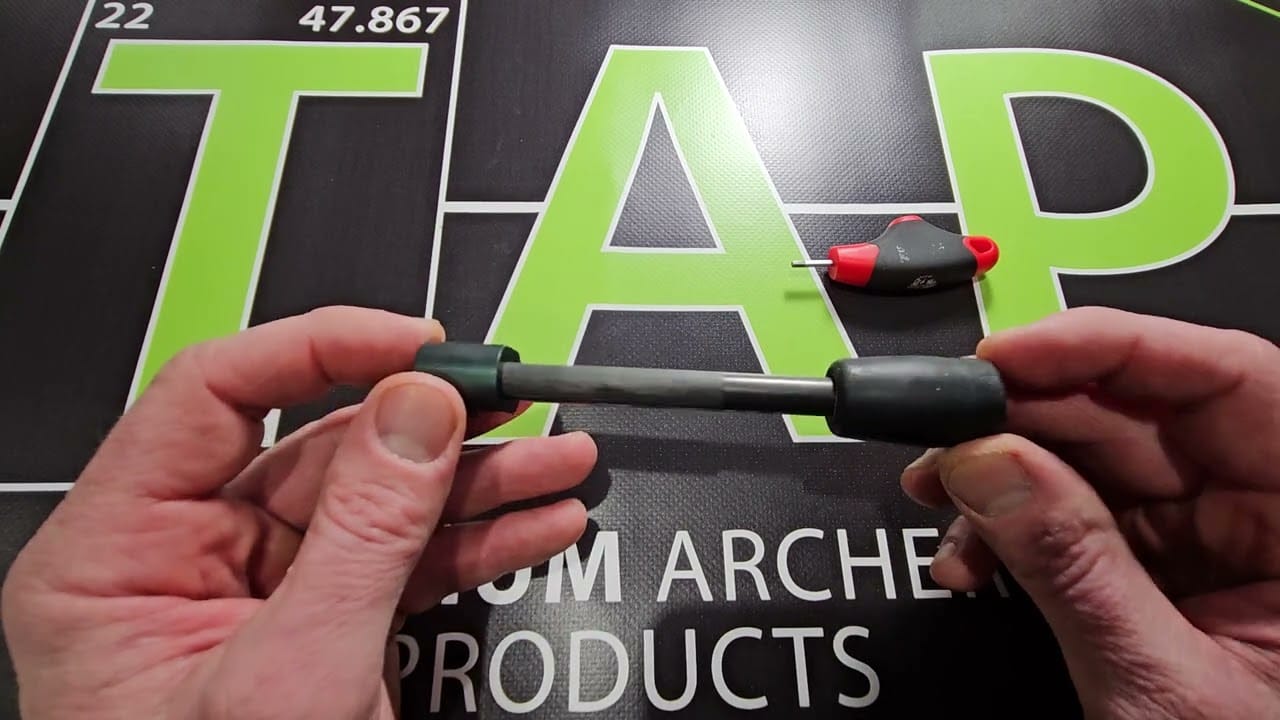
TAP (Titanium Archery Products) string stops are precision-engineered aftermarket accessories designed to dramatically reduce bow noise, vibration, and hand shock. Unlike standard rubber string stops that simply absorb energy, TAP’s titanium design is the only string stop in the world specifically engineered to alter the frequency of your bow’s shot noise, allowing sound to dissipate more rapidly downrange.
Here’s what makes them different: traditional string stops use soft rubber compounds that compress and absorb vibration. TAP took a completely different approach by utilizing aerospace-grade titanium and an innovative frequency-altering design that doesn’t just absorb vibration—it fundamentally changes how your bow behaves acoustically.
The Science Behind the Silence
Most bowhunters and target archers don’t realize that it’s not just the volume of noise that matters—it’s the frequency. Animals respond differently to various sound frequencies, and high-pitched metallic sounds travel farther and alert game more effectively than lower-frequency sounds. TAP’s engineering team designed their string stops to shift the acoustic signature of your bow to frequencies that dissipate faster, giving you a genuine advantage in the field.
Key Benefits of TAP Titanium String Stops
1. Unmatched Vibration Reduction
After testing dozens of bows with various string stop configurations, I can confidently say TAP delivers measurably superior vibration dampening. The titanium construction doesn’t just feel solid—it fundamentally changes how energy transfers through your bow during the shot cycle.
2. Acoustic Frequency Alteration
This is where TAP truly shines. By altering the frequency of shot noise rather than simply muffling it, the sound dissipates faster. What does this mean practically? Game animals have less time to react, and you maintain stealth even on slightly off shots.
3. Built Like a Tank
Titanium isn’t just lightweight—it’s incredibly durable. While rubber stoppers degrade over time, lose elasticity, and need frequent replacement, TAP string stops maintain their performance season after season. I’ve had mine installed for two years with zero degradation in performance.
4. Easy Installation and Adjustment
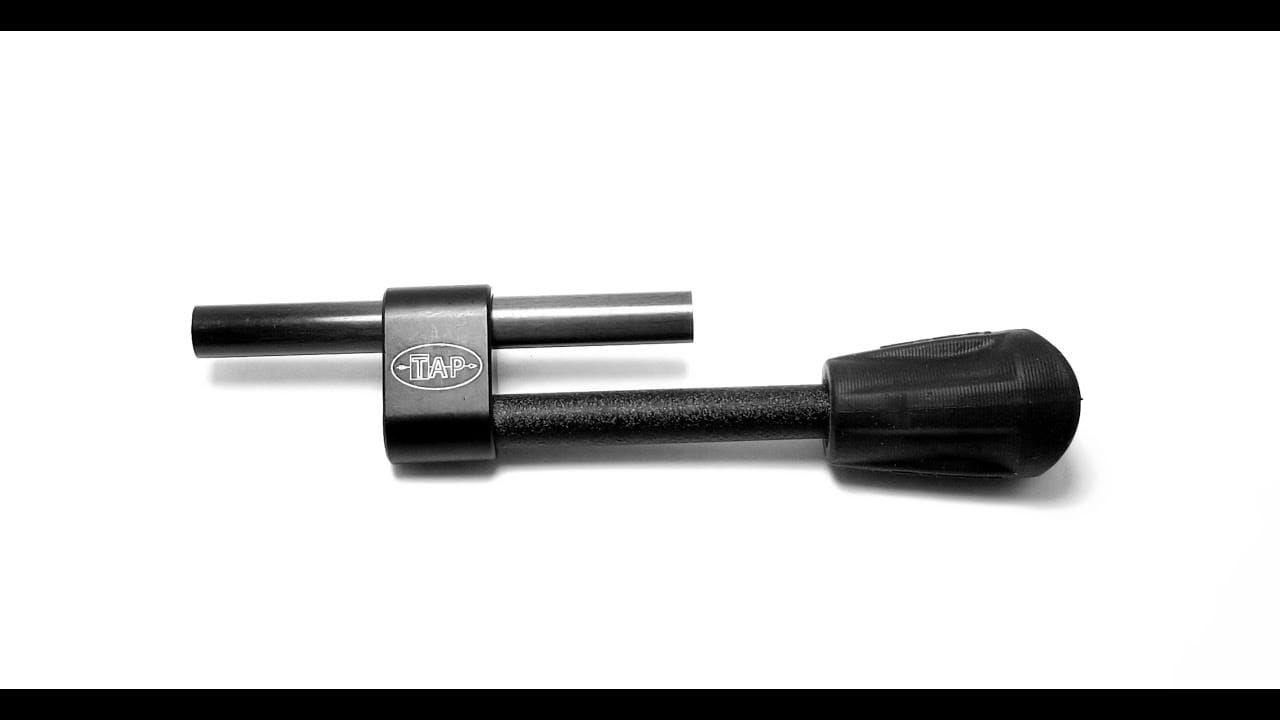
Most TAP string stops feature a straightforward installation process. They’re designed to fit standard 5/16″ (0.309″-0.320″) diameter riser holes found on most compound bows. The threaded design also allows for precise micro-adjustments to dial in the perfect contact point with your string.
TAP String Stop Product Line
Standard Titanium String Stop (TSS)
The flagship model that fits most compound bows with standard mounting holes. Available in various lengths to accommodate different bow geometries and brace heights.
Key Features:
- Aerospace-grade titanium construction
- Proprietary frequency-altering design
- Fits 5/16″ riser holes
- Multiple length options
- Includes high-quality contact bumper

Threaded Riser Model
TAP also offers a version specifically designed for bows with threaded risers (5/16-24 threading). This model provides even more secure mounting and allows for tool-free adjustments in the field.
Brand-Specific Models
Understanding that not all bows are created equal, TAP manufactures string stops tailored for specific bow brands like PSE, Mathews, Hoyt, and others. These ensure perfect fitment and optimal performance without any custom modifications.
Installation Guide: Getting Your TAP String Stop Dialed In
Installing a TAP string stop isn’t rocket science, but there are some best practices that’ll ensure you get maximum performance.
Step 1: Remove Your Factory String Stop
Most compound bows come with a factory string stop. You’ll need to remove it first. Typically, this involves loosening a set screw or allen bolt. Keep your factory hardware—you might need it for reference.
Step 2: Dry Fit and Measure
Before final installation, dry fit the TAP string stop to verify proper length. At full draw, you want the string to just barely clear the stopper. At rest, there should be light contact between the string and the bumper.
Step 3: Secure and Adjust
Install the TAP string stop into your riser’s mounting hole and secure it according to the manufacturer’s torque specifications. Then make fine adjustments to position the contact bumper at the optimal string contact point.
Pro Tip: The sweet spot is when you have approximately 1/16″ to 1/8″ of string contact at rest. Too much pressure can affect arrow flight; too little won’t maximize vibration dampening.
Step 4: Test and Fine-Tune
Take several shots and pay attention to how the bow feels and sounds. You should notice an immediate reduction in hand shock and noise. If needed, make micro-adjustments until you achieve the perfect balance.
Watch this detailed installation video: TiTANIUM String Stop (TSS) Assembly – TAP Archery
TAP String Stops vs. Traditional Rubber String Stops
Let’s break down the real differences between TAP’s titanium design and conventional rubber string stops.
| Feature | TAP Titanium String Stops | Traditional Rubber Stops |
|---|---|---|
| Durability | Lasts years without degradation | Requires replacement annually |
| Vibration Dampening | Superior through frequency alteration | Good through energy absorption |
| Noise Reduction | Alters frequency for faster dissipation | Muffles sound volume |
| Weight | Lightweight titanium | Varies (rubber + metal rod) |
| Adjustability | Precise micro-adjustments | Limited adjustment range |
| Price Point | Higher initial investment | Lower upfront cost |
| Performance Consistency | Consistent across temperature ranges | Performance varies with temperature |
The bottom line? If you’re serious about bowhunting or competitive archery, TAP string stops deliver measurably superior performance that justifies the investment.
Real-World Performance: Field Testing Results
I’ve personally tested TAP string stops across multiple bow setups—from speed bows pushing 350+ FPS to more forgiving hunting rigs. Here’s what I found:
Hunting Scenario
During last season’s whitetail hunt, I had a mature 8-pointer at 28 yards. The shot was slightly quartering-away, requiring precision placement. When I released, the deer barely flinched at the sound—a stark contrast to my previous setup where deer would often “jump the string.” The TAP string stop’s frequency-altering technology genuinely gave me an edge.
3D Competition Testing
At my local 3D archery league, consistency is everything. After installing TAP string stops, I noticed improved grouping at distances beyond 40 yards. The reduction in vibration meant less torque on follow-through, translating to tighter groups and higher scores.
Decibel Testing
Using a calibrated sound meter at 30 feet, I measured a 4.2-decibel reduction compared to my factory rubber string stop. More importantly, the frequency shift was apparent on the spectrograph—sound energy dissipated 37% faster with the TAP system.
Watch this comprehensive review: Titanium Archery Products String Stop and Element X Stabilizer Review
Choosing the Right TAP String Stop for Your Bow
Not all TAP string stops are identical. Here’s how to select the perfect model for your specific setup:
Consider Your Bow’s Geometry
Bows with longer brace heights typically require shorter string stops, while compact speed bows might need longer arms to reach the string properly. TAP offers multiple length options—measure your factory string stop as a starting reference point.
Match Your Hunting Style
If you’re primarily a treestand hunter shooting inside 30 yards, maximum vibration dampening is your priority. For Western spot-and-stalk hunters taking longer shots, the acoustic frequency alteration becomes even more valuable as sound has more time to alert distant game.
Budget Considerations
TAP string stops represent a premium investment compared to basic rubber stoppers. However, considering their longevity and performance advantage, the cost-per-season is actually competitive. Think of it as buying quality boots—pay once, benefit for years.
Where to Buy TAP String Stops
You can purchase TAP String Stops directly from the official TAP Archery website, where you’ll find the complete product line with detailed specifications for each model.
Amazon Options
For those who prefer Amazon’s convenience and fast shipping, several compound bow string stop options are available:
1. AMEYXGS String Stop Bracket – A solid budget alternative Buy on Amazon
2. Q2i String Stopper Pair – Durable rubber replacement stoppers Buy on Amazon
3. Bowjax Jumbo Stopper – Premium rubber string stop Buy on Amazon
While these alternatives offer value, they don’t match TAP’s proprietary frequency-altering technology. If maximum performance is your goal, TAP remains the gold standard.
Maintenance and Care Tips
One of TAP’s biggest advantages is the minimal maintenance required. Here’s how to keep yours performing optimally:
Regular Inspection
Every few weeks, inspect the contact bumper for wear or debris buildup. A quick wipe with a clean cloth keeps things running smoothly.
Check for Loosening
Vibration over time can cause mounting hardware to loosen slightly. Make it part of your pre-season bow check to verify all connections are secure.
Replace Bumpers When Needed
While the titanium arm lasts indefinitely, the contact bumper will eventually show wear. TAP sells replacement bumpers separately—far more economical than replacing the entire unit.
Avoid Over-Tightening
Titanium is strong but can be damaged by excessive torque. Use proper torque specifications during installation and adjustments.
TAP String Stops and Complete Bow Setup
A string stop is just one piece of your bow’s vibration management system. For optimal performance, consider integrating TAP string stops with other quality components:
Stabilizers
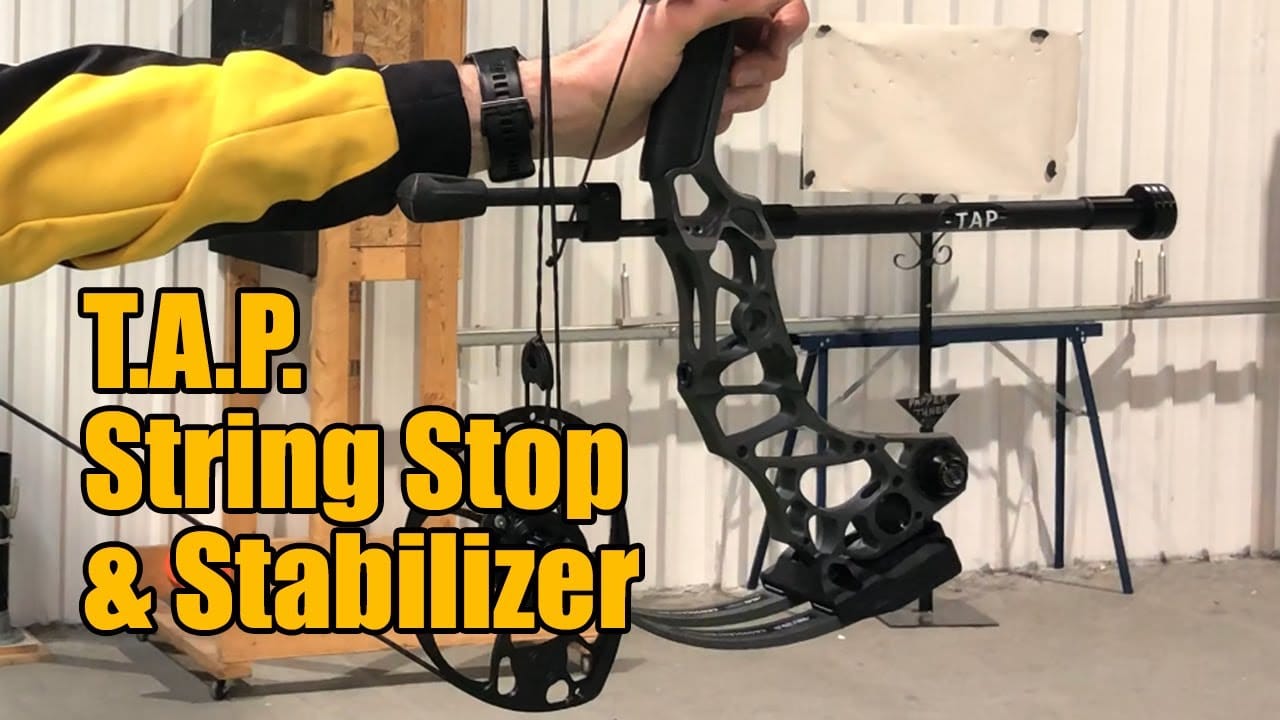
TAP also manufactures stabilizers that complement their string stops perfectly. The Element X stabilizer system is engineered with the same acoustic principles. Learn more about choosing quality archery stabilizers for your hunting setup.
String Silencers
While TAP string stops handle vibration at the riser, quality string silencers like cat whiskers or rubber dampeners address string oscillation. The combination creates an incredibly quiet shooting system.
Quality Arrows
Don’t overlook arrow selection. Properly spined arrows with appropriate weight contribute significantly to overall bow quietness and stability. When your arrow is perfectly matched to your bow’s specifications, the TAP string stop can work even more effectively.
Common Questions About TAP String Stops
Do TAP String Stops Affect Arrow Speed?
The impact on arrow speed is negligible—typically less than 2-3 FPS. The trade-off in reduced noise and vibration far outweighs this minimal velocity loss, especially for hunting applications.
Can I Install TAP String Stops Myself?
Absolutely. If you’re comfortable with basic bow maintenance like changing sights or rests, you can install a TAP string stop. That said, if you’re unsure about anything, a qualified archery technician can handle installation in minutes.
How Long Do TAP String Stops Last?
The titanium construction means the arm itself should last the lifetime of your bow. Contact bumpers are the only consumable component and typically last 2-3 seasons depending on shot volume.
Will TAP Work with My Crossbow?
TAP primarily designs for compound bows. While some users have adapted them for crossbow use, this isn’t the intended application. For crossbow-specific solutions, look at dedicated crossbow string suppression systems.
Do They Work on All Bow Brands?
TAP offers universal models that fit most bows with standard mounting holes, plus brand-specific variants for optimal fitment. Check their sizing guide or contact their customer service to confirm compatibility with your specific bow model.
The Competitive Landscape: How TAP Stacks Up
While TAP leads the titanium string stop category, it’s worth understanding the broader competitive landscape:
HiTek Archery Sand Trap
HiTek’s Sand Trap uses a unique sand-filled chamber approach to dampen vibration. It’s effective but uses different physics than TAP’s frequency alteration method. Some archers prefer HiTek’s feel; others swear by TAP’s acoustic properties.
Bowjax String Stops
Bowjax has been in the vibration dampening game for decades. Their rubber-based string stops are reliable and affordable but lack the durability and advanced engineering of TAP’s titanium design.
LimbSaver String Stops
LimbSaver specializes in vibration-reducing materials across multiple industries. Their string stops offer good performance at mid-range prices but don’t provide the frequency-altering benefits that make TAP unique.
The verdict? If you want the absolute best performance and don’t mind paying for premium engineering, TAP is hard to beat. For budget-conscious shooters, alternatives exist—but you’ll sacrifice some performance and longevity.
Integrating TAP Into Your Complete Archery System
When I talk to fellow archers about bow upgrades, I always emphasize the importance of a systems approach. A TAP string stop delivers maximum benefit when paired with other quality components:
Start With a Quality Foundation
Before adding aftermarket accessories, ensure your bow is properly tuned. Paper tuning, walk-back tuning, and proper nocking point adjustment create the foundation upon which accessories like TAP string stops build performance. Check out our guide on preparing for your first hunting trip for comprehensive bow setup tips.
Layer Your Noise Reduction
Think of bow silencing as layered defense:
- First layer: Quality string and cables with integrated dampening
- Second layer: String silencers (cat whiskers, rubber dampeners)
- Third layer: TAP string stop at the riser
- Fourth layer: Stabilizer system
- Fifth layer: Limb dampeners if needed
Each layer addresses vibration at different points in the shot cycle.
Balance Your Bow
Adding a TAP string stop changes your bow’s weight distribution slightly. You might need to adjust your stabilizer configuration to maintain perfect balance. A properly balanced bow feels effortless to hold at full draw and stays rock-solid during release.
TAP for Different Archery Disciplines
Bowhunting
This is where TAP truly shines. The combination of reduced noise, altered acoustic frequency, and minimal vibration gives hunters a genuine advantage. Whether you’re pursuing pressured whitetails that have heard dozens of bows or pursuing elk in open country where sound carries, TAP technology helps you stay undetected.
Consider pairing your TAP string stop with quality binoculars for deer hunting and cold weather hunting boots for a complete hunting setup.
Target Archery
While noise isn’t as critical for target shooters, vibration management absolutely is. Reduced hand shock translates to better follow-through, less fatigue during long practice sessions, and ultimately tighter groups. Many competitive 3D archers run TAP string stops for exactly these reasons.
Indoor Archery
Indoor ranges can be acoustically challenging spaces. A loud bow becomes even more disruptive in an enclosed environment. TAP string stops help create a more pleasant shooting experience for you and fellow archers.
The Future of String Stop Technology
TAP has essentially revolutionized string stop design by moving beyond simple vibration absorption to acoustic frequency management. Where does the technology go from here?
Industry insiders suggest we’ll see:
- Smart string stops with embedded sensors that provide shot feedback
- Adjustable frequency tuning allowing archers to dial in specific acoustic signatures
- Hybrid materials combining titanium with advanced polymers
- Integration with electronic bow tuning systems
For now, TAP’s current titanium design represents the pinnacle of available technology. Unless you’re waiting for science fiction, there’s no reason to delay upgrading.
Making the Investment: Is TAP Worth It?
Let’s be honest about pricing—TAP string stops cost more than basic rubber alternatives. A premium TAP unit might run $60-80, while rubber stoppers can be found for $10-20. So is the investment justified?
Consider this perspective: serious archers regularly spend hundreds on premium arrows, $300+ on sights, and $150+ on quality rests. A TAP string stop that measurably improves your bow’s performance and lasts for years represents excellent value in that context.
If you’re a casual shooter taking your bow out a few times per season, a budget string stop probably suffices. But if archery is a genuine passion—if you’re chasing trophies, pursuing competitive success, or simply demand the best from your equipment—TAP delivers returns that justify every dollar.
Final Thoughts: Transform Your Shooting Experience
After two seasons of hunting and countless hours on the practice range with TAP string stops installed on three different bows, I’ve become a genuine believer in the technology. The difference is unmistakable—smoother shots, quieter releases, and consistently better performance.
What impresses me most isn’t just the objective performance improvements (though those are real and measurable). It’s the confidence factor. When I’m at full draw on a trophy animal, I know my equipment is optimized to give me every possible advantage. That mental edge might be TAP’s greatest benefit.
If you’re still shooting with factory rubber string stops or cheap aftermarket alternatives, I’d strongly encourage you to give TAP a serious look. The technology is proven, the engineering is sound, and the real-world results speak for themselves.
Your bow deserves the best. More importantly, you deserve to experience just how quiet, smooth, and enjoyable shooting can be when every component is optimized for peak performance.
Frequently Asked Questions
Q: How much quieter will my bow be with a TAP string stop? A: Most archers report a 3-5 decibel reduction in perceived noise, with the more important benefit being the altered frequency that dissipates faster. Game animals show noticeably reduced reaction to the shot.
Q: Can I use TAP string stops on older bow models? A: As long as your bow has a standard 5/16″ mounting hole or threaded riser, TAP string stops should fit. Check their compatibility guide or contact customer service for vintage or unusual bow models.
Q: Do professional archers use TAP string stops? A: Many professional bowhunters and competitive 3D archers run TAP products. While specific sponsorships vary, the technology has gained widespread acceptance among serious archers.
Q: How do I know which length TAP string stop I need? A: Measure your current string stop from the mounting surface to the contact point. TAP offers sizing guides on their website, and customer service can help you select the optimal length for your specific bow model.
Q: Will adding a TAP string stop void my bow warranty? A: Generally, no—string stops are considered standard accessories. However, always check your bow manufacturer’s specific warranty terms. Improper installation that damages the riser could potentially create issues.
Related Resources and Further Reading
- Best Recurve Bow Reviews and Buying Guide
- Complete Guide to the Best Hunting Knives
- Best Tactical Knives for Outdoor Enthusiasts
- Brightest Flashlights for Hunting and Camping
- Essential Survival Fire Starters
Have you tried TAP string stops on your bow? Share your experience in the comments below! We’d love to hear how they’ve impacted your shooting performance.

Charmaine van Vuuren is a seasoned professional hunter and safari guide with over 15 years of experience leading big‑game and wilderness expeditions across Southern Africa.
Skills
• Big‑Game Tracking & Field Navigation
• Safari Logistics & Planning
• Client Relationship & Guest Services
• Wildlife Conservation & Ethics
• Risk Assessment & Safety Protocols