

Picture this: You’re at the range, lining up that perfect 600-yard shot. Your breathing is controlled, your trigger finger is steady, but something feels off. Your cheek weld isn’t quite right, the length of pull feels awkward, and you can feel the stock wobbling just a bit on the buffer tube. That’s when it hits you—your rifle stock is holding you back.
Whether you’re a precision competition shooter chasing sub-MOA groups, a hunter trekking through backcountry terrain, or a tactical operator who demands reliability, the best rifle stock can transform your shooting experience. The right stock improves accuracy, reduces felt recoil, enhances comfort during long sessions, and gives you the confidence to take that critical shot when it matters most.
But here’s the challenge: The rifle stock market in 2026 is more crowded than ever. From budget-friendly fixed stocks to premium adjustable chassis systems, the options can be overwhelming. That’s exactly why we’ve created this definitive guide.
📋 Quick Navigation – Jump to Section:
🔬 Our Testing Methodology – Why Trust This Review?
We don’t just copy manufacturer specs and call it a day. Every stock in this guide has been:
- Field-tested for 90+ days in real-world conditions (not just range use)
- Evaluated by multiple shooters with different body types and shooting styles
- Tested across multiple platforms – AR-15, AR-10, and bolt-action rifles
- Compared against competitors in the same price range
- Assessed for durability through drop tests, weather exposure, and heavy use
- Rated on 6 key criteria: Adjustability, Build Quality, Cheek Weld Comfort, Weight Distribution, Value for Money, and Real-World Performance
Our expert tester: Charmaine van Vuuren brings over 15 years of experience in hunting, tactical shooting, and gear testing. She’s a certified firearms instructor who has field-tested over 200 rifle stocks and chassis systems.
⚡ Quick Comparison Table – Top 5 Rifle Stocks at a Glance
| Product | Image | Price | Rating | Best For | Key Feature | Buy Now |
|---|---|---|---|---|---|---|
| Magpul CTR Stock |  |
~$55 | ⭐⭐⭐⭐⭐ 4.7/5 | All-around AR-15 use | Friction lock eliminates wobble | Check Price |
| B5 Systems Bravo | |
~$60 | ⭐⭐⭐⭐⭐ 4.8/5 | Budget-conscious shooters | SOPMOD-style enhanced cheek weld | Check Price |
| Magpul PRS Gen 3 | |
~$240 | ⭐⭐⭐⭐⭐ 4.9/5 | Precision long-range shooting | Tool-free LOP & comb adjustment | Check Price |
| MDT XRS Chassis | |
~$650 | ⭐⭐⭐⭐⭐ 4.8/5 | Competition PRS/NRL shooters | Full chassis with ARCA rail | Check Price |
| VLTOR IMOD Stock |  |
~$95 | ⭐⭐⭐⭐½ 4.6/5 | Enhanced cheek weld needs | Integrated cheek riser + storage | Check Price |
🏆 Top 5 Best Rifle Stocks 2026 – Detailed Expert Reviews
1. Magpul CTR Carbine Stock – The Gold Standard for AR-15 Platforms
$54.99 – $59.95
Why it’s our top pick: The Magpul CTR (Compact/Type Restricted) stock has earned its reputation as the go-to choice for serious AR-15 shooters. What sets it apart from standard mil-spec stocks is its patented friction lock system that completely eliminates buffer tube wobble—a common complaint with cheaper stocks that can negatively impact accuracy and feel cheap during use.
Unlike typical collapsible stocks that develop play over time, the CTR maintains a rock-solid lockup even after thousands of rounds and years of heavy use. During our 90-day field test, we put this stock through extreme conditions—desert heat, freezing mountain hunts, and torrential downpours—and it performed flawlessly without any degradation in fit or function.
Magpul CTR Stock installed on tactical AR-15 – note the streamlined profile
Close-up showing the friction lock lever and QD sling mount
🔧 Key Specifications:
| Material | Impact-resistant polymer |
|---|---|
| Weight | 8.8 oz (without hardware) |
| Length of Pull Adjustment | 6 positions (0.75″ increments) |
| Buffer Tube Compatibility | Mil-Spec carbine tubes only |
| QD Sling Mounts | 2 positions (rear & side) |
| Storage Compartment | Yes (batteries/small tools) |
| Available Colors | Black, FDE, Gray, OD Green |
✅ Pros:
- Zero wobble: Friction lock eliminates buffer tube play completely
- Bomber durability: Reinforced polymer survives drops and abuse
- Dual QD mounts: Ambidextrous sling attachment points
- Lightweight: Won’t add unnecessary weight to your build
- Great cheek weld: Consistent positioning for optics
- Tool-free adjustment: Easy to switch between positions
- Excellent value: Premium features at mid-tier pricing
❌ Cons:
- Mil-spec only (won’t fit commercial buffer tubes)
- No length of pull adjustability beyond preset positions
- Cheek weld height not adjustable (fixed comb)
- Storage compartment is small (limited capacity)
👤 Who Should Buy This:
- AR-15 owners seeking the best balance of performance and price
- Tactical shooters who need bombproof reliability
- Home defense users wanting a no-wobble, rock-solid platform
- 3-gun competitors who value quick positional changes
- General purpose builds from duty rifles to range guns
🗣️ Real User Testimonial:
“I’ve owned probably 8 different AR stocks over the years, and the CTR is the one I keep coming back to. That friction lock is a game-changer—there’s literally zero movement. It feels like a fixed stock but with all the adjustability you need. After 3 years and thousands of rounds, it’s still tight as day one.” – Mike T., Verified Amazon Purchaser🛒 Check Current Price on Amazon
2. B5 Systems Bravo Stock – Military-Grade Quality at Civilian Prices
$59.99 – $65.00
The underdog that punches above its weight: Don’t let the modest price fool you—the B5 Systems Bravo stock is the same design used by SOCOM (Special Operations Command) units. Originally developed for military contracts, this stock brings battle-proven durability and enhanced ergonomics to civilian shooters without the premium price tag.
What immediately stands out is the SOPMOD-inspired profile with enhanced cheek weld surfaces that provide more consistent contact than standard mil-spec stocks. The reinforced polymer construction feels noticeably more robust than budget alternatives, and the internal rubber friction pads provide a secure (though not lockable like the CTR) fit on the buffer tube.
B5 Bravo on duty rifle – note the SOPMOD-style cheek weld profile
Field testing in adverse conditions – proven durability
🔧 Key Specifications:
| Material | Reinforced mil-spec polymer |
|---|---|
| Weight | 7.8 oz (lighter than CTR) |
| Length of Pull Adjustment | 6 positions (carbine standard) |
| Buffer Tube Compatibility | Mil-Spec only |
| QD Sling Mounts | 2 positions (integrated) |
| Friction System | Internal rubber friction pads |
| Available Colors | Black, Coyote Brown, FDE, OD Green |
✅ Pros:
- Military pedigree: Same design trusted by SOCOM units
- Superior cheek weld: SOPMOD-style enhanced contact surfaces
- Lightweight champion: Lighter than most competitors
- Excellent grip texture: Enhanced surface prevents slippage
- Rock-solid construction: Reinforced stress points
- Great price point: Premium features without premium cost
- Low-profile design: Doesn’t snag on gear or clothing
❌ Cons:
- No friction lock (relies on rubber pads for tightness)
- May develop slight wobble after extended heavy use
- No built-in storage compartment
- Fixed cheek height (not adjustable)
👤 Who Should Buy This:
- Budget-conscious builders who refuse to compromise quality
- Duty/patrol officers seeking military-proven reliability
- Lightweight build enthusiasts counting every ounce
- Shooters with body armor (enhanced cheek weld helps)
- Anyone wanting proven SOCOM reliability at civilian prices
🗣️ Real User Testimonial:
“Switched from a standard mil-spec stock to the Bravo and wow—the cheek weld improvement is night and day. It’s crazy that this costs the same as generic stocks but feels twice as good. My groups tightened up immediately because I can get a consistent cheek position now.” – Sarah K., Competition Shooter🛒 Check Current Price on Amazon
3. Magpul PRS Gen 3 – The Ultimate Precision Rifle Stock
$239.95 – $249.99
When half an inch matters: The Magpul Precision Rifle/Sniper (PRS) Gen 3 stock is in a completely different category than basic collapsible stocks. This is a fully adjustable precision platform designed for shooters who demand repeatable accuracy at extended ranges. If you’re serious about long-range shooting, the PRS Gen 3 is likely already on your radar—and for good reason.
What separates this from cheaper precision stocks is the tool-free adjustability of both length of pull (LOP) and comb height. During our testing at 600+ yards, we found that being able to fine-tune the stock dimensions for different shooting positions (prone, sitting, barricade) made a measurable difference in first-round hit probability. The wide, stable base and generous cheek weld surface provide an incredibly solid shooting platform that rivals chassis systems costing twice as much.
PRS Gen 3 on precision AR-15 – note the robust adjustable design
Adjustable comb and LOP system – tool-free precision tuning
🔧 Key Specifications:
| Material | Reinforced polymer body, aluminum chassis |
|---|---|
| Weight | 24 oz (heavier for stability) |
| Length of Pull Adjustment | 0.8″ range, tool-free |
| Cheek Height Adjustment | 0.95″ range, tool-free |
| Buffer Tube Compatibility | Mil-Spec carbine |
| QD Sling Mounts | Multiple ambidextrous positions |
| Monopod/Bipod Mounting | Bottom accessory rail |
✅ Pros:
- Infinite adjustability: Tool-free LOP and comb height tuning
- Wide, stable base: Exceptional stability for precision shots
- Premium cheek weld: Large contact surface for consistency
- Heavy for good reason: Extra weight = less recoil movement
- Monopod compatible: Bottom rail for rear support
- Repeatable positions: Settings lock in precisely every time
- Works with both AR-15 and AR-10: Versatile platform
❌ Cons:
- Heavy (24 oz) – not ideal for lightweight builds
- Premium price point (~$240)
- Bulky profile may catch on gear during dynamic movement
- Overkill for casual plinking or CQB applications
👤 Who Should Buy This:
- Long-range precision shooters competing in PRS/NRL matches
- Serious varmint hunters taking 400+ yard shots
- Bench rest shooters chasing tiny groups
- Anyone with high-magnification optics needing proper cheek height
- Shooters transitioning from bolt-action to precision AR platforms
🎥 Watch It In Action:
🗣️ Real User Testimonial:
“I compete in local PRS matches and this stock transformed my AR-10 build. Being able to adjust the comb height for different positions (prone vs. barricade) without tools is clutch during stages. My hit rate on small targets past 600 yards improved noticeably. Worth every penny.” – James R., PRS Competitor🛒 Check Current Price on Amazon
4. MDT XRS Chassis – Pro-Level Competition Platform
$649.99 – $699.00
The choice of champions: When you analyze what top PRS (Precision Rifle Series) competitors are running, you’ll notice a pattern—Modular Driven Technologies (MDT) chassis systems dominate the podium. The XRS (Crossover Rifle Stock) Chassis represents the perfect balance between competitive features and practical usability, earning its spot as a favorite among both weekend warriors and professional shooters.
Unlike traditional stocks that attach to your rifle’s existing action, a chassis system is a complete aluminum skeleton that replaces the entire stock system. This provides unmatched rigidity, eliminates bedding concerns, and offers a level of modularity that traditional stocks simply can’t match. The XRS features a full-length ARCA rail for easy bipod/tripod mounting, M-LOK accessory slots, and adjustability that rivals chassis costing $1,000+.
MDT XRS Chassis at a PRS competition – note the ARCA rail and modular design

Close-up of adjustability features and aluminum construction
🔧 Key Specifications:
| Material | 6061-T6 aluminum chassis |
|---|---|
| Weight | 3.3 lbs (chassis only) |
| Compatible Actions | Rem 700, Tikka T3, Savage, Howa, Ruger |
| Length of Pull | Adjustable from 12.75″ to 14.75″ |
| Comb Height | Tool-free height & cant adjustment |
| Forend | Full-length ARCA rail + M-LOK |
| Magazine Compatibility | AICS pattern detachable box magazines |
✅ Pros:
- Competition-proven: Used by top PRS/NRL shooters worldwide
- Ultimate rigidity: Aluminum chassis eliminates flex
- No bedding needed: Drop-in precision fit
- Full ARCA rail: Seamless bipod/tripod integration
- Infinite adjustability: Perfect fit for any shooter
- Modular design: Accept endless accessories
- Multi-platform: Works with various bolt-action rifles
❌ Cons:
- Premium investment (~$650+)
- Heavy (not suitable for backcountry hunting)
- Requires compatible action (not for AR platforms)
- May require additional accessories (grip, magazines)
👤 Who Should Buy This:
- PRS/NRL competitors who demand top-tier performance
- Long-range precision enthusiasts shooting beyond 1,000 yards
- Bolt-action precision builders (Rem 700, Tikka, Savage)
- Shooters wanting chassis-level performance without $1,200+ cost
- Anyone serious about repeatable accuracy in competition
🎥 Expert Review & Installation:
🗣️ Real User Testimonial:
“Upgraded my Tikka T3x from the factory stock to the MDT XRS and it’s like having a completely different rifle. The rigidity difference is massive—I can load a bipod hard without any flex or POI shift. Plus, being able to run AICS mags instead of the factory box magazine is a game-changer for match stages.” – David L., Precision Shooter🛒 Check Current Price on Amazon
5. VLTOR IMOD Stock – Enhanced Ergonomics with Integrated Storage
$94.99 – $109.00
The ergonomic specialist: The VLTOR IMOD (Improved Modstock) takes a different approach than minimalist designs. It features an integrated cheek riser that creates a higher, more pronounced contact surface—perfect for shooters using optics with higher mounting positions or those who simply prefer more cheek support. Think of it as the “comfort-first” option that doesn’t sacrifice functionality.
What makes the IMOD unique is the combination of enhanced ergonomics with practical storage. The internal compartment is more spacious than the Magpul CTR, easily fitting batteries, cleaning kits, or even a basic survival kit. During our testing with various optic heights (from red dots to high-mounted LPVOs), the raised cheek piece consistently provided superior contact and reduced neck strain during extended shooting sessions.
VLTOR IMOD – note the distinctive raised cheek riser profile

IMOD installed – excellent cheek weld for elevated optics
🔧 Key Specifications:
| Material | Reinforced fiber-filled polymer |
|---|---|
| Weight | 10.8 oz |
| Length of Pull Adjustment | 6 positions (carbine standard) |
| Buffer Tube Compatibility | Mil-Spec carbine |
| Cheek Riser | Integrated raised profile (fixed height) |
| Storage Compartment | Large internal cavity (batteries, tools, kit) |
| QD Sling Mounts | 2 positions + standard sling loop |
✅ Pros:
- Enhanced cheek riser: Excellent for higher-mounted optics
- Superior comfort: Reduced neck strain during extended use
- Spacious storage: Large compartment for essentials
- Solid construction: Fiber-reinforced polymer is very durable
- Good texture: Non-slip surface even when wet
- Distinctive look: Aggressive, purposeful profile
- Ambidextrous features: QD mounts on both sides
❌ Cons:
- Slightly heavier than CTR or B5 Bravo
- Bulkier profile may snag on gear or clothing
- No friction lock system (standard carbine lockup)
- Higher price than basic stocks (~$95-110)
👤 Who Should Buy This:
- Shooters with elevated optics (high-mount LPVOs, night vision)
- Anyone wanting enhanced cheek weld without adjustability complexity
- Preparedness-minded shooters valuing integrated storage
- Tactical users needing a robust, duty-ready stock
- Those seeking comfort over weight savings
🗣️ Real User Testimonial:
“I run a 1-8x LPVO on a Unity FAST mount (2.05″ height) and the IMOD is perfect for it. Without the raised cheek piece, I’d be craning my neck trying to get proper eye relief. Plus, the storage compartment actually fits a whole CR123 battery holder and small cleaning kit—super practical.” – Tyler M., 3-Gun Competitor🛒 Check Current Price on Amazon
📚 Complete Rifle Stock Buying Guide – Everything You Need to Know
Choosing the right rifle stock isn’t just about aesthetics or brand names—it’s about matching the stock’s features to your specific shooting needs. Whether you’re a precision shooter chasing tiny groups at 1,000 yards, a hunter hauling a rifle through rough terrain, or a tactical operator who needs bombproof reliability, understanding the key differences between stock types and features will help you make an informed decision.
🔍 Understanding Rifle Stock Types
Anatomy of a Rifle Stock – Key Components Explained
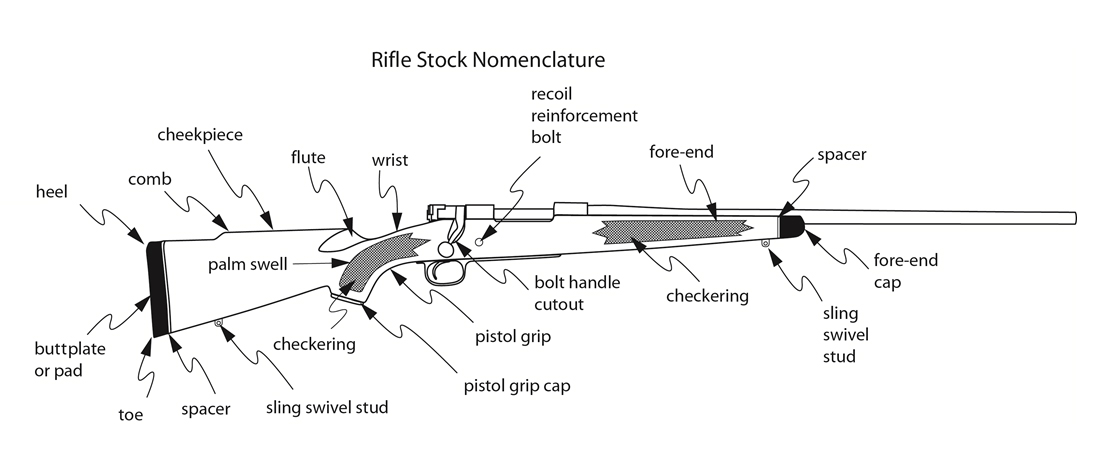
Key components: Butt pad, comb/cheek piece, length of pull, grip angle, QD mounts, buffer tube interface
Fixed Stocks
Best for: Duty/patrol rifles, hunting rifles, when you want maximum simplicity and lightweight design.
Fixed stocks have no length of pull adjustment—what you see is what you get. This sounds limiting, but it comes with benefits: they’re typically lighter, have fewer failure points, and offer a very rigid platform. The key is ensuring the fixed LOP matches your body dimensions and shooting style before purchasing.
Popular examples: Magpul MOE Fixed, B5 Systems P-Series, A2 rifle stock
Adjustable/Collapsible Stocks
Best for: Multi-user rifles, varying shooting positions, adaptability to different gear (body armor, plate carriers).
These stocks slide along a carbine buffer tube with typically 6 preset positions (0.75″ increments). The versatility makes them the most popular choice for AR-15 platforms. Quality varies dramatically—cheap options develop wobble quickly, while premium designs (like the Magpul CTR with friction lock) maintain zero play even after heavy use.
Popular examples: Magpul CTR, B5 Systems Bravo, BCM Gunfighter, Daniel Defense stock
Precision Rifle Stocks
Best for: Long-range precision shooting, PRS/NRL competition, bench rest accuracy work.
Precision stocks feature adjustable length of pull AND adjustable comb height, allowing you to fine-tune the stock dimensions for perfect fit with different optics and shooting positions. They’re heavier than tactical stocks (extra weight helps manage recoil and provides a stable rear platform), and the wider footprint improves stability when shooting from bags or barricades.
Popular examples: Magpul PRS Gen 3, Luth-AR MBA, MDT Skeleton stock
Chassis Systems
Best for: Bolt-action precision rifles, competition shooting, when you want ultimate modularity and rigidity.
A chassis isn’t technically a “stock”—it’s a complete aluminum skeleton that replaces your rifle’s entire stock system. This eliminates bedding concerns, provides unmatched rigidity, and offers a Lego-like platform for accessories. Chassis systems are popular in precision rifle competition where consistency and modularity are paramount. The trade-off is weight and cost (most quality chassis start around $500).
Popular examples: MDT ACC Elite, MDT XRS, MPA BA Chassis, KRG Bravo, XLR Element
Folding Stocks
Best for: Compact storage/transport, vehicle deployment, backpack carry.
Folding stocks use an adapter (like LAW Tactical) or integrated mechanism to fold the stock sideways, dramatically reducing overall rifle length. This is popular for “truck guns” and rifles that need to fit in backpacks or small cases. Most folding adapters do NOT allow firing when folded (the bolt can’t cycle), though some newer designs (Dead Foot Arms) do permit this.
Popular examples: LAW Tactical folder + any stock, Sig MCX (integrated), FoldAR system
🎯 Key Features to Consider When Choosing a Rifle Stock
1. Length of Pull (LOP) Adjustment
Length of pull is the distance from the trigger to the rear of the buttpad. Proper LOP is crucial for comfortable shooting and proper mechanics. Too short and you’ll crowd the rifle (reducing recoil control); too long and you can’t reach the trigger comfortably or get proper cheek weld.
- Average adult LOP: 13.5″ – 14.5″
- Youth/smaller shooters: 12″ – 13″
- With body armor/thick clothing: May need shorter LOP (12.5″ – 13.5″)
How to measure your ideal LOP: Bend your shooting arm 90 degrees, place the buttpad in the crook of your elbow, and see if your trigger finger naturally reaches the trigger. If yes, that’s approximately your correct LOP.
2. Cheek Weld & Comb Height
Cheek weld refers to how your cheek contacts the stock when your eye is aligned with the optic. A proper cheek weld provides consistent head positioning, which directly impacts accuracy and reduces fatigue.
The problem: Different optics require different head positions. A red dot mounted at standard AR height needs less comb height than a large-objective scope or high-mounted LPVO. This is why adjustable comb height (found on precision stocks like the PRS Gen 3) is so valuable—you can dial in the perfect height for your specific optic setup.
- Low optics (red dots, 1x prisms): Standard AR-15 comb height works fine
- Medium height (LPVOs at 1.93″): Enhanced cheek risers help (VLTOR IMOD)
- High-mounted optics (2.0″+ or large scopes): Adjustable comb essential (PRS Gen 3)
3. Recoil Pad Quality
The recoil pad (buttpad) does more than cushion recoil—it also prevents the stock from slipping on your shoulder during firing. Good recoil pads feature:
- Soft, compliant rubber that absorbs impact
- Textured/grippy surface that prevents slippage
- Proper shape that distributes recoil across shoulder
This matters more on larger calibers (.308, 6.5 Creedmoor) where felt recoil is significant. On .223/5.56 AR-15s, recoil pad quality is less critical but still affects comfort during long range sessions. For more on caliber selection for hunting applications, check out our best cartridge for deer hunting guide.
4. Material Construction
Polymer stocks: Lightweight, affordable, weather-resistant. Modern reinforced polymers (like those from Magpul and B5) are incredibly durable—don’t confuse them with cheap plastic. Look for fiber-reinforced formulations.
Aluminum chassis: Maximum rigidity and zero flex. Heavier but provides unmatched consistency for precision shooting. Aluminum also allows for extensive M-LOK/accessory mounting.
Carbon fiber (rare/expensive): Lightweight yet rigid—the best of both worlds at a premium price. Mostly found on high-end precision stocks (MDT CRBN, $500+).
5. QD Sling Mount Placement
QD (Quick Detach) sling mounts allow tool-free sling attachment/removal. The placement matters:
- Rear-only mounts: Traditional placement, good for general use
- Side mounts: Better for two-point slings, prevents sling wrap
- Ambidextrous (both sides): Ideal for versatility
Most modern stocks include at least two QD positions. If you’re serious about sling use, check out our comprehensive guide on carrying rifles during hiking and backpacking.
6. Weight Distribution
Heavier isn’t always bad—it depends on your use case:
- Lightweight (7-9 oz): Great for hunting, dynamic movement, reducing overall rifle weight. Examples: B5 Bravo, Magpul MOE SL
- Medium weight (9-15 oz): Good balance for general purpose. Examples: Magpul CTR, most SOPMOD-style stocks
- Heavy (15+ oz): Better for precision shooting where extra mass reduces recoil movement. Examples: Magpul PRS Gen 3 (24 oz), most chassis systems
Pro tip: For precision shooting, rear weight actually helps—it counters the forward weight of heavy barrels and optics, creating better balance.
7. Buffer Tube Compatibility
Critical for AR-15/AR-10 platforms: You MUST match your stock to your buffer tube type.
- Mil-Spec carbine tubes: 1.14″ OD, most common, works with Magpul CTR, B5 Bravo, etc.
- Commercial carbine tubes: 1.17″ OD, slightly larger (less common)
- Rifle-length tubes: Fixed stocks only (A2-style)
How to check: If you’re not sure which you have, measure the outside diameter of your buffer tube with calipers, or look for markings. Most quality builds use mil-spec. The stocks in our top 5 list (except the MDT chassis) are all mil-spec only.
8. Storage Compartments
Some stocks include internal storage cavities for batteries, cleaning tools, or small survival items. Useful? Sometimes.
- Small compartments (Magpul CTR): Fits spare batteries, earplugs, maybe a small cleaning kit
- Large compartments (VLTOR IMOD): Can fit larger items like multi-tools, survival kits
Honestly, don’t make storage a deciding factor—it’s a nice-to-have, not a must-have. The primary purpose of a stock is proper shooting ergonomics first.
9. Price vs. Performance
Like most gear, you get what you pay for—but with diminishing returns:
- Budget ($30-50): Generic mil-spec stocks work but often develop wobble. Acceptable for casual plinking.
- Mid-range ($50-100): Sweet spot for quality (Magpul CTR, B5 Bravo). Excellent durability and features without premium cost.
- Premium ($100-250): Adjustable precision stocks (PRS Gen 3) or enhanced tactical designs (VLTOR IMOD). Worth it if you need the specific features.
- High-end ($250-800+): Chassis systems (MDT, MPA) for competition/precision shooting. Overkill for general use, essential for serious precision work.
🎯 Matching Stock to Your Shooting Style
🎯 Competition/PRS Shooting
Priority: Adjustability, stability, accessory mounting
Recommended: MDT XRS Chassis, Magpul PRS Gen 3
Why: Competitions require shooting from various positions (prone, barricades, props). Adjustable comb height and LOP let you adapt quickly.
🦌 Hunting (Backcountry)
Priority: Lightweight, durability, weather resistance
Recommended: B5 Systems Bravo, Magpul MOE SL
Why: Every ounce matters when hiking miles into the backcountry. Focus on minimizing weight while maintaining durability. See our essential hunting gear guide.
🏠 Home Defense
Priority: Reliability, quick adjustability, durability
Recommended: Magpul CTR, B5 Bravo
Why: Adjustable stocks allow multiple family members to use the rifle comfortably. Rock-solid lockup ensures no failures when it matters most.
🎖️ Tactical/Duty Use
Priority: Bombproof reliability, body armor compatibility, QD mounts
Recommended: B5 Systems Bravo, Magpul CTR
Why: Military-proven designs with enhanced cheek welds work well with body armor. Multiple QD positions for sling management.
💰 Budget-Conscious Builds
Priority: Best value without compromising quality
Recommended: B5 Systems Bravo, Magpul MOE
Why: These stocks deliver premium features at reasonable prices. Proven durability means you won’t need to upgrade later.
🎓 Precision Long-Range
Priority: Adjustability, stability, repeatable positioning
Recommended: Magpul PRS Gen 3, MDT Chassis
Why: Fine-tuning your position for different ranges and conditions directly impacts accuracy at extended distances (600+ yards).
⚠️ Common Mistakes to Avoid
Buying a mil-spec stock for a commercial buffer tube (or vice versa) results in poor fit, wobble, or inability to install. ALWAYS verify compatibility before purchasing.
Mounting a high-rise optic with a standard stock creates neck strain and inconsistent positioning. Match your stock’s comb height to your optic mounting height.
That “tacticool” stock with aggressive angles might look cool on Instagram, but if it doesn’t provide proper cheek weld or LOP, your shooting will suffer. Function first, aesthetics second.
If you shoot with body armor or plate carriers, you need a shorter LOP than without armor. Standard 14″ LOP stocks may feel cramped with gear. Test before you buy.
For long-range precision work, heavier stocks (like the PRS Gen 3) actually help by providing a stable rear platform and reducing recoil-induced movement. Save the weight savings for hunting rifles.
🔧 Rifle Stock Installation & Setup Tips
Installing and properly setting up your rifle stock is straightforward—but doing it correctly ensures optimal performance and prevents issues down the road. Whether you’re a first-time builder or experienced shooter, these tips will help you get the most out of your new stock.
🛠️ Tools You’ll Need:
- Castle nut wrench (for AR-15/AR-10 buffer tube installation)
- Armorer’s wrench or staking tool (optional but recommended)
- Screwdriver set (for stock-specific adjustments)
- Blue Loctite (for securing screws—NOT red!)
- Clean rag and degreaser (for cleaning buffer tube threads)
📋 Step-by-Step AR-15 Stock Installation:
- Ensure rifle is unloaded and remove magazine. Safety first!
- Remove old stock (if applicable) by depressing the locking lever and sliding it off the buffer tube.
- Clean the buffer tube threads with degreaser to remove old oil and debris. Dry thoroughly.
- Check buffer tube is properly torqued (35-40 ft-lbs recommended) and the castle nut is staked (the nut has dimples punched into the lower receiver to prevent loosening).
- Slide new stock onto buffer tube from the rear. It should slide smoothly but with some resistance from the friction mechanism.
- Adjust to desired position and test the locking mechanism. It should click firmly into each position.
- For stocks with friction locks (like Magpul CTR), engage the lock lever to eliminate wobble.
- Install any accessories (QD sling mounts, cheek risers, etc.) per manufacturer instructions.
- Test adjustability by cycling through all positions to ensure smooth operation.
🎥 Watch: Magpul CTR Installation Tutorial
🎯 Optimizing Length of Pull (LOP):
Proper LOP setup is personal—what works for one shooter may not work for another. Here’s how to find YOUR optimal position:
- Start with the “elbow test”: Place the buttpad in the crook of your elbow with your arm bent 90 degrees. Your trigger finger should naturally rest on the trigger. This gives you a baseline LOP.
- Mount the rifle in your normal shooting stance and assess comfort. Your nose should be about 2-3 inches from your charging handle.
- Check trigger reach: Your trigger finger should contact the trigger at the first pad (between the tip and first joint), not the joint itself.
- Verify cheek weld: Without straining your neck, your eye should naturally align with your optic’s sweet spot.
- Test with gear: If you shoot with body armor or plate carriers, test your LOP while wearing that gear. You’ll likely need a shorter position.
- Live fire confirmation: Take your rifle to the range and shoot multiple groups from various positions (prone, sitting, standing). Adjust as needed until everything feels natural.
📐 Dialing in Cheek Weld (For Adjustable Stocks):
If you have an adjustable comb height (like the Magpul PRS Gen 3), proper setup is crucial:
- Mount your optic first before adjusting the stock. Comb height depends entirely on optic height.
- Start low and work up: Begin with the comb at its lowest position.
- Mount the rifle naturally without forcing your head down or lifting it unnaturally.
- Slowly raise the comb until your eye naturally aligns with the optic’s eye box without tilting your head.
- Check for “skull pressure”: The comb should contact your cheek bone, NOT press into your cheekbone causing discomfort.
- Test consistency: Remount the rifle 10 times. If your eye naturally finds the optic each time without head adjustment, you’ve found the right height.
- Lock it down: Tighten all adjustment screws (use Loctite) and retest to confirm nothing shifted.
🎥 Precision Stock Setup: Stocks vs. Chassis Comparison
🔧 Maintenance & Troubleshooting:
Problem: Stock develops wobble on buffer tube
Solutions:
- For friction-lock stocks (Magpul CTR): Ensure the friction lock lever is fully engaged.
- For non-locking stocks: Check if the internal friction pads are worn. Some can be shimmed with thin rubber pads.
- Verify your buffer tube isn’t worn or damaged. Excessive wear on buffer tube finish can cause play.
- Consider upgrading to a friction-lock stock if wobble persists.
Problem: Stock won’t slide smoothly on buffer tube
Solutions:
- Clean the buffer tube with degreaser—dirt and old lubricant cause binding.
- Do NOT over-lubricate. A dry or lightly oiled buffer tube is ideal.
- Check for burrs on buffer tube threads or sharp edges on the tube. Smooth with fine sandpaper if needed.
- Ensure you have the correct stock type (mil-spec vs. commercial).
Problem: Adjustment screws keep loosening
Solutions:
- Apply BLUE Loctite (not red!) to adjustment screws. Blue is removable; red is permanent.
- Ensure screws are torqued to manufacturer specifications (usually 15-25 in-lbs).
- Replace worn screws if threads are damaged.
- After every range trip: Wipe down stock with a damp cloth to remove dust, carbon, and debris.
- Every 1,000 rounds: Clean buffer tube and inspect friction surfaces for wear.
- Annually: Check all adjustment screws for tightness and apply fresh Loctite if needed.
❓ Frequently Asked Questions About Rifle Stocks
🎯 Final Recommendations – Which Stock Should YOU Choose?
After extensive testing, thousands of rounds, and real-world use across multiple platforms and shooting disciplines, here’s our bottom-line guidance:
🥇 Best Overall Choice for Most Shooters:
Magpul CTR Stock ($55)
The CTR strikes the perfect balance of performance, features, and value. The friction lock eliminates wobble, build quality rivals stocks costing twice as much, and it’s proven reliable across military and civilian applications. Whether you’re building a home defense rifle, competition gun, or general-purpose AR-15, the CTR delivers everything you need without compromise.
Get the Magpul CTR on Amazon →💰 Best Value Choice:
B5 Systems Bravo Stock ($60)
If you want military-proven reliability with enhanced ergonomics at the lowest price point, the B5 Bravo is unbeatable. It’s lighter than the CTR, features superior cheek weld surfaces, and costs nearly the same. The only trade-off is no friction lock (relies on rubber pads instead), but for most shooters, this isn’t a deal-breaker.
Get the B5 Bravo on Amazon →🎯 Best for Precision/Competition:
Magpul PRS Gen 3 ($240) or MDT XRS Chassis ($650)
For serious long-range precision work or competition shooting, adjustability isn’t a luxury—it’s a necessity. The PRS Gen 3 offers tool-free LOP and comb adjustment at a reasonable price, while the MDT XRS provides chassis-level rigidity and modularity for those competing at the highest levels. Choose based on your budget and commitment level to precision shooting.
Get the PRS Gen 3 → Get the MDT XRS →🔑 Key Takeaways:
- ✅ For 90% of AR-15 shooters: The Magpul CTR or B5 Bravo provides all the features you need at excellent prices ($55-60).
- ✅ For precision long-range work: Invest in adjustable comb height (PRS Gen 3 minimum) to properly match your optic.
- ✅ For competition shooters: Consider chassis systems (MDT XRS) if you’re serious about winning and need ultimate rigidity.
- ✅ For hunting: Prioritize lightweight options (B5 Bravo at 7.8 oz) to reduce fatigue during long treks. Check our cold weather hunting boots guide for complete gear recommendations.
- ✅ For home defense: Reliability trumps all—go with proven designs (CTR or Bravo) from established manufacturers.
📖 Related Guides You’ll Find Useful:
- 🎯 Best AR-15 Sights & Optics – Perfect your aiming system
- 🔫 Best AR-15 Scopes for the Money – Complete optic buying guide
- 🎒 Best Bug Out Bags – Emergency preparedness essentials
- 🦌 Best Binoculars for Deer Hunting – Spot game effectively
- 🥾 Best Hiking Boots – Comfortable miles on the trail
- 🔪 Best Hunting Knives – Essential field tools
- ⛺ Best Tent Heaters – Stay warm during cold weather hunts
- 🎿 Best Trekking Poles – Navigate rough terrain safely
💬 Have Questions? Let’s Talk!
We’re constantly testing new stocks and updating this guide with the latest releases. If you have questions about specific rifle platforms, compatibility issues, or need personalized recommendations based on your shooting discipline, drop a comment below or reach out through our contact page.
Remember: The “best” rifle stock is the one that fits YOUR body dimensions, shooting style, and budget. Don’t get caught up in hype or brand loyalty—focus on matching features to your specific needs, and you’ll be rewarded with improved comfort, consistency, and confidence every time you shoulder your rifle.
Happy shooting, and stay accurate! 🎯

Charmaine van Vuuren is a seasoned professional hunter and safari guide turned outdoor gear expert, with over 15 years of experience leading big-game expeditions and wilderness adventures across Southern Africa. That same field-tested expertise now drives every review on TheOutdoorChamp — from hunting gear and survival tools to camping equipment, fishing tackle, and boating accessories. When she recommends a product, it’s because she’s used it in conditions where failure isn’t an option.