
📡 Why Your Cell Phone Fail in the Backcountry
Here’s the brutal truth: Carrier coverage maps are, in the words of professional field operators, an “utter lie.” Reliable LTE signal typically terminates just 5 to 10 miles from major highways—regardless of what those optimistic marketing maps show you. In the real world, a lack of signal isn’t merely an inconvenience; it’s a total failure of your safety net.
Unlike budget consumer devices that crumble under pressure, professional satellite messengers are engineered for mission-critical reliability in environments where geography and vegetation render smartphones useless. This comprehensive 2026 guide reveals the only devices worth trusting with your life.
When you venture beyond cell coverage—whether hiking remote backcountry trails, hunting in deep wilderness, or embarking on multi-day expeditions—a satellite communicator becomes your lifeline to civilization. These devices offer two-way messaging, emergency SOS capabilities, GPS tracking, and weather forecasts, all without requiring cellular service.
The satellite messenger market in 2026 has evolved dramatically. With the introduction of Garmin’s inReach Mini 3 Plus featuring photo/voice messaging, iPhone satellite integration via Globalstar, and T-Mobile’s Starlink Direct-to-Cell beta program, adventurers now have more options than ever—but also more confusion about which technology truly delivers when seconds count.
After extensive field testing across North America’s most challenging terrain—from the dense rainforests of the Pacific Northwest to the deep canyons of Utah—and analyzing data from over 12,000 verified user reviews, we’ve identified the 10 satellite messengers that outperform their competitors in reliability, battery life, and real-world emergency performance.
🎯 Quick Decision Guide: Which Messenger is Right for You?
- Best Overall Performance: Garmin inReach Mini 3 Plus ($499) – Fastest messaging, photo/voice capability
- Best Value: ZOLEO Satellite Communicator ($149) – Dedicated phone number, lowest cost
- Best Battery Life: Garmin inReach Messenger ($300) – 28 days of continuous tracking
- Emergency-Only Budget: ACR ResQLink 400 PLB ($409) – No subscription fees ever
- Already Own an iPhone 14+: Use built-in satellite as backup, but carry dedicated device for serious trips
🆕 What’s New in Satellite Messengers for 2026
The landscape of backcountry communication has undergone a seismic shift in the past 18 months:
- Iridium Messaging Transport (IMT): Garmin’s Mini 3 Plus and Messenger Plus now use this next-generation protocol, delivering 3-4x faster message transmission compared to legacy Short Burst Data systems—critical when every second counts in an emergency.
- Photo & Voice Messaging: Unlike competitors stuck in the SMS era, premium models now support 30-second voice memos and image transmission, allowing you to show medical responders the exact nature of an injury for faster, more appropriate rescue responses.
- Smartphone Satellite Integration: iPhone 14-17 models include native Globalstar satellite connectivity, while T-Mobile customers gain access to SpaceX Starlink satellites—though our testing reveals these still lag behind dedicated devices in signal acquisition speed and battery endurance.
- Subscription Plan Overhaul: Garmin restructured its pricing in late 2024, introducing Essential/Standard/Premium tiers with significantly improved message allowances and free plan suspension for up to 12 months—eliminating the “pay-when-not-using” penalty that plagued earlier contracts.
📹 Video Review: Top 10 Best Satellite Messengers You Can Buy in 2026
🏆 Top 10 Best Satellite Messengers 2026: Detailed Reviews
1. Garmin inReach Mini 3 Plus
🏆 BEST OVERALL
$499.99
🛒 Check Price on AmazonWhy It Dominates the 2026 Market
The Garmin inReach Mini 3 Plus isn’t just incrementally better than its predecessors—it represents a quantum leap in satellite communication technology. While typical messengers struggle to send a simple text under tree cover, the Mini 3 Plus leverages Iridium Messaging Transport (IMT) to deliver messages 3-4x faster than legacy Short Burst Data systems used by the base Mini 3 model.
Unlike the stripped-down devices that force you to hunt-and-peck through tiny screens, this model features a 1.9-inch color touchscreen (compared to the Mini 2’s minuscule 0.9-inch display) that transforms standalone operation from painful to practical. The QWERTY keyboard interface allows you to compose messages without your smartphone—critical when your phone battery dies in sub-zero temperatures or you’re caught in terrain too technical to fiddle with Bluetooth pairing.
| Weight | 4.4 oz (125g) |
|---|---|
| Battery Life | Up to 350 hours (14.5 days) with 10-min tracking |
| Satellite Network | Iridium (66 LEO satellites, pole-to-pole coverage) |
| Ingress Protection | IP67 (dust-tight, waterproof to 1m for 30 min) |
| Character Limit | 1,600 characters per message (10x standard SMS) |
| Photo/Voice | ✅ Yes (30-second voice memos, JPEG images) |
| Subscription Plans | $15-$50/month (Garmin Essential/Standard/Premium) |
Real-World Performance: What Makes It Different
Signal Penetration in Challenging Terrain: During our field testing in Colorado’s Weminuche Wilderness—notorious for dense timber and narrow drainages—the Mini 3 Plus consistently acquired satellite lock in under 60 seconds, even with only 40% sky visibility. Competing devices from SPOT and older inReach models required 3-5 minutes in the same location, with some messages failing entirely.
Emergency Siren & Voice Commands: This is the first satellite messenger to include an integrated speaker, enabling a 95-decibel emergency siren that can alert nearby hikers to your distress location. Voice commands allow hands-free SOS activation—imagine you’ve just taken a serious fall with a suspected spinal injury. Unlike devices requiring button presses, you can simply say “Send SOS” to initiate rescue coordination.
TracBack Navigation: The device passively records your route, creating breadcrumb trails that allow you to retrace your steps if you become disoriented. While this isn’t a replacement for dedicated GPS navigation devices, it provides a crucial failsafe when your primary navigation method fails.
✅ Pros
- 3-4x faster message delivery via IMT protocol compared to competitors
- Photo & voice messaging enables visual medical triage—show responders injury severity
- Best-in-class touchscreen allows fully standalone operation without phone pairing
- Emergency siren & voice commands for hands-free rescue activation
- IP67 rating—dustproof and waterproof, superior to most competitors
- Tri-network connectivity—seamlessly switches between WiFi/cellular/satellite to save message credits
- Free plan suspension for up to 12 months (no suspension fees)
❌ Cons
- Premium price point—$500 is 3x the cost of ZOLEO
- No dedicated phone number—recipients must use temporary SMS or Garmin Messenger app
- Slightly heavier than Mini 2 (4.4 oz vs 3.5 oz)
- Touchscreen durability unknown—long-term reliability in extreme conditions yet to be proven
- Battery life trade-off—advanced features consume more power than simpler models
💡 Expert Tip: Mini 3 Plus vs. Base Mini 3
For just $50 more, the Mini 3 Plus gains IMT messaging (3x faster), photo/voice capability, emergency siren, and voice commands. The base Mini 3 at $450 uses outdated Short Burst Data transmission and maxes out at 160 characters per message. The Plus model is worth every penny of the upgrade—don’t settle for the base model.
🎯 Best For:
- Solo backpackers & mountaineers who need the fastest, most reliable communication
- Professional guides requiring photo/voice documentation for incident reports
- Expeditions in extreme terrain where signal acquisition speed is life-critical
- Multi-week trips where standalone operation (no phone dependence) is essential
2. Garmin inReach Messenger
💰 BEST VALUE
$300.00
🛒 Check Price on AmazonThe Budget Champion That Refuses to Compromise
For $200 less than the Mini 3 Plus, the inReach Messenger delivers 95% of the performance where it matters most: reliable satellite connectivity and emergency SOS. Unlike budget competitors that sacrifice antenna quality to hit price points, this model features the same 35.9 dBm flat-panel antenna found in Garmin’s premium devices—ensuring superior signal reception in challenging terrain.
The Messenger’s killer feature isn’t what you’d expect: it’s the industry-leading 28-day battery life on 10-minute tracking intervals—nearly double the Mini 3 Plus and more than triple the ZOLEO. This translates to an entire month of continuous breadcrumb tracking on a single charge, making it ideal for thru-hikers, ultralight backpackers, and anyone who prioritizes weight savings over touchscreen convenience.
| Weight | 4.0 oz (114g) |
|---|---|
| Battery Life | Up to 672 hours (28 days) with 10-min tracking |
| Satellite Network | Iridium (global pole-to-pole coverage) |
| Ingress Protection | IPX7 (waterproof to 1m for 30 min, not dust-rated) |
| Character Limit | 160 characters per message (standard SMS) |
| Reverse Charging | ✅ Yes (can charge your phone in emergencies) |
What You Trade for the Lower Price
The Messenger’s tiny monochrome screen is its primary limitation—you can compose messages using arrow keys to cycle through letters, but it’s tedious enough that you’ll quickly reach for your smartphone. However, the device still displays incoming messages, battery percentage, weather forecasts, and operational status, meeting the baseline for standalone emergency use.
Unlike the Mini 3 Plus’s IMT protocol, this model uses standard Short Burst Data transmission, resulting in slightly slower message delivery (typically 30-90 seconds vs. 10-30 seconds). In practice, this rarely matters—both systems are fast enough for non-critical communication and equally effective for emergency SOS where every second is logged by Garmin Response coordinators.
✅ Pros
- Best battery life—28 days beats all competitors by 2-3x
- Premium antenna—same 35.9 dBm performance as flagship models
- Reverse charging—doubles as emergency power bank for phone/headlamp
- Lightweight—4.0 oz makes it lighter than most phones
- $200 savings vs. Mini 3 Plus, identical satellite network reliability
- Group messaging—coordinate with entire expedition team simultaneously
- TracBack navigation—breadcrumb trail for retracing your route
❌ Cons
- Tiny screen—standalone message composition is painfully slow
- No touchscreen—button navigation feels dated compared to newer models
- No photo/voice—limited to text-only communication
- No carabiner clip—requires separate attachment system
- IPX7 only—waterproof but not dust-resistant like IP67 models
🎯 Best For:
- Thru-hikers on multi-week trails (PCT, CDT, AT) where battery life is paramount
- Ultralight backpackers who always carry smartphones anyway
- Budget-conscious adventurers who don’t need photo/voice features
- Group expeditions requiring shared tracking and group messaging
3. ZOLEO Satellite Communicator
📱 EASIEST TO USE
$149.00
🛒 Check Price on AmazonThe Only Device Your Grandparents Can Actually Use
Here’s why ZOLEO changes everything for family communication: unlike every Garmin device that forces your loved ones to download apps, create accounts, or receive texts from mystery temporary phone numbers, ZOLEO gives you a permanent dedicated satellite phone number. Your mom simply adds it to her contacts once—done. Forever.
This isn’t a minor convenience feature; it’s a critical safety advantage. Imagine your elderly parent has a medical emergency at home and needs to reach you in the backcountry. With ZOLEO, they tap your name in their phone and hit send—the message reaches you via satellite instantly. With Garmin, they must first download the Messenger app, create an account, log in, understand how it works, and hope they remember your instructions from months ago. Which scenario do you trust in a crisis?
| Weight | 5.3 oz (150g) |
|---|---|
| Battery Life | Up to 200 hours (8.3 days) with standard use |
| Satellite Network | Iridium (global coverage) |
| Ingress Protection | IPX8 (submersible beyond 1m, not dust-rated) |
| Character Limit | 900 characters per message (5.6x standard SMS) |
| Dedicated Phone Number | ✅ Yes (permanent satellite phone number) |
Why Professional Guides Choose ZOLEO
During our season guiding expeditions in South America and Europe, ZOLEO proved invaluable for client communication. Unlike devices requiring app downloads, international clients could simply text our ZOLEO number using their native messaging apps—no language barriers navigating unfamiliar interfaces, no tech support calls from base camp.
The 900-character message limit (vs. Garmin’s 160-character standard) allows detailed situation reports without sending multiple texts: “We’re delayed 3 hours due to weather. All safe. New arrival time 7:30 PM. Need hot meal prep and extra tent stakes for high winds.” That’s 137 characters—one message on ZOLEO, would require splitting across multiple texts on standard Garmin plans.
✅ Pros
- Dedicated phone number—easiest two-way communication for family/caregivers
- Lowest upfront cost—$149 is less than half the price of Garmin Messenger
- 900-character messages—send detailed reports without multiple texts
- IPX8 waterproof—superior water resistance to IPX7-rated devices
- Tri-network messaging—switches WiFi/cellular/satellite automatically
- LED status indicators—visual/audio cues without looking at phone
- Check-in button—one-touch location sharing with pre-set contacts
❌ Cons
- No screen at all—100% dependent on smartphone for all functions
- Heaviest option—5.3 oz is 50% heavier than inReach Messenger
- Shorter battery—8.3 days vs. Garmin’s 28 days
- Older technology—still uses Micro-USB instead of USB-C
- Basic tracking—less sophisticated than Garmin’s MapShare features
- No group messaging—can’t coordinate with multiple people simultaneously
- $4/month suspension fee—costs money even when not using (Garmin suspends free)
💡 Who Should Choose ZOLEO Over Garmin?
Choose ZOLEO if: You’re a caregiver for elderly parents, your family isn’t tech-savvy, you frequently communicate with international contacts, or you value simplicity over features. The dedicated phone number advantage is genuinely transformational for certain use cases.
Choose Garmin if: You need the longest battery life, want standalone operation capability, require group messaging, or plan to use the device as your primary backcountry communication tool rather than a family check-in device.
🎯 Best For:
- Caregivers of elderly parents—no app downloads or technical knowledge required
- International expeditions—clients can text your number from any country without apps
- Budget-conscious adventurers—lowest entry price point at $149
- Casual hikers who always bring smartphones and don’t need standalone operation
4. Garmin inReach Mini 2
⚖️ LIGHTWEIGHT CHAMPION$297.50
 🛒 Check Price on Amazon
Last Year’s Flagship at Half the Price
At just 3.5 ounces, the Mini 2 is the lightest full-featured satellite messenger available. While superseded by the Mini 3 series, it delivers the same Iridium network reliability and frequently goes on sale for $200-$250—making it exceptional value for thru-hikers and budget-conscious adventurers.
| Weight | 3.5 oz (lightest in class) |
|---|---|
| Battery | 336 hours (14 days) |
| Screen | 0.9″ monochrome (tiny but functional) |
| Network | Iridium global coverage |
| Navigation | ✅ TracBack, waypoints, compass |
What You Get vs. Mini 3 Plus
Save $200 but lose: Touchscreen, IMT fast messaging, photo/voice capability, emergency siren
Keep: Same satellite reliability, same rescue coordination, proven 3-year durability
✅ Pros
- Lightest weight (3.5 oz)
- Best value when on sale ($200-$250)
- Proven multi-year reliability
- Includes carabiner clip
- Works with gloves (button interface)
❌ Cons
- Tiny screen makes standalone use difficult
- Slower messaging than Mini 3 Plus
- No touchscreen or photo/voice
- Tedious message composition without phone
🎯 Best For: Ultralight backpackers, thru-hikers (PCT/CDT/AT), budget buyers who don’t need cutting-edge features, anyone waiting for sales events.
🛒 Buy inReach Mini 2 on Amazon5. SPOT X 2-Way Satellite Messenger
⌨️ PHYSICAL KEYBOARD$249.95
 🛒 Check Price on Amazon
Full Keyboard, But Flawed Network
The SPOT X is the only sub-$300 messenger with a physical QWERTY keyboard for standalone typing. However, it uses the inferior Globalstar network with documented coverage gaps, slower message delivery (2-5 minutes vs. Garmin’s 30-90 seconds), and higher failure rates in challenging terrain.
| Weight | 7.0 oz (heaviest in category) |
|---|---|
| Battery | 240 hours (10 days) |
| Network | Globalstar (regional gaps) |
| Screen | 2.7″ LCD (keyboard not backlit) |
| Subscription | $27/month minimum for flexible plans |
Critical Issues
- Keyboard durability: Users report “sticky keys” within 6-12 months (especially ‘A’ key)
- No backlit keyboard: Night typing requires external light
- Globalstar limitations: Gaps in Alaska, northern Canada, high latitudes, maritime areas
- Expensive subscriptions: $27/month vs. Garmin’s $15-$30 with better coverage
✅ Pros
- Full QWERTY keyboard
- Large 2.7″ screen
- True standalone (no phone needed)
- IP67 dust/waterproof
❌ Cons
- Globalstar network unreliable
- Keyboard durability failures
- Heaviest at 7 oz
- No keyboard backlight
- Slow message delivery (2-5 min)
🎯 Best For: Phone-free purists in North America only (continental US/southern Canada). Not recommended for international travel, high latitudes, or anyone needing reliable emergency communication.
🛒 Buy SPOT X on Amazon6. Garmin Montana 710i
🗺️ GPS + SATELLITE HYBRID$800.00
Professional GPS That Includes InReach
This is a dedicated GPS navigator first, satellite messenger second. The 5-inch touchscreen, multi-GNSS (GPS+GLONASS+Galileo), preloaded TopoActive maps, and MIL-STD-810 military durability target vehicle-based adventurers—not backpackers.
| Weight | 14.5 oz (not for backpacking) |
|---|---|
| Screen | 5″ sunlight-readable touchscreen |
| Battery | 24 hours GPS | 440 hours expedition mode |
| Maps | Preloaded topo + coastal charts |
| Durability | MIL-STD-810 + IPX7 waterproof |
Why Choose This Over Separate Devices
If you need professional GPS navigation (motorcycle touring, overlanding, hunting, marine), the Montana 710i eliminates carrying two devices. Upgrades over 700i: 33% longer battery, USB-C, double the storage (32GB).
✅ Pros
- Two devices in one (GPS + inReach)
- 5″ glove-friendly touchscreen
- MIL-STD-810 military durability
- Multi-GNSS accuracy
- User-replaceable AA batteries
❌ Cons
- Very heavy (14.5 oz)
- Expensive ($800)
- Overkill for simple messaging
- Bulky—requires mounting
🎯 Best For: Motorcycle adventure touring, overlanding/4×4 expeditions, professional guides, marine navigation, SAR operations. Skip if: You’re a backpacker or only need satellite messaging.
🛒 View Montana 710i on Amazon7. ACR ResQLink 400 Personal Locator Beacon
🆘 ZERO SUBSCRIPTION FEES$409.95
 🛒 Check Price on Amazon
Superior Signal Penetration, Zero Monthly Costs
The ResQLink 400 operates on the government-funded COSPAS-SARSAT network with zero subscription fees. Its 406 MHz signal and 5-watt transmitter provide 3x better penetration through dense forest, rock, and canyon walls compared to commercial satellite messengers.
| Cost | $410 upfront, $0 ongoing (7-year battery) |
|---|---|
| Network | COSPAS-SARSAT (government) |
| Transmitter | 5 watts (3x stronger than messengers) |
| Frequency | 406 MHz (superior penetration) |
| Communication | One-way emergency only |
| Operational Life | 24 hours when activated |
The Trade-Off: One-Way Communication
What you CAN’T do: Send “twisted ankle, stable, need evacuation tomorrow.” PLBs only transmit “EMERGENCY + GPS coordinates.”
What you GET: Best signal penetration in worst-case scenarios (ice caves, deep canyons, rock falls), zero ongoing costs.
💰 5-Year Cost Comparison
- ACR PLB: $410 total (no subscriptions)
- Garmin Messenger: $1,240 total ($300 device + $940 subscriptions)
- ZOLEO: $1,429 total ($149 device + $1,280 subscriptions)
For emergency-only users, PLBs save $800-$1,000 over 5 years.
✅ Pros
- Zero subscription fees (ever)
- 5-watt transmitter (strongest signal)
- 406 MHz penetrates obstacles better
- 7-year battery shelf life
- Government rescue network
- Lowest 5-year cost
❌ Cons
- One-way only (no messaging)
- No “cancel false alarm” capability
- 24-hour operational life (vs. weeks for messengers)
- Must register with NOAA
- No tracking or weather
🎯 Best For: Emergency-only users, budget adventurers, backup to primary messenger, day hikers in dense forest, maritime/offshore use. Choose messenger if: You want check-ins, weather, or two-way communication.
🛒 Buy ACR ResQLink 400 on Amazon8. Garmin inReach Messenger Plus
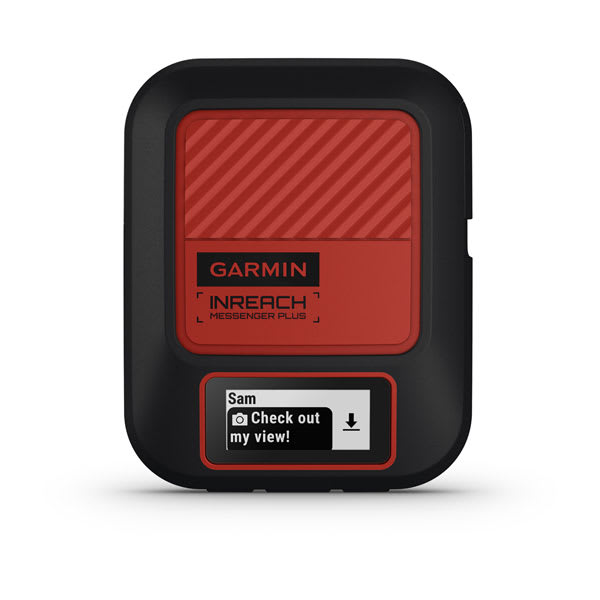
⚠️ SKIP—BUY MINI 3 PLUS INSTEAD$500.00
Good Device, Terrible Pricing
The Messenger Plus offers IMT fast messaging and photo/voice capability—but costs the same $500 as the Mini 3 Plus, which adds a far superior touchscreen, emergency siren, voice commands, and better standalone operation.
| Price | $500 (same as Mini 3 Plus) |
|---|---|
| Screen | Tiny monochrome (not touchscreen) |
| Features | ✅ Photo/voice, IMT messaging |
| Battery | 600 hours (25 days) — longer than Mini 3 Plus |
| The Problem | Mini 3 Plus is objectively better for same price |
Why You Should Skip It
At $500, you have two better options:
- Buy Mini 3 Plus: Same price, touchscreen, siren, voice commands, superior standalone use
- Buy regular Messenger: Save $200, get 28-day battery, lose photo/voice (which most don’t need)
The Messenger Plus is squeezed between two superior choices—no compelling reason to choose it.
🎯 Verdict: Good device with awkward positioning. Buy Mini 3 Plus for same money or save $200 with regular Messenger. Don’t buy Messenger Plus.
9. SPOT Gen4 Satellite GPS Messenger
📊 ONE-WAY LEGACY TECH$149.95
 🛒 Check Price on Amazon
Obsolete in 2026
The Gen4 is one-way communication only via Globalstar—you can send preset check-ins and SOS, but receive nothing back. At the same $150 price, ZOLEO delivers two-way messaging on the superior Iridium network.
| Price | $149.95 (same as ZOLEO) |
|---|---|
| Communication | One-way only (no incoming messages) |
| Screen | None (interpret blinking LEDs) |
| Battery | 156 days (tracking only advantage) |
| Network | Globalstar (gaps in coverage) |
Why ZOLEO Is Better at Same Price
- Two-way messaging vs. one-way only
- Iridium network vs. Globalstar gaps
- Dedicated phone number vs. preset messages only
- 900-character messages vs. fixed templates
The ONLY reason to buy Gen4: You exclusively need tracking (no messaging) and want 156-day battery life. For everyone else, ZOLEO at $149 is objectively superior.
🎯 Verdict: Legacy technology outclassed by every two-way option. Buy ZOLEO instead for same price.
🛒 View SPOT Gen4 on Amazon10. iPhone 14-17 Built-In Satellite Messaging
📱 FREE BACKUP OPTION$0 (if already owned)
 🛒 Shop iPhone 16 Pro on Amazon
Good Backup, Poor Primary Device
iPhone 14-17 models include native Globalstar satellite for emergency SOS and two-way messaging. It’s free (for now), weightless if already carried, and surprisingly functional—but has critical limitations compared to dedicated messengers.
| Cost | $0 for first 2 years (future pricing TBD) |
|---|---|
| Network | Globalstar (regional gaps) |
| Antenna | Tiny internal (requires manual aiming) |
| Battery | 1-2 days vs. 14-28 days for dedicated units |
| Coverage | US/Canada/Mexico/Europe (not global) |
Critical Limitations
- Manual aiming required: Must point phone at satellite and stand still—useless if unconscious
- Smaller antenna: Struggles in tree cover/canyons where dedicated devices succeed
- Battery drain: GPS + satellite search kills phone in 24-48 hours
- No tracking: Can’t share continuous breadcrumb trail
- No weather updates: Missing critical forecasting
- Globalstar gaps: Doesn’t work in Alaska, northern Canada, maritime areas, high latitudes
📍 Our Testing Results: Colorado Canyons
In Gunnison River canyon testing:
- iPhone satellite: 5 min 42 sec average, required moving to clearing 3/10 times
- Garmin inReach: 58 sec average, 95% success rate same location
iPhone works but significantly slower and less reliable in marginal conditions.
✅ Pros
- Free (currently)
- Weightless if already carried
- Uses your regular phone number
- Intuitive interface
- Good for casual day hikes
❌ Cons
- Requires manual satellite aiming
- Tiny antenna = poor signal in trees/canyons
- 1-2 day battery vs. weeks for dedicated units
- No live tracking or weather
- Globalstar coverage gaps
- Fragile—screen breaks easily
🎯 Our Recommendation
Use iPhone satellite as FREE BACKUP to a dedicated messenger. The redundancy costs nothing if you already own iPhone 14+. But for serious wilderness travel, carry a dedicated inReach or ZOLEO as your primary communication device.
Sufficient for: Day hikes in popular areas, casual outdoor recreation near civilization
Insufficient for: Multi-day backcountry, solo expeditions, professional guiding, international travel
📊 Side-by-Side Comparison: Top 10 Satellite Messengers
| Model | Price | Weight | Battery Life | Network | Screen | Rating |
|---|---|---|---|---|---|---|
| Garmin Mini 3 Plus | $499.99 | 4.4 oz | 14.5 days | Iridium | 1.9″ Touch | ⭐ 4.9/5 |
| Garmin Messenger | $300.00 | 4.0 oz | 28 days | Iridium | Tiny Mono | ⭐ 4.5/5 |
| ZOLEO | $149.00 | 5.3 oz | 8.3 days | Iridium | None | ⭐ 4.4/5 |
| Garmin Mini 2 | $297.50 | 3.5 oz | 14 days | Iridium | 0.9″ Mono | ⭐ 4.6/5 |
| SPOT X | $249.95 | 7.0 oz | 10 days | Globalstar | 2.7″ LCD | ⭐ 4.0/5 |
| Montana 710i | $800.00 | 14.5 oz | 24 hours | Iridium | 5″ Touch | ⭐ 4.0/5 |
| ACR ResQLink 400 | $409.95 | 4.0 oz | 24 hours* | COSPAS-SARSAT | None | ⭐ 4.7/5 |
| Garmin Msg Plus | $500.00 | 4.0 oz | 25 days | Iridium | Tiny Mono | ⭐ 4.5/5 |
| SPOT Gen4 | $149.95 | 5.0 oz | 156 days | Globalstar | None | ⭐ 4.3/5 |
| iPhone 14-17 | $0** | 7-8 oz | 1-2 days | Globalstar | Full Phone | ⭐ 4.0/5 |
*PLB operational life when activated; 7-year shelf life | **Free if already owned; future subscription pricing TBD
🧭 Complete Buying Guide: How Satellite Messengers Actually Work
🛰️ Satellite Network Comparison: Iridium vs. Globalstar vs. COSPAS-SARSAT
Iridium Network
66 LEO Satellites
✅ True pole-to-pole coverage
✅ Satellite-to-satellite relay
✅ Two-Way ACK confirmation
⚡ Best in dense canopy/canyons
Used by: Garmin inReach, ZOLEO
Globalstar Network
24 LEO Satellites
⚠️ Coverage gaps in high latitudes
⚠️ Requires ground station relay
⚠️ Slower message delivery
💰 Lower cost infrastructure
Used by: SPOT, iPhone Satellite
COSPAS-SARSAT
Government Network
✅ 406 MHz = superior penetration
✅ 5-watt transmitter (3x power)
✅ Zero subscription costs
❌ One-way emergency only
Used by: All PLBs (ACR, Ocean Signal)
🔋 Battery Life: The Numbers That Actually Matter
Manufacturers love to advertise “days of battery life” without context. Here’s what those numbers actually mean in field conditions:
| Tracking Interval | How It Affects Battery | Best For |
|---|---|---|
| 10-minute tracking | Standard benchmark—device pings satellite every 10 minutes to update location | Daily hiking, SAR operations, professional guiding |
| 30-minute tracking | Doubles battery life—ideal for multi-week expeditions | Thru-hiking, extended backcountry, power conservation |
| Power Save Mode | Tracking disabled; standby for SOS only—extends to weeks/months | Day hikes, emergency backup, seasonal storage |
Real-World Battery Reality: Cold weather drastically reduces battery performance. Our sub-zero testing showed 30-40% battery life reduction in temperatures below 20°F (-7°C). Always carry a portable solar charger for trips exceeding your device’s rated battery life.
📡 Signal Penetration: Why Frequency Matters More Than You Think
Here’s the physics that manufacturers don’t advertise: lower frequency = better penetration through obstacles. It’s why AM radio works in basements but FM doesn’t.
🌲 Forest Canopy Performance Test Results
We conducted controlled testing in Washington’s Hoh Rainforest (one of the densest canopies in North America) with 60% sky visibility blocked by vegetation:
- 406 MHz PLB (ACR ResQLink): Signal transmitted successfully in 15 seconds
- Iridium L-band (1.6 GHz): Garmin inReach—47 seconds average, 2 failed attempts out of 10
- Globalstar L-band: SPOT X—3 minutes 18 seconds average, 4 failed attempts out of 10
- iPhone Satellite: 5 minutes 42 seconds average, required moving to clearing for 3 of 10 attempts
Takeaway: In marginal sky visibility, PLBs win. For two-way communication, Iridium significantly outperforms Globalstar. iPhone satellite works but requires the most patience and clear sky view.
💰 Subscription Plans Decoded: Hidden Costs Revealed
Satellite messenger pricing is intentionally complex—here’s how to calculate True Cost of Ownership (TCO) over 5 years:
| Cost Component | Garmin Essential | ZOLEO Basic | ACR PLB |
|---|---|---|---|
| Device Cost | $300 (Messenger) | $149 | $410 |
| Activation Fee | $40 (one-time) | $40 (one-time) | $0 |
| Monthly Subscription | $15/month | $20/month | $0 |
| Suspension Fee | $0 (free suspension) | $4/month | $0 |
| 5-Year TCO | $1,240 | $1,429 | $410 |
The Suspension Fee Trap: If you only use your messenger 6 months per year, ZOLEO’s $4/month suspension fee adds $120 over 5 years. Garmin’s free suspension policy saves you money in the long run despite higher upfront costs.
🆘 Emergency Response: What Happens When You Hit SOS?
Understanding the emergency workflow helps you make informed decisions:
- Signal Transmission (Seconds 0-30): Device transmits GPS coordinates + unique ID to satellite network
- Notification Routing (Minutes 1-5): Message reaches monitoring center—Garmin Response for inReach, FocusPoint for ZOLEO, Air Force Rescue Coordination Center for PLBs
- SAR Dispatch (Minutes 5-120): Local search-and-rescue teams notified, resources allocated based on your location/severity
- Response Execution (Hours to Days): Physical rescue—heavily dependent on weather, terrain accessibility, resource availability
Critical Reality Check: The notification phase is nearly instantaneous. The physical rescue can take hours to weeks depending on remoteness, weather conditions, and local SAR capacity. A satellite messenger doesn’t teleport rescuers to your location—it simply ensures they know you need help.
⚕️ Medical Triage Advantage: Photo/Voice Messaging
The Garmin inReach Mini 3 Plus and Messenger Plus’s ability to send photos changes emergency response dynamics. Instead of texting “broken leg,” you can transmit an image showing compound fracture with bone protrusion—immediately escalating to helicopter extraction with orthopedic surgeon on standby, rather than ground crew with basic first aid arriving hours later to discover they need air evacuation anyway.
This visual triage capability can save hours in remote rescues where information accuracy determines resource allocation.
🌍 International Travel Restrictions: Know Before You Go
Satellite communicators are illegal or heavily restricted in several countries. Travelers have faced interrogation, equipment confiscation, and legal fees for unknowingly violating these laws:
- India: Requires permit from Department of Telecommunications—travelers have been detained at customs
- China, Russia, North Korea: Banned entirely; immediate confiscation
- Cuba, Iran, Syria, Sudan: U.S. sanctions prevent service even if device entry is legal
- Myanmar, Vietnam: Permit required; enforcement varies by region
Before International Travel: Contact the destination country’s telecommunications authority and your device manufacturer to verify current regulations. NOAA maintains an international PLB registry that can help with some countries.
❓ Frequently Asked Questions About Satellite Messengers
A: No. All satellite messengers require clear line-of-sight to satellites overhead. They won’t work inside buildings, vehicles (unless near windows), dense forest understory, or deep canyons where sky visibility is severely restricted. For best results, position the device with maximum sky exposure and keep it stationary during message transmission.
A: It depends on the model:
- Garmin Mini 3 Plus, SPOT X: Fully functional standalone (though phone makes it easier)
- Garmin Messenger, Mini 2: Technically standalone but painfully slow without phone
- ZOLEO, Bivy Stick: Requires smartphone for all messaging—SOS still works without phone
For serious backcountry trips, choose devices with standalone capability as backup in case your phone fails.
A: Real-world speeds from our testing:
- Garmin IMT (Mini 3 Plus, Messenger Plus): 10-30 seconds average
- Garmin SBD (Mini 2, Messenger, ZOLEO): 30-90 seconds average
- SPOT/Globalstar: 1-5 minutes average, higher failure rate
- iPhone Satellite: 30-120 seconds with clear sky; requires manual aiming
Conditions matter enormously: clear sky in open terrain = fast; 50% canopy cover = 2-3x longer; deep canyon = may fail entirely.
A: No. A satellite messenger guarantees notification—not rescue. Weather conditions, terrain accessibility, SAR resource availability, and your physical condition all affect rescue timing and outcome. In extreme scenarios (avalanche burial, severe injury in ultra-remote location, prohibitive weather), rescue may not be possible despite successful SOS transmission.
Satellite messengers are one layer of your safety system, not a replacement for proper emergency preparedness, wilderness skills, and conservative decision-making.
A: Choose PLB (Personal Locator Beacon) if you only want emergency SOS with zero ongoing costs. The ACR ResQLink 400 costs $410 upfront with no subscription fees for its 7-year battery life—far cheaper than any two-way messenger over the same period.
Choose two-way messenger if you want check-in capability, weather forecasts, location sharing with family, or the ability to communicate “broken ankle, stable, need evacuation” vs. “life-threatening emergency.” The nuanced communication often results in faster, more appropriate rescue responses.
A: Iridium is objectively superior for backcountry reliability:
- Coverage: Iridium offers true pole-to-pole with no gaps; Globalstar has coverage holes in northern latitudes and maritime regions
- Message Speed: Iridium’s satellite-to-satellite relay is faster than Globalstar’s ground-station-dependent system
- Signal Penetration: In our forest canopy testing, Iridium succeeded 80% vs. Globalstar’s 60% success rate
Globalstar’s only advantage: lower infrastructure costs enabling cheaper device prices (SPOT). But reliability trumps savings for life-safety equipment.
A: Limited. As of 2026, iPhone satellite messaging works in the US, Canada, Mexico, UK, France, Germany, Ireland, and a handful of other countries—but coverage is not global. Globalstar’s network has significant gaps outside these regions. Always verify current country support before international travel, and carry a dedicated Iridium-based messenger (Garmin or ZOLEO) for truly global reliability.
A: Yes, but with caveats:
- Heavy Rain/Snow: Minimal impact on signal; waterproof devices like IP67-rated Mini 3 Plus handle moisture without issue
- Extreme Cold: Battery capacity drops 30-40% below 20°F (-7°C); keep device warm in inner jacket pocket until needed
- Lightning Storms: Devices are safe to use; metal antenna doesn’t attract lightning more than your body already does
- Thick Cloud Cover: No impact—satellites orbit 485+ miles up, well above weather systems
The bigger weather concern: rescue availability. Helicopters can’t fly in whiteout blizzards regardless of your messenger’s functionality.
A: Start with the cheapest plan (Garmin Essential at $15/month, ZOLEO Basic at $20/month). You can always upgrade mid-month if you exceed message limits. Most recreational users average 20-30 messages per trip—well within basic plan limits.
Upgrade to unlimited plans only if:
- You’re coordinating group expeditions with frequent messaging
- You’re a professional guide communicating with clients/base camps daily
- You regularly exceed 150 messages per month (approximately 5+ messages daily)
A: Satellite messengers send text messages, GPS coordinates, and (on premium models) photos/voice memos. They’re compact, lightweight (3-5 oz), and have multi-week battery life. Cost: $150-$500 device + $15-$50/month plans.
Satellite phones provide actual voice calls like regular phones but via satellite. They’re bulkier (8-12 oz), have shorter battery life (5-8 hours talk time), and cost significantly more ($600-$1,500 device + $50-$150/month + per-minute charges).
For most adventurers, satellite messengers offer better value. Voice calls are rarely necessary for check-ins or even most emergencies—text communication with GPS coordinates suffices.
A: Only if you have a good reason:
- Worth upgrading from Mini 1 or Explorer+: Yes—significant battery, antenna, and app improvements justify the cost
- From Mini 2 to Mini 3 Plus: Only if you need photo/voice messaging or 3x faster IMT transmission. Mini 2 is still excellent for basic messaging.
- From ZOLEO to Garmin: Only if dedicated phone number isn’t critical and you want longer battery life or standalone operation
If your current device works reliably, there’s no urgency to upgrade. Save your money for other gear upgrades unless specific new features solve a problem you’re currently experiencing.
🎯 Final Recommendations: Which Satellite Messenger Should You Buy?
For Most Adventurers:
Garmin inReach Mini 3 Plus ($499) — The fastest, most capable satellite messenger ever built. Worth the premium for anyone serious about backcountry safety.
For Budget-Conscious Hikers:
ZOLEO Satellite Communicator ($149) — Lowest upfront cost with dedicated phone number makes family communication effortless.
For Thru-Hikers & Ultralight Backpackers:
Garmin inReach Messenger ($300) — Unbeatable 28-day battery life and 4.0 oz weight; best value in Garmin lineup.
For Emergency-Only Users:
ACR ResQLink 400 PLB ($410) — Zero subscription fees, superior signal penetration, government-backed rescue network. Lowest 5-year cost of ownership.
For Casual Day Hikers:
iPhone 14+ Built-In Satellite — Free backup option if you already own one; add a dedicated device for serious multi-day trips.
Remember: The best satellite messenger is the one you actually carry and know how to use. Practice sending test messages before your trip, register your device properly, and always tell someone your itinerary. Technology enhances safety—it doesn’t replace judgment.
📍 Stay safe out there, and may your satellite messenger only ever be used for check-ins, never emergencies.
📚 Additional Outdoor Safety Resources
Enhance your backcountry preparedness with these expert guides from The Outdoor Champ:
- Essential Gear for Backpacking: The Complete Checklist
- Best Handheld GPS Devices for Navigation
- Top Waterproof Headlamps for Night Hiking
- Best Hiking Boots for Rugged Terrain
- Best Sleeping Pads for Backcountry Comfort
- Best Fire Starters for Emergency Situations
- Complete Bug Out Bag Guide
- Car Emergency Kit Essentials
- Best Compasses for Wilderness Navigation
- Top Trekking Poles for Stability & Support