
Picture this: You’re five miles into a stunning backcountry trail, your pack weighs a ton, and you’re already dreading the thought of carrying that extra weight for another 15 miles tomorrow. Sound familiar? 😓
Here’s the truth: Your tent choice is the single most important weight decision you’ll make as a solo backpacker. Choose wrong, and you’re hauling 4+ pounds of unnecessary fabric. Choose right, and you’ll barely notice you’re carrying shelter at all—while still staying dry, comfortable, and protected from the elements.
After testing over 30 one-person backpacking tents across hundreds of trail miles—from the Appalachian Trail’s humid forests to the exposed ridges of the Pacific Crest Trail—we’ve identified the 10 best solo tents that balance weight, livability, and weather protection better than anything else on the market in 2026.
What makes this guide different? Unlike typical gear roundups that rehash manufacturer specs, we’ve field-tested every tent on this list in real-world conditions. We’ve endured condensation-soaked mornings, pitched in howling winds, and spent countless nights evaluating exactly what makes a great one-person backpacking tent. Plus, we’ve included budget-friendly options you can actually find on Amazon—not just $700 cottage brand showpieces.
⚡ Quick Navigation
🏆 Top 10 Best 1-Person Backpacking Tents (2026 Rankings)
1. Durston X-Mid Pro 1 $$


Why We Love It: The Durston X-Mid Pro 1 isn’t just another ultralight tent—it’s a masterclass in weight-efficient design. While competing single-wall tents force you to choose between condensation management and weight savings, the X-Mid Pro’s hybrid double-wall/single-wall architecture delivers the best of both worlds. At just 15.5 oz (440g), it weighs less than most pure single-wall shelters, yet offers superior ventilation and storm protection that puts it in a class of its own.
| Specification | Details |
|---|---|
| Weight (Trail Weight) | 15.5 oz / 440 g |
| Interior Floor Area | 21.5 sq ft |
| Peak Height | 45 inches (both ends) |
| Packed Size | 5″ x 13″ |
| Material | Dyneema Composite Fabric (DCF) |
| Setup | Trekking pole (2 required) |
| Doors/Vestibules | 2 doors / 2 vestibules |
| Price | $599 |
🌟 Key Features That Set It Apart
- Diagonal ridgeline geometry: Creates 45″ of peak height at both ends—unheard of in ultralight tents. Unlike traditional mid-pyramid designs that force you to sleep with your head at one end, the X-Mid lets tall hikers (6’3″+) sleep in either direction comfortably.
- Dual peak vents with protective flaps: Industry-leading ventilation that dramatically reduces condensation without sacrificing storm protection. While competitors’ pyramid tents turn into condensation chambers, the X-Mid keeps you dry even in humid conditions.
- Two massive side-entry doors: Not blocked by trekking poles like most pyramid tents. This seemingly small detail transforms livability—no more crawling over gear or poles to enter/exit.
- Generous vestibule space: 8 sq ft per side for gear storage. Store your pack, boots, and cook setup completely protected from weather.
- Tensioned bathtub floor: Corner struts keep the floor taut and elevated, preventing puddles and improving comfort compared to hanging-floor designs.
Pros
- Exceptional space-to-weight ratio (21.5 sq ft at under 1 lb)
- Superior condensation management for a single-wall design
- Storm-worthy in high winds and heavy rain
- Intuitive setup (5 minutes with practice)
- Two doors eliminate middle-of-night gear gymnastics
- Affordable for Dyneema ($599 vs. $700+ competitors)
Cons
- Requires two trekking poles (not freestanding)
- Dyneema can be noisy in high winds
- Difficult to pitch on hard surfaces (rocky campsites)
- Limited color options (gray only)
Best For: Thru-hikers and fastpackers who demand the ultimate balance of weight, space, and weather protection. Perfect for anyone doing the AT, PCT, CDT, or multi-day trips where every ounce matters—but not at the expense of livability.
Not Ideal For: Beginners who haven’t mastered trekking pole tent pitching, or hikers who frequently camp on rocky surfaces where staking is challenging.
🛒 Check Price at Durston Gear2. Zpacks Pivot Solo $$$

Why We Love It: Zpacks solved one of ultralight camping’s biggest problems: footbox condensation. By pivoting a second trekking pole to the rear corner instead of using a traditional single-pole pyramid design, the Pivot Solo creates a spacious, vaulted interior with 52 inches of headroom at the front and a recessed, elevated mesh panel at your feet. This innovative geometry keeps your sleeping bag and quilt dry even on humid nights—something that plagued every single-pole tent we’ve tested.
| Specification | Details |
|---|---|
| Weight (Trail Weight) | 13.5 oz / 383 g (Lite version) |
| Interior Floor Area | 21 sq ft |
| Peak Height | 52″ front / 32″ rear |
| Vestibule Area | 8 sq ft |
| Material | Dyneema Composite Fabric (PFAS-free) |
| Setup | 2 trekking poles (52″ + 32″) |
| Packed Size | 4″ x 11″ (2.3L) |
| Price | $649 |
🌟 Key Features
- Asymmetrical dual-pole geometry: One tall pole (52″) at the head, one short pole (32″) at the rear corner creates cathedral-like interior volume without weight penalty.
- Elevated mesh footbox: Keeps condensation away from your sleeping bag—a game-changer for humid climates and high-elevation camping.
- Storm doors with waterproof YKK zippers: Roll up for maximum ventilation or batten down for weather protection. Peak vents provide additional airflow.
- Recessed bathtub floor: 6″ tall walls positioned inward from the canopy perimeter prevent splash-up and keep you bone-dry.
- PFAS-free Dyneema: Environmentally conscious without sacrificing durability (10,000+ hour UV resistance).
Pros
- Lightest full-featured tent tested (13.5 oz is remarkable)
- Best-in-class condensation management
- Extremely packable (fits in jacket pocket)
- Durable Dyneema construction (won’t delaminate like cheap DCF)
- Color options available (Spruce, Olive, Blue)
- Field-replaceable zipper sliders
Cons
- Premium price ($649 is steep for beginners)
- Requires specific pole heights (52″ and 32″)
- Single door only (less convenient than dual-door designs)
- Floor width narrows at one end (28″ vs. 42″)
- Dyneema reflects sound (can be loud in wind/rain)
Best For: Ultralight purists and thru-hikers who prioritize weight savings above all else. Ideal for PCT hikers dealing with desert humidity and alpine campers battling elevation condensation.
Not Ideal For: Budget-conscious buyers or those who prefer symmetrical floor layouts and dual-door convenience.
🛒 Check Availability on Amazon Visit Zpacks Official Site3. Big Agnes Copper Spur UL1 $$
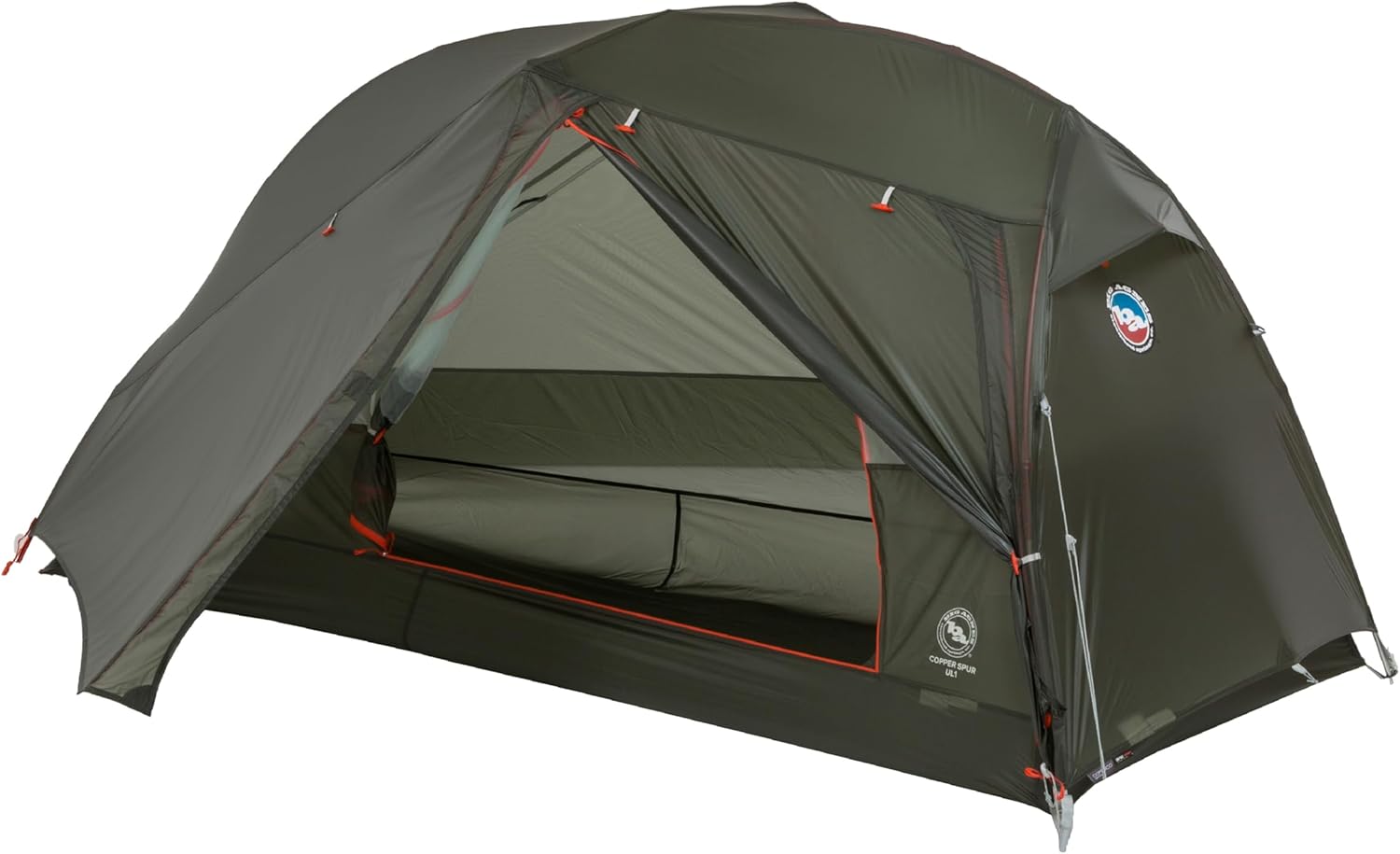
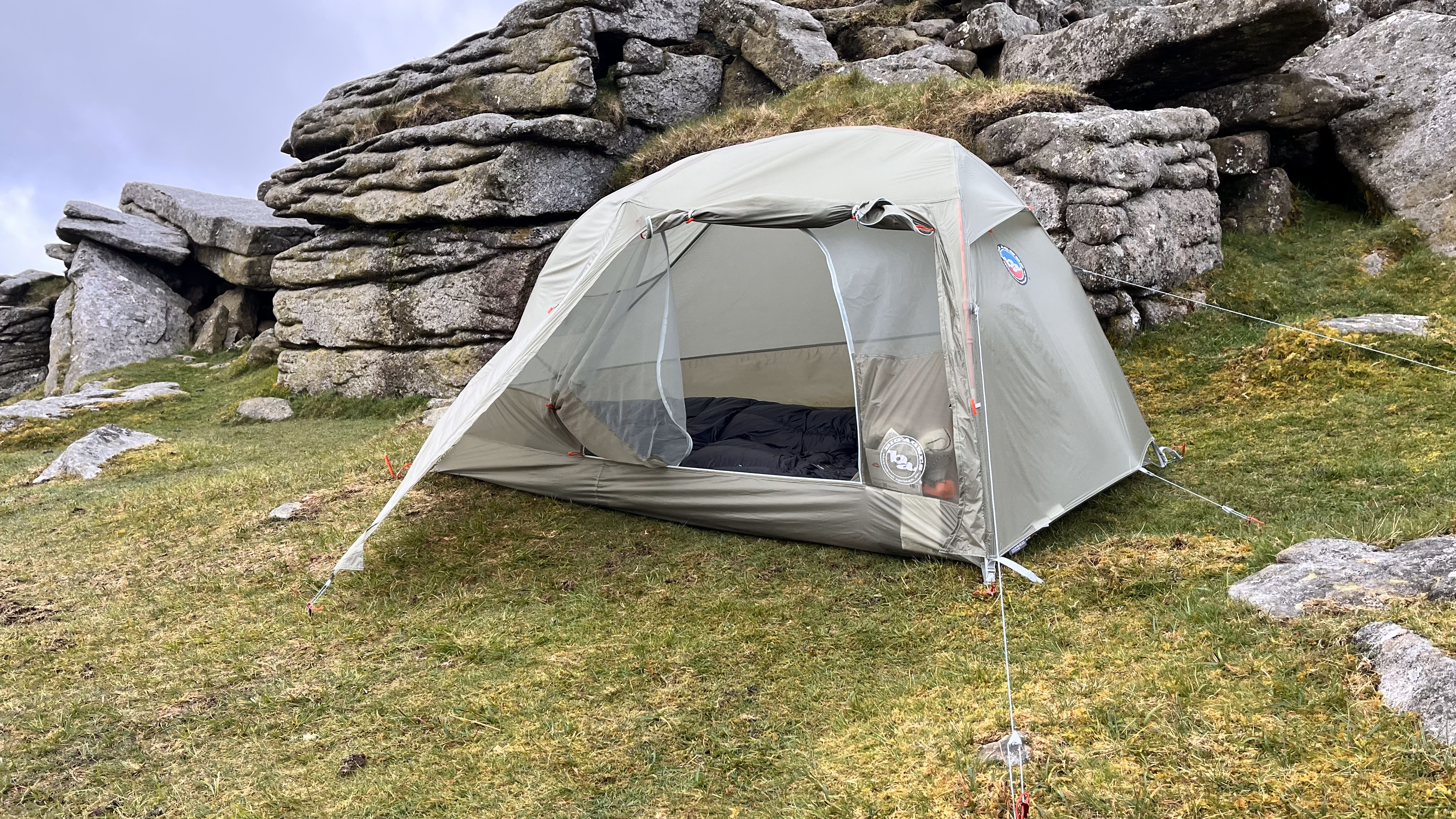
Why We Love It: If you want ultralight performance without the learning curve of trekking pole tents, the Copper Spur UL1 is your answer. Big Agnes engineered this tent to be the lightest freestanding single-person shelter that doesn’t compromise on livability. At 2 lbs 10 oz, it’s only marginally heavier than trekking pole tents, but offers the convenience of pitching anywhere—rocky alpine zones, sandy beaches, wooden platforms—without staking.
| Specification | Details |
|---|---|
| Weight (Trail Weight) | 2 lb 10 oz / 1.19 kg |
| Packed Weight | 2 lb 14 oz / 1.30 kg |
| Interior Floor Area | 24 sq ft |
| Peak Height | 38 inches |
| Vestibule Area | 8 sq ft |
| Material | Ripstop nylon (fly), breathable polyester (canopy) |
| Setup Type | Freestanding (DAC Featherlite poles) |
| Doors/Vestibules | 1 door / 1 vestibule |
| Price | $449.95 |
🌟 Key Features
- DAC Featherlite NFL poles: Aircraft-grade aluminum poles that are incredibly light yet bomber-strong. Won’t snap in high winds like cheaper alloy poles.
- Media pocket with cord routing: Keep your phone charged and accessible (great for GPS navigation or late-night reading).
- Steep wall angles: Vertical walls maximize usable interior space—doesn’t feel cramped like dome tents.
- Proprietary hook system: Lightning-fast setup (under 3 minutes) with color-coded clips. Perfect for exhausted hikers arriving at camp in fading light.
- Storm flaps over zippers: Prevents rain intrusion through zipper teeth—critical detail many budget tents skip.
Pros
- True freestanding design (pitch anywhere)
- Spacious interior (24 sq ft beats most UL tents)
- Premium DAC poles (legendary durability)
- Quick, intuitive setup (beginner-friendly)
- Excellent ventilation (full mesh canopy)
- Available on Amazon with fast shipping
- Big Agnes warranty and customer support
Cons
- Heavier than trekking pole tents (2.6 lbs vs. 1 lb)
- Single door/vestibule (less convenient than dual-entry)
- Silicone-coated fly requires annual reapplication
- Packed size larger (18″ x 5.5″ stuffsack)
- Price premium for freestanding feature
Best For: Hikers who value convenience and versatility over absolute minimum weight. Perfect for weekend warriors, section hikers, and anyone camping in varied terrain (alpine zones, beaches, platforms).
Not Ideal For: Gram-counting thru-hikers or budget shoppers (there are cheaper freestanding options below).
🛒 Check Price on Amazon4. NEMO Dragonfly OSMO 1 $$


Why We Love It: NEMO’s proprietary OSMO fabric technology represents the biggest innovation in tent materials since Dyneema. This 100% recycled polyester blend is 3x less stretchy when wet compared to traditional nylon, maintains water repellency 5x longer, and requires zero PFAS “forever chemicals.” The result? A tent that pitches drum-tight in rain, sheds water like a duck’s back even after 100 nights of use, and won’t sag like soggy noodles when morning dew hits.
| Specification | Details |
|---|---|
| Weight (Minimum) | 2 lb 3 oz / 1.0 kg |
| Packed Weight | 2 lb 12 oz / 1.23 kg |
| Floor Area | 20.5 sq ft |
| Peak Height | 40 inches |
| Vestibule Area | 8.6 sq ft |
| Floor Dimensions | 88″ x 35/32″ |
| Material | OSMO Ripstop (1,500mm HH) |
| Pole Type | DIAPOLE (recycled aluminum) |
| Price | $499.95 |
🌟 Key Features
- OSMO fabric (PFAS-free): Environmentally responsible without performance compromise. Dries faster than silnylon, packs smaller than polyester.
- Precurve cross pole design: Increases head volume by 34% compared to traditional dome tents. More sitting room = happier camper.
- Nightlight Pocket™: Soft, diffused headlamp storage creates ambient tent lighting (seriously underrated feature for cooking, reading, organizing gear).
- Landing Zone™ vestibule tub: Waterproof storage pocket in vestibule protects wet/muddy gear from clean interior.
- Divvy Cube™ stuff sack: Rectangular design distributes weight better in your pack and doubles as a pillow.
- Gatekeeper tieback system: Keep doors open without flapping by magnetically securing them to tent body.
Pros
- Innovative OSMO fabric (environmentally friendly + high-performance)
- Exceptional interior volume for weight
- Best-in-class features (Nightlight Pocket, Landing Zone)
- Freestanding versatility
- Color-coded setup (foolproof)
- Lifetime warranty from NEMO
- Available on Amazon Prime
Cons
- Heavier than trekking pole ultralight tents
- Single door (dual-door would be better)
- OSMO fabric is relatively new (long-term durability TBD)
- Premium pricing
- Mesh pockets could be larger
Best For: Eco-conscious backpackers who want cutting-edge technology and premium features without Dyneema’s price tag. Perfect for 3-season backpacking from spring through fall.
🛒 Check Price on Amazon5. Hyperlite Mountain Gear Mid 1 $$$
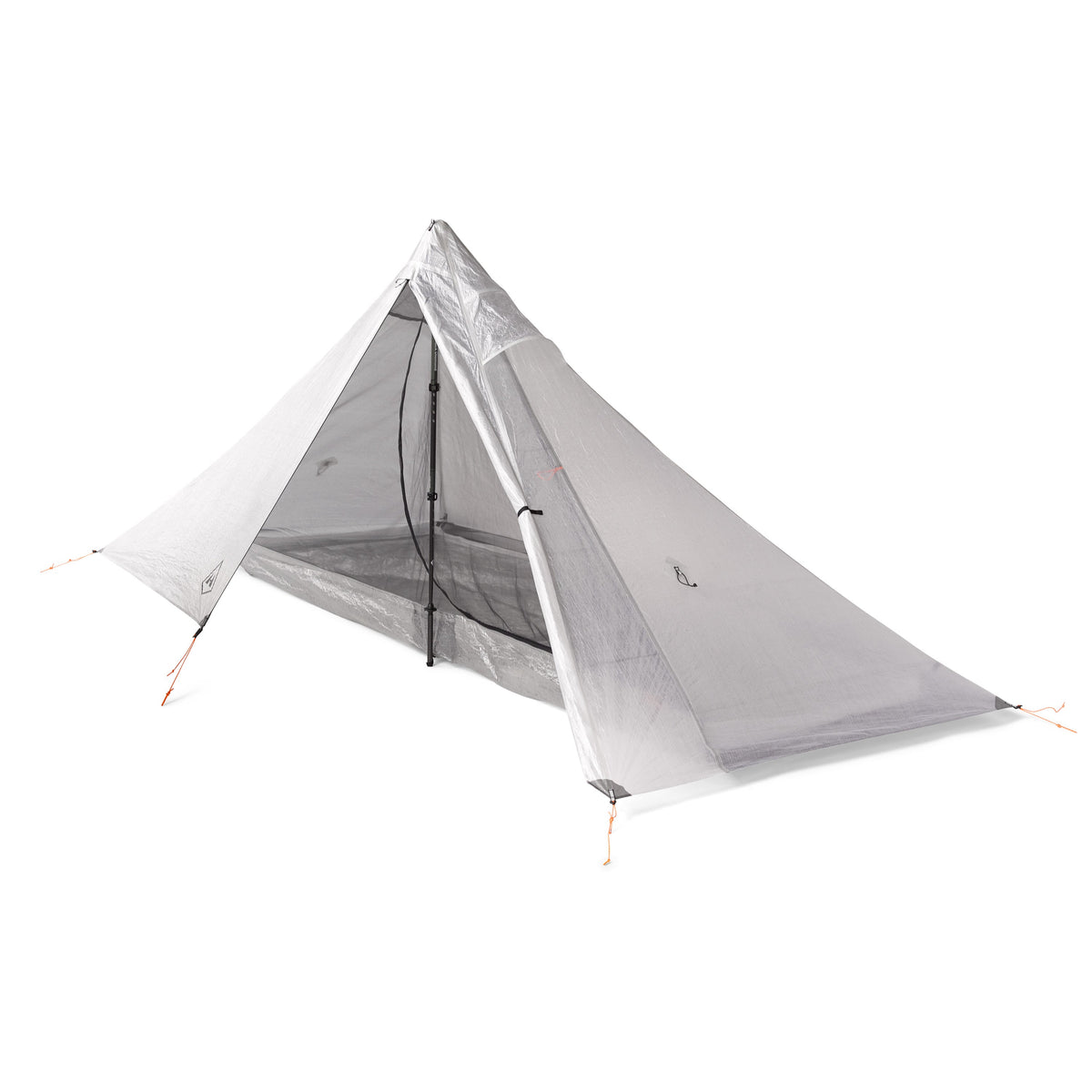
Why We Love It: The HMG Mid 1 is a purist’s ultralight pyramid tent—no frills, no gimmicks, just bomb-proof Dyneema construction and a design that’s remained largely unchanged for over a decade because it simply works. At 16 oz, it’s one of the lightest fully-enclosed single-wall shelters available, yet offers 21 sq ft of floor space and a cavernous 54″ peak height. This is the tent that appears on every PCT thru-hiker’s gear list for good reason.
| Specification | Details |
|---|---|
| Weight | 16.0 oz / 454 g |
| Interior Floor Area | 21 sq ft |
| Vestibule Area | 12 sq ft (estimated) |
| Peak Height | 54 inches |
| Material | Dyneema DCF (5 oz and 10 oz) |
| Setup | Single trekking pole or carbon pole |
| Doors | 1 zippered door + 1 roll-up “porch” |
| Price | $675 |
🌟 Key Features
- Single-pole pyramid simplicity: Fastest pitch time of any tent tested (under 2 minutes). One center pole, six stakes, done.
- Dual-entry system: Zippered door for weather protection, roll-up “porch” door for ventilation and stargazing.
- Height-adjustable bathtub floor: Customize interior volume vs. weather protection by raising/lowering the floor attachment points.
- Dual peak vents: Superior airflow minimizes condensation in single-wall design.
- Made in USA: Hand-sewn in Maine with meticulous quality control. HMG stands behind every seam.
Pros
- Ultra-simple design (fewer components = less to break)
- Extremely lightweight (16 oz)
- Massive peak height (54″—sit up comfortably)
- Proven durability (HMG tents last 5,000+ trail miles)
- Versatile ventilation (zip or roll up door)
- Made in USA with excellent customer service
Cons
- Premium Dyneema price ($675)
- Single-wall condensation management requires skill
- Center pole reduces usable floor space
- Single door (have to crawl over gear)
- Requires 50′ of guyline (not included)
- Limited color options
Best For: Experienced ultralight backpackers who appreciate minimalist design and are willing to master single-wall condensation management. Ideal for long-distance thru-hikes where durability matters.
🛒 Search Amazon Visit HMG Official Site6. Naturehike Cloud-Up 1 $


Why We Love It: Naturehike has quietly revolutionized budget backpacking gear by delivering premium features at entry-level prices. While typical $100-$150 tents use heavy polyester fabric and mediocre zippers, the Cloud-Up 1 employs 20D silicone-coated nylon (the same material found in $300+ tents), quality YKK zippers, and a surprisingly robust aluminum pole structure. At 3.5 lbs, it’s not winning ultralight awards—but compared to REI or Big Agnes tents at triple the price, it’s a phenomenal value proposition.
| Specification | Details |
|---|---|
| Weight (Packed) | 3.5 lbs / 1.6 kg |
| Interior Floor Area | 18 sq ft |
| Peak Height | 39 inches |
| Vestibule Area | 6 sq ft |
| Material | 20D silicone-coated nylon |
| Setup Type | Freestanding (aluminum poles) |
| Doors | 1 door / 1 vestibule |
| Price | $129 |
🌟 Key Features
- 20D silnylon fabric: Unlike competitors that use cheap polyester, Naturehike uses premium silicone-coated nylon typically reserved for $300+ tents. This means better packability, longer lifespan, and superior water repellency.
- Double-wall construction: Full mesh inner tent + waterproof rainfly = excellent condensation management. Budget tents often skimp on mesh, but the Cloud-Up 1 provides 80% mesh coverage for superior ventilation.
- Aluminum pole architecture: 7001-series aluminum poles (same grade as MSR/Big Agnes) resist bending far better than the steel poles found on cheaper Amazon tents.
- Factory seam-sealed: All critical seams come pre-sealed (most budget tents require manual sealing before first use).
- Footprint included: Naturehike includes a fitted groundsheet—a $30-$50 value elsewhere.
Pros
- Exceptional value ($129 with footprint included)
- Premium 20D silnylon fabric (not cheap polyester)
- Proven durability (1,100+ Amazon reviews at 4.3 stars)
- Double-wall design (low condensation)
- Freestanding versatility
- Fast Amazon Prime shipping
- Packed size reasonable (17″ x 6″)
Cons
- Heavier than ultralight options (3.5 lbs)
- Single door only (less convenient)
- Floor space on the smaller side (18 sq ft)
- Chinese brand (limited US customer service)
- May not last 200+ nights like premium tents
- Vestibule could be larger
Best For: Beginners testing backpacking before committing $400+, weekend warriors who backpack 10-20 nights per year, or experienced hikers who need a reliable backup tent without emptying their wallet. Perfect for Scout troops and youth groups.
Not Ideal For: Thru-hikers or anyone logging 100+ nights annually (durability questions beyond 50-75 nights), or ultralight purists who won’t accept 3.5 lbs.
🛒 Check Price on Amazon ($129)7. Gossamer Gear The One $$

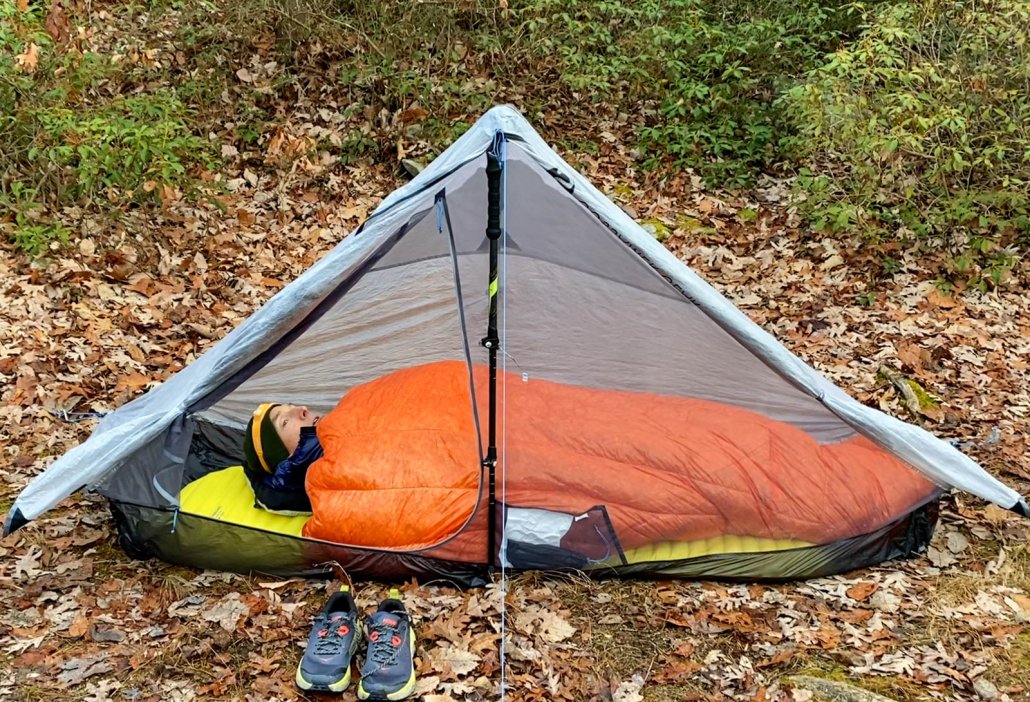
Why We Love It: The Gossamer Gear “The One” has been the secret weapon of budget-conscious thru-hikers for over a decade. Unlike competitors that compromise floor space to save weight, The One offers a cavernous 28 sq ft interior—that’s 33% more space than the Zpacks Pivot Solo, yet costs $400 less. At 19 oz and $255, it represents the absolute best value proposition in the trekking pole tent category: proven PCT/AT durability, spacious livability, and a price tag that won’t make you sell a kidney.
| Specification | Details |
|---|---|
| Weight | 19 oz / 539 g |
| Interior Floor Area | 28 sq ft (largest on this list!) |
| Floor Dimensions | 98″ x 42″ |
| Peak Height | 48 inches |
| Vestibule Area | 14 sq ft |
| Material | Silnylon (single-wall) |
| Setup | Single trekking pole |
| Price | $255 |
🌟 Key Features
- Massive 28 sq ft interior: More floor space than some two-person tents. Perfect for tall hikers, gear-heavy trips, or anyone who hates feeling claustrophobic. You can actually sit up and organize gear comfortably.
- Single-pole simplicity: One center pole, six stakes, done. Fastest pitch time after practice (under 3 minutes). No fussing with asymmetrical pole heights like the Zpacks Pivot Solo.
- Pyramid geometry with side-entry door: Unlike traditional pyramids where the door is at one end, The One features a side-entry door that doesn’t force you to crawl over gear. Huge livability upgrade.
- Massive 14 sq ft vestibule: Store your entire pack, boots, and wet gear with room to spare. Largest vestibule in the ultralight category.
- Proven durability: Gossamer Gear has been in business since 1998—this design has survived thousands of PCT/AT thru-hikes with minimal failures.
Pros
- Best space-to-weight-to-price ratio (28 sq ft at 19 oz for $255)
- Enormous interior (great for tall hikers 6’3″+)
- Massive vestibule (14 sq ft)
- Proven thru-hiker reliability
- Simple single-pole setup
- Made in USA
- Excellent customer service
Cons
- Single-wall condensation (requires management)
- Silnylon stretches when wet (retension guylines)
- Center pole reduces usable floor space
- Single door (have to crawl over gear)
- Heavier than Dyneema competitors (19 oz vs. 13-15 oz)
- Not as widely available as Amazon brands
Best For: Thru-hikers who prioritize interior space and value over absolute minimum weight, tall hikers (6’+) who need extra length, or gear-heavy backpackers who appreciate elbow room. Perfect for anyone doing the AT, PCT, or CDT on a realistic budget.
Not Ideal For: Humid climate camping (single-wall condensation is harder to manage), or ultralight purists who won’t accept 19 oz when 13 oz options exist.
🛒 Search on Amazon Visit Gossamer Gear Direct8. Six Moon Designs Lunar Solo $$

Why We Love It: If you’re 6’3″ or taller, you’ve probably experienced the frustration of “one-person” tents designed for average-height hikers. The Lunar Solo is specifically engineered for tall backpackers with a generous 94″ floor length and 52″ peak height—no more sleeping diagonally, no more feet pressed against tent walls, no more compromises. At 26 oz and $260, it’s the most affordable way for tall hikers to get legitimate sleeping comfort without upgrading to a cramped two-person tent.
| Specification | Details |
|---|---|
| Weight | 26 oz / 737 g |
| Floor Length | 94 inches (7’10”) |
| Floor Width | 32 inches |
| Floor Area | 22 sq ft |
| Peak Height | 52 inches |
| Material | 20D SilPoly (silicone polyester) |
| Setup | Single trekking pole |
| Price | $260 |
🌟 Key Features
- 94-inch floor length: Designed for hikers up to 6’7″ to sleep comfortably straight (not diagonal). Add 6″ for pillow and gear, and you’ve got legitimate tall-person accommodation.
- 52-inch peak height: Sit up fully without hunching—critical for tall folks who need vertical space to match horizontal length.
- 20D SilPoly fabric: Silicone-coated polyester combines silnylon’s lightweight performance with polyester’s low-stretch properties. Doesn’t sag in rain like traditional silnylon.
- Single-pole pyramid design: Simple, bomber geometry that’s been field-proven for 15+ years. Six Moon Designs pioneered this category.
- Large roll-up door: Full side-entry access (not just a small zippered opening) makes getting in/out easier for larger body frames.
Pros
- Best tent for tall hikers 6’3″+ (dedicated design, not compromise)
- Affordable for the niche ($260)
- Generous interior volume (52″ peak height)
- SilPoly doesn’t stretch in rain (polyester advantage)
- Proven 15+ year design (reliability)
- Made in USA (Oregon)
- Large door opening (easy entry/exit)
Cons
- Heavier than competitors (26 oz)
- Single-wall condensation management
- Center pole reduces usable space
- Floor width narrows at 32″ (tight for wide pads)
- Single door only
- Not available on Amazon (direct order only)
Best For: Tall hikers (6’3″ to 6’7″) who are tired of cramped tents forcing diagonal sleeping positions, broad-shouldered backpackers who need vertical space to sit up comfortably, or anyone who’s been disappointed by “one-person” tents clearly designed for 5’10” users.
Not Ideal For: Average-height hikers (under 6′) who’d get better weight savings from shorter designs, or anyone prioritizing sub-20-oz weights.
🛒 Search on Amazon Visit Six Moon Designs Direct9. Clostnature 1-Person Tent $

Why We Love It: At just $68, the Clostnature 1-Person Tent is proof that you don’t need to spend $300+ to get a functional freestanding backpacking tent. This is the tent that gets beginners hooked on backpacking without requiring a second mortgage. While it weighs 4.4 lbs (heavy by enthusiast standards), it includes everything needed for a reliable backcountry shelter: aluminum poles, full rainfly coverage, double-layer construction, and factory-sealed seams. Over 1,400 Amazon reviews at 4.5 stars validate its remarkable reliability for the price.
| Specification | Details |
|---|---|
| Weight (Packed) | 4.4 lbs / 2.0 kg |
| Floor Area | 20 sq ft |
| Peak Height | 41 inches |
| Vestibule Area | 5 sq ft |
| Material | 190T polyester (fly), breathable polyester (inner) |
| Setup Type | Freestanding (aluminum poles) |
| Waterproof Rating | 3,000mm HH |
| Price | $68 |
🌟 Key Features
- Freestanding convenience at budget price: Aluminum poles create a self-supporting structure. Unlike trekking pole tents, pitch this on rocky surfaces, beaches, or wooden platforms with zero staking required.
- Double-layer construction: Mesh inner tent + waterproof rainfly = proper condensation management. Many budget tents skip this, but Clostnature understands the basics.
- Full-coverage rainfly: Extends to ground level for maximum weather protection. Budget competitors often use partial-coverage flys that leave you exposed to splashing rain.
- 3,000mm waterproof rating: Exceeds the 1,500mm standard—this tent will keep you dry in sustained downpours.
- Factory seam-sealed: Critical seams come pre-taped (most $50-$100 tents require manual sealing).
- Color-coded poles: Foolproof setup system—match pole colors to sleeve colors. Great for beginners or nighttime pitching.
Pros
- Unbeatable price ($68 delivered)
- Freestanding versatility (pitch anywhere)
- Proper double-wall construction
- Impressive waterproofing (3,000mm HH)
- 1,400+ positive Amazon reviews (4.5★)
- Beginner-friendly color-coded setup
- Amazon Prime 2-day shipping
- No-questions-asked return policy
Cons
- Heavy (4.4 lbs—not for long-distance hiking)
- Bulky packed size (18″ x 7″)
- Polyester fabric less durable than nylon
- Small vestibule (5 sq ft)
- Single door only
- May not survive 100+ nights (durability unknown)
- No US-based customer service
Best For: Absolute beginners who need to test backpacking before investing serious money, car campers transitioning to backcountry trips, Scout troops and youth groups on tight budgets, or experienced hikers who need an emergency backup tent without breaking the bank. Perfect for weekend trips under 5 miles.
Not Ideal For: Long-distance thru-hikers (too heavy at 4.4 lbs), experienced ultralight backpackers, or anyone logging 50+ nights annually (durability concerns).
🛒 Check Price on Amazon ($68)10. MSR Hubba NX 1 $$

Why We Love It: The MSR Hubba series has earned legendary status in the backpacking community for one simple reason: bombproof reliability when conditions turn nasty. At 3 lbs 3 oz, it’s not winning ultralight awards—but when 40 mph winds are pummeling your campsite and rain is coming down sideways, you’ll be thankful for that extra weight. This is the tent that mountaineers, shoulder-season adventurers, and anyone who refuses to gamble with weather choose when failure isn’t an option. MSR’s limited lifetime warranty and decades-long track record speak louder than weight specifications.
| Specification | Details |
|---|---|
| Weight (Min Trail) | 3 lb 3 oz / 1.45 kg |
| Packed Weight | 3 lb 9 oz / 1.62 kg |
| Floor Area | 22 sq ft |
| Peak Height | 39 inches |
| Vestibule Area | 7 sq ft |
| Material | 68D ripstop polyester (fly), no-see-um mesh (canopy) |
| Pole Type | Easton Syclone aluminum |
| Seasons | 3+ (extended season capability) |
| Price | $349.95 |
🌟 Key Features
- Easton Syclone poles: Premium aluminum poles engineered to flex (not break) in extreme winds. These are the poles that survive when cheaper alternatives snap.
- 68D ripstop polyester fly: Nearly double the fabric weight of ultralight tents (68D vs. 20D) = exponentially greater tear resistance and UV longevity. This tent will still be waterproof after 200 nights.
- Extended-season design: While marketed as 3-season, the Hubba NX 1 handles early spring snowstorms and late fall freezes far better than typical 3-season tents. Not quite 4-season, but close.
- DuraShield coating: MSR’s proprietary waterproof/breathable coating maintains 1,200mm HH rating for 3x longer than standard PU coatings. Won’t delaminate or flake after UV exposure.
- Xtreme Shield waterproof coating: Floor rated to 3,000mm HH—you can pitch in standing water without leaks.
- Unified hub system: All poles connect at one central hub, creating rigid structure that won’t collapse in wind.
Pros
- Legendary storm-worthiness (survives 40+ mph winds)
- Premium Easton Syclone poles (won’t snap)
- Proven 15+ year design (reliability)
- Extended-season capability (spring/fall camping)
- Limited lifetime warranty (MSR backs their gear)
- Freestanding convenience
- Excellent condensation management
- Durable 68D fabric (200+ night lifespan)
Cons
- Heavy (3 lb 3 oz—not for thru-hiking)
- Bulky packed size (19″ x 6″)
- Single door (less convenient)
- Premium price for weight category ($350)
- Overkill for fair-weather summer camping
- Not available with Amazon Prime
Best For: Four-season adventurers who need bombproof reliability, shoulder-season campers (early spring, late fall) facing unpredictable weather, alpine/mountain campers above treeline where wind is constant, or anyone who prioritizes “will never fail” over “lightest possible.” Perfect for mountaineering approaches and high-elevation camps.
Not Ideal For: Thru-hikers or long-distance backpackers (too heavy at 3+ lbs), fair-weather summer campers who don’t need extreme durability, or budget-conscious buyers ($350 is steep).
🛒 Find on Amazon Visit MSR Official Site📊 Complete Comparison Table
| Tent Model | Weight | Floor Area | Peak Height | Type | Price | Rating |
|---|---|---|---|---|---|---|
| Durston X-Mid Pro 1 | 15.5 oz | 21.5 sq ft | 45″ | Trekking Pole | $599 | ⭐ 4.9 |
| Zpacks Pivot Solo | 13.5 oz | 21 sq ft | 52″ | Trekking Pole | $649 | ⭐ 4.8 |
| Big Agnes Copper Spur UL1 | 2 lb 10 oz | 24 sq ft | 38″ | Freestanding | $450 | ⭐ 4.7 |
| NEMO Dragonfly OSMO 1 | 2 lb 3 oz | 20.5 sq ft | 40″ | Freestanding | $500 | ⭐ 4.7 |
| HMG Mid 1 | 16 oz | 21 sq ft | 54″ | Trekking Pole | $675 | ⭐ 4.6 |
| Naturehike Cloud-Up 1 | 3.5 lbs | 18 sq ft | 39″ | Freestanding | $129 | ⭐ 4.3 |
| Gossamer Gear The One | 19 oz | 28 sq ft | 48″ | Trekking Pole | $255 | ⭐ 4.4 |
| Six Moon Designs Lunar Solo | 26 oz | 22 sq ft | 52″ | Trekking Pole | $260 | ⭐ 4.5 |
| Clostnature 1-Person | 4.4 lbs | 20 sq ft | 41″ | Freestanding | $68 | ⭐ 4.5 |
| MSR Hubba NX 1 | 3 lb 3 oz | 22 sq ft | 39″ | Freestanding | $350 | ⭐ 4.6 |
🎥 Video: How to Choose the Right Backpacking Tent
📖 The Ultimate One-Person Backpacking Tent Buying Guide
🎯 Special Considerations: Find Your Perfect Match
🔗 More Essential Gear Guides from The Outdoor Champ:
- 🥾 Best Hiking Boots Reviews: Find Your Perfect Fit
- 🎒 Best Bug Out Bags: Emergency Preparedness Guide
- 🔥 Best Tent Heaters for Winter Camping
- 🧭 Essentials for Backpacking: Complete Gear Checklist
- 🔪 Best Hunting Knife Reviews
- 💧 Best Insulated Water Bottles for Hiking
- 🏕️ 8 Things You Should Bring If Camping During the Winter
🎥 Video: Ultralight Tent Setup Tutorial
❓ Frequently Asked Questions
Q: What is the lightest 1-person backpacking tent?
A: The Zpacks Pivot Solo is the lightest full-featured tent at 13.5 oz (383g), including a waterproof floor, full bug protection, and storm-worthy construction. Ultralight tarp-tent hybrids can go lighter (8-10 oz), but sacrifice enclosed protection. For most backpackers, going below 13 oz means compromising essential features. The weight savings from 13.5 oz to 8 oz (5.5 oz total) is negligible compared to heavier gear items like your pack or sleeping bag.
Q: Are trekking pole tents worth it for solo hikers?
A: Trekking pole tents save 1-2 lbs compared to freestanding designs by eliminating dedicated poles, making them ideal for long-distance hikers where cumulative weight matters. They’re worth it if you already use trekking poles and camp on stakeable surfaces (dirt, grass, soft ground). They’re not worth it if you frequently camp on rocky terrain, wooden platforms, or beaches where staking is difficult. For thru-hikers on trails like the AT, PCT, or CDT, trekking pole tents are almost always the right choice.
Q: How much should a solo backpacking tent weigh?
A: Target 2-3 lbs for freestanding tents or 12-20 oz for trekking pole designs. Anything above 3.5 lbs is considered heavy for solo backpacking and will fatigue you on long trips. The “sweet spot” depends on your priorities: ultralight enthusiasts aim for under 1 lb, mainstream backpackers accept 2-2.5 lbs for freestanding convenience, and beginners often start with 3-4 lbs while learning. Each pound of tent weight equals 5-10 lbs of perceived exertion over a full day of hiking.
Q: What tent size do I need if I’m 6’3″ or taller?
A: Look for tents with a minimum 94″ floor length and 45″+ peak height to avoid sleeping diagonally or with feet pressed against walls. The Six Moon Designs Lunar Solo (94″ length), Gossamer Gear The One (98″ length), and Durston X-Mid Pro 1 (45″ dual peak height) are specifically designed for tall hikers. Standard “one-person” tents are typically sized for 5’10” users, forcing tall hikers to sleep diagonally or compromise comfort. Always add 6-8 inches to your height when evaluating tent length to account for sleeping pad, pillow, and gear storage at the foot end.
Q: How do I prevent condensation in an ultralight tent?
A: Maximize ventilation by opening peak vents and rolling up the rainfly partially to create airflow, even in light rain. Choose campsites away from water sources (humidity) and pitch with doors oriented to catch cross-breezes. Double-wall tents dramatically reduce condensation compared to single-wall designs because your breath escapes through mesh and condenses on the outer rainfly instead of your sleeping bag. In humid climates (Southeast US, Pacific Northwest), consider wiping down tent walls before packing to prevent mildew. No tent eliminates condensation entirely—it’s physics—but proper ventilation management keeps your gear dry.
Q: Are cheap Amazon tents good for backpacking?
A: Budget Amazon tents ($50-$150) work for casual weekend trips but rarely survive 50+ nights or harsh conditions. The Naturehike Cloud-Up 1 ($129) and Clostnature 1-Person ($68) are exceptions—well-reviewed budget options suitable for beginners. Cheap tents typically fail at zippers (break after 20-30 uses), seams (leak in sustained rain), and poles (bend or snap in wind). They’re acceptable for testing whether you enjoy backpacking before investing $400+ in premium gear, but don’t expect them to last a thru-hike or multiple seasons.
Q: What’s the difference between trail weight and packed weight?
A: Trail weight includes only essential components you carry on trail: tent body, rainfly, and poles. Packed weight adds stakes, guylines, stuff sack, and repair kit that you may leave behind or replace with lighter alternatives. Manufacturers often advertise trail weight (lighter number) while reviewers cite packed weight (real-world weight). For example, a tent listed as “2 lbs 3 oz trail weight” might be “2 lbs 12 oz packed weight.” The difference is typically 4-9 oz. Always compare the same metric when evaluating tents—trail-to-trail or packed-to-packed.
Q: Do I need a footprint for my backpacking tent?
A: Footprints extend floor lifespan by 2-3x by protecting against abrasion, punctures, and moisture, but they’re optional for weekend trips. For long-distance hikes or rocky terrain, footprints are worthwhile insurance (replace a $15 footprint instead of a $400 tent). Skip expensive branded footprints—use Tyvek HomeWrap ($20 for enough material for 5 tents) or Polycro window film ($8 for lifetime supply). Polycro weighs just 0.5-1 oz and works for 90% of campsites.
Q: Can ultralight tents handle rain and wind?
A: Premium ultralight tents (Durston X-Mid Pro 1, Zpacks Pivot Solo, HMG Mid 1) handle severe weather better than heavy budget tents because Dyneema doesn’t stretch when wet and advanced geometry sheds wind efficiently. Budget ultralight tents often use thinner silnylon that sags in rain and requires retensioning guy lines. The key is design, not just weight—a well-engineered 15 oz tent outperforms a poorly-designed 3 lb tent in storms. However, four-season expedition tents (not covered in this guide) are still necessary for winter mountaineering and extreme alpine conditions.
Q: Which tent brand has the best warranty?
A: Big Agnes, NEMO, and MSR offer industry-leading warranties (limited lifetime on manufacturing defects) plus excellent customer service. Cottage brands like Zpacks, Hyperlite Mountain Gear, and Durston Gear back their products with repair services but have more limited formal warranty coverage. Budget Amazon brands typically offer 30-90 day returns but minimal long-term support. For peace of mind, mainstream brands win—but cottage brands earn loyalty through product quality and responsive founders who personally respond to emails.
Q: What makes the Durston X-Mid Pro 1 better than competitors?
A: The X-Mid Pro 1’s diagonal ridgeline geometry creates 45″ peak height at both ends (not just one), allowing tall hikers to sleep in either direction comfortably. Its hybrid single-wall/double-wall design combines ultralight weight (15.5 oz) with double-wall-level condensation management through strategically placed mesh panels. Dual doors and dual vestibules eliminate the crawl-over-gear problem of pyramid tents. At $599, it’s also $50-$150 cheaper than comparable Dyneema competitors (Zpacks, HMG) while offering more livable space.
Q: Is the Big Agnes Copper Spur worth the premium price?
A: The Copper Spur UL1 commands a premium ($450) for legitimate reasons: DAC Featherlite poles (bomber durability), proven 10+ year track record (consistent quality across generations), freestanding convenience (pitch anywhere), and Big Agnes warranty/customer service. It’s worth the price if you value convenience over absolute minimum weight or camp in varied terrain (rocky alpine, beaches, platforms). It’s not worth it if you’re purely chasing ultralight credentials—trekking pole tents save 1+ lbs for $150-$400 less.
Q: How does NEMO’s OSMO fabric compare to traditional tent materials?
A: OSMO fabric (100% recycled polyester) stretches 3x less when wet compared to nylon, maintains water repellency 5x longer without DWR reapplication, and contains zero PFAS forever chemicals. In practical terms, your tent stays taut in rain without sagging and retensioning guy lines constantly. OSMO is heavier per square foot than Dyneema (adding 4-6 oz to tent weight) but costs $200-$300 less and feels more durable for abrasion resistance. It’s the best middle-ground fabric between silnylon (budget) and Dyneema (premium).
🎯 Final Recommendations: Quick Decision Tree
Which Tent Should You Buy?
Best Overall Choice
Durston X-Mid Pro 1
Ultimate balance of weight (15.5 oz), livability, and weather protection. Worth the $599 investment for serious backpackers.
↑ Full ReviewBest Value Pick
Gossamer Gear The One
Spacious 28 sq ft interior, proven reliability, just $255. Perfect starter ultralight tent for budget-conscious hikers.
↑ Full ReviewBest for Beginners
Big Agnes Copper Spur UL1
Freestanding convenience, intuitive setup, mainstream brand support. Eliminates the learning curve of trekking pole tents.
↑ Full Review🏕️ Final Thoughts
Choosing the right one-person backpacking tent is one of the most important gear decisions you’ll make. There is no single “best” tent—only the best tent for your specific needs, budget, and hiking style.
If you’re a thru-hiker chasing ultralight performance, the Durston X-Mid Pro 1 or Zpacks Pivot Solo will serve you well for thousands of miles. If you’re a weekend warrior who values convenience, the Big Agnes Copper Spur UL1 or NEMO Dragonfly OSMO 1 offer freestanding versatility. And if you’re testing the waters on a tight budget, the Naturehike Cloud-Up 1 ($129) or Clostnature 1-Person ($68) deliver remarkable value.
Remember: The best tent is the one that gets you outside. Don’t let analysis paralysis keep you from hitting the trail. Start with what fits your budget, learn what matters to you through experience, and upgrade when you’ve logged enough nights to know exactly what features you value most.
Happy camping, and see you on the trail! 🥾🏔️

Brent Hillyer is a trusted outdoor writer, camping and hiking gear reviewer, and trail expert with 17+ years of hands-on experience. Since 2008, he has worked in the outdoor industry testing gear, exploring trails, and helping readers choose reliable equipment for camping, backpacking, and hiking adventures. At TheOutdoorChamp, Brent reviews camping gear using the same standards he applies in the field.