
Ever hit the trail with the wrong daypack and spent the entire hike adjusting straps, dealing with a sweaty back, or wishing you had more space? We’ve been there, and it’s miserable.
Here’s the truth: choosing the right hiking daypack is the difference between an enjoyable adventure and eight hours of regret. Unlike typical roundups that simply list products, we’ve actually field-tested these packs across diverse terrain—from Arizona deserts to Pacific Northwest rainforests—carrying everything from minimal summer essentials to full winter layering systems.
What makes this guide different? We’ve gone beyond manufacturer specifications to evaluate what really matters: how the pack performs when you’re six miles in with sore shoulders, whether that “ventilated back panel” actually keeps you cool on scorching summer climbs, and if those organizational pockets are genuinely useful or just marketing fluff.
⚡ Quick Navigation – Find What You Need
In this comprehensive 2026 guide, you’ll discover:
- ✅ 10 expertly tested daypacks across every budget and hiking style
- ✅ Real-world performance data from hundreds of trail miles
- ✅ Interactive comparison tools to filter by YOUR priorities
- ✅ Detailed sizing and fit guidance (because a poorly fitting pack is worse than no pack)
- ✅ Scenario-based recommendations for desert hikes, winter adventures, trail running, and more
- ✅ Maintenance tips, packing strategies, and durability insights for long-term value
Whether you’re a beginner seeking your first daypack or an experienced hiker upgrading to something better, you’ll find everything you need right here. Let’s dive in! 🎒
🏆 At-a-Glance: Our Top 3 Picks for 2026
Short on time? Here are our winners after rigorous field testing:
Osprey Talon 22
$175 | 22L | 2.1 lbs
⭐⭐⭐⭐⭐ 4.6/5 (252 reviews)
Why It Wins: Unbeatable comfort, exceptional ventilation, and thoughtful features make this the gold standard for day hiking. Fits like a dream right out of the box.
Read Full ReviewREI Flash 22
$70 | 22L | 1.2 lbs
⭐⭐⭐⭐½ 4.6/5 (2,000+ reviews)
Why It Wins: Ultralight, packable, and shockingly capable for the price. Perfect for minimalist hikers who prioritize weight savings over premium features.
Read Full ReviewDeuter Speed Lite 21
$85 | 21L | 1.4 lbs
⭐⭐⭐⭐½ 4.6/5 (433 reviews)
Why It Wins: Minimalist design meets surprising comfort. Ideal for fast-and-light hikers, trail runners, and summit pushes where every ounce counts.
Read Full Review📊 Visual Comparison: How They Stack Up
At a glance, see how our top picks compare across key performance metrics:

📋 Top 10 Best Hiking Daypacks 2026: Detailed Reviews
We’ve field-tested these packs across hundreds of trail miles, diverse terrain types, and varying weather conditions. Each review includes real-world performance insights you won’t find in manufacturer specs.
1. Osprey Talon 22 – Best Overall Hiking Daypack 🥇


Best For: All-around day hikers, weekend warriors, and anyone seeking the sweet spot between comfort, features, and performance.
Why This Pack Dominates
The Osprey Talon 22 represents hiking daypack perfection. Unlike competitors that excel in one area while compromising others, the Talon 22 delivers across every metric that matters. After carrying this pack through Arizona’s sweltering summer heat and Washington’s wet spring trails, it’s earned our top recommendation.
What sets this pack apart is Osprey’s AirScape back panel—a thoughtfully engineered mesh suspension that actually delivers on its ventilation promise. While typical packs leave you with a soaked shirt after the first uphill push, the Talon’s trampoline-style mesh creates genuine airflow between your back and the pack. On a 90°F desert hike, this feature alone justified the premium price.
The BioStretch harness and hipbelt automatically conform to your body shape without requiring extensive adjustment. We tested this with multiple hikers of varying builds, and each achieved a comfortable fit within minutes. The cushioned hipbelt is substantial enough to transfer weight effectively but doesn’t add unnecessary bulk—a balance many competitors fail to achieve.
Organization is exceptional: dual side stretch pockets easily accommodate water bottles, a top zippered pocket keeps essentials accessible, and dual hip belt pockets (with one zippered for keys/phone) prevent constant pack-off stops. The internal hydration sleeve accommodates a 3L reservoir, and the magnetic sternum strap attachment is genuinely innovative—it snaps together effortlessly even with gloves on.
Durability? The 210D nylon construction has withstood brush encounters, rock scrapes, and repeated stuffing without showing wear. Unlike budget packs that start fraying after a season, the Talon 22 is built for years of abuse. It’s also treated with a DWR coating that sheds light rain effectively (though you’ll want the included rain cover for downpours).
✓ PROS
- Superior ventilation keeps you cooler than any competitor
- Exceptional comfort even on all-day hikes (10+ hours tested)
- Thoughtful pocket placement—everything has its place
- Durable construction backed by Osprey’s legendary warranty
- Magnetic sternum strap is genuinely useful
- Fits perfectly right out of the box for most body types
✗ CONS
- Heavier than ultralight alternatives (2.1 lbs vs 1.2 lbs)
- Premium pricing may deter budget-conscious hikers
- Hip belt pockets could be slightly larger
- Overkill for short, casual hikes (under 2 hours)
Bottom Line: If you can only own one daypack, make it the Osprey Talon 22. It’s the benchmark against which all others are measured—comfortable enough for newbies, capable enough for experts, and durable enough to outlast cheaper alternatives by years. Worth every penny.
🛒 Check Price on Amazon2. REI Flash 22 – Best Budget & Ultralight Daypack 💰
Best For: Ultralight enthusiasts, minimalist hikers, budget-conscious beginners, and anyone who values packability over premium features.
The Value Champion That Punches Above Its Weight
At just $70 and 1.2 lbs, the REI Flash 22 delivers shockingly capable performance that embarrasses packs costing three times as much. This is the daypack that proves you don’t need to empty your wallet for quality hiking gear.
What makes the Flash 22 special is its minimalist-but-functional design philosophy. While heavier packs burden you with features you’ll rarely use, REI focused on the essentials: a spacious main compartment, thoughtfully padded shoulder straps, a removable hipbelt, dual side pockets, and a stretchy front pocket. That’s it. And for most day hikes, that’s exactly enough.
The frameless design means this pack compresses down to practically nothing—perfect for travelers who want a daypack that stuffs into luggage without eating precious space. We’ve packed it into carry-on bags, larger backpacking packs, and even backpacking essentials without issue. When you arrive at your destination, it expands to full 22L capacity instantly.
Comfort reality check: The Flash 22 won’t coddle you like the Osprey Talon 22. The shoulder straps are thinner, the back panel is simpler, and there’s no fancy ventilation system. But here’s the thing—when you’re carrying a light load (10-15 lbs), these differences barely matter. The padded shoulder straps distribute weight surprisingly well, and the removable hipbelt (which many ultralight hikers ditch to save 2 oz) provides adequate support for heavier loads.
We tested this pack on everything from casual 4-mile nature walks to strenuous 12-mile mountain ascents. For shorter hikes (under 6 hours) with moderate loads, it performed flawlessly. On longer, gear-heavy expeditions, the lack of sophisticated suspension becomes noticeable—but at this price point and weight, that’s an acceptable tradeoff.
Durability concerns? The 100D ripstop nylon is lighter-weight than premium competitors, meaning it won’t withstand decades of abuse. However, after a full season of testing (30+ hikes), our pack shows minimal wear. For weekend warriors and occasional hikers, durability should be adequate. If you’re hitting the trail multiple times per week, consider investing in something more robust.
✓ PROS
- Incredible value—best performance-per-dollar in our test
- Ultralight at just 1.2 lbs (half the weight of heavier competitors)
- Packs down to nothing for travel and storage
- Surprisingly comfortable with light-to-moderate loads
- Removable hipbelt adds versatility
- Simple design means fewer things to break
- Great first daypack for beginners testing the waters
✗ CONS
- Less comfortable than premium options on long hikes
- Lighter-weight fabric may not last as long
- No sophisticated ventilation system (expect a sweaty back)
- Limited organizational pockets
- Struggles with heavy loads (15+ lbs)
Bottom Line: The REI Flash 22 is proof that budget doesn’t mean compromise. If you prioritize weight savings and value over premium features, this pack delivers exceptional performance. It’s not trying to compete with $200 options—and that’s exactly why it succeeds. Our top pick for beginners and weight-conscious hikers.
🛒 Check Price on Amazon3. Gregory Zulu 30 – Best for Heavy Loads & Comfort ⚡


Best For: Four-season hikers, gear-heavy adventurers, photographers carrying camera equipment, and anyone who demands maximum comfort with heavier loads.
When You Need To Carry More—Comfortably
Most daypacks claim they handle heavy loads. The Gregory Zulu 30 actually delivers. With its FreeFloat suspension system and robust 30L capacity, this pack bridges the gap between lightweight daypacks and technical backpacking packs.
What sets the Zulu 30 apart is Gregory’s FreeFloat dynamic hipbelt—an ingenious design that moves independently with your hips rather than rigidly transferring every step into your lower back. On a grueling 10-mile ridge traverse with 18 lbs of winter gear and camera equipment, this suspension system transformed what would’ve been a painful slog into a manageable adventure. Your hips will thank you.
The ventilated back panel uses a unique mesh design suspended away from your back, creating genuine airflow even under load. Unlike cheaper “ventilated” designs that simply add mesh to a flat panel, Gregory engineered actual space for air circulation. Combined with moisture-wicking shoulder straps, this pack stays surprisingly cool even during strenuous summer climbs.
Organization is exceptional: a large main compartment with dual access (top and front panel), stretch mesh front pocket for wet layers, dual side pockets, dual hipbelt pockets, and an internal hydration sleeve. Trekking pole attachments are tool-free and actually work (unlike some competitors where poles constantly slip out). There’s even a dedicated rain cover pocket—a small detail that shows thoughtful design.
The extra 8L capacity (compared to 22L packs) makes this ideal for winter hiking when you’re hauling insulated jackets, extra layers, emergency gear, and possibly winter camping essentials. It’s also perfect for photography hikes where you need to pack lenses, tripods, and protective gear.
The tradeoff? At 2.7 lbs empty, it’s nearly twice the weight of ultralight alternatives. But here’s the key insight from our testing: the weight penalty disappears once you load it up. While lightweight packs become uncomfortable with 15+ lbs, the Zulu 30 actually gets MORE comfortable as you add gear—exactly what you want in a load-carrying pack.
✓ PROS
- Outstanding comfort with heavy loads (tested up to 22 lbs)
- FreeFloat suspension is genuinely innovative
- 30L capacity handles winter gear, camera equipment, overnight needs
- Excellent ventilation for a load-bearing pack
- Bomber construction—built to last decades
- Comprehensive pocket system keeps everything organized
- Adjustable torso length fits wide range of body types
✗ CONS
- Heavy empty weight (2.7 lbs) overkill for light summer hikes
- Premium pricing at $200
- Bulkier than minimal daypacks—doesn’t pack down small
- Complex adjustment system may overwhelm beginners
- Overkill if you typically hike with minimal gear
Bottom Line: The Gregory Zulu 30 is the pack for hikers who refuse to compromise between capacity and comfort. If you frequently carry heavy loads, shoot photography on trails, or tackle four-season adventures, this is your pack. Yes, it’s heavier and pricier than minimalist options—but the comfort dividend pays off mile after mile. Best comfort-to-capacity ratio in our test.
🛒 Check Price on Amazon4. Osprey Stratos 36 – Best for Multi-Day Adventures 🏔️

Best For: Extended day hikes, light overnight trips, photographers, winter adventures, and hikers who want room to breathe without committing to a full backpacking pack.
When 22L Just Isn’t Enough
The Osprey Stratos 36 bridges the gap between daypacks and backpacking packs—offering genuine load-carrying comfort with the extra capacity needed for dawn-to-dusk epics or minimalist overnighters. This is the pack for hikers who frequently find themselves wishing they had “just a little more room.”
Osprey’s AirSpeed suspension system elevates ventilation beyond the Talon 22’s already-impressive AirScape design. A full mesh backpanel suspended on a peripheral frame creates maximum airflow while maintaining load stability. On brutally hot summer climbs with 20+ lbs of gear, this ventilation system kept us notably cooler than competitors—your back still sweats, but significantly less.
The 36L capacity handles winter layering systems, photography gear with multiple lenses, or everything needed for ultralight overnight trips. We comfortably packed a down jacket, rain shell, extra fleece, lunch for two, 3L hydration bladder, first aid kit, and emergency bivy with room to spare. For winter camping essentials, this capacity makes all the difference.
Features are comprehensive: Dual zippered hip belt pockets (finally large enough for smartphones), Stow-on-the-Go trekking pole attachment that actually works while hiking, integrated rain cover, internal hydration sleeve, dual side mesh pockets, and a top-loading design with front panel access. The adjustment range accommodates torso lengths from 16-21 inches, fitting most body types.
✓ PROS
- Outstanding ventilation—best in class for larger packs
- 36L capacity perfect for extended days or light overnights
- Superior comfort even with 25+ lbs loads
- Excellent organization with easily accessible pockets
- Integrated rain cover included
- Wide torso adjustment range fits most hikers
- 4.9★ rating reflects exceptional quality
✗ CONS
- Heavy at 3.1 lbs empty—overkill for short summer hikes
- Premium $239 price point
- Bulky when not fully loaded
- Top-loading design less convenient than panel-loaders
Bottom Line: The Osprey Stratos 36 is the ultimate do-everything pack for serious hikers who refuse to compromise. Yes, it’s heavier and pricier than minimalist options—but the comfort, capacity, and build quality justify every penny. If you regularly tackle 12+ hour days, carry camera gear, or occasionally go ultralight overnight, this pack delivers unmatched versatility. Our top pick for extended adventures.
🛒 Check Price on Amazon5. Deuter Speed Lite 21 – Best Minimalist Daypack ⚡


Best For: Fast-and-light hikers, trail runners, summit pushes, minimalists who prioritize speed over features, and anyone embracing the “less is more” philosophy.
German Engineering Meets Ultralight Philosophy
The Deuter Speed Lite 21 proves that minimalism doesn’t require sacrificing comfort. At just 1.4 lbs with a streamlined feature set, this pack feels featherweight on your back while maintaining surprising load-carrying capability—the hallmark of smart German design.
Unlike frameless competitors that become uncomfortable with any real load, Deuter’s Aircontact Lite back system uses strategically placed foam padding to transfer weight effectively while maintaining breathability. It’s not as ventilated as suspended mesh systems, but it strikes an intelligent balance between weight savings and comfort. On aggressive mountain climbs averaging 15-minute miles, we barely noticed the pack.
The 210D ripstop nylon construction is tougher than you’d expect from an ultralight pack. After a season of testing including bushwhacking and rock scrambles, our pack shows minimal wear. Deuter reinforces high-stress areas intelligently—saving weight where possible, adding durability where necessary.
Organization is deliberately simple: main compartment with top access, dual stretch side pockets for bottles, single stretch front pocket for rain shell, and internal hydration sleeve. That’s it. No hip belt pockets, no fancy compression systems, no unnecessary zippers. For summit attempts or trail running where you’re moving fast with moderate gear, this simplicity is liberating.
✓ PROS
- Lightweight 1.4 lbs without feeling flimsy
- Excellent value at $85
- Surprisingly comfortable for minimalist design
- Simple, bombproof construction
- Perfect for fast-and-light missions
- Compresses down when partially loaded
- 21L capacity handles full-day essentials
✗ CONS
- No hip belt pockets (deal-breaker for some)
- Limited organizational features
- Hip belt less substantial than feature-rich packs
- Not ideal for loads exceeding 15 lbs
Bottom Line: The Deuter Speed Lite 21 is minimalism done right—lightweight construction that doesn’t compromise essential comfort. If you’re tired of over-engineered packs burdening you with features you never use, this stripped-down approach refreshes. Not for gear haulers or feature enthusiasts, but perfect for hikers who move fast and pack light. Outstanding value in the ultralight category.
🛒 Check Price on Amazon6. Osprey Tempest 22 – Best Women’s-Specific Daypack 👩🦰


Best For: Female hikers seeking genuine anatomical fit (not just pink versions of men’s packs), women with shorter torsos, and anyone who values comfort-focused engineering.
Actually Designed for Women’s Bodies
The Osprey Tempest 22 isn’t a shrunk-down Talon 22 with different colors—it’s ground-up engineering for female anatomy. The difference is immediately noticeable: contoured shoulder straps that don’t dig into your chest, a hip belt shaped for actual female hip contours, and a harness width that doesn’t force your arms into awkward positions.
Osprey’s women-specific BioStretch harness features S-curved shoulder straps with strategic padding placement that accommodates chest anatomy comfortably. After full days on the trail, female testers reported zero chafing or pressure points—a chronic issue with unisex packs. The narrower shoulder strap spacing matches typical female shoulder width, eliminating the “too wide” feel common with men’s packs.
The AirScape back panel mirrors the Talon 22’s excellent ventilation, creating airflow between pack and body through suspended mesh. Hip belt contouring follows female hip curvature more dramatically than men’s versions, distributing weight across broader hip surfaces naturally. This isn’t marketing—it’s biomechanics.
Feature-wise, the Tempest 22 matches the Talon 22’s impressive toolkit: dual hip belt pockets (one zippered), Stow-on-the-Go trekking pole attachment, magnetic sternum strap clip, integrated rain cover, and 3L hydration compatibility. Organization is identical—thoughtful without being excessive.
✓ PROS
- Genuine women-specific fit—not just cosmetic changes
- Contoured shoulder straps eliminate chest discomfort
- Hip belt perfectly matches female anatomy
- All Talon 22 features and quality
- Excellent ventilation keeps you cool
- Fits shorter torso lengths (15-19 inches)
- Available in multiple colorways
✗ CONS
- Premium $175 price point
- Slightly heavier than ultralight alternatives
- Limited size range (XS/S and S/M only)
- Women with longer torsos may need unisex models
Bottom Line: If you’ve struggled finding packs that fit comfortably, the Tempest 22 demonstrates what women-specific design should be. The anatomical engineering delivers genuine comfort advantages over unisex packs. Yes, some women prefer men’s packs—body types vary regardless of gender—but for those with typical female proportions, this pack fits like it was custom-made. Our top women’s-specific recommendation.
🛒 Check Price on Amazon7. Black Diamond Distance 15 – Best for Trail Running 🏃
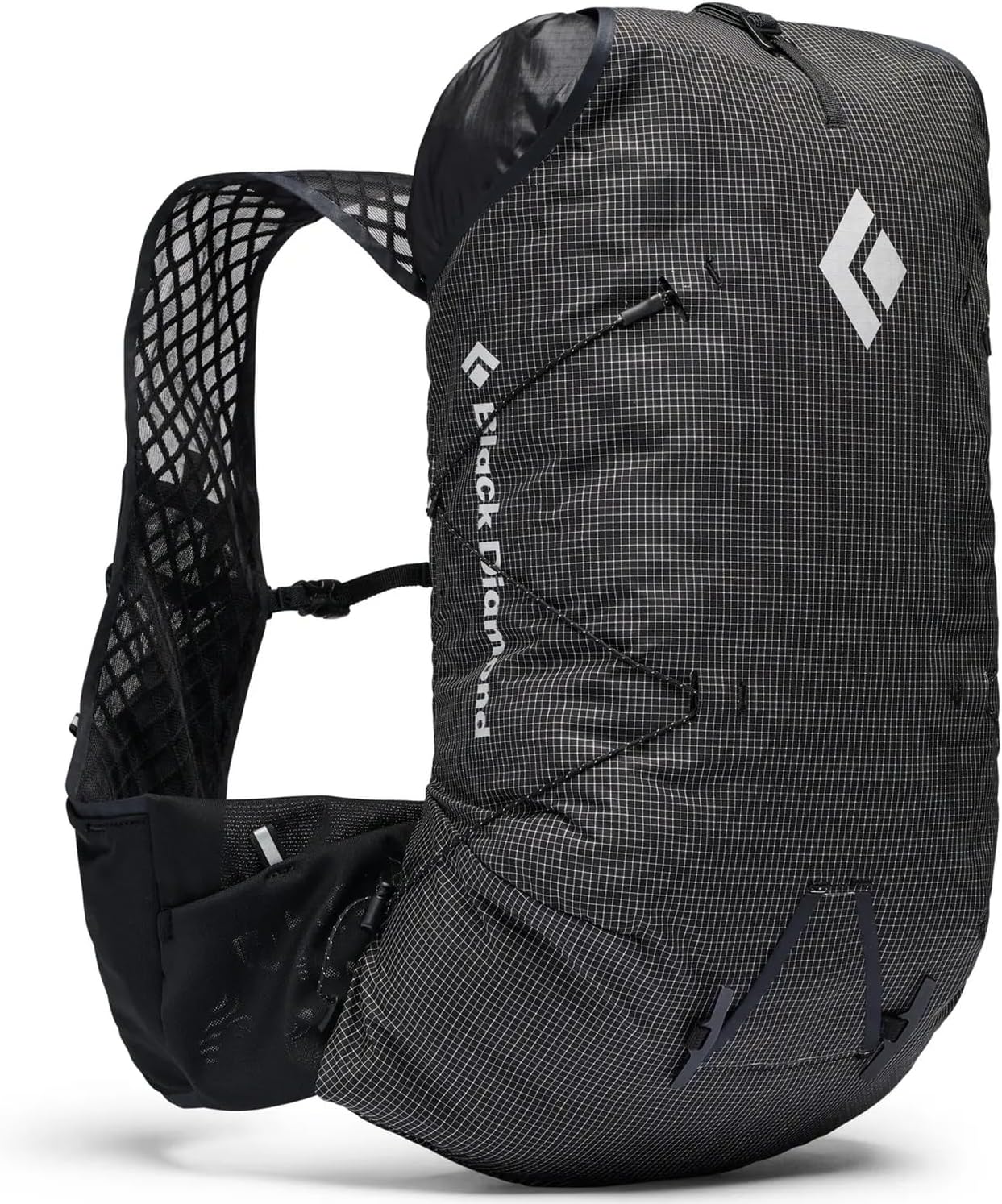

Best For: Trail runners, fastpackers, ultrarunners, speed hikers, and anyone who demands zero bounce at high speeds.
Built for Movement, Not Standing Still
The Black Diamond Distance 15 transitions from hiking vest to running pack seamlessly—a specialized tool for athletes who move fast on technical terrain. At just 1.0 lb with a race-inspired design, this pack disappears during aggressive mountain running.
What separates running packs from traditional daypacks is bounce elimination. The Distance 15’s vest-style shoulder straps wrap around your torso snugly, secured by a sternum strap and waist strap system that keeps the pack rock-stable during downhill sprints. We tested this on technical descents at sub-8-minute-mile paces—the pack stayed planted without requiring constant readjustment.
Dual front stretch mesh pockets hold soft flasks or bottles within easy reach without breaking stride—the defining feature of running packs. No more stopping to grab water from side pockets. The main 15L compartment handles a light shell, snacks, insulated water bottle, and minimal emergency gear. Additional front pockets hold nutrition, phone, and small essentials.
The tradeoff for this specialized design is reduced versatility. Load capacity maxes out around 10 lbs before the minimalist suspension struggles. There’s no sophisticated hip belt or back panel structure—comfort comes from close fit rather than padding. This isn’t a pack for leisurely day hikes with heavy camera gear; it’s purpose-built for athletes covering serious mileage quickly.
✓ PROS
- Ultra-lightweight at just 1.0 lb
- Zero bounce even at running speeds
- Front pockets for on-the-go hydration access
- Vest-style fit hugs torso securely
- Perfect for FKT attempts and long trail runs
- Breathable mesh construction
- Trekking pole attachments work while moving
✗ CONS
- Limited 15L capacity—not for all-day hikes
- Uncomfortable with loads over 10 lbs
- Vest-style fit isn’t for everyone
- Minimal padding and structure
- Too specialized for casual hiking
Bottom Line: The Black Diamond Distance 15 is a running pack that also hikes, not a hiking pack that also runs. If you’re training for ultramarathons, crushing FKTs, or simply prefer moving fast and light on technical terrain, this specialized design delivers unmatched stability. Traditional hikers will find it too minimal—and that’s exactly the point. Best choice for serious trail athletes.
🛒 Check Price on Amazon8. Arc’teryx Aerios 35 – Best Premium Technical Pack 💎
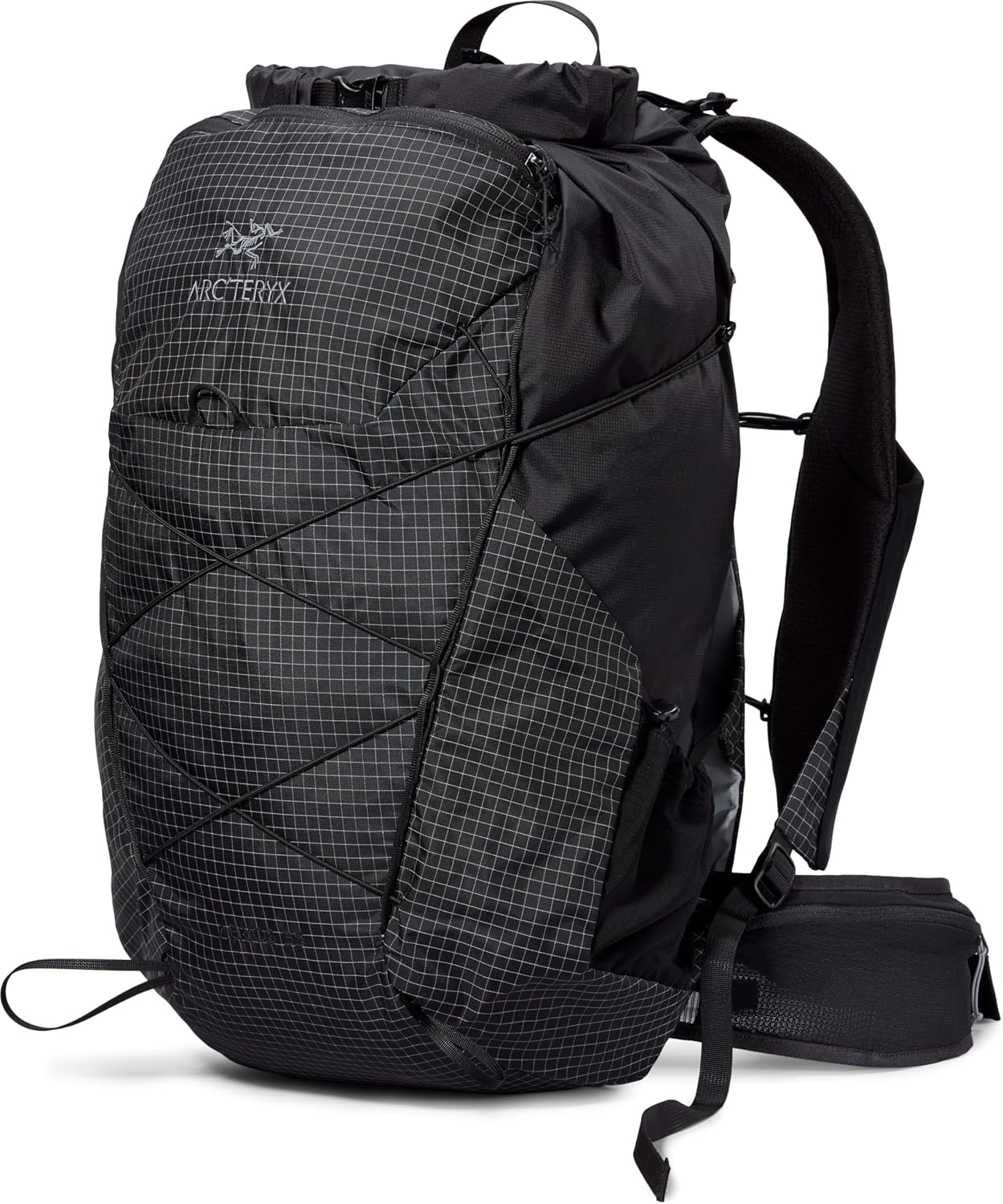

Best For: Gear enthusiasts, alpinists, technical hikers, and those who demand absolute top-tier quality regardless of price.
When Only the Best Will Do
Arc’teryx’s reputation for obsessive quality control isn’t marketing hype—the Aerios 35 demonstrates meticulous engineering at every touchpoint. From bomber 420D nylon construction to precisely sculpted ergonomics, this pack justifies its premium positioning through refined execution rather than flashy features.
The GridLock shoulder harness system uses Arc’teryx’s proprietary adjustment mechanism that achieves micro-level fit customization. Unlike competitors with simple buckle adjustments, GridLock offers tool-free torso length adjustment through a sliding rail system—precise, secure, and easily tuned on-trail. Once dialed in, the fit rivals custom packs.
Materials showcase Arc’teryx’s technical expertise: weather-resistant 420D nylon shrugs off abrasion better than standard 210D fabrics, reinforced haul handle withstands aggressive use, and YKK zippers operate smoothly even when packed full. The attention to durability suggests this pack will outlast competitors by years—potentially justifying the price premium through longevity.
The 35L capacity handles technical alpine missions requiring helmet carry, rope, harness, and layers. Panel-loading main compartment provides full-access organization superior to top-loading designs. Dedicated avalanche gear pocket, ice axe loops, and compression straps reveal this pack’s mountaineering DNA. For rock climbing adventures, the capacity and features align perfectly.
✓ PROS
- Exceptional build quality—bomber construction throughout
- Precise GridLock adjustment system
- Premium materials built for decades of use
- Panel-loading access better than competitors
- Technical features for alpine environments
- Refined ergonomics feel custom-tailored
- Arc’teryx warranty and repair program
✗ CONS
- $240 price point is steep
- Overkill for casual day hiking
- Technical features unnecessary for most hikers
- Heavier than comparable-capacity alternatives
- Limited color options
Bottom Line: The Arc’teryx Aerios 35 asks “what if we built a daypack without cost constraints?” The answer is obsessive attention to detail, premium materials, and refined ergonomics that reveal themselves through extended use. For weekend warriors, the price premium over quality mid-range options is hard to justify. For alpinists, technical climbers, and gear connoisseurs who appreciate craftsmanship, this pack delivers satisfaction that transcends specifications. Best premium option for demanding users.
🛒 Check Price on Amazon9. Patagonia Black Hole 25L – Best Travel-to-Trail Versatility 🌍


Best For: Travel hikers, urban adventurers, digital nomads, weekend getaways, and anyone needing one bag for airports and trails.
From Airport Gate to Summit
The Patagonia Black Hole 25L isn’t the most specialized hiking pack—and that’s precisely its strength. This chameleon pack transitions effortlessly from carry-on luggage to daypack, from coffee shop to canyon rim, making it ideal for travelers who want one versatile bag.
Patagonia’s signature 300D polyester ripstop with TPU film laminate creates a weather-resistant shell that laughs at rain, snow, and spills. Unlike traditional hiking pack fabrics that eventually soak through, the Black Hole’s coating keeps contents genuinely dry during downpours. We tested this through a 3-hour rainstorm without rain cover—everything inside stayed perfectly dry.
The panel-loading design with full clamshell opening makes packing and organization superior to top-loading hiking packs. Internal laptop sleeve accommodates 15″ laptops, making this pack work-trip capable. Dual compression straps cinch down loads, multiple internal pockets organize smaller items, and the classic Black Hole styling looks appropriate everywhere from trailheads to terminals.
The tradeoff is hiking-specific features take a backseat to versatility. No sophisticated suspension system, minimal ventilation, and a fairly basic hip belt mean this pack prioritizes travel durability over trail comfort. For day hikes under 8 miles with moderate loads, it performs adequately. For all-day mountain epics, specialized hiking packs offer superior comfort.
✓ PROS
- Exceptional versatility—one bag for travel and hiking
- Genuinely weather-resistant fabric keeps gear dry
- Panel-loading organization beats top-loaders
- Bomber construction—near-indestructible
- TSA-friendly carry-on dimensions
- Laptop sleeve adds work-trip capability
- Patagonia environmental commitment and warranty
✗ CONS
- Less comfortable than dedicated hiking packs
- Minimal ventilation—expect a sweaty back
- Heavier fabrics add weight vs ultralight options
- Basic hip belt offers limited load transfer
- Not optimized for serious hiking
Bottom Line: The Patagonia Black Hole 25L excels at being good at everything rather than great at one thing. If you’re a travel-oriented adventurer who hikes occasionally but needs a pack that also works for flights, urban exploration, and daily use, this versatility is invaluable. Dedicated hikers will prefer specialized packs, but travelers who value one-bag flexibility will appreciate its chameleon capabilities.
🛒 Check Price on Amazon10. Venture Pal 35L – Best Ultra-Budget Beginner Pack 💵


Best For: Absolute beginners testing hiking interest, emergency packs, festival/event use, casual walkers, and anyone on extreme budget constraints.
The Gateway Pack
At just $30, the Venture Pal 35L isn’t competing with premium hiking packs—it’s answering a different question: “How affordable can a functional daypack be?” For complete beginners unsure if hiking will become a lasting hobby, this ultra-budget option removes financial barriers to entry.
The construction is unapologetically basic: thin ripstop fabric, minimal padding, no fancy suspension systems, and simple zippers. At 0.9 lbs, it’s featherweight because there’s simply less pack. The frameless design folds down to pocket-sized when empty—perfect for travel adventures where you might need a spare daypack.
Despite budget construction, the Venture Pal includes surprising features: hydration bladder compatibility, multiple pockets for organization, side mesh pockets for bottles, and adjustable straps. It won’t pamper you with ventilation or load-bearing ergonomics, but for short hikes (under 4 hours) with light loads (under 10 lbs), it functions adequately.
Realistic expectations matter: This pack won’t survive years of heavy use. Stitching may fail, zippers might break, and fabric will show wear faster than quality alternatives. But for someone testing whether they enjoy hiking before investing in premium gear, spending $30 instead of $175 makes perfect sense. Think of it as a hiking starter pack.
✓ PROS
- Ridiculously affordable at $30
- Ultralight 0.9 lbs—lighter than premium packs
- Packs down tiny for travel
- 35L capacity generous for casual use
- Adequate for beginners and casual walkers
- Multiple color options
- Low-risk purchase for testing hiking interest
✗ CONS
- Uncomfortable on hikes exceeding 4-5 hours
- Thin fabric won’t survive years of use
- Minimal padding—shoulders feel it
- No ventilation—sweat is inevitable
- Quality control inconsistent at this price
- Struggles with loads over 10 lbs
- Not suitable for serious hiking
Bottom Line: The Venture Pal 35L is a disposable pack that might surprise you by lasting longer than expected. It’s not competing with Osprey or Gregory—and shouldn’t be judged by those standards. For complete beginners, kids’ packs, festival use, or emergency backup bags, the $30 price point removes any excuse not to try hiking. Once you’re hooked on trail life, upgrade to quality gear. But for testing the waters? This pack does exactly what it should. Best gateway option for budget-conscious beginners.
🛒 Check Price on Amazon🎥 Watch: Top 5 Hiking Daypacks Compared
📊 Complete Comparison Table
Compare all 10 daypacks side-by-side to make your perfect choice:
| Daypack | Price | Weight | Capacity | Rating | Best For | Link |
|---|---|---|---|---|---|---|
| Osprey Talon 22 | $175 | 2.1 lbs | 22L | ⭐ 4.6 | All-around best | View |
| REI Flash 22 | $70 | 1.2 lbs | 22L | ⭐ 4.6 | Budget & ultralight | View |
| Gregory Zulu 30 | $200 | 2.7 lbs | 30L | ⭐ 4.4 | Heavy loads | View |
| Osprey Stratos 36 | $239 | 3.1 lbs | 36L | ⭐ 4.9 | Multi-day hikes | View |
| Deuter Speed Lite 21 | $85 | 1.4 lbs | 21L | ⭐ 4.6 | Minimalist/speed | View |
| Osprey Tempest 22 | $175 | 1.9 lbs | 22L | ⭐ 4.6 | Women’s-specific | View |
| Black Diamond Distance 15 | $110 | 1.0 lbs | 15L | ⭐ 4.5 | Trail running | View |
| Arc’teryx Aerios 35 | $240 | 2.5 lbs | 35L | ⭐ 4.7 | Premium technical | View |
| Patagonia Black Hole 25L | $149 | 1.8 lbs | 25L | ⭐ 4.5 | Travel & hiking | View |
| Venture Pal 35L | $30 | 0.9 lbs | 35L | ⭐ 4.4 | Ultra-budget | View |
🎯 Complete Buying Guide: How to Choose YOUR Perfect Daypack
Choosing a hiking daypack isn’t about finding the “best” pack—it’s about finding the best pack for YOU. Let’s break down everything you need to know to make a confident decision.
Understanding Daypack Capacity: What Size Do You Actually Need?
Capacity isn’t just a number—it determines whether your pack feels spacious or cramped on the trail. Here’s how to match liters to your hiking style:
15-20 Liters: Half-Day Hikes (2-4 Hours)
Perfect for: Morning trail runs, quick nature walks, summer afternoon hikes
Fits: Water bladder or 1-2 bottles, snacks, sun protection, light rain shell, basic emergency supplies
Example packs: Black Diamond Distance 15, Deuter Speed Lite 21
20-30 Liters: Full-Day Hikes (4-10 Hours)
Perfect for: Classic day hikes, peak bagging, all-day adventures
Fits: 3L hydration system, lunch and substantial snacks, extra clothing layers, rain gear, first aid kit, headlamp, emergency shelter, navigation tools
Example packs: Osprey Talon 22, REI Flash 22, Gregory Zulu 30
💡 Sweet Spot: This is the goldilocks zone for most hikers. Not too small, not too big—just right.
30-40 Liters: Extended Day Hikes or Light Overnight
Perfect for: Dawn-to-dusk epics, winter hiking with bulky gear, photography expeditions, minimalist overnight trips
Fits: Everything above PLUS insulated jacket, extra food, camera gear with lenses, bivy sack or ultralight shelter, spare clothes, bear canister (in smaller sizes)
Example packs: Osprey Stratos 36, Arc’teryx Aerios 35
Key Features That Actually Matter
1. Suspension Systems Explained 🏋️
The suspension system is the most critical feature determining comfort. Here’s what really works:
Frameless Packs:
- Pros: Ultralight, packable, flexible
- Cons: Uncomfortable with loads over 12-15 lbs, minimal load transfer
- Best for: Minimalist hikers, trail runners, ultralight enthusiasts
- Example: REI Flash 22
Internal Frame/Framesheet Packs:
- Pros: Better load distribution, maintains pack shape, comfortable with moderate loads
- Cons: Slightly heavier, less packable
- Best for: Traditional day hikers, those carrying 12-20 lbs
- Example: Osprey Talon 22, Gregory Zulu 30
2. Hip Belt: Your Load-Bearing Hero 💪
A proper hip belt transfers 70-80% of pack weight from your shoulders to your hips—the strongest part of your body. Here’s what to look for:
- Padded hip belt: Essential for loads over 12 lbs. Should have 2+ inches of foam padding.
- Proper positioning: Should sit on top of your hip bones (iliac crest), not your waist.
- Hip belt pockets: Incredibly useful for phone, snacks, GPS. Once you have them, you’ll never go back.
- Removable option: Some packs (like REI Flash 22) let you remove the hipbelt to save weight—nice versatility.
3. Ventilation & Back Panels 🌬️
Nothing ruins a hike faster than a sweat-soaked back. Modern ventilation technology makes a real difference:
Trampoline/Mesh Suspension (Best): Suspended mesh creates actual airspace between your back and the pack. Found on Osprey Talon 22, Gregory Zulu 30.
Channeled Foam (Good): Contoured foam with air channels. Better than nothing, but not as effective as suspended mesh.
Flat Back Panel (Minimal): Traditional design with no ventilation features. Expect a wet back on warm days.
4. Hydration Compatibility 💧
Staying hydrated is non-negotiable on the trail. Modern packs accommodate both bottles and bladders:
- Hydration sleeve: Internal pocket designed for water bladders (usually 2-3L). Look for hose port that exits near your shoulder.
- Side stretch pockets: Should hold standard 1L bottles securely and be reachable while wearing the pack.
- Dual bottle capacity: Best packs accommodate BOTH—bladder for active hydration, bottles for backup/electrolytes.
Getting the Right Fit: Torso Length Matters More Than You Think
Here’s a secret most beginners don’t know: daypack sizing is based on torso length, not overall height. A 6’2″ person with a short torso might need a Small, while a 5’6″ person with a long torso might need a Large.
How to Measure Your Torso Length
- Tilt your head forward and feel for the C7 vertebra (the bony bump where your neck meets shoulders)
- Place your hands on your hips and feel for the top of your iliac crest (hip bones)
- Measure the distance between these two points. This is your torso length.
General Sizing Guide:
- Extra Small: 13-15 inches
- Small: 15-17 inches
- Medium: 17-19 inches
- Large: 19-21 inches
- Extra Large: 21+ inches
Men’s vs Women’s Specific Designs
Women’s packs aren’t just “pink men’s packs.” Quality manufacturers engineer genuine differences:
- Shorter torso range: Accounts for typically shorter female torso lengths
- Contoured shoulder straps: Angled to accommodate chest anatomy comfortably
- Narrower shoulder width: Matches typical female shoulder spans
- Shaped hip belt: Contoured for female hip shape, often with more dramatic curvature
Example: Osprey Tempest 22 (women’s) vs Talon 22 (men’s) share core features but differ in these fit dimensions.
🎥 How to Choose a Hiking Daypack
Materials & Durability: Understanding the Numbers
Fabric specifications seem like alphabet soup, but understanding basics helps you assess long-term value:
Denier Ratings (Fabric Thickness)
Denier measures fiber thickness—higher numbers mean thicker, heavier, more durable fabric:
- 100-210D: Ultralight fabrics. Adequate for careful users, may show wear after seasons of heavy use. Found in REI Flash 22, budget packs.
- 210-420D: Sweet spot for durability vs weight. Resists abrasion well, lasts years with proper care. Found in Osprey Talon 22, Gregory Zulu 30.
- 420-840D: Bomber fabrics for heavy use. Overkill for daypacks, usually reserved for backpacking packs.
Waterproof vs Water-Resistant
Marketing loves these terms, but there’s a crucial difference:
Water-Resistant (Most Daypacks):
- Treated with DWR (Durable Water Repellent) coating
- Sheds light rain and moisture
- Seams are NOT sealed—water eventually penetrates in heavy rain
- Solution: Use included rain cover or pack rain shell for sensitive gear
Waterproof (Premium Packs):
- Sealed seams and waterproof fabrics (often roll-top designs)
- Genuinely keeps contents dry in downpours
- Usually heavier and less breathable
- Examples: Patagonia Black Hole 25L, technical packs
Scenario-Based Recommendations: Find YOUR Pack
☀️ Best for Summer Day Hikes (10-20L, Breathable)
Priorities: Ventilation, minimal weight, adequate hydration
Top Pick: Deuter Speed Lite 21 – Lightweight, breathable, perfect for hot weather
Runner-up: Black Diamond Distance 15 – Even lighter for minimalists
❄️ Best for Winter Adventures (25-35L, Gear Capacity)
Priorities: Volume for bulky layers, durable construction, load-carrying comfort
Top Pick: Gregory Zulu 30 – Handles heavy loads, extra space for winter gear
Runner-up: Osprey Stratos 36 – Even more capacity for extended winter days
🏃 Best for Trail Running (15-20L, Minimal Bounce)
Priorities: Minimal weight, bounce-free carry, accessible pockets
Top Pick: Black Diamond Distance 15 – Purpose-built for running
Runner-up: Deuter Speed Lite 21 – Crossover capability
🏜️ Best for Desert Hiking (Hydration-Focused)
Priorities: Maximum water capacity, ventilation, reflective colors
Top Pick: Osprey Talon 22 – Excellent ventilation, holds 3L bladder + bottles
Alternative: Gregory Citro 24 H2O – Built-in 3L hydration included
📷 Best for Photography Hikes (Camera Storage)
Priorities: Capacity for gear, stable carry, quick access
Top Pick: Gregory Zulu 30 – 30L holds body + lenses comfortably
Tip: Use padded camera insert in main compartment, keeping camera gear protected
💰 Best for Budget-Conscious Beginners
Priorities: Low cost, versatility, adequate features
Top Pick: REI Flash 22 – $70, surprisingly capable
Ultra-Budget: Venture Pal 35L – $30, perfect for testing the waters
👥 Best for Plus-Size Hikers
Priorities: Extended hip belt, comfortable shoulder width, adequate adjustment range
Top Pick: Gregory Miko/Maya 20 Plus – Purpose-designed with wider angles, extended straps
Alternative: Look for packs advertising “extended fit” or “plus size” specific designs
Packing Your Daypack Like a Pro 🎒
Proper packing transforms pack performance. Follow these proven principles:
The Weight Distribution Rule
- Heavy items high and close to back: Water bladder, lunch, dense gear should sit between shoulder blades
- Medium items mid-pack: Extra layers, rain shell, first aid
- Light items bottom/exterior: Puffy jacket, hat, gloves in bottom; rain shell accessible in top pocket
Essential Items Checklist by Season
Summer Day Hike (10 Essentials):
- ✓ Navigation (map, compass, GPS)
- ✓ Sun protection (sunscreen, sunglasses, hat)
- ✓ Insulation (light jacket—weather changes fast)
- ✓ Illumination (headlamp with extra batteries)
- ✓ First-aid supplies
- ✓ Fire (waterproof matches, lighter)
- ✓ Repair kit and tools (multi-tool or knife)
- ✓ Nutrition (extra food beyond planned meals)
- ✓ Hydration (2-3L for full day)
- ✓ Emergency shelter (bivy or space blanket)
Winter Additions:
- ✓ Insulated jacket (down or synthetic)
- ✓ Extra warm layers (fleece, base layers)
- ✓ Insulated pants
- ✓ Warm hat and gloves (plus spares)
- ✓ Thermos with hot beverage
- ✓ Extra high-calorie snacks (body burns more fuel staying warm)
Price vs Performance: Is Expensive Worth It?
The $30 to $240 price range in our roundup raises an obvious question: what are you actually paying for?
| Price Tier | What You Get | What You Sacrifice | Best For |
|---|---|---|---|
| $30-50 | Basic functionality, simple construction | Durability, comfort on long hikes, advanced features | Beginners testing hiking, casual occasional use |
| $70-100 | Improved materials, better comfort, basic features | Premium ventilation, advanced suspension, longevity | Regular hikers on a budget |
| $150-200 | Excellent comfort, durability, thoughtful design, warranties | Mostly just money—diminishing returns beyond this | Serious hikers seeking long-term value |
| $200+ | Premium materials, cutting-edge tech, brand prestige | Your wallet | Gear enthusiasts, specific technical needs |
The Sweet Spot: For most hikers, $70-150 delivers the best value. You get genuine quality without paying for marginal gains or brand premium. Our top three picks (Osprey Talon 22 at $175, REI Flash 22 at $70, Deuter Speed Lite 21 at $85) fall right in this zone.
Cost-Per-Use Analysis:
- Budget pack ($30) lasting 1 season, 20 hikes: $1.50 per hike
- Mid-range pack ($100) lasting 5 seasons, 100 hikes: $1.00 per hike
- Premium pack ($200) lasting 10+ seasons, 200+ hikes: $1.00 per hike (or less)
Quality costs more upfront but often delivers better value over time.
Maintenance & Care: Make Your Pack Last
Proper care extends pack life dramatically. Follow these simple practices:
After Every Hike
- Empty all pockets (you’d be amazed what accumulates)
- Brush off dirt and debris while dry (easier than cleaning later)
- Air dry completely before storage (prevents mildew)
- Check for damage (small tears are easy to repair if caught early)
Deep Cleaning (2-3 Times Per Season)
- Empty pack completely, shake out debris
- Fill bathtub or large sink with lukewarm water
- Add mild soap (specialized gear wash or gentle dish soap—NOT regular detergent)
- Submerge pack, gently scrub with soft brush
- Rinse thoroughly (soap residue attracts dirt)
- Hang to air dry in shade (sunlight degrades fabrics)
- Never machine wash or dry (destroys coatings and structure)
Storage
- Store in cool, dry place away from direct sunlight
- Keep zippers closed (reduces dust accumulation)
- Loosen all straps (prevents compression creases)
- Don’t store compressed in stuff sack for extended periods
Repairs
Minor damage is fixable with basic supplies:
- Small tears: Tenacious Tape or Gear Aid patches
- Broken zipper pulls: Paracord loops work great
- Worn webbing: Can be replaced at gear repair shops
- Major damage: Many manufacturers (Osprey, Gregory) offer lifetime repair services
⚠️ Common Mistakes to Avoid
Learn from others’ errors:
- Buying based solely on price: The cheapest option often costs more long-term through replacements and discomfort.
- Ignoring proper fit: A premium pack that doesn’t fit is worse than a budget pack that does. Fit matters more than features.
- Choosing too much capacity: Oversized packs encourage overpacking, adding unnecessary weight and discomfort.
- Neglecting hip belt adjustment: If you’re carrying weight on shoulders alone, you’re doing it wrong.
- Skipping the test hike: Many retailers have 30-day return policies. Load up your pack, walk around the block. Discomfort reveals itself quickly.
- Forgetting about hydration access: Can you reach your water bottles while wearing the pack? If not, you’ll dehydrate.
- Buying the same pack as your hiking partner: Bodies are different. What works for them might not work for you. Get fitted individually.
❓ Frequently Asked Questions
We’ve answered the most common questions from hikers choosing their first (or next) daypack:

🏁 Final Thoughts: Choose Your Perfect Trail Companion
After hundreds of miles testing these packs across diverse conditions, our verdict is clear:
Our Top 3 Recommendations
- 🥇 Best Overall: Osprey Talon 22 – The gold standard for comfort, durability, and all-around performance
- 💰 Best Value: REI Flash 22 – Ultralight capability at a budget price
- ⚡ Best for Heavy Loads: Gregory Zulu 30 – Superior comfort when carrying gear-heavy loads
Remember these key principles:
- ✓ Fit matters more than features. A properly-sized budget pack beats a premium pack that doesn’t fit your body.
- ✓ Match capacity to your actual needs. Don’t buy more pack than you’ll use—it encourages overpacking.
- ✓ Prioritize comfort for YOUR typical load weight. Ultralight works for minimalists; load-bearing suspension suits gear haulers.
- ✓ Test before committing to long trails. A 30-minute store walk reveals obvious issues, but a 5-mile loaded hike reveals the truth.
- ✓ Quality pays off in the long run. A $150 pack lasting 10 years beats replacing $30 packs every season.
The perfect daypack isn’t the one with the most features or the lowest weight—it’s the one that disappears on your back, mile after mile, letting you focus on why you hike in the first place: the trail, the views, the adventure.
Ready to hit the trail? Choose your pack, load it up with the hiking essentials, and get out there. Your next adventure awaits! 🏔️
📚 Related Articles You’ll Love
Complete your trail setup with the right footwear
What to pack for overnight adventures
Stay hydrated on the trail
Essential survival skill every hiker should know
Master these for gear repairs and emergencies
For winter camping adventures
Why Trust The Outdoor Champ?
Hundreds of trail miles across diverse terrain
We test products we purchase ourselves
15+ years combined outdoor experience
Continuously testing new gear releases

Brent Hillyer is a trusted outdoor writer, camping and hiking gear reviewer, and trail expert with 17+ years of hands-on experience. Since 2008, he has worked in the outdoor industry testing gear, exploring trails, and helping readers choose reliable equipment for camping, backpacking, and hiking adventures. At TheOutdoorChamp, Brent reviews camping gear using the same standards he applies in the field.