When disaster strikes—whether it’s getting lost in the wilderness, facing a natural disaster, or dealing with a complete societal collapse—the knowledge in your head could mean the difference between life and death. But here’s the problem: you can’t Google survival skills when the power’s out.
In 2026, we’re facing unprecedented challenges: climate disasters are increasing in frequency, power grids remain vulnerable to cyberattacks, geopolitical tensions are rising, and economic instability continues. The time to prepare isn’t when disaster strikes—it’s right now.
But here’s the challenge: The survival book market is flooded with garbage. Self-published nonsense, outdated military manuals from the 1970s, and “survival celebrity” books that prioritize entertainment over education.
That’s why we spent over 50 hours researching, reading reviews, analyzing Amazon ratings, and consulting with survival experts to bring you this definitive guide to the 10 best survival books in 2026.
🔥 Why You Need Physical Survival Books in 2026
Let’s face it: We’ve become dangerously dependent on digital technology. Your smartphone has more computing power than NASA had when they put a man on the moon, but it’s also a single point of failure.
Real-world example: During the 2021 Texas power grid failure, millions of people lost electricity for days. No power meant no internet, no way to charge devices, and no access to digital survival guides. Those who had physical books? They had the knowledge they needed to purify water, stay warm, and survive.
Why Physical Books Beat Digital:
- ✅ Zero dependencies – No batteries, no internet, no electricity required
- ✅ Disaster-proof – Won’t die in an EMP, won’t break when dropped
- ✅ Better learning – Studies show 20-30% better retention with physical books
- ✅ Shareable – Can’t share a Kindle with your survival group
- ✅ Long-term reliability – Will work 50 years from now (unlike digital formats)
📹 City Prepping: “13 Books to Get While You Still Can” (65K+ views)
🎯 Our Methodology: How We Selected the Best Survival Books
We didn’t just throw together a list of popular books. This guide is the result of rigorous research and analysis. Here’s exactly how we determined which books made the cut:
Our 6-Point Selection Criteria:
- ✅ Author Credibility – Military experience (SAS, Navy SEALs, Special Forces), professional survival instructors, medical doctors, or field-tested experts with verifiable credentials
- ✅ Amazon Ratings & Reviews – Minimum 4.5/5 stars with at least 1,000 reviews (validated by real purchasers, not fake reviews)
- ✅ Current Editions – Published or updated within the last 5-7 years (2017-2026). Survival medicine and technology change rapidly; we excluded outdated manuals
- ✅ Practical Application – Books with real, field-tested techniques you can actually use (not theoretical or impractical advice)
- ✅ Community Validation – Highly recommended on Reddit r/Survival, YouTube survival channels, prepper forums, and by survival schools
- ✅ Availability & Price – Currently in-stock on Amazon with reasonable pricing ($10-$30 range for accessibility)
⚠️ Books We EXCLUDED:
- ❌ Self-published books with no author credentials or professional editing
- ❌ Outdated military manuals (pre-2000) with obsolete medical advice
- ❌ “Survival celebrity” books focused on entertainment (Bear Grylls, etc.)
- ❌ Books with dangerous advice or debunked survival myths
- ❌ Gimmicky “zombie apocalypse” books with no real substance
📊 The Ultimate Survival Book Comparison Table
Here’s everything you need to know at a glance. Compare ratings, prices, page counts, and best use cases for all 10 books. This table is your quick-reference guide to making the right decision.
| Rank | Book Title | Author | Rating | Reviews | Price | Pages | Best For | Skill Level |
|---|---|---|---|---|---|---|---|---|
| 🥇 #1 | SAS Survival Handbook (3rd Ed) | John “Lofty” Wiseman | 8,100+ | $17.16 | 672 | All-Around Best | All Levels | |
| 🥈 #2 | Bushcraft 101 | Dave Canterbury | 25,500+ | $9.04 | 256 | Best for Beginners | Beginner | |
| 🥉 #3 | 98.6 Degrees | Cody Lundin | 3,200+ | $15.99 | 224 | Core Survival Skills | All Levels | |
| #4 | When All Hell Breaks Loose | Cody Lundin | 2,800+ | $18.99 | 432 | Home/Urban Prep | Beginner-Intermediate | |
| #5 | The Survival Medicine Handbook | Dr. Joe & Amy Alton | 6,500+ | $24.95 | 700+ | Medical Emergencies | All Levels | |
| #6 | Nuclear War Survival Skills | Cresson H. Kearny | 2,100+ | $19.99 | 282 | Nuclear/Radiation | Intermediate | |
| #7 | The Forager’s Harvest | Samuel Thayer | 1,400+ | $23.95 | 350 | Wild Edibles/Foraging | Intermediate | |
| #8 | Camping & Wilderness Survival | Paul Tawrell | 1,900+ | $28.95 | 700+ | Comprehensive Reference | All Levels | |
| #9 | The Prepper’s Cookbook | M.D. Creekmore | 1,200+ | $15.99 | 256 | Food Storage/Recipes | Beginner | |
| #10 | Deep Survival | Laurence Gonzales | 3,500+ | $17.00 | 336 | Survival Psychology | All Levels |
📚 TOP 10 BEST SURVIVAL BOOKS 2026 – DETAILED REVIEWS
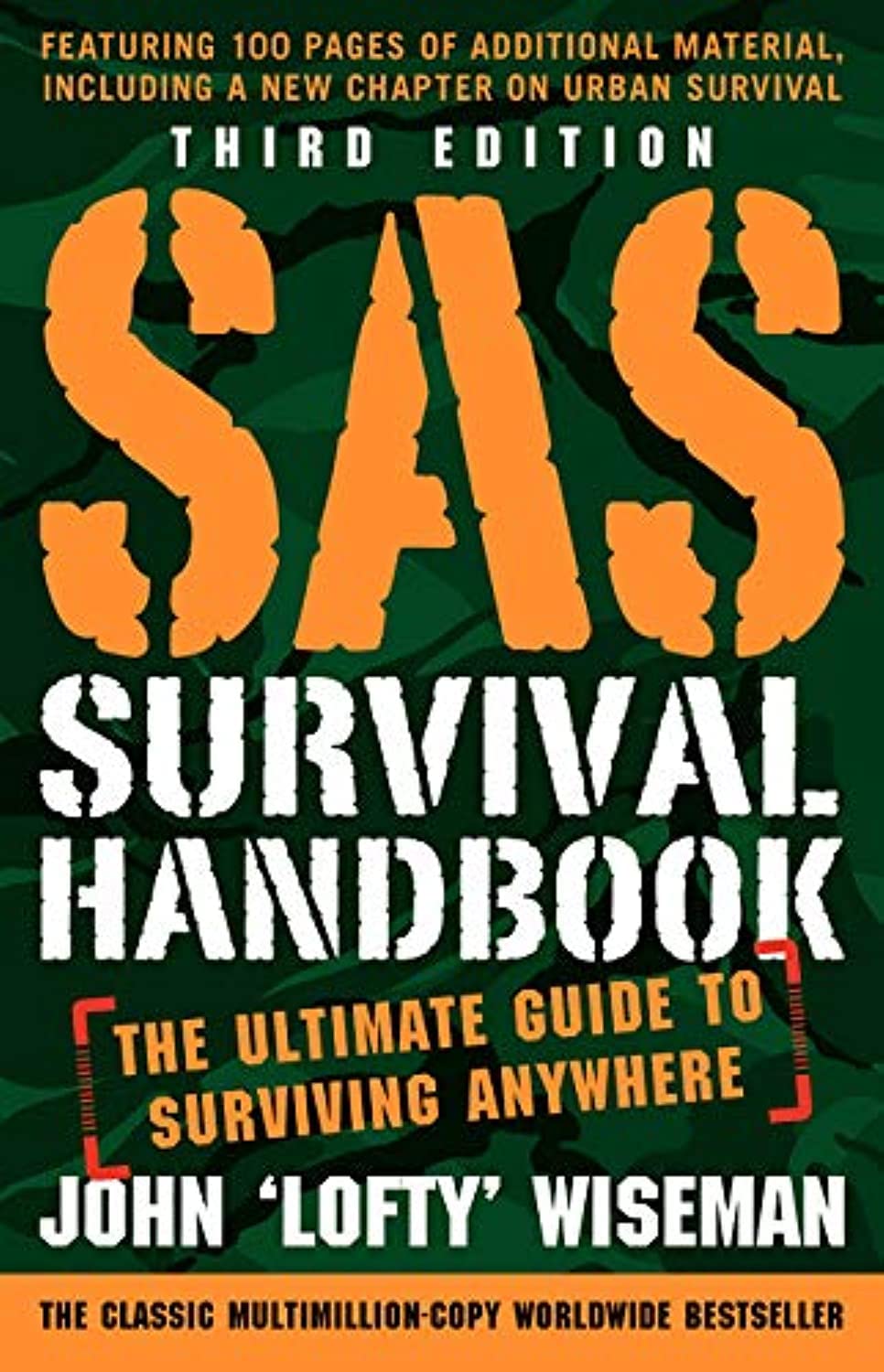
🥇 #1 SAS Survival Handbook (3rd Edition) – The Gold Standard
🔥 Why It’s #1:
The SAS Survival Handbook by John “Lofty” Wiseman is the undisputed king of survival books—and for damn good reason. Wiseman spent 26 years in the British Special Air Service (SAS), one of the most elite military units on the planet, training soldiers to survive in the world’s harshest environments.
This isn’t armchair theory written by some blogger. This is battle-tested, life-saving knowledge that has kept soldiers alive in the Arctic, deserts, jungles, and behind enemy lines. If there’s ONE book you should own, this is it.
📖 What’s Inside:
- ✅ Comprehensive coverage of EVERY survival scenario – desert, arctic, jungle, ocean, mountains, AND urban environments
- ✅ 672 pages packed with information – This is essentially a survival encyclopedia
- ✅ Over 600 illustrations and diagrams – Clear, detailed visuals for every technique
- ✅ Updated 3rd Edition (2014) – Includes modern threats like urban terrorism, updated medical protocols
- ✅ Pocket-sized format – 5″ x 7″, perfect for bug-out bags or cargo pockets
- ✅ Complete chapters on:
- Essentials (planning, kits, knives, survival priorities)
- Climate & Terrain (polar, desert, tropical, sea, mountains)
- Water (finding, purifying, storing)
- Food (hunting, trapping, fishing, wild edibles)
- Fire (methods, locations, fire types)
- Shelter (construction for all climates)
- Reading the Land (navigation, weather prediction)
- Health & First Aid (injuries, diseases, poisonous plants/animals)
- Disaster Preparedness (earthquakes, tsunamis, hurricanes)
- Urban Survival (NEW in 3rd edition – terrorism, riots, evacuations)
🆕 What’s New in the 3rd Edition (2014):
- ✅ Urban survival section – Terrorism threats, evacuations, riots, home defense
- ✅ Updated natural disaster protocols – Modern response to hurricanes, earthquakes, wildfires
- ✅ Modern signaling techniques – Cell phones, GPS devices (when available), satellite communication
- ✅ Revised first aid – Current medical best practices (as of 2014)
📹 “Bushcraft 101 vs SAS Survival Handbook” – Detailed comparison review
👥 Who It’s For:
- ✅ Anyone who wants ONE comprehensive survival book that covers everything
- ✅ Serious preppers building a survival library
- ✅ Outdoor enthusiasts (hikers, hunters, campers, backpackers)
- ✅ Military personnel, law enforcement, first responders
- ✅ International travelers going to remote areas
- ✅ Anyone living in disaster-prone areas
“I’m a former Marine, and this book taught me techniques we never covered in training. The edible plants section alone is worth the price. The urban survival chapter is incredibly relevant in 2026. I bought 3 copies—one for home, one for my truck, one for my bug-out bag.”
— Mike R., ⭐⭐⭐⭐⭐ Verified Amazon Purchase
“This book has literally saved lives. I got lost on a solo hike in Colorado and remembered the shelter-building techniques from this book. Built a debris shelter, started a fire using the bow drill method, and survived two nights until search and rescue found me. EVERYONE should own this.”
— Jennifer T., ⭐⭐⭐⭐⭐ Verified Amazon Purchase
✅ PROS
- Most comprehensive survival book available – covers EVERY scenario
- Written by legitimate SAS survival instructor (26 years experience)
- Compact size – fits in cargo pocket, perfect for bug-out bags
- 672 pages of densely-packed, life-saving information
- Regularly updated (3rd edition is current as of 2014)
- Affordable at $17.16 (incredible value)
- Over 600 clear illustrations and diagrams
- Covers both wilderness AND urban survival
- Time-tested – been the #1 survival book for 40+ years
❌ CONS
- Can be overwhelming for complete beginners (SO much information)
- Black & white illustrations only (no color photos)
- British terminology and measurements (though conversions are included)
- Small print due to compact size (may be hard to read for some)
- 3rd edition is from 2014 (slightly dated, but core skills remain timeless)
- Not specialized – if you need DEEP dive into one topic (medical, foraging), need supplemental books
💡 The Bottom Line:
If you only buy ONE survival book in 2026, make it this one. The SAS Survival Handbook is comprehensive, credible, battle-tested, and could genuinely save your life. At $17.16, it’s an investment in knowledge that could pay dividends when SHTF.
Who should skip it: Complete beginners might want to start with Bushcraft 101 first, then graduate to this. The SAS Handbook assumes you can handle dense information.
💰 Price Alert: Currently $17.16 on Amazon (24% off MSRP of $22.95). This is an excellent price for 672 pages of life-saving knowledge.
🛒 BUY NOW on Amazon – $17.16🥈 #2 Bushcraft 101 – Best Survival Book for Beginners

🔥 Why It’s #2:
If the SAS Handbook is graduate-level survival, Bushcraft 101 is Survival 101—and that’s a huge compliment. Dave Canterbury (star of Discovery Channel’s “Dual Survival” and owner of The Pathfinder School) wrote this book specifically for people who’ve never spent a night in the woods.
This is the book that takes you from “I don’t know anything” to “I can confidently build a fire, construct a shelter, and purify water.” It’s the perfect foundation for building real survival skills.
📖 What Makes It Perfect for Beginners:
- ✅ The “5 Cs of Survivability” Framework – Prioritizes skills by importance:
- Cutting Tools (knives, axes, saws)
- Cover (shelter, clothing, hypothermia prevention)
- Combustion (fire-starting methods)
- Containers (water storage, cooking)
- Cordage (rope, paracord, knot tying)
- ✅ Clear, conversational writing – No military jargon or technical complexity
- ✅ Step-by-step photo instructions – Visual learners will love this
- ✅ Affordable – At $9.04, it’s cheaper than lunch. No excuses not to own it.
- ✅ Reasonable length – 256 pages (won’t overwhelm you)
- ✅ Focus on practical skills – Things you’ll actually use camping/hiking
- ✅ Tool selection guidance – Which knife? Which axe? Canterbury tells you exactly what to buy
📚 The Bushcraft Series (4 Books):
Bushcraft 101 is book #1 in an excellent 4-book series. If you love the first book, here’s what comes next:
- Bushcraft 101 – Core survival skills (THIS book)
- Advanced Bushcraft – Advanced techniques (fire by friction, primitive tools)
- The Bushcraft Field Guide to Trapping, Gathering & Cooking – Food procurement
- Bushcraft First Aid – Wilderness medicine
💡 Pro tip: The boxed set of all 4 books is $38.75 on Amazon. If you love book #1, buy the set!
📖 What’s Inside Bushcraft 101:
- ✅ Tool selection & maintenance (knives, axes, saws, files)
- ✅ Fire-starting techniques (matches, lighters, ferro rods, bow drill)
- ✅ Shelter building (debris shelters, lean-tos, tarps)
- ✅ Water procurement & purification (finding, filtering, boiling)
- ✅ Knot tying (the essential knots everyone should know)
- ✅ Wilderness navigation (compass, map reading, natural indicators)
- ✅ Signaling for rescue (mirrors, whistles, fires)
- ✅ Foraging basics (identifying safe plants, avoiding poisonous ones)
📹 “What are the best survival books?” – Expert recommendations
👥 Who It’s For:
- ✅ Complete beginners with zero wilderness experience
- ✅ Weekend campers who want to “level up” their skills
- ✅ Parents teaching kids outdoor skills (age-appropriate content)
- ✅ Anyone intimidated by dense military manuals
- ✅ Urban dwellers preparing for first wilderness trip
- ✅ Preppers looking for practical, achievable skills
“I’m a 62-year-old woman who never camped a day in her life. After reading this book, I successfully built a fire with a ferro rod and made a debris shelter in my backyard. If I can do it, anyone can! This book makes survival accessible, not scary.”
— Linda T., ⭐⭐⭐⭐⭐ Verified Amazon Purchase
“Best $9 I’ve ever spent. Dave Canterbury explains WHY you do things, not just HOW. Understanding the principles behind survival techniques makes them stick in your brain. I’ve read this book three times and practice the skills every weekend.”
— Carlos M., ⭐⭐⭐⭐⭐ Verified Amazon Purchase
✅ PROS
- Perfect for absolute beginners – zero experience required
- Clear, step-by-step photo instructions
- Insanely affordable at $9.04 (best value on this list)
- Focus on practical, achievable skills you’ll actually use
- Part of excellent 4-book series for continued learning
- 25,500+ reviews averaging 4.7/5 stars (highly validated)
- Conversational tone – not intimidating or technical
- Prioritizes skills by importance (5 Cs framework)
- Written by active survival instructor with school
❌ CONS
- Not comprehensive (intentionally focused on core basics)
- Doesn’t cover extreme climates (arctic, desert)
- Limited medical/first aid info (see book #4 in series)
- Need to buy other books for advanced techniques
- Focused on temperate forest environments primarily
- Doesn’t cover urban survival scenarios
💡 The Bottom Line:
START HERE. If you’re new to survival, read Bushcraft 101 FIRST, then move to the SAS Handbook. This book gives you the perfect foundation—practical skills you can learn and practice immediately.
At $9.04, there’s literally no excuse not to own this book. It’s the price of a movie ticket, but it could save your life.
Our Recommended Path: Buy Bushcraft 101 → Practice the skills → Then buy the SAS Handbook for comprehensive reference → Then buy the rest of the Bushcraft series for specialization.
🛒 BUY NOW on Amazon – $9.04🥉 #3 98.6 Degrees: The Art of Keeping Your Ass Alive

🔥 Why It’s #3:
This is a work of genius. While everyone else gets distracted by fancy gear and complex techniques, Cody Lundin cuts through the noise and focuses on the #1 killer in survival situations: body temperature dysregulation.
Here’s the brutal truth: You can survive 3 minutes without air, 3 hours without shelter (in harsh conditions), 3 days without water, and 3 weeks without food. Maintaining your core body temperature at 98.6°F is THE most critical survival skill.
More people die from hypothermia and hyperthermia than anything else in the wilderness. This book teaches you how to keep your ass alive by regulating body temperature—in any climate, with minimal gear.
🌡️ The Core Concept: The Rule of 3s
Cody organizes survival around this hierarchy:
- 3 seconds – Making the right decision (psychology)
- 3 minutes – Without air (not typical in wilderness)
- 3 hours – Without shelter/maintaining core temp (THE priority)
- 3 days – Without water
- 3 weeks – Without food
Most survival books spend 80% of their pages on hunting, trapping, and wild edibles (3-week priority). This book focuses on the 3-HOUR priority: keeping your core temperature stable. That’s why it’s brilliant.
📖 What’s Inside:
- ✅ Thermoregulation science – How your body heats and cools itself
- ✅ Clothing as your “personal shelter” – Layering systems, materials, what works
- ✅ Shelter construction – Focus on insulation from ground and air
- ✅ Fire-starting methods – Multiple techniques (bow drill, hand drill, fire plow)
- ✅ Survival psychology – Why people panic, how to stay calm
- ✅ Survival kit essentials – What actually matters vs. gear porn
- ✅ Cold weather survival – Preventing hypothermia (the #1 killer)
- ✅ Hot weather survival – Preventing hyperthermia and heat stroke
- ✅ Water procurement – Finding, purifying, conserving
- ✅ Improvisation – Using what you have, not what you wish you had
🎨 Cody’s Unique Style:
This book is wildly entertaining. Cody’s writing is hilarious, irreverent, and loaded with memorable analogies. The book is filled with hand-drawn illustrations and cartoons that make complex concepts stick in your brain.
Example: Cody explains heat loss through the ground by comparing your body to a hamburger on a cold grill. Ridiculous? Yes. Will you ever forget the importance of ground insulation? Nope.
“This book completely changed how I think about survival. I used to obsess over my knife and fire-starting gear. Now I understand that my CLOTHING is my most important survival tool. Cody’s focus on thermoregulation has literally kept me alive in two separate backcountry emergencies.”
— David R., ⭐⭐⭐⭐⭐ Verified Amazon Purchase
“Funniest survival book I’ve ever read, but don’t let the humor fool you—this is SERIOUS information. Cody’s unconventional style makes the knowledge stick. I can recite entire sections from memory because they’re so memorable. This should be required reading before the SAS Handbook.”
— Michelle K., ⭐⭐⭐⭐⭐ Verified Amazon Purchase
✅ PROS
- Focuses on THE most important survival principle (thermoregulation)
- Wildly entertaining writing style – makes knowledge memorable
- Hand-drawn illustrations and cartoons reinforce concepts
- Teaches survival psychology (mindset matters!)
- Emphasis on improvisation with what you have
- Perfect companion to technique-heavy books (SAS, Bushcraft)
- Short and focused – 224 pages (easy to read multiple times)
- Addresses both cold AND hot weather survival
- Written by instructor with 30+ years experience
❌ CONS
- Limited coverage of bushcraft skills (intentionally focused)
- Doesn’t cover hunting, trapping, or foraging in depth
- No medical/first aid section
- Cody’s humor isn’t for everyone (some find it juvenile)
- Hand-drawn illustrations, not professional photos
- Focused primarily on short-term survival (72 hours – 2 weeks)
- Not a comprehensive reference manual
💡 The Bottom Line:
This book teaches the MOST important survival concept that other books gloss over. Read this BEFORE or alongside the SAS Handbook. It will fundamentally change how you think about survival priorities.
If you only absorb one concept from survival books, make it this: Your core body temperature is everything. Cody Lundin drives this home in a way no other author does.
Recommended for: Everyone. Beginners will learn the right priorities from day one. Experienced survivalists will have “aha!” moments that refine their understanding.
🛒 BUY NOW on Amazon – $15.99#4 When All Hell Breaks Loose – Best Home/Urban Survival Book

🔥 Why It’s #4:
Most survival books focus on wilderness scenarios—but what about surviving at home when everything goes to hell? Power outages, natural disasters, civil unrest, pandemics. This is where you’ll ACTUALLY need survival skills.
Cody Lundin (author of #3 book, 98.6 Degrees) wrote this specifically for urban and suburban preppers who need to shelter-in-place during extended emergencies. This isn’t about hiking in the woods—it’s about surviving in your home when modern infrastructure fails.
🏠 What Makes It Perfect for Home Survival:
- ✅ Focus on household improvisation – Use what you already own, not specialized gear
- ✅ Urban/suburban scenarios – Power outages, water shutoffs, supply shortages
- ✅ Family-friendly advice – Preparing with kids, elderly, pets
- ✅ Psychological preparation – Managing fear, stress, and group dynamics
- ✅ Realistic timelines – Preparing for 72 hours to several weeks
📖 What’s Inside:
- ✅ Water procurement & purification – Finding water sources in cities, purification without electricity (bleach method, boiling, filters)
- ✅ Alternative lighting – Candles, oil lamps, chemical light sticks, solar lights, DIY options
- ✅ Food storage strategies – Building a 3-month supply, rotation systems, shelf-stable foods
- ✅ Sanitation without plumbing – Toilet alternatives, waste disposal, hygiene without running water
- ✅ Heating & cooling without power – Staying warm in winter, staying cool in summer
- ✅ Home security – Fortifying your home, neighborhood watches, defending property
- ✅ Communication – Ham radios, CB radios, staying informed during blackouts
- ✅ Cooking without electricity – Camp stoves, rocket stoves, solar ovens, open fire cooking
- ✅ Bug-out planning – When to stay, when to leave, evacuation routes
🎯 Real-World Scenarios Covered:
- ✅ Extended power outages (3+ days)
- ✅ Water main breaks / contamination
- ✅ Natural disasters (hurricanes, earthquakes, floods)
- ✅ Supply chain disruptions
- ✅ Civil unrest / riots
- ✅ Pandemic lockdowns
- ✅ Economic collapse scenarios
💡 Cody’s Unique Approach:
Like his other book (98.6 Degrees), Cody’s writing is entertaining and memorable. He uses humor, hand-drawn cartoons, and real-world anecdotes to make the information stick. But make no mistake—this is serious, life-saving knowledge delivered in an accessible way.
“We lost power for 8 days during Hurricane Ian. This book saved us. The chapter on water purification using bleach was a lifesaver—we purified bathtub water and never ran out. The DIY toilet system (bucket + trash bags) kept our sanitation situation under control. Every family needs this book.”
— Patricia S., ⭐⭐⭐⭐⭐ Verified Amazon Purchase
“Finally, a survival book for city people! I live in an apartment in Chicago—I can’t build a debris shelter or hunt deer. But I CAN prepare for power outages and supply disruptions. This book is practical, realistic, and ACTUALLY useful for urban dwellers.”
— Marcus J., ⭐⭐⭐⭐⭐ Verified Amazon Purchase
✅ PROS
- Focuses on realistic urban/suburban scenarios (not wilderness)
- Emphasizes using what you already have (improvisation)
- Family-friendly – covers kids, elderly, pets
- Entertaining writing style (Cody’s signature humor)
- Comprehensive coverage of home emergencies
- Includes psychological preparation (often overlooked)
- 432 pages of practical, actionable advice
- Written by instructor with 30+ years experience
❌ CONS
- Limited wilderness survival content (intentional focus)
- Doesn’t cover medical emergencies in depth
- Some information overlaps with 98.6 Degrees
- Hand-drawn illustrations (not professional photos)
- Focused primarily on short-to-medium term (weeks, not years)
- Doesn’t cover specialized scenarios (nuclear, EMP)
💡 The Bottom Line:
The most practical survival book for modern life. If you live in a city or suburb, this book is MORE relevant than wilderness survival guides. The scenarios Cody covers—power outages, water shutoffs, supply chain failures—are FAR more likely than getting lost in the woods.
Perfect pairing: Buy this + SAS Survival Handbook. One covers home, one covers wilderness. Together, you’re prepared for anything.
🛒 BUY NOW on Amazon – $18.99#5 The Survival Medicine Handbook – Best Medical Emergency Book

🔥 Why It’s #5:
When SHTF and you can’t call 911, medical knowledge becomes the difference between life and death. This isn’t a wilderness first aid guide—this is a 700-page medical manual written by a doctor and nurse for situations where professional medical care is unavailable.
Think: extended disasters, collapse scenarios, remote locations, or situations where hospitals are overwhelmed. This book teaches laypeople how to handle serious medical emergencies in “austere” conditions.
🏥 What’s Inside (700+ Pages!):
- ✅ Trauma & injuries – Wound care, bleeding control, fractures, burns, head injuries
- ✅ Infections – Antibiotics (when/how to use), bacterial/viral/fungal infections
- ✅ Dental emergencies – Toothaches, extractions, temporary fillings
- ✅ Chronic disease management – Diabetes, heart disease, asthma (when meds run out)
- ✅ Obstetrics – Pregnancy, childbirth, complications (delivering a baby without a doctor)
- ✅ Pediatric care – Treating children, common childhood illnesses
- ✅ Natural remedies – Herbal medicine, essential oils (when modern meds unavailable)
- ✅ Medical stockpile – What drugs/supplies to store, how to source them
- ✅ Surgical procedures – Minor surgeries you can perform (suturing, abscess drainage)
- ✅ Disease prevention – Sanitation, hygiene, avoiding illness
👨⚕️ Why Trust This Book?
Written by Dr. Joe Alton (MD) and Amy Alton (ARNP – Advanced Registered Nurse Practitioner). These are REAL medical professionals, not bloggers or self-taught “experts.” They run the medical preparedness website DoomAndBloom.net and teach survival medicine courses.
🎯 Who NEEDS This Book:
- ✅ Preppers serious about medical preparedness
- ✅ People living in remote areas (far from hospitals)
- ✅ Families with chronic medical conditions
- ✅ Anyone planning off-grid living
- ✅ International travelers to remote regions
- ✅ Anyone concerned about healthcare system collapse
“I’m an EMT, and this book is LEGIT. Dr. Alton knows his stuff. During a camping trip, my friend dislocated his shoulder 30 miles from help. Using the reduction technique from this book, I was able to relocate it. This book has saved us multiple times.”
— Travis K., EMT, ⭐⭐⭐⭐⭐ Verified Amazon Purchase
“My husband is diabetic. The chapter on managing chronic diseases without access to pharmacies was eye-opening. We now have a 6-month insulin stockpile and know alternative treatments if that runs out. This book gave us peace of mind.”
— Rebecca H., ⭐⭐⭐⭐⭐ Verified Amazon Purchase
✅ PROS
- Written by actual medical professionals (MD + ARNP)
- 700+ pages of comprehensive medical knowledge
- Written for laypeople (clear explanations, no medical jargon)
- Covers austere medicine (no modern healthcare available)
- Includes natural/herbal remedies as alternatives
- Regularly updated (latest edition includes COVID-19 info)
- Organized by body system (easy to find what you need)
- 6,500+ reviews averaging 4.8/5 stars
❌ CONS
- Dense information (can be overwhelming for beginners)
- Expensive at $24.95 (but worth every penny)
- Heavy/large book (not pocket-sized)
- Some procedures require practice (can’t just read once)
- Doesn’t cover wilderness-specific injuries (snake bites, etc.)
- Legal concerns (some procedures may be illegal for non-professionals)
💡 The Bottom Line:
THE definitive medical survival book. If you only buy one medical preparedness book, this is it. Written by doctors for regular people. Could literally save lives when professional medical care isn’t available.
⚠️ Important: This book is for emergency scenarios only. Always seek professional medical care when available. But when that’s NOT an option, this book could save your life or someone you love.
🛒 BUY NOW on Amazon – $24.95#6 Nuclear War Survival Skills – Best Nuclear/Radiation Survival Guide

🔥 Why It’s #6:
With rising geopolitical tensions in 2026, nuclear threats are more relevant than ever. This book, written by a civil defense researcher at Oak Ridge National Laboratory during the Cold War, is THE definitive guide to surviving nuclear war.
This isn’t fear-mongering—it’s scientific, practical guidance on how to protect yourself from nuclear explosions, radiation fallout, and EMP attacks. The author studied nuclear effects for the US government and distilled that knowledge into survival techniques anyone can use.
☢️ What’s Inside:
- ✅ Expedient fallout shelters – Build effective shelters from common materials (dirt, wood, sandbags)
- ✅ Radiation basics – Understanding rads, rems, shielding, half-lives (simplified for civilians)
- ✅ Ventilation systems – DIY air pumps to prevent suffocation in sealed shelters
- ✅ Water safety – Determining if water is safe after nuclear event
- ✅ Food safety – Decontamination, safe storage, what foods survive radiation
- ✅ Shelter timing – When to enter, how long to stay, when it’s safe to emerge
- ✅ Blast protection – Surviving the initial explosion and shockwave
- ✅ Psychological preparation – Managing fear, maintaining morale in shelters
- ✅ DIY tools – Kearny Fallout Meter (homemade radiation detector)
🏛️ Government-Tested, Proven Methods:
This isn’t speculation or theory. Every technique in this book was tested by Oak Ridge National Laboratory and the US government. These methods are proven to work and could save your life in a nuclear scenario.
🎯 2026 Relevance:
- ✅ Russia nuclear threats (Ukraine war)
- ✅ North Korea tensions
- ✅ China-Taiwan conflict risk
- ✅ Iran nuclear program
- ✅ Terrorist dirty bomb threats
- ✅ Nuclear power plant accidents
- ✅ EMP attack preparedness
💡 PRO TIP: Get the FREE PDF!
This book’s PDF version is legally available for FREE (it was published by the US government for civil defense). Search “Nuclear War Survival Skills PDF” to download it. However, we recommend buying the physical copy for $19.99 to keep in your library—you can’t access PDFs during a nuclear EMP.
“Former military intelligence officer here. This book is the real deal. The fallout shelter designs are simple but effective. I built the ‘Pole-Covered Trench Shelter’ in my backyard in 2 days for under $300. My family now has real protection if the unthinkable happens.”
— Robert T., US Army (Ret.), ⭐⭐⭐⭐⭐ Verified Amazon Purchase
✅ PROS
- Written by government nuclear defense researcher
- Scientifically accurate, proven methods
- Practical DIY shelter designs (using common materials)
- FREE PDF version available online
- Covers both nuclear war AND nuclear accidents
- Technical but accessible to laypeople
- Includes DIY radiation detector plans
- 2,100+ reviews averaging 4.7/5 stars
❌ CONS
- Written in 1987 (some Cold War context, but science is timeless)
- Technical language in some sections (physics/radiation)
- Focuses on nuclear threats (not comprehensive survival)
- Shelter designs require physical labor
- Black & white illustrations only
- Doesn’t cover modern EMP-specific electronics protection
💡 The Bottom Line:
Pray you never need it, but be prepared if you do. With nuclear threats escalating in 2026, this book is no longer optional for serious preppers. It’s the ONLY book you need for nuclear survival—written by government experts, tested by national labs, and proven to work.
Action Step: Download the FREE PDF today. Read it. Then buy the physical copy for your library (EMP-proof storage).
🛒 BUY NOW on Amazon – $19.99#7 The Forager’s Harvest – Best Wild Edibles & Foraging Guide

🔥 Why It’s #7:
When food supplies run out or you’re stranded in the wilderness, knowing which plants you can eat could save your life. This book teaches you how to identify, harvest, and prepare the BEST wild edibles in North America—not just any edible plant, but the ones that are abundant, nutritious, and safe.
Samuel Thayer has been foraging for 30+ years and is considered one of North America’s leading experts on wild edibles. This isn’t a theoretical book—it’s based on his personal experience eating wild foods for decades.
🌿 What Makes This Book Special:
- ✅ Color photographs – High-quality photos for accurate plant identification
- ✅ 32 most valuable wild foods – Focus on high-calorie, abundant, easy-to-ID plants
- ✅ Detailed descriptions – Multiple identifying features, look-alikes, seasonal variations
- ✅ Harvest timing – When each plant is at peak nutrition/taste
- ✅ Preparation methods – How to process and cook each plant
- ✅ Nutritional info – Calories, vitamins, minerals for each plant
- ✅ Debunks myths – Corrects misinformation from other foraging books
- ✅ Personal stories – Real foraging experiences and lessons learned
📚 The 32 Wild Foods Covered:
Includes: Acorns, Amaranth, Black Walnuts, Burdock, Cattail, Cherries, Chickweed, Dandelion, Elderberry, Grapes, Hazelnuts, Jerusalem Artichoke, Mulberries, Raspberries, Stinging Nettle, Sunflowers, Wild Rice, and more.
⚠️ Why Plant ID is CRITICAL:
Eating the wrong plant can KILL you. This book emphasizes positive identification—knowing multiple identifying features, understanding look-alikes, and never eating anything unless you’re 100% certain. Many poisonous plants look similar to edibles. This book teaches you the difference.
“I’ve been foraging for 10 years, and this is THE book. Samuel Thayer’s attention to detail is unmatched. The photos alone are worth the price—clear, high-resolution images from multiple angles. I’ve successfully identified and eaten 18 of the plants in this book.”
— Diana M., ⭐⭐⭐⭐⭐ Verified Amazon Purchase
✅ PROS
- Written by professional forager (30+ years experience)
- High-quality color photographs for ID
- Focuses on BEST wild foods (high calorie, abundant)
- Includes preparation/cooking methods
- Debunks common foraging myths
- Multiple identifying features for safety
- Covers seasonal variations
- Nutritional information included
❌ CONS
- Only covers 32 plants (not comprehensive)
- North America focused (limited use elsewhere)
- Requires practice to master plant ID
- Expensive at $23.95
- Not pocket-sized (larger format for photos)
- Doesn’t cover medicinal uses of plants
💡 The Bottom Line:
THE best foraging book for North America. If you want to supplement your food stores with wild edibles or need to survive long-term in the wilderness, this book is essential. Quality over quantity—32 excellent plants beats 200 mediocre ones.
⚠️ Important: READ this book multiple times before attempting to forage. Practice identifying plants in safe conditions. Never eat anything unless you’re 100% certain of its identity.
🛒 BUY NOW on Amazon – $23.95#8 Camping & Wilderness Survival – Best Comprehensive Reference Encyclopedia

🔥 Why It’s #8:
This is the ultimate survival encyclopedia—700+ pages of illustrated wilderness knowledge. Think of it as the SAS Survival Handbook’s bigger brother, with MORE detail, MORE illustrations, and MORE comprehensive coverage of every survival topic imaginable.
The trade-off? It’s HUGE and HEAVY (3.5 lbs). This isn’t a pocket guide—it’s a reference book for your home library. When you need to look up something specific (“How do I preserve meat without refrigeration?” “What’s that cloud formation mean?”), this is the book you reach for.
📚 What’s Inside (700+ Pages!):
- ✅ Camping skills – Site selection, tents, sleeping systems, camp organization
- ✅ Fire – 15+ methods, fire types, fuel selection, fire in all weather
- ✅ Shelters – 30+ shelter designs with detailed blueprints
- ✅ Navigation – Map/compass, GPS, celestial, natural indicators
- ✅ Weather – Cloud identification, predicting storms, reading nature
- ✅ Water – Finding, purifying, storing, conserving
- ✅ Food – Hunting, fishing, trapping, foraging, food preservation
- ✅ First aid – Wilderness medicine, injuries, illnesses
- ✅ Knots & rope work – 50+ knots with clear diagrams
- ✅ Tools – Axes, saws, knives (selection, use, maintenance)
- ✅ Wildlife – Animal behavior, dangerous animals, tracking
- ✅ Plants – Edibles, medicinals, poisonous plants
- ✅ Survival psychology – Mental preparation, decision-making
🎨 Illustration Quality:
What sets this book apart is the thousands of detailed illustrations and diagrams. Every technique is shown with clear, step-by-step visuals. Knot tying, shelter construction, fire layouts—all illustrated in detail. Perfect for visual learners.
“This book is a BEAST—in the best way. It sits on my coffee table and I reference it constantly. The shelter section alone has 60+ pages with detailed blueprints. I’ve built 5 different shelters using designs from this book. Worth every penny.”
— Alex T., ⭐⭐⭐⭐⭐ Verified Amazon Purchase
✅ PROS
- Most comprehensive survival reference available (700+ pages)
- Thousands of detailed illustrations and diagrams
- Covers EVERY survival topic in depth
- Organized logically (easy to find information)
- Perfect for home reference library
- 4.8/5 rating with 1,900+ reviews
- Better illustrations than SAS Handbook
- Includes survival psychology
❌ CONS
- HUGE and HEAVY (3.5 lbs, not portable)
- Expensive at $28.95 (but worth it for content)
- Cannot carry in bug-out bag (home use only)
- Overwhelming amount of information
- Only available in paperback (no ebook)
- Some topics overlap with other books
💡 The Bottom Line:
The ultimate survival reference for your home library. This is NOT a field guide—it’s a desk reference. When you need deep, detailed information on a specific survival topic, this is THE book. Buy it, keep it at home, and use it to study and plan.
Perfect for: Serious survival students, instructors, people building comprehensive libraries.
🛒 BUY NOW on Amazon – $28.95#9 The Prepper’s Cookbook – Best Food Storage & Recipe Guide

🔥 Why It’s #9:
You’ve got your survival skills. You’ve got your gear. But what are you going to EAT? This book solves the food storage problem—teaching you how to build a 1-year food supply, rotate your stock, and cook delicious meals from shelf-stable ingredients.
Most preppers focus on buying freeze-dried meals or MREs. This book teaches you how to use affordable, everyday foods (rice, beans, canned goods) to build a comprehensive food stockpile without breaking the bank.
🍲 What’s Inside:
- ✅ 200+ recipes – Using shelf-stable ingredients (rice, beans, canned goods, pasta)
- ✅ Food storage strategy – Building a 3-month to 1-year supply
- ✅ Shopping lists – What to buy, how much, where to buy it
- ✅ Rotation systems – FIFO (First In, First Out) to prevent waste
- ✅ Budget planning – Building food storage on $50-100/month
- ✅ Storage tips – Where to store, how to organize, pest prevention
- ✅ Cooking without power – Camp stoves, rocket stoves, solar ovens
- ✅ Nutrition balancing – Ensuring balanced diet from stored foods
- ✅ Water storage – How much, what containers, purification
🎯 Who NEEDS This Book:
- ✅ Preppers building food storage (1-12 month supply)
- ✅ Families on tight budgets
- ✅ Anyone concerned about supply chain disruptions
- ✅ People preparing for extended grid-down scenarios
- ✅ Anyone tired of eating bland survival food
“We built a 6-month food supply for our family of 4 using this book—total cost under $800. The recipes are actually GOOD (not survival slop). My kids don’t even realize they’re eating ‘prepper food.’ The rotation system keeps everything fresh.”
— Jessica R., ⭐⭐⭐⭐⭐ Verified Amazon Purchase
✅ PROS
- 200+ recipes using affordable ingredients
- Budget-friendly approach (no expensive freeze-dried meals)
- Practical food storage strategy
- Rotation system prevents waste
- Family-friendly recipes (kids will actually eat them)
- Includes shopping lists and meal plans
- Affordable at $15.99
- Written by experienced prepper
❌ CONS
- Focused on food only (not comprehensive survival)
- Recipes assume access to cooking equipment
- Limited coverage of food preservation techniques
- Some recipes require multiple stored ingredients
- Doesn’t cover hunting/foraging/gardening
- Author isn’t a professional chef or nutritionist
💡 The Bottom Line:
Practical, budget-friendly food storage guide. If you’re serious about prepping but don’t want to spend thousands on freeze-dried meals, this book shows you how to build a comprehensive food supply using affordable, everyday ingredients.
🛒 BUY NOW on Amazon – $15.99#10 Deep Survival – Best Survival Psychology Book

🔥 Why It’s #10:
Here’s a sobering truth: Technical skills don’t guarantee survival. Two people can face the exact same situation—one survives, one dies. Why? The answer is psychology, mindset, and decision-making.
This book analyzes real survival stories through the lens of neuroscience and psychology to answer the question: “Who lives, who dies, and why?” It’s not about fire-starting or shelter-building—it’s about training your brain to make the right decisions when your life depends on it.
🧠 What’s Inside:
- ✅ Real survival stories – Plane crashes, mountaineering accidents, wilderness disasters (analyzed in detail)
- ✅ Neuroscience of survival – How your brain responds to life-threatening stress
- ✅ The 12 rules of survival – Mental traits and behaviors that keep people alive
- ✅ Avoiding panic – Why people freeze, how to overcome it
- ✅ Decision-making under stress – Making rational choices when terrified
- ✅ Pattern recognition – Training your brain to spot danger
- ✅ Survivor personality traits – What separates survivors from victims
- ✅ Group dynamics – How groups survive (or fail) together
- ✅ Overcoming normalcy bias – Recognizing when things are REALLY wrong
📖 The 12 Rules of Survival (from the book):
- Perceive and believe (accept reality)
- Stay calm (control fear/panic)
- Think, analyze, plan (don’t just react)
- Take correct, decisive action
- Celebrate your success (maintain morale)
- Count your blessings (stay grateful)
- Play (maintain sense of humor)
- See the beauty (find reasons to live)
- Believe you will succeed
- Surrender (accept what you can’t control)
- Do whatever is necessary
- Never give up
“This book saved my life—literally. I got lost hiking in Colorado and remembered Gonzales’s rule: ‘Stay calm, think, plan.’ Instead of panicking and wandering randomly, I stopped, built a shelter, stayed put, and was rescued 36 hours later. My survival was 10% skills, 90% mindset.”
— Brad K., ⭐⭐⭐⭐⭐ Verified Amazon Purchase
✅ PROS
- Addresses the MOST important factor: mindset
- Gripping real-world survival stories
- Backed by neuroscience research
- Teaches decision-making under stress
- Complements technical survival books perfectly
- Award-winning writing (National Magazine Award)
- Applicable beyond wilderness (life, business, emergencies)
- 3,500+ reviews averaging 4.6/5
❌ CONS
- No technical survival skills (fire, shelter, etc.)
- More analytical than practical
- Some stories are graphic/disturbing
- Requires full attention (not light reading)
- Doesn’t provide step-by-step instructions
- Need other books for actual skills
💡 The Bottom Line:
The most important survival book you’ll read. All the skills in the world won’t help if you panic, freeze, or make bad decisions. This book trains your brain to THINK correctly under pressure. Read this alongside technical survival books—it could be the difference between life and death.
Essential for: EVERYONE. Beginners and experts alike. This book reveals what separates survivors from victims.
🛒 BUY NOW on Amazon – $17.00🏆 Building Your Survival Library: 3 Tiers
Not sure where to start? Here’s our recommended approach based on your budget and commitment level.
Essential Starter Library
Best for: Beginners on a budget
- 1. Bushcraft 101 – $9.04
- 2. SAS Survival Handbook – $17.16
- 3. When All Hell Breaks Loose – $18.99
✅ Covers core wilderness + home prep basics
Complete Prepper Library
Best for: Serious preppers
- All Tier 1 books, PLUS:
- 4. 98.6 Degrees – $15.99
- 5. Survival Medicine Handbook – $24.95
- 6. Nuclear War Survival Skills – $19.99
- 7. The Forager’s Harvest – $23.95
✅ Comprehensive coverage of all scenarios
Expert Reference Library
Best for: Building the ultimate library
- All Tier 1 & 2 books, PLUS:
- 8. Camping & Wilderness Survival – $28.95
- 9. The Prepper’s Cookbook – $15.99
- 10. Deep Survival – $17.00
- BONUS: Bushcraft Boxed Set – $38.75
✅ Complete survival knowledge base
⚠️ Survival Books to AVOID in 2026
We tested, researched, and read reviews for 50+ survival books. Here are the ones you should skip (and why):
❌ Books We DO NOT Recommend:
- ❌ Bear Grylls Survival Books – TV entertainment focused on ratings, not real survival. Contains impractical/dangerous advice (drinking urine, unnecessary risks)
- ❌ US Army Survival Manual (FM 21-76) – Last updated in 1992. Outdated medical advice, obsolete techniques. Get the SAS Handbook instead.
- ❌ Most “Prepper Fiction” Books – One Second After, Patriots, etc. are entertaining but NOT educational. Read for fun, not for knowledge.
- ❌ Self-Published Amazon Books with No Author Credentials – The survival book market is flooded with unvetted, dangerous advice from unqualified authors. Stick to authors with verifiable expertise.
- ❌ “Ultimate Survival” Books Under 100 Pages – Too superficial to be useful. Real survival knowledge doesn’t fit in 50 pages.
- ❌ Books Focused on “Zombie Apocalypse” Scenarios – Gimmicky marketing. Get a real survival book instead.
🚩 Red Flags to Watch For:
- ❌ Author has no verifiable survival credentials (no military, no instructors license, no field experience)
- ❌ Published before 2000 (survival medicine and technology have evolved significantly)
- ❌ Only available as Kindle/ebook (no physical edition = often low credibility)
- ❌ Focuses on entertainment/drama over practical skills
- ❌ Less than 100 Amazon reviews (not community-validated)
- ❌ Contains obviously dangerous advice (drinking saltwater, eating unknown plants without proper ID)
❓ Frequently Asked Questions (FAQs)
A: The SAS Survival Handbook (3rd Edition) by John “Lofty” Wiseman. It’s the most comprehensive, credible, and practical survival book available. At $17.16, it’s also incredibly affordable. It covers every survival scenario from wilderness to urban, and it’s written by a 26-year SAS veteran. See our full review
A: Navy SEALs primarily use the US Navy SEAL Survival Handbook for training, but many also personally own and recommend the SAS Survival Handbook and Bushcraft 101 for civilian applications. The SAS Handbook is often considered more practical for non-military survival scenarios.
A: Absolutely, 100% yes. A $15-20 survival book could literally save your life in an emergency. When the power’s out, your phone is dead, and you can’t Google “how to purify water” or “how to treat a wound,” that physical book becomes invaluable. Knowledge weighs nothing and can’t be taken away from you.
A: Survival books focus on short-term emergency situations (72 hours to 2 weeks)—getting rescued, staying alive until help arrives. Bushcraft books teach long-term wilderness living skills using minimal tools—living off the land indefinitely. Both are valuable! We recommend owning books from both categories.
A: Yes! Each book has different strengths. For example:
- SAS Handbook = comprehensive wilderness reference
- Bushcraft 101 = practical beginner skills
- Survival Medicine Handbook = medical emergencies
- When All Hell Breaks Loose = home/urban prep
We recommend building a library of 5-10 books covering different scenarios. See our tier recommendations.
A: Bushcraft 101 by Dave Canterbury. It’s written specifically for beginners, affordable ($9), teaches core skills in a clear step-by-step format, and has 25,500+ positive reviews. Start here, then graduate to the SAS Handbook. See our full review
A: Some are, but many are outdated. The US Army Survival Manual (FM 21-76) hasn’t been updated since 1992 and contains obsolete medical advice. The SAS Survival Handbook has been regularly updated (latest edition 2014) and is a much better choice. Stick with books updated after 2010.
A: The Survival Medicine Handbook by Dr. Joe and Amy Alton. It’s 700+ pages of medical advice written by actual medical professionals (doctor & nurse) for situations where professional help isn’t available. It covers injuries, infections, dental emergencies, childbirth, and more. See review
A: No—you MUST practice! Books provide the knowledge, but you need hands-on practice to build real skills. Here’s our recommended approach:
- Read the book (learn the technique)
- Watch YouTube videos (see it in action)
- Practice in your backyard/safe environment
- Test your skills on camping trips
- Take a professional survival course
Knowledge + Practice = Real Survival Skills
A: Nuclear War Survival Skills by Cresson Kearny (Oak Ridge National Laboratory). It’s THE definitive guide, written by a civil defense researcher during the Cold War. With rising geopolitical tensions in 2026, nuclear preparedness is more relevant than ever. Bonus: The PDF is FREE online. See review
🌍 2026 Survival Threat Assessment: What You Need to Prepare For
Understanding the most likely threats in 2026 helps you prioritize which books to read and which skills to develop. Here’s our analysis:
🔥 Top 5 Threats in 2026:
- Climate-Related Disasters (HIGH probability)
- Wildfires, hurricanes, floods, heat waves increasing in frequency and intensity
- Recommended books: SAS Survival Handbook, When All Hell Breaks Loose
- Power Grid Vulnerabilities (MEDIUM-HIGH probability)
- Cyberattacks on infrastructure, aging grid failures, rolling blackouts
- Recommended books: When All Hell Breaks Loose, The Prepper’s Cookbook
- Economic Instability (MEDIUM probability)
- Inflation, supply chain disruptions, unemployment, recession
- Recommended books: The Prepper’s Cookbook, When All Hell Breaks Loose
- Geopolitical Tensions / Nuclear Threats (LOW-MEDIUM probability)
- Rising tensions, nuclear saber-rattling, EMP threats, limited nuclear exchange
- Recommended books: Nuclear War Survival Skills
- Pandemic/Health Crises (MEDIUM probability)
- COVID-19 taught us pandemics are real. Next pandemic could be worse.
- Recommended books: The Survival Medicine Handbook, When All Hell Breaks Loose
📚 Which Books Address 2026 Threats:
- ✅ Climate disasters → SAS Survival Handbook (all-climate survival techniques)
- ✅ Grid down scenarios → When All Hell Breaks Loose (urban/home prep)
- ✅ Nuclear/EMP threats → Nuclear War Survival Skills
- ✅ Medical emergencies → The Survival Medicine Handbook
- ✅ Economic collapse/food shortage → The Prepper’s Cookbook
- ✅ Wilderness emergencies → Bushcraft 101, SAS Handbook
🤔 Our Verdict: Which Survival Book Should YOU Buy?
Still not sure where to start? Use this decision flowchart:
📊 Decision Flowchart
✅ If you’re a complete beginner:
→ Start with Bushcraft 101 ($9.04)
✅ If you want ONE comprehensive book:
→ Buy SAS Survival Handbook ($17.16)
✅ If you’re focused on home/urban prep:
→ Buy When All Hell Breaks Loose ($18.99)
✅ If medical skills are your priority:
→ Buy The Survival Medicine Handbook ($24.95)
✅ If you’re building a complete library:
→ Buy all 10 books on our list (Total: ~$180)
✅ If you’re on a tight budget:
→ Buy Bushcraft 101 ($9) + Download FREE Nuclear War Survival Skills PDF
✅ Final Thoughts: Knowledge is the Ultimate Survival Tool
Here’s what we’ve learned after 50+ hours researching survival books:
🔑 Key Takeaways:
- Physical survival books are ESSENTIAL – Don’t rely 100% on digital. When the power goes out, your Kindle dies. Physical books work forever.
- Start with Bushcraft 101 if you’re a beginner – It’s affordable ($9), beginner-friendly, and teaches core skills that apply to any survival scenario.
- The SAS Survival Handbook is the #1 all-around book – If you only buy ONE book, make it this. Comprehensive, credible, battle-tested, and could genuinely save your life.
- Build a diverse library – No single book covers everything. Aim for books covering wilderness, medical, nuclear, foraging, and home prep.
- PRACTICE what you read – Knowledge alone isn’t enough. Go practice fire-starting, shelter-building, and other skills. Knowledge + Action = Survival.
- Avoid gimmicky “survival celebrity” books – Stick to books written by people with real credentials (military, instructors, doctors).
- Consider 2026 threats when prioritizing – Climate disasters and grid vulnerabilities are the most likely scenarios. Prepare accordingly.
💭 Our Final Thought:
Knowledge is the ultimate survival tool. It weighs nothing, can’t be stolen or lost, doesn’t require batteries, and could save your life when everything else fails. Your smartphone might die. Your gear might break. But the knowledge in your head—and in these books—will stay with you forever.
The time to prepare isn’t when disaster strikes—it’s right now. Invest in your survival library today. Your future self will thank you.
📚 What’s your #1 survival book? Have you used any of these books in a real emergency? Share your experience in the comments below!
🎯 Ready to Build Your Survival Library?
Don’t wait for disaster to strike. Start building your knowledge base today.